
"HULFT Technology Days 2023" was held again this year! (Business Day: Part 1) [17th]
We will continue our report on the second day of HULFT Technology Days 2023, which was held over three days in November 2023.
Special Lecture: Let's do our best, Japan! Digitalization makes Japan competitive again
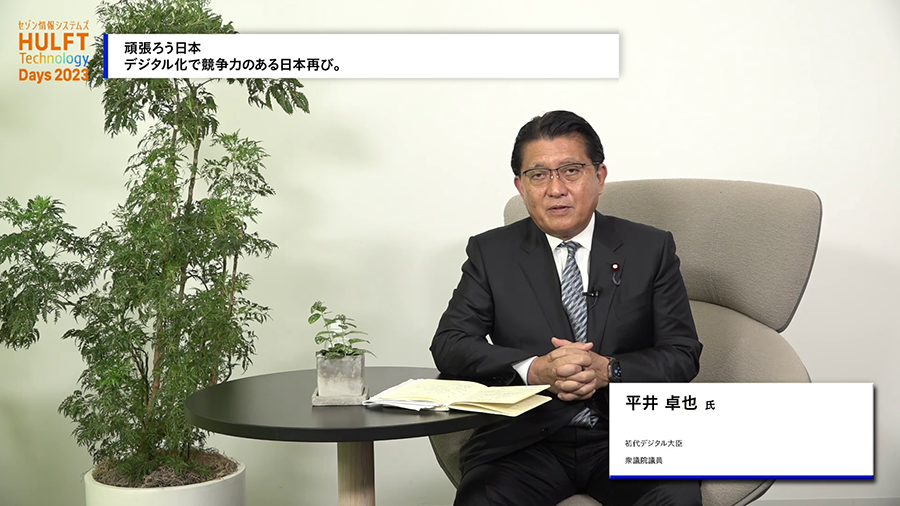
Mr. Takuya Hirai
First Minister of Digital Affairs Member of the House of Representatives
The second day began with a speech by Takuya Hirai, a member of the House of Representatives and the first Minister of the Digital Agency, a ministry established by the Japanese government to promote IT and digital transformation in Japan. He spoke about Japan's future digital policy and Japan's position in the world.
Leapfrogging
When I visited Turkey and Albania, countries that are often thought to be lagging behind Japan, I found that they were far ahead of Japan in terms of digitalization. For example, a large hospital in Turkey is completely paperless, with no queues. You can make an appointment and receive treatment on your smartphone, and you can pay right there, so there's no need to wait to pay. In Albania, it seems that over 2,000 administrative procedures can be completed on a smartphone.
When asked how this was possible, Representative Hirai explained it using the term leapfrogging. He explained that because their social infrastructure lagged behind Japan's, they were able to digitize all at once. The term comes from what actually happened in Africa and Asia, where a society without landlines, for example, could leapfrog the intermediate stage and become one where smartphones are widespread. This phenomenon is sometimes called leapfrogging, as it gives the image of a frog making a giant leap. Japan may be quickly being overtaken by countries that we believe to be underdeveloped.
Reasons why Japan's digitalization is lagging behind
So why is Japan lagging behind in digitalization? He suggested it may be because the social infrastructure that has existed for a long time is well-developed. He suggested that people did not have any particular expectations for digitalization because they did not experience any inconvenience with the pre-digital methods of visiting hospitals with paper insurance cards and paying with cash.
Just because we're not experiencing any problems doesn't mean there are no problems as things are now. In Japan, paper health insurance cards are used 2 billion times each year, and of those, around 5 million are returned to medical institutions due to administrative errors. Errors occur because administrative work is done by people on paper, and there is no proper identification of the person when using the health insurance card.
Japan's Competitiveness and the Risks of Maintaining the Status Quo
Thirty years ago, Japan was ranked number one in the world in IMD's "World Competitiveness Yearbook," but now it's down to 35th. He said that Japan's current sense of stagnation may be due to its declining competitiveness. Japan's digital competitiveness ranking has also fallen to around 30th place, and he believes that this is because other countries are working hard while Japan remains the same.
He said that Japan has not properly addressed the changes that digitalization is bringing to the world, and that this is true for both the government and companies. It is a good thing that Japan has many long-established companies, but perhaps they have not been able to transform themselves to increase their competitiveness. He said that in order to grow even with an aging population, investment in people and digital technology is necessary, and that the risks of maintaining the status quo need to be explained to the public, and that a change in mindset is necessary.
And it's not like Japan hasn't been doing anything digital-related. For example, although Japan has one of the world's most advanced fiber optic networks, it hasn't been able to make full use of this excellent infrastructure. Everyone must have experienced the power of digital connectivity during the COVID-19 pandemic, but the IT infrastructure needed for this has been in place in every corner of Japan for a long time, and yet it hasn't been fully utilized.
The age of data is upon us, and I hope Japanese companies will do their best.
In 2016, the Basic Act on the Utilization of Public and Private Data was enacted. We are entering an era in which data will create new value, but the public and private sectors have not yet shared a common understanding of how to create data, how to utilize it, and what the value of data is. The Digital Agency is promoting digital transformation across the country. It will centralize and optimize IT procurement, which has been wasteful, and will change future IT at the national and local levels, with the cloud as a given. Moreover, in Japan, it is necessary to change what already exists, which can be more difficult than creating something from scratch.
I also feel that data integration is necessary to provide one-stop government services. Data sharing creates new value. Even within the government, I believe that data integration platform is important for disaster response and childcare support. Also, when considering economic security, Japanese manufacturers need to remain in mission-critical system, core system. Therefore, I want Japanese companies to do their best in the fields of IT and information sharing. That is why I spoke to you all today. I really want Japanese companies to do their best on the world stage.
Sponsor "DX" to "SX" - What is the business foundation for next-generation accounting that is realized by "connecting"?
Mr. Mizuki Hiramatsu
Partner Business Manager, Digital Ecosystem Department, Solutions Headquarters, Concur Japan
Mr. Hiramatsu from Concur took the stage to introduce their digital transformation efforts in accounting. Concur is a group company of SAP, a globally renowned ERP company, and among the many products in the SAP group, they are responsible for the business travel and expense reimbursement areas. Concur's products are already in use worldwide and have a proven track record, and are also highly popular in Japan, with a 97% continued usage rate for their cloud services. With the slogan "A world without expense reimbursement," they are working to improve the efficiency of operations in this area.
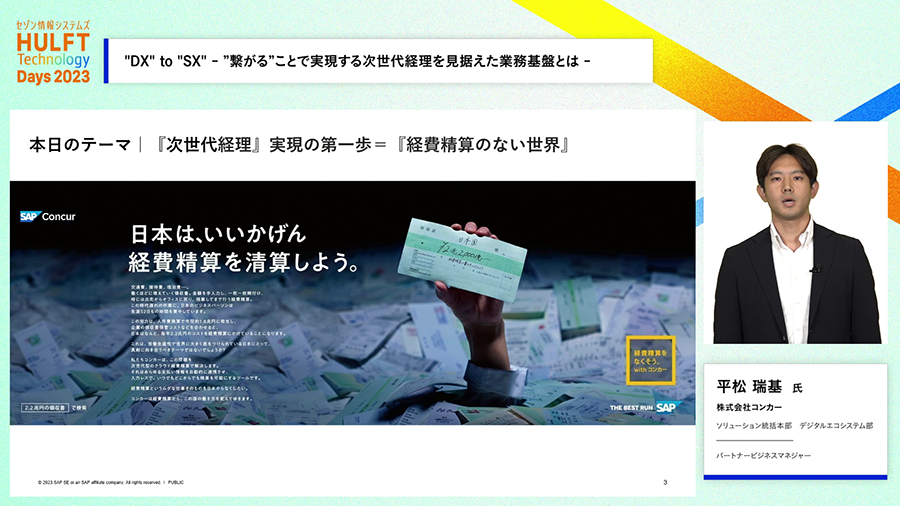
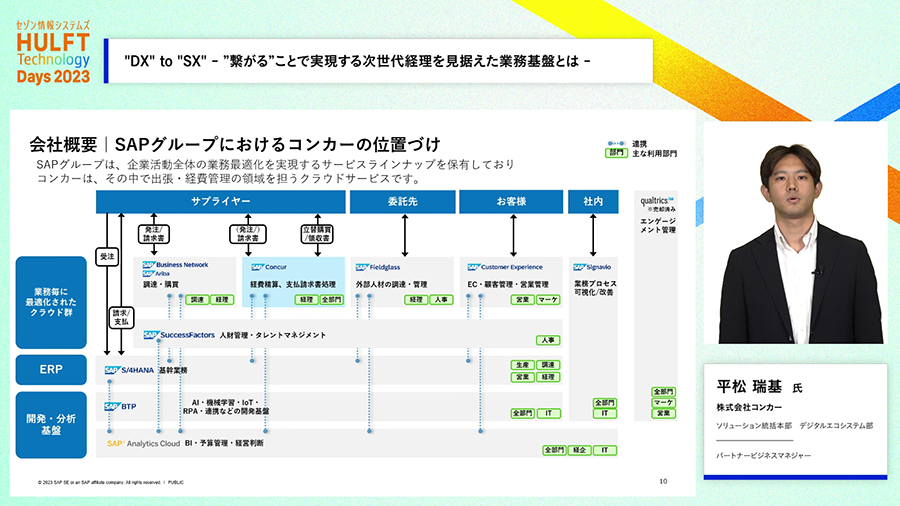
These days, the world is said to be based on IT, and is becoming a different place than before. There is also talk of the Fourth Industrial Revolution and the need to tackle digital transformation. However, even if people understand that they need to do something, it can be difficult to know where to start, what to do, and how to do it, leaving many people in a difficult position.
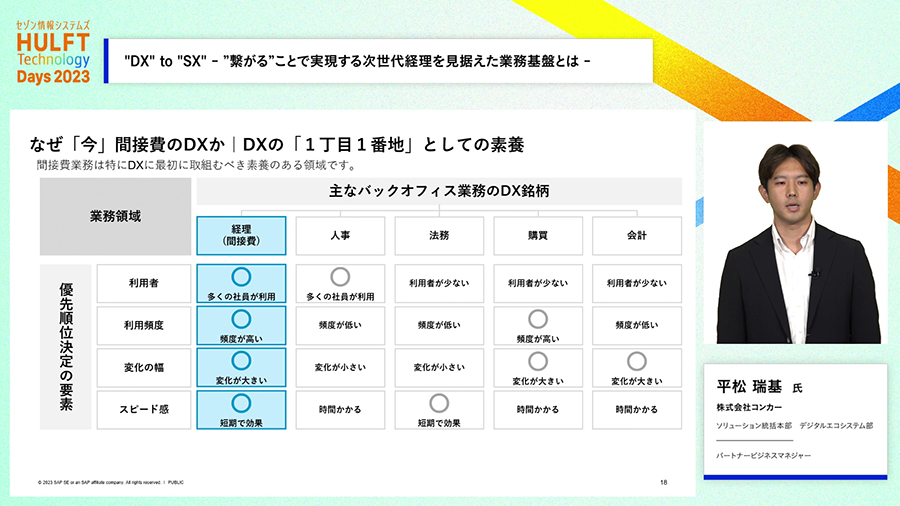
Hiramatsu was encouraged to tackle DX with expense reimbursement because it involves many departments, makes it easier to achieve results in a short period of time, and makes it easier to feel the effects of improvements. It is said that with DX, it is important to first produce results, even if they are small, without spending too much time, in order to continue the activity, and working on digitizing expense reimbursement may make it easier to achieve initial results.
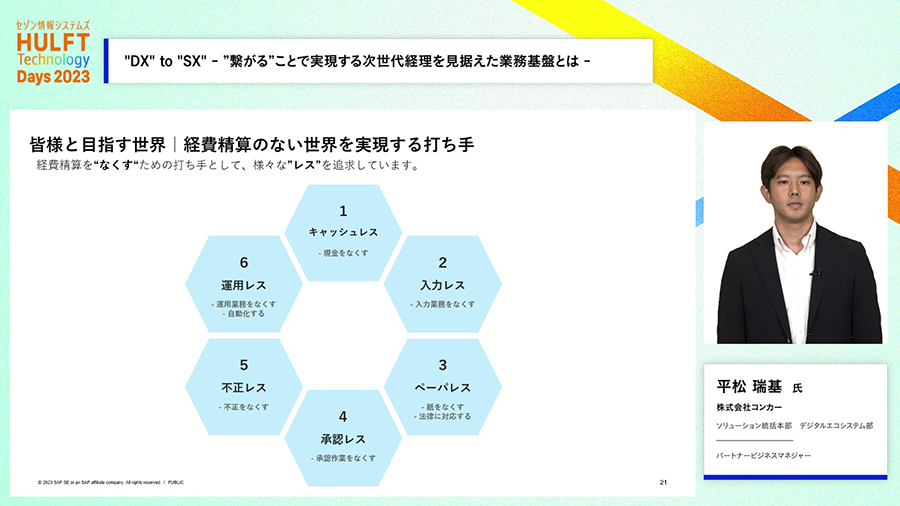
Concur is working on providing six "less" services: "cashless," "inputless," "paperless," "approvalless," "fraudless," and "operationless."
Accounting work tends to rely on paper, but this creates obstacles for remote work, so going paperless will be necessary. Input-less means efficiency, such as automatically acquiring travel expense data and automatically submitting expense reports, eliminating the need for manual input. Concur also reduces the approval process by providing a function for automatic approval based on the amount and set rules. Even when automatic approval is not used, Concur automatically checks for input errors in applications and returns them, and human approval work can be efficiently carried out via cloud or mobile, further streamlining the process. Furthermore, fraud is prevented by visualizing usage and budget results, and budget progress is also made visible, eliminating the need for calculation work.
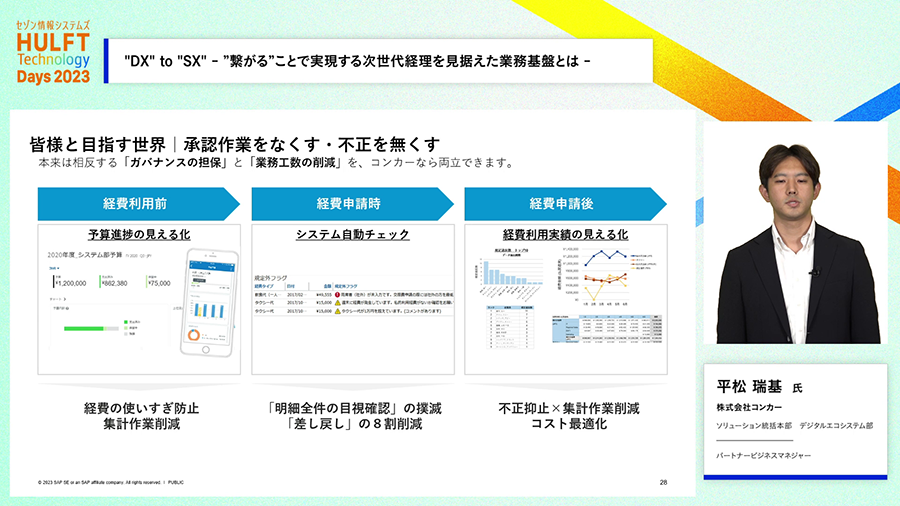
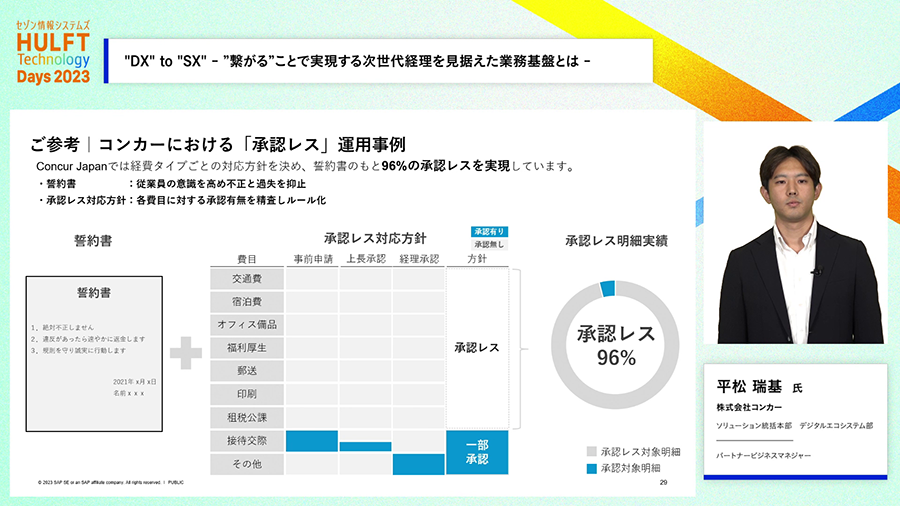
Furthermore, in addition to expense processing, there is a system that supports reporting on greenhouse gas emissions and efforts to reduce them, which will become mandatory for companies in the future, such as automatically calculating CO2 emissions associated with those activities, and can support not only DX but also the realization of SX (S: Sustainability).
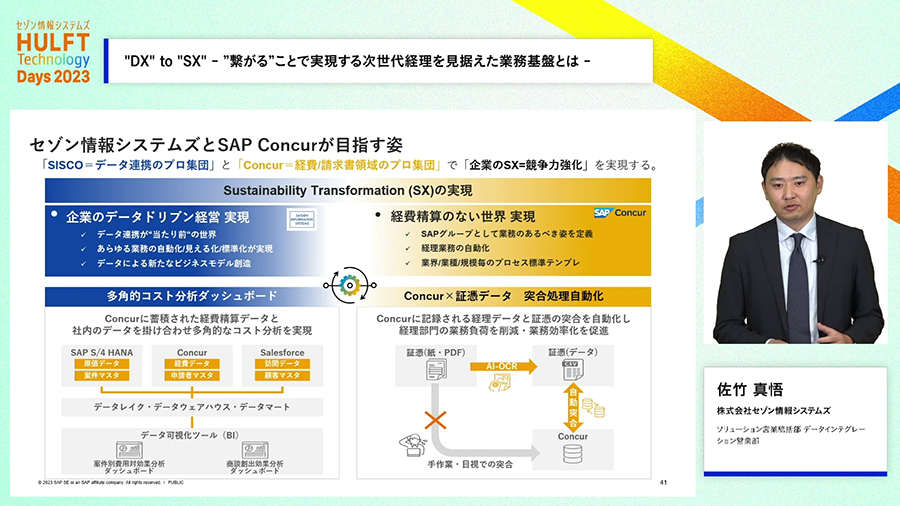
Our company's Mr. Satake also took the stage during the session and introduced our efforts to combine and utilize Concur products that "connect" data.
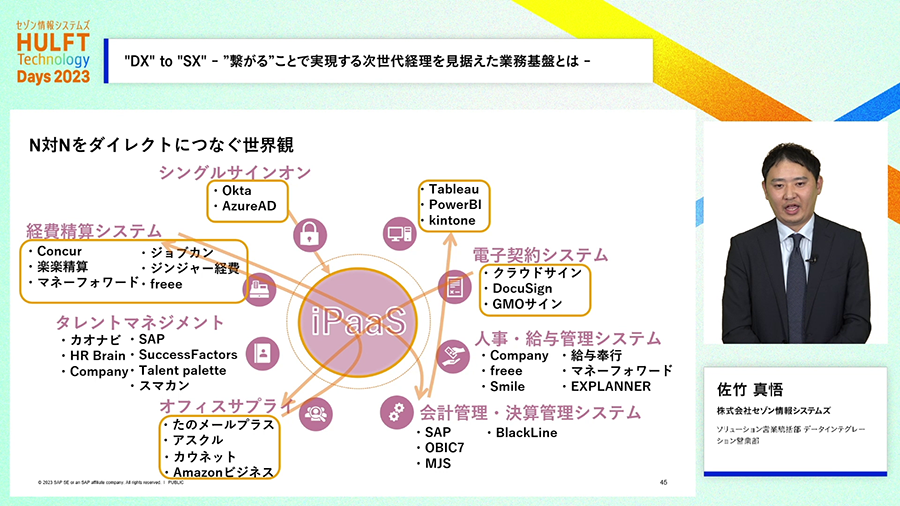
Accounting-related data and system functions are scattered across multiple systems within a company. With data integration tool, you can automate the process of reconciling data on Concur with paper or PDF data, and link expense reimbursement data to data analysis platforms such as BI tools for advanced analysis. The two products can also be combined for other use cases, such as automatically linking purchasing data from purchasing-related systems to Concur, or automatically linking expense reimbursement in Concur to accounting management or financial settlement management systems.
Sponsor: Introducing Persefoni, a carbon accounting platform that accelerates decarbonization
Mr. Koichi Sakamoto
Sales Account Director, Persefoni Japan LLC
Nobuyuki Muto
Product Director, Persefoni Japan LLC
Continuing on, I will talk about the use of data in relation to measures to combat global warming. When we hear about environmental issues, it tends to seem like something we should be mindful of, but in fact, the use of data is an important element (see also the article on the first day of HULFT Days 2023).
»Click here for the report on Day 1: Part 3
Global warming countermeasures are already becoming a practical necessity for companies. For example, companies listed on the Tokyo Stock Exchange Prime are now required to disclose information such as their greenhouse gas emissions. This means that in addition to traditional efforts that focus on corporate image in the eyes of consumers and society, companies are now required to report sustainability-related information in the same way as financial reporting. Furthermore, we are approaching a time when investment decisions in companies will be based on such disclosed information.
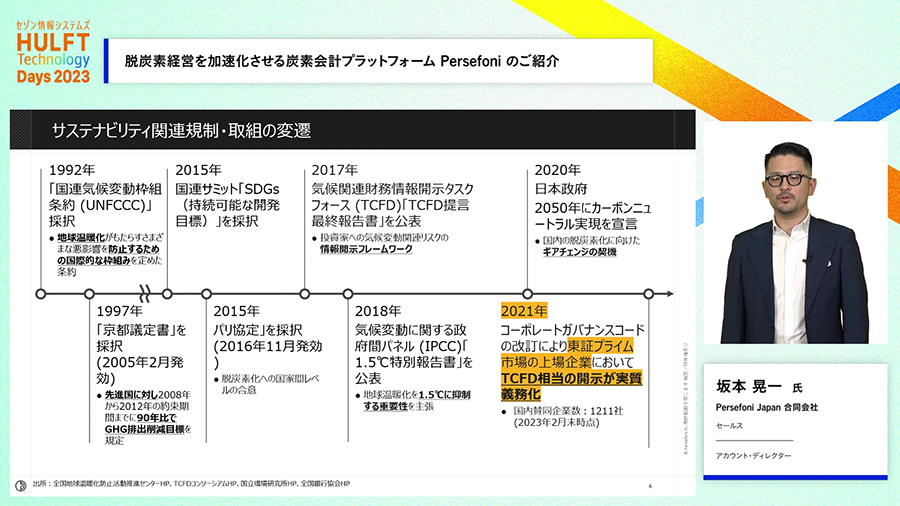
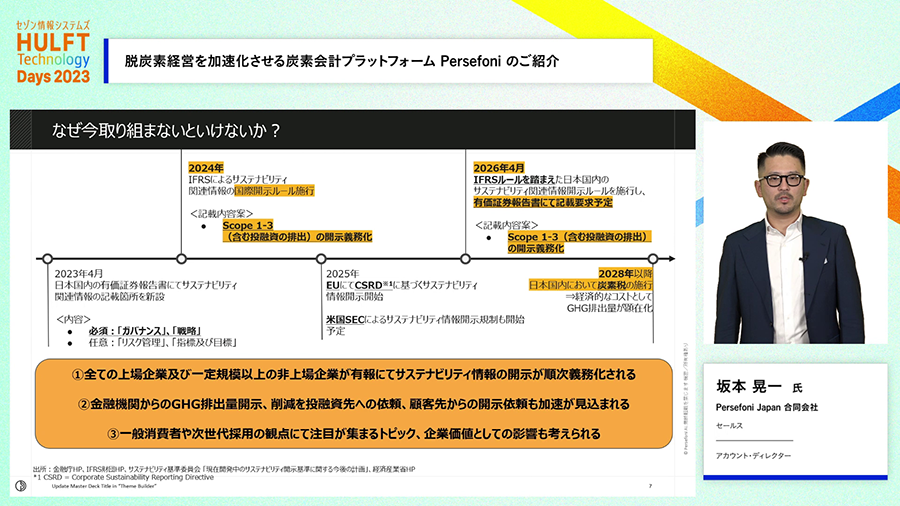
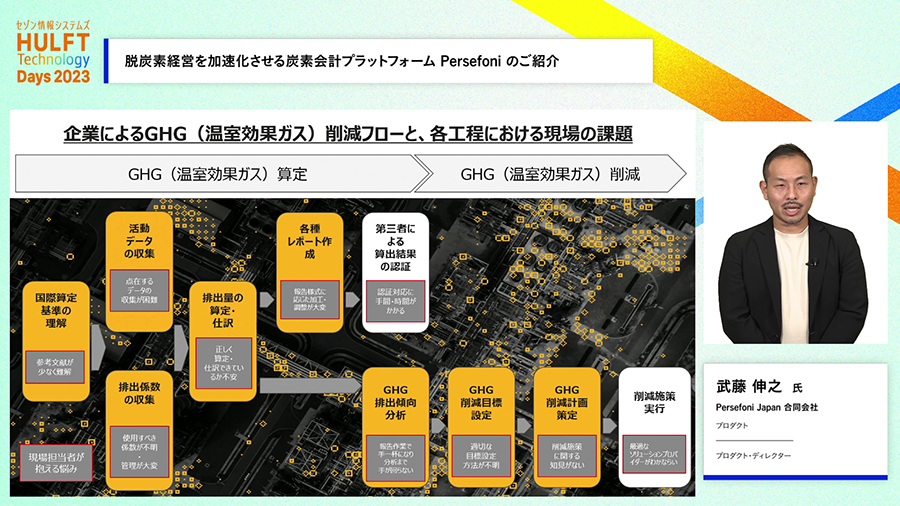
Understanding greenhouse gas emissions requires consideration not only of all corporate activities and the associated emissions, but also of what is consumed and purchased and the emissions associated with their production, making it necessary to exchange the necessary information with group companies and business partners. Furthermore, calculating emissions is not only time-consuming, but there are various international rules, making it difficult to calculate correctly in accordance with them. This is why solutions are now being offered.
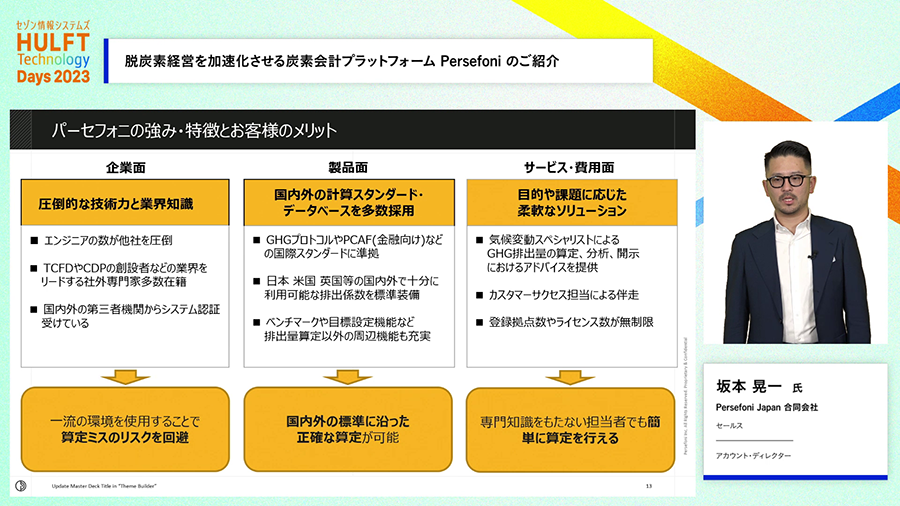
Persefoni has in-house experts on international rules, and is able to provide accurate emissions calculations that comply with domestic and international standards based on their expert knowledge. Users can easily obtain accurate results by simply using Persefoni's products, even if they do not have specialized knowledge.
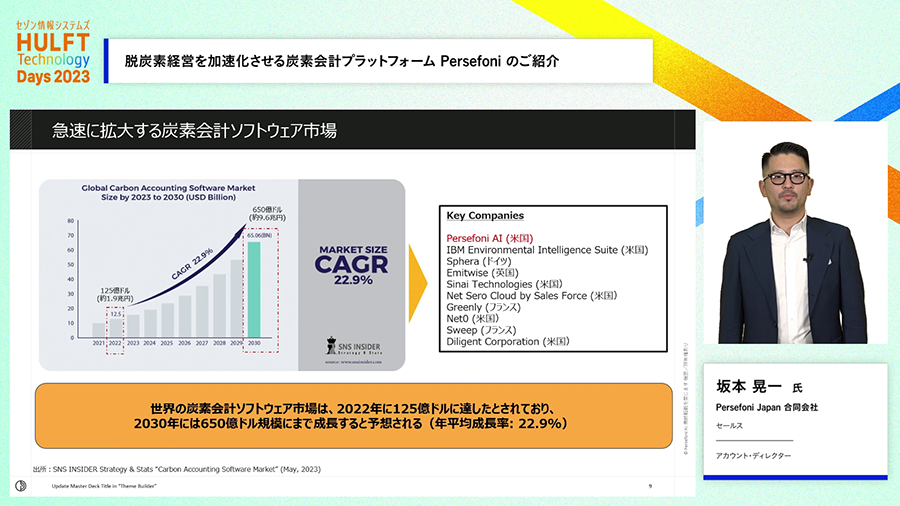
Another problem is the task of collecting the large amount of data required for calculations from various places within the company. This is a lot of work, as it requires data on all of the company's activities, including data on business partners. In the past, it seemed that the arduous task of collecting large amounts of data was often done using Excel.
This is where our "connecting" products, such as HULFT Square and DataSpider, come in handy. They can data integration to a wide variety of systems and perform data preprocessing and format conversion as needed. By combining the products of both companies, data collection can be significantly streamlined with HULFT Square, and the collected data can be formatted and connected to Persefoni's system for accurate calculations. Furthermore, HULFT Square can also automate the process of reporting and linking the results obtained to external parties.
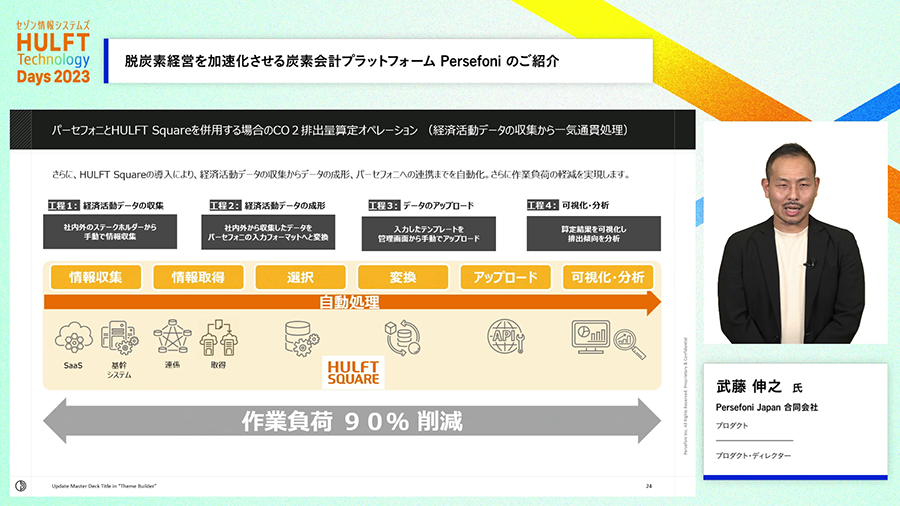
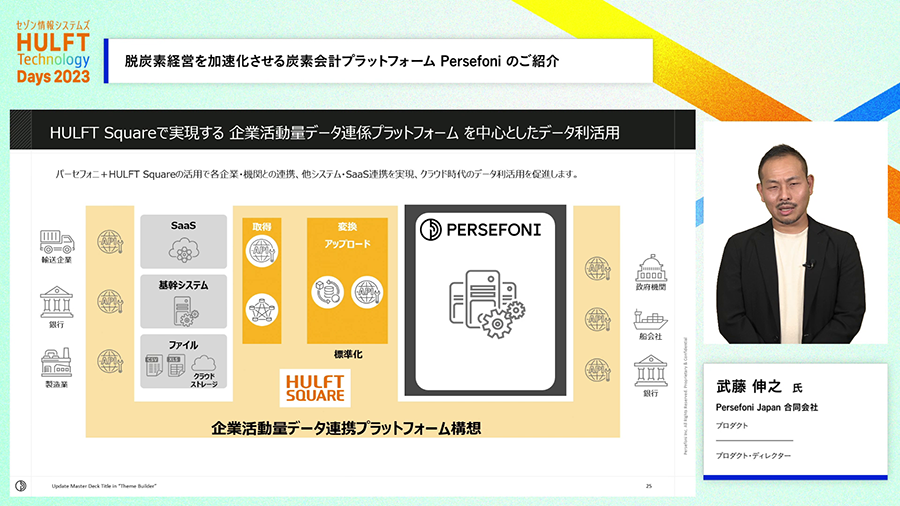
Furthermore, reporting greenhouse gas emissions shouldn't be the end of it. When working in Excel, collecting data and doing calculations can be exhausting, but what you really need to do is go beyond that. You need to analyze the emissions situation, consider how to improve it, and then create and implement an improvement plan. You need to automate it appropriately so that you can focus on what your company really needs to work on.
Customer Case Study: Local Government Data Infrastructure: To Go Far? data integration Starting Small
Mr. Kiyohiko Nagano
Director of the DX Promotion Division, Planning and Promotion Department, Nagano Prefecture
Next, we were given an introduction to Nagano Prefecture's data integration platform and DX initiatives.
While digital transformation initiatives are being implemented in various organizations these days, there are probably not many cases where they are going well. Common situations include initiatives that don't get off to a good start, being able to start but not being able to continue due to lack of understanding, or somehow managing to implement initiatives but not expanding beyond their limited scope. Nagano Prefecture's initiatives seem like a useful example of what specific initiatives are possible to address such concerns.
Start small and get results
Unfortunately, it seems to be quite common for people to start a project but then give up because they can't get others to understand what they're trying to do. To avoid such failures, it's often said that it's important to start small and achieve small results quickly.
In our efforts in Nagano Prefecture, the need to start an initiative was very clear. The prefecture had experienced major flooding, and we needed to prevent something similar from happening in the future, so we started by launching a new initiative using IT to combat flooding.
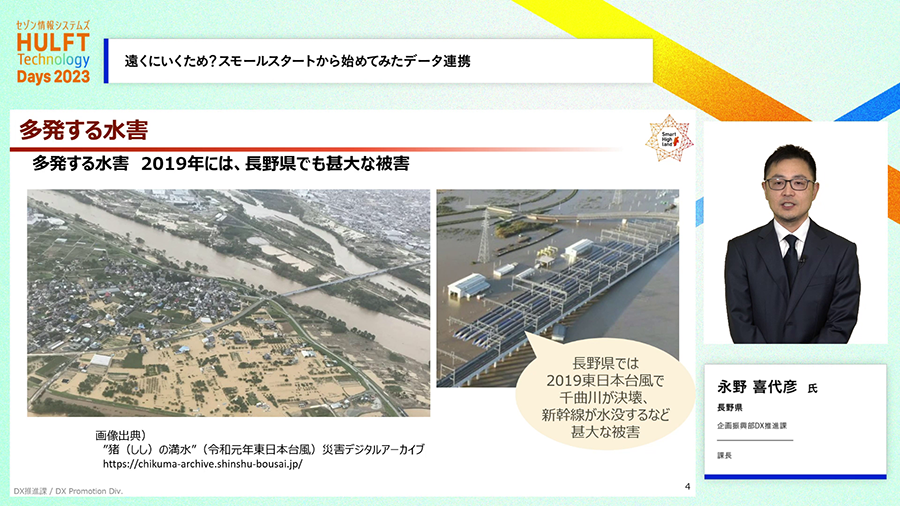
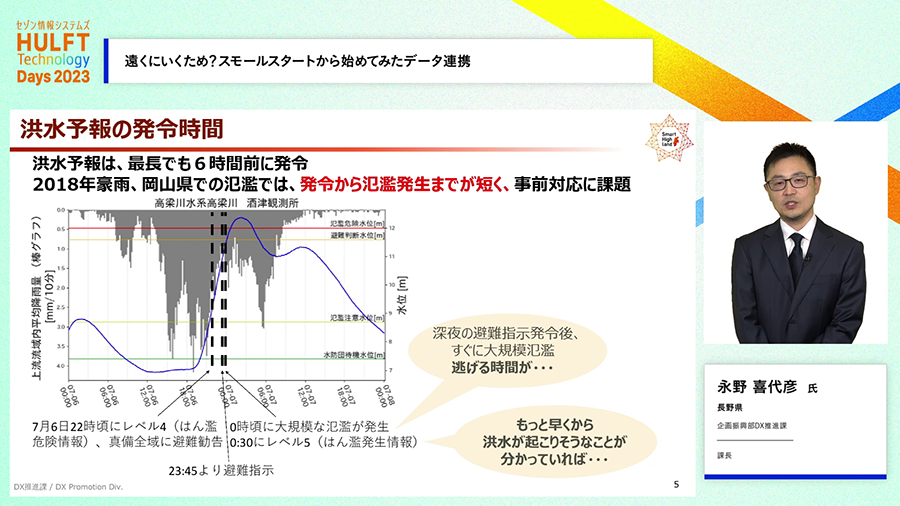
Was it not possible to predict the occurrence of flooding in advance? Up until now, flood forecasts have been available, but only six hours in advance at most, and there was a limit to what could be done beyond that. Therefore, Nagano Prefecture will be involved in research into a new system that is being conducted jointly by the University of Tokyo and JAXA, which can predict floods up to 39 hours in advance.
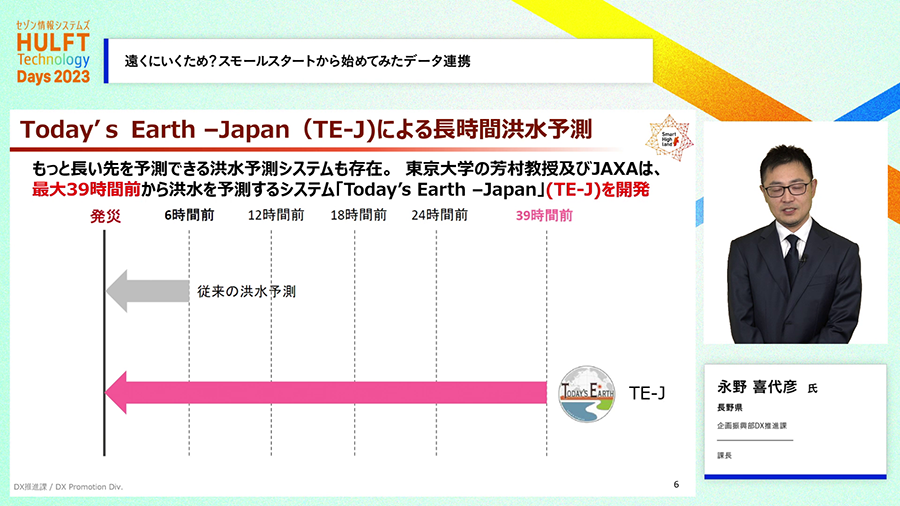
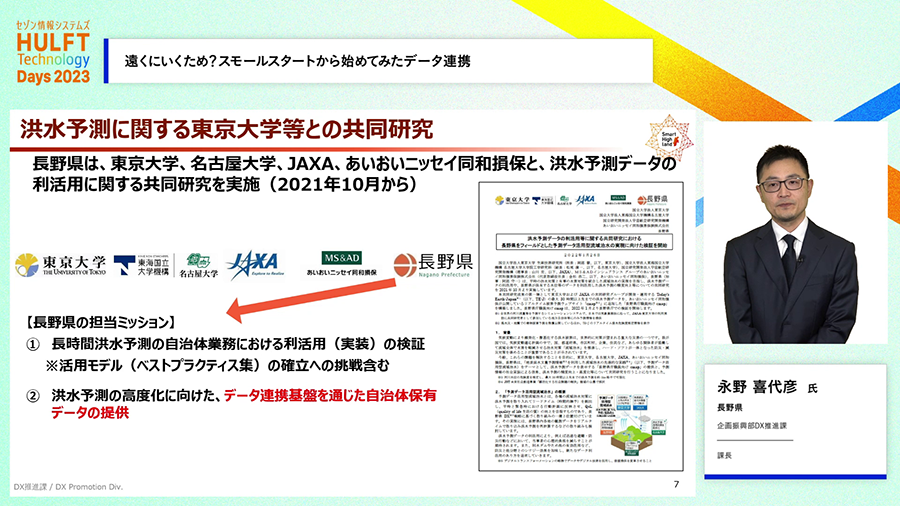
Nagano Prefecture has participated in flood prediction research by providing water level data and other information, and has also considered what measures each city, town, and village in Nagano Prefecture can take now that early flood forecasting is possible, leading to successful flood control measures. However, Nagano Prefecture has 77 cities, towns, and villages, and acquiring water level data and implementing measures based on flood forecasts requires working with numerous organizations and dispersed data. Therefore, we will use DataSpider to build a data infrastructure that collects water level information for Nagano Prefecture, and to provide an early flood forecast function (TE-J) and a damage prediction function (CMAP) using this function with a user interface that is easy to understand and use for city, town, and village officials.
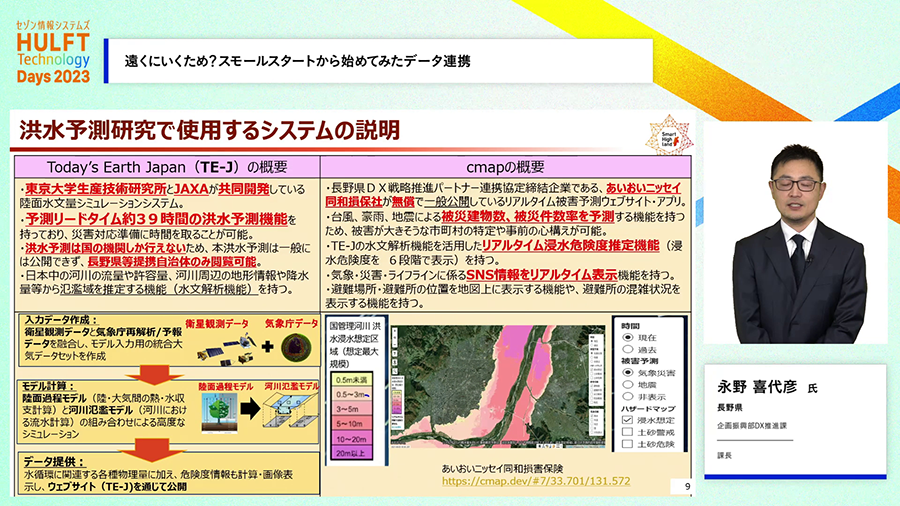
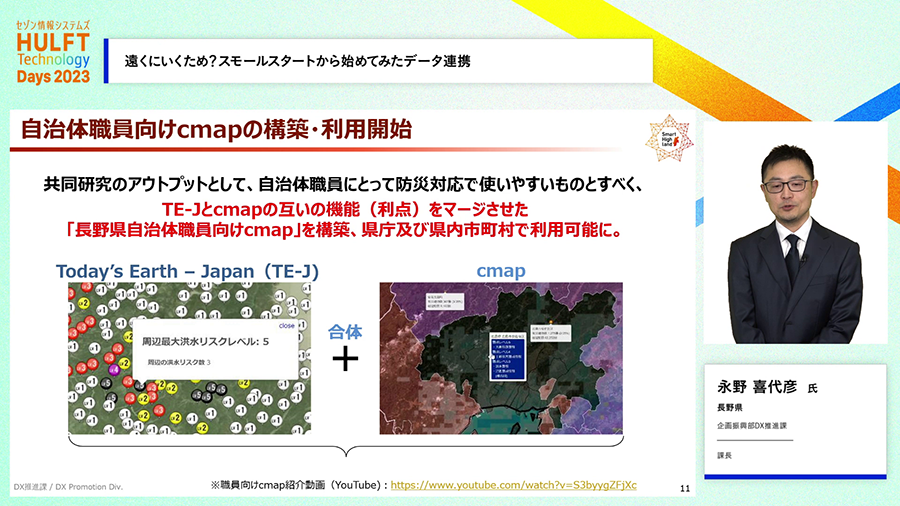
Data infrastructure available throughout the prefecture
A common problem with DX is the inability to expand initiatives. Even if a good initiative is launched, cooperation cannot be obtained, or the effort required prevents the initiative from progressing. Nagano Prefecture is also working on a useful initiative in this regard.
Even in Nagano Prefecture, it was not easy to expand the initiative throughout the prefecture. There are 77 cities, towns, and villages, and neither the prefecture nor each city, town, or village has sufficient budget or personnel. It is not a situation in which it can be expected that the initiative will spread smoothly. Furthermore, sharing water level information and flood forecasts is only the beginning of the DX initiative, and there is much more that IT needs to do for the future of the prefecture.
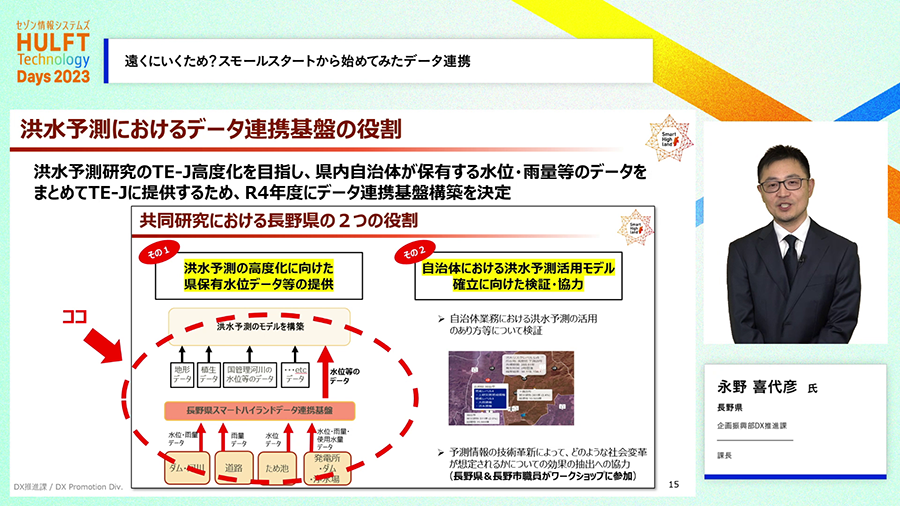
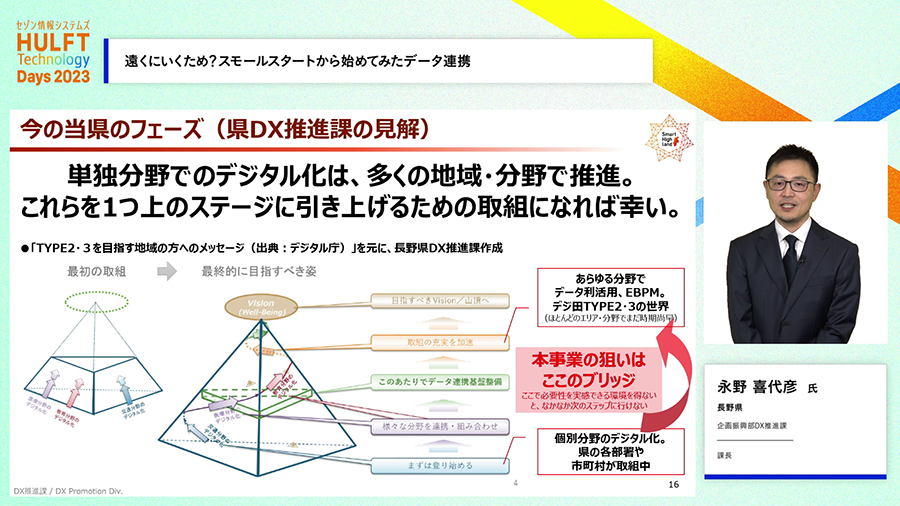
For the simple reason of the need to tackle flood prevention, we have gained understanding for the creation of a data infrastructure for water levels and rainfall and for the start of this initiative. Using this data infrastructure as a foothold, we are now working to expand it and create a comprehensive data integration platform that can be used in many fields for the future of the prefecture.
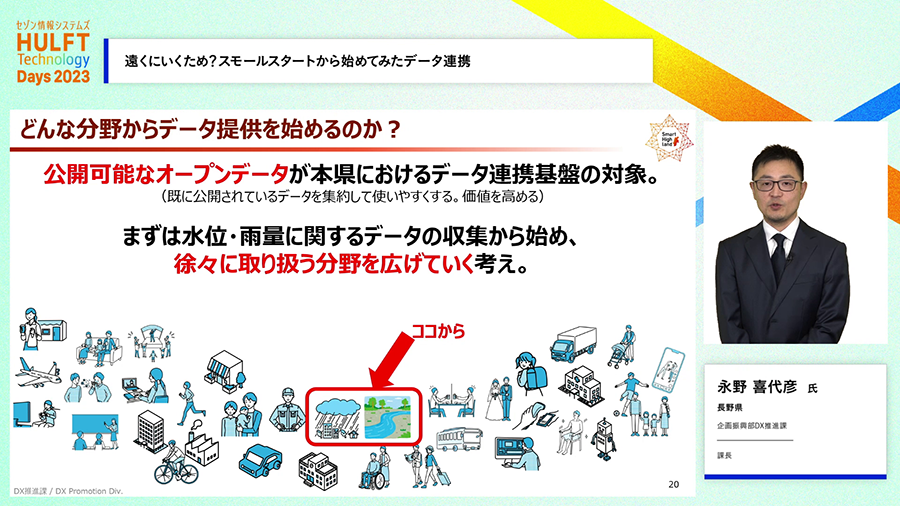
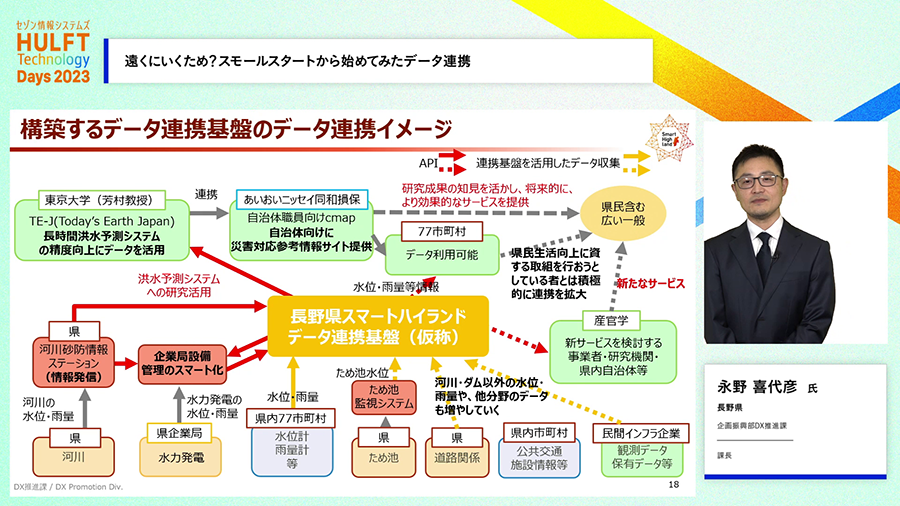
Considerations have also been made to ensure that data collection can begin smoothly. The data in question is open data (both water levels and rainfall). Since the data was originally intended to be made public, municipalities do not waste time confirming whether it is okay to make this data public. There is also no need to be careful about how data is handled, such as data protection. This allows for rapid progress.
We also don't ask for data in a specific format or for an API to be created for data integration. This would require the time and budget of system modifications, which would prevent progress. We decided to use web crawling to obtain information that was already publicly available on the web in HTML, etc. In that case, we could simply ask "May I obtain it?" and get permission, and then we could execute immediately.
This is a very practical approach to dealing with data that can be used immediately without any problems in a way that places no burden on the other party, and it is quite eye-opening when compared to stories of complicated DX plans that are quickly derailed when made solely based on "shoulds" in a conference room.
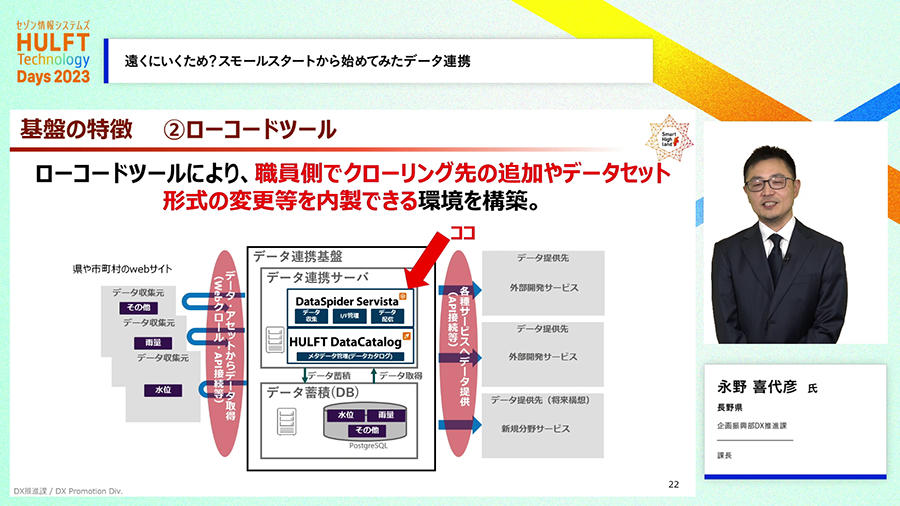
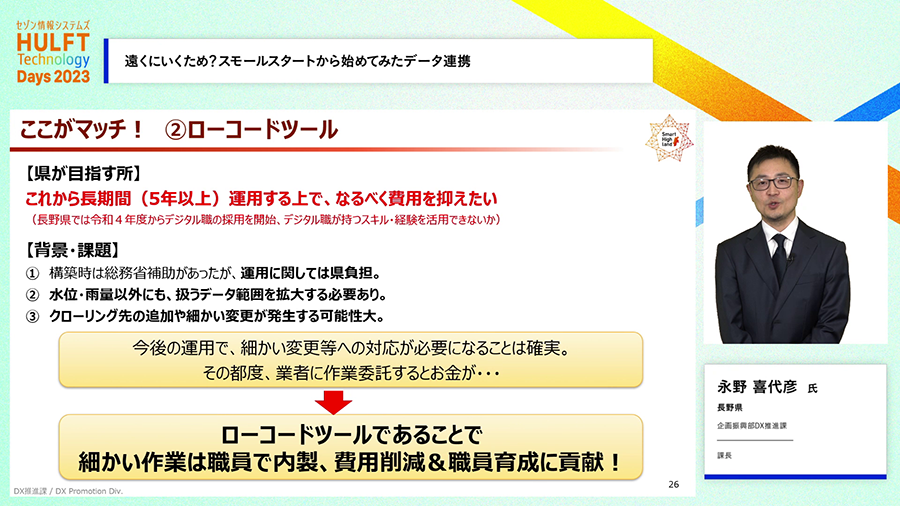
Another innovation is the use of a "low-code tool," using our company's DataSpider. Even if the budget is secured initially for such an initiative, it's often unclear what will happen afterward. Furthermore, with an unprecedented initiative, it's natural that things that need to be done later will arise, and having to budget for additional development every time something happens will prevent the initiative from progressing smoothly.
Therefore, they decided to introduce "DataSpider" as their data infrastructure and build basic data infrastructure functions, after which the prefecture's employees would proceed with in-house development. As it is a low-code tool that can be used with just a GUI, they were able to use it without any problems, and prefecture employees were often able to add detailed functions themselves afterwards. Furthermore, this has led to prefecture employees improving their IT skills and improving their in-house development capabilities, which has not only reduced costs but also contributed to improving the digital skills of employees.
Customer Case Study: data integration platform "Standardization" Method for Driving DX in the Manufacturing Industry
Mr. Hiromichi Kato
Daikin Information Systems Co., Ltd. Development Department 1 Manager
Mr. Ryo Murakami
Daikin Information Systems Co., Ltd. Infrastructure Operations Department
Next, we were introduced to examples of how to select products when promoting DX or introducing data integration platform, which is essential for today's IT utilization.
Before that, let's first review why data integration platform is necessary.
In an age where new initiatives are required and business has become inseparable from IT, new business initiatives require the introduction of new IT systems. Furthermore, in an age where rapid implementation is required, each department is being asked to quickly introduce and use cloud services as needed. However, as a result, companies often end up with a variety of IT systems being introduced across the company.
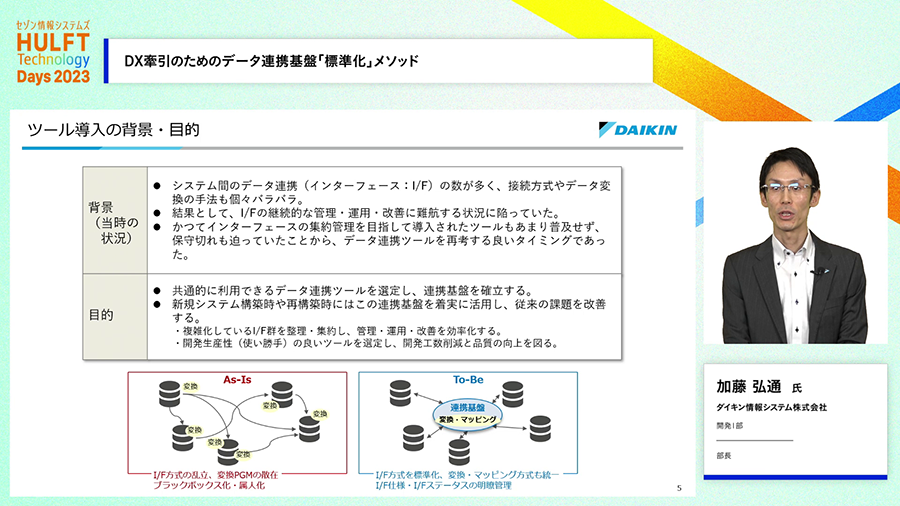
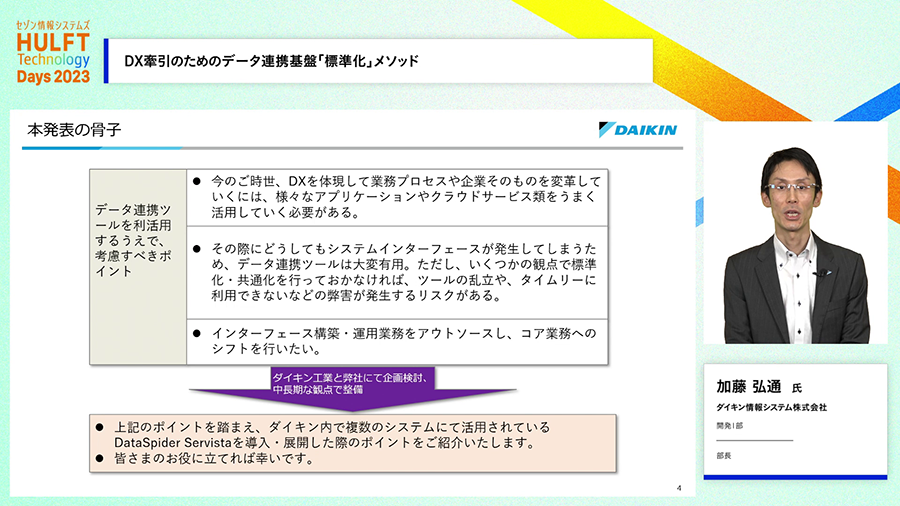
To avoid this situation, some bold proposals are made, such as standardizing IT across the entire company and prohibiting any other use, or introducing a huge external software package for the entire company and eliminating the old system all at once.However, just as the ideal cloud service for the sales department and the technical department is not the same, it is desirable for each department to use the cloud according to the characteristics of their work.
In reality, what will be needed is a "data integration platform" that maintains order and efficiency overall by firmly linking each system while taking advantage of the strengths of having the necessary IT installed in each department. Furthermore, by utilizing an integration platform, it will be possible to effectively utilize the strengths of proven systems that have been in operation for a long time without forcing them to be replaced. Furthermore, with a system-unification mindset, it will be difficult to successfully combine your company's own systems with those of other companies (which will become increasingly necessary in the future).
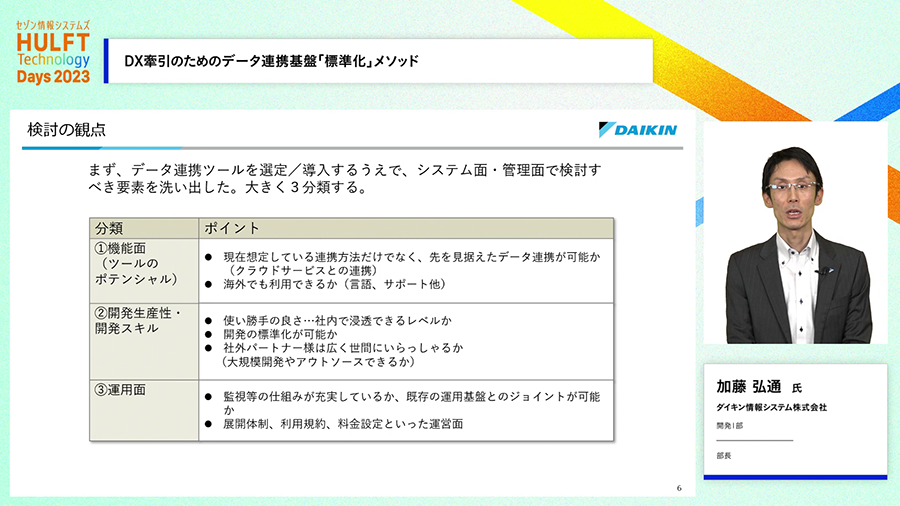
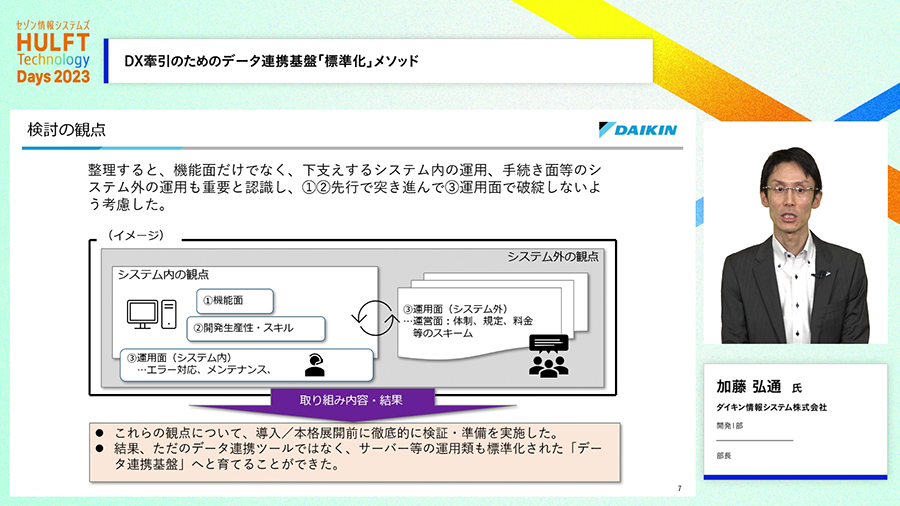
So how should we select data integration platform, which is crucial for promoting DX and utilizing IT? There were various discussions during the process, and based on those discussions, we summarized the three key points and presented them.
Functionality (tool potential)
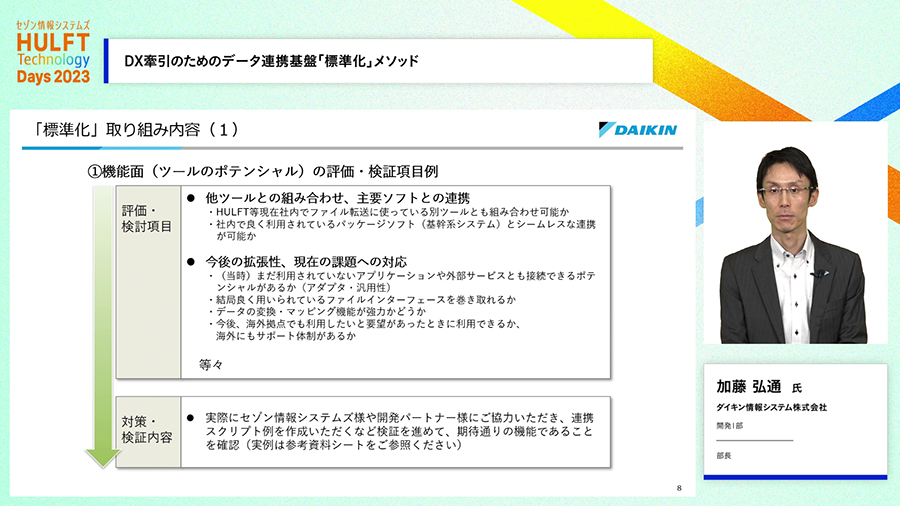
Functionality (tool potential) The first thing that was mentioned was functionality. "Combination with other tools/linkage with major software" and "future expandability/addressing current issues" were mentioned.
There are many software and cloud services available these days that claim to be able to share data. However, unfortunately, it is common for them to have a modern UI that allows you to do simple things easily but not do much more than that, or to connect to trendy cloud services but not at all to the packaged products and mainframes that are traditionally used in corporate systems. Also, if your company has bases overseas, you may be concerned about whether there is a support system in place overseas.
For example, HULFT is still widely used throughout Japan, but if integration with HULFT is required, our products, developed by the same company, will naturally be considered. Furthermore, without the ability to fully develop data preprocessing and processing that accompanies integration, not only will integration requiring conversion processing be impossible, but if something goes wrong, you may be stuck because you cannot develop the necessary solutions. Furthermore, even with connection destinations that do not yet have connection adapters, such as the latest services that have just been released, if you have high development capabilities, you can expect to be able to develop and integrate them.
Development productivity and skills
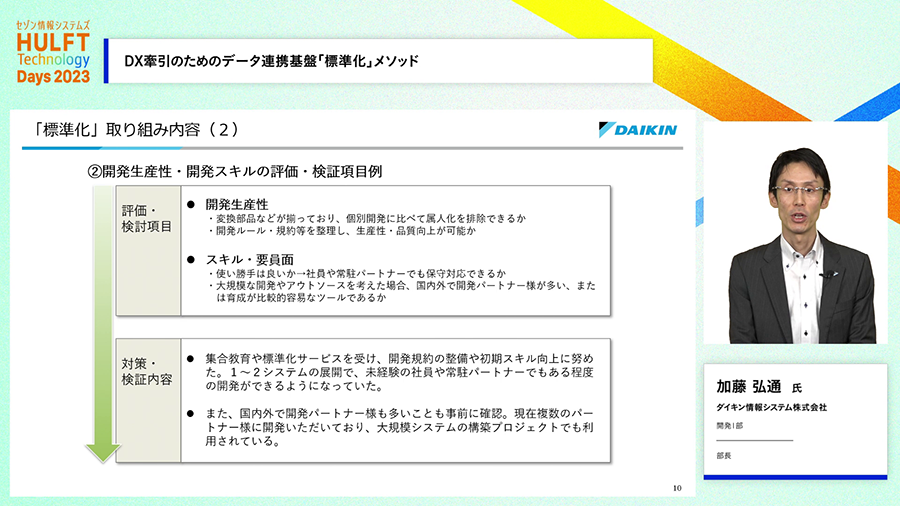
However, if we only consider powerful functionality, we end up deciding that development in a programming language is sufficient. While it would be ideal to have in-house engineers fully utilize the latest IT, this is not realistic in terms of the reality of securing personnel, and even if there are personnel, the development time is often too long.
In other words, the means to support data integration platform must also take into consideration issues of development productivity and personnel skills. There are tools that are easy to use but can only do simple things, and tools that can do advanced things but ultimately require writing source code, and it is also necessary to consider that these can have problems.
It is also necessary to consider whether the system will be easy to develop or outsource, such as whether it has sufficient capabilities yet can be used with just a GUI, whether it is easy for others to see what has been created and understand it, whether it is easy to train personnel, such as whether a wide range of personnel can acquire development skills through training, and whether it will be easy for partner companies to work effectively.
Operational aspect
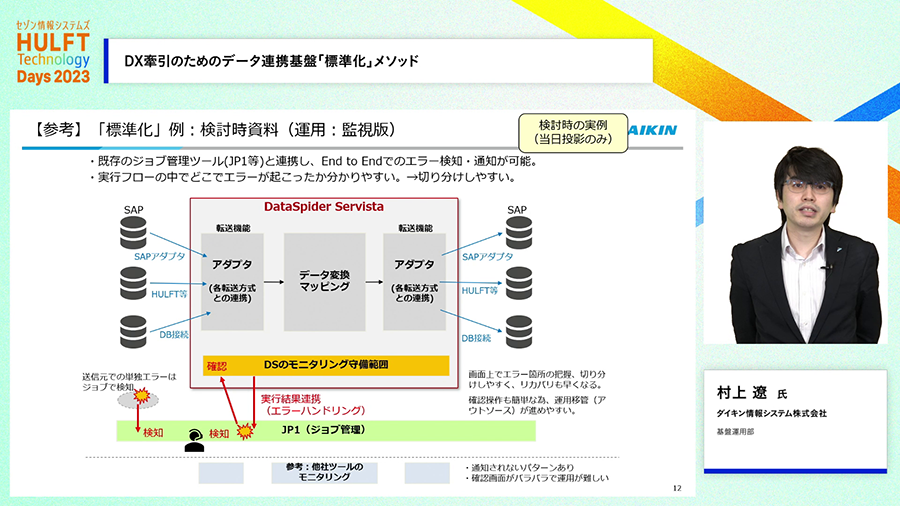
After development, you also need to consider whether the system will be usable when it is up and running.You should also consider operational monitoring mechanisms such as error detection and notification, whether it can be integrated with existing operational infrastructure (such as compatibility with existing operational automation mechanisms), and if it is necessary to comply with J-SOX, otherwise you may not be able to integrate with important systems.
Integration tools that claim to be easy to use are often little more than an extension of consumer applications. They often do not take into consideration not only operational monitoring mechanisms, but also the ability to properly handle exceptions, the reality that systems will inevitably experience failures, and the ability to keep a log of what happened when a failure occurs, how far the processing proceeded normally, and what failed, allowing for recovery work.
DataSpider was already in use within the company
It is also noteworthy that DataSpider was originally introduced as part of four individual systems within the company, but was rediscovered during the process of selecting a platform technology for collaboration, and has since become a successful company-wide data integration platform.
For example, it is quite common for DataSpider to be introduced as a means of linking Salesforce and kintone for the sales department's systems. By deploying DataSpider across the company, which meets the needs for linking individual systems like this, it can be said to be an example of how it has been elevated to data integration platform that handles company-wide DX. In fact, it has come to be called "company-wide DataSpider," and it seems that DataSpider is becoming recognized as a company-wide data platform.
If your company has implemented our "Tsunagu" product for individual systems, by deploying it company-wide you may be able to achieve the "results" of solving company-wide DX problems.
HULFT Event Report List
- The 17th HULFT Technology Days 2023 was held again this year! (Business Day: Part 1)
- The 17th HULFT Technology Days 2023 was held again this year! (Business Day: Part 2)