
"HULFT Technology Days 2023" was held again this year! (Business Day: Part 2) [17th]
We will continue our report on the second day of HULFT Technology Days 2023, which was held over three days in November 2023.
special lectureData Managementorganizational reform Connecting data to business impact
"DX Change Management" starting from scratch
produced by NewsPicks Brand Design
Mr. Takashi Yanase
Kaho Musen Holdings Co., Ltd., Good Day Co., Ltd., Kaho Enterprise Co., Ltd., Representative Director and President
Yasuko Nishizaki
Seven Bank, Ltd. Corporate Transformation Department, AI & Data Promotion Group, Data Management Office, Researcher
Mr. Kaoru Nakamichi
NewsPicks Brand Design Creative Editor
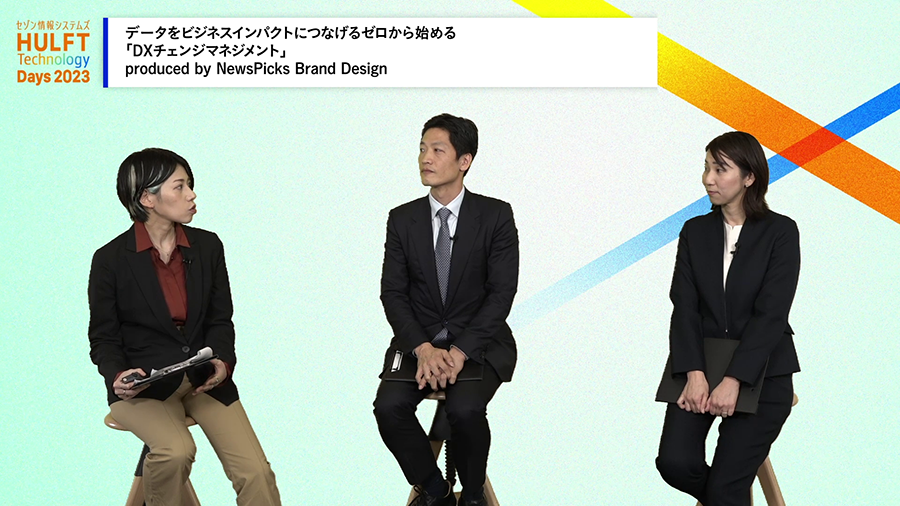
There is growing momentum to utilize data, but not many companies are doing so effectively. Taking this situation into consideration, we invited two companies that are actually working on utilizing data to speak.
Introduction to the company's business and what kind of data infrastructure it uses
First, we heard an introduction to the businesses of both companies, how they are utilizing data, and what kind of data infrastructure they are using.
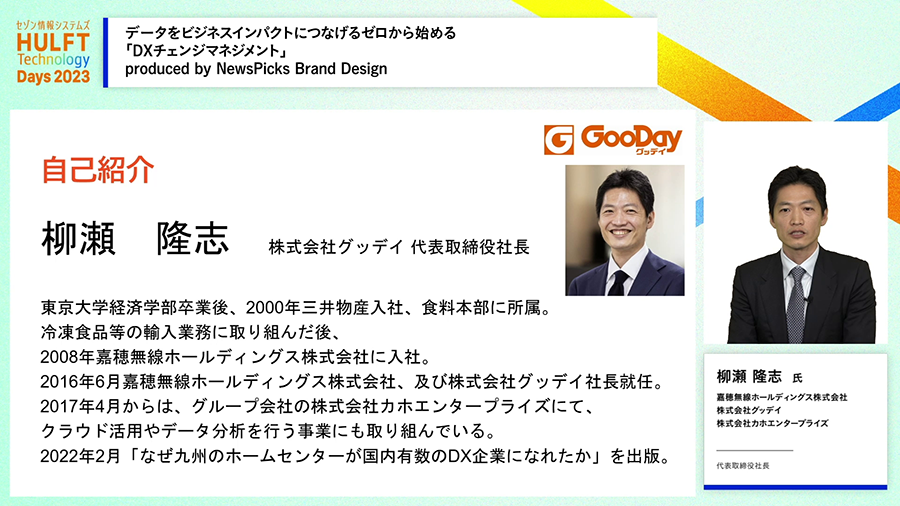
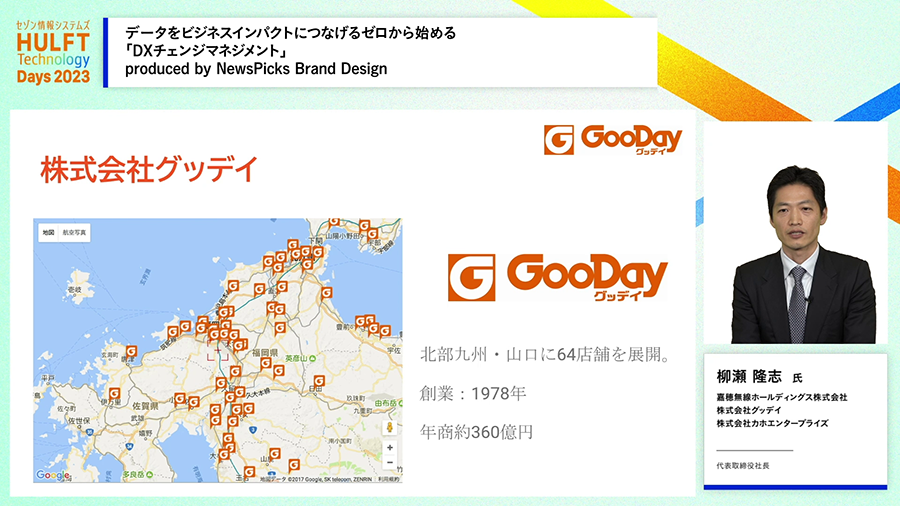
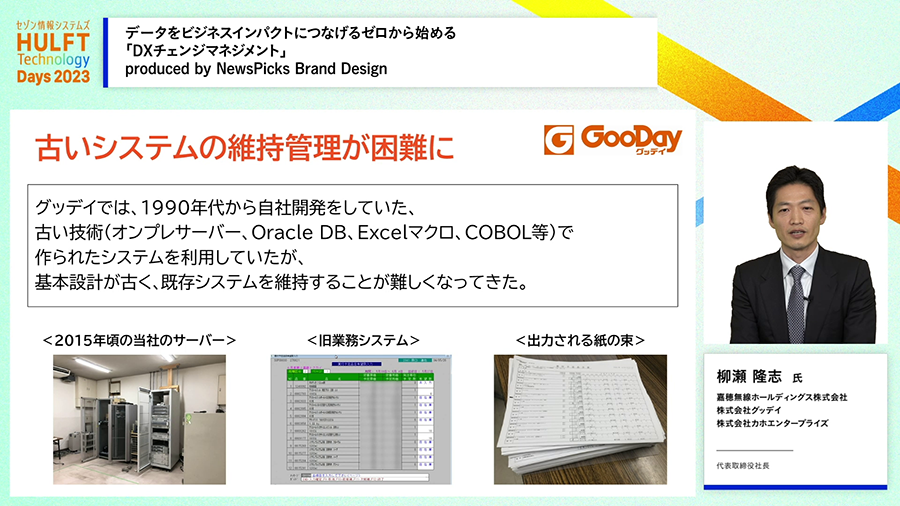
Mr. Yanase is the CEO of GooDay Co., Ltd. There are other group companies, but today's presentation will focus on the efforts of GooDay. The company operates 64 home improvement stores in northern Kyushu, and he took over the family business as president. The first thing he had to do was to rebuild the company's outdated IT system, which had been in development since the 1990s.
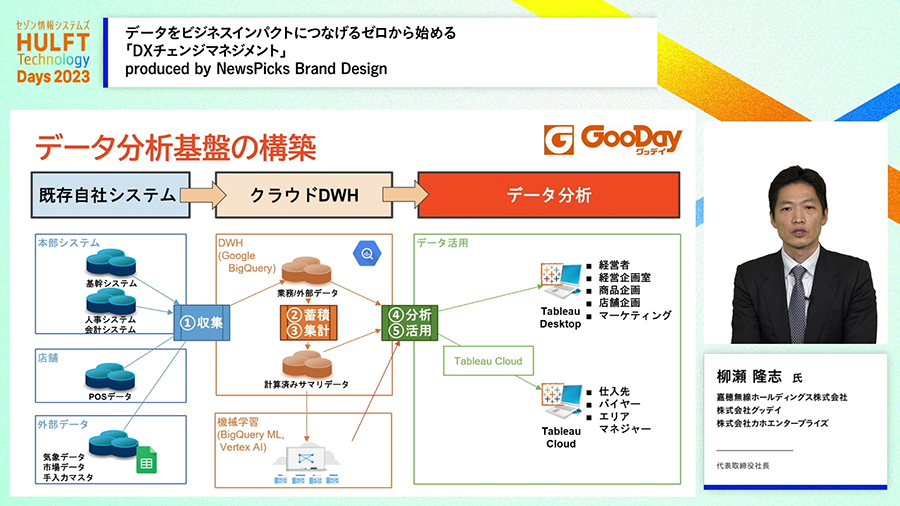
The company's internal data infrastructure stores data collected from its own systems in a cloud-based DWH, from which it uses the data for machine learning and other purposes, or transfers the data to Tableau, a self-service BI service that can be used on the cloud, creating a system that allows even on-site staff with low IT skills to analyze data.
Next, I would like to introduce an initiative by Seven Bank. As you all know, we provide ATM services at Seven-Eleven convenience stores.
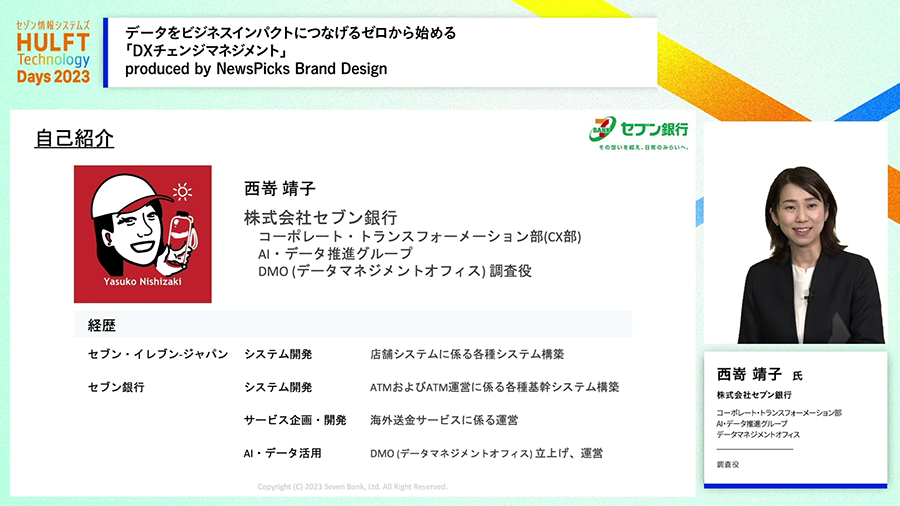
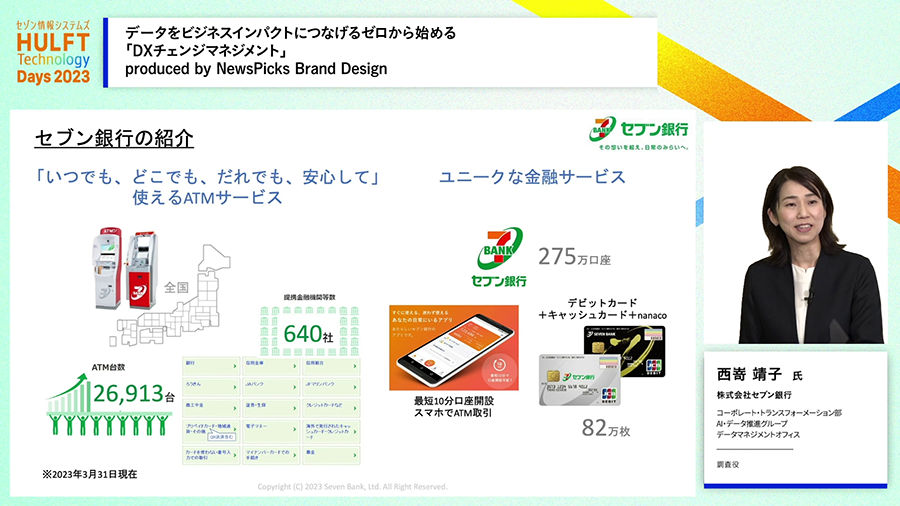
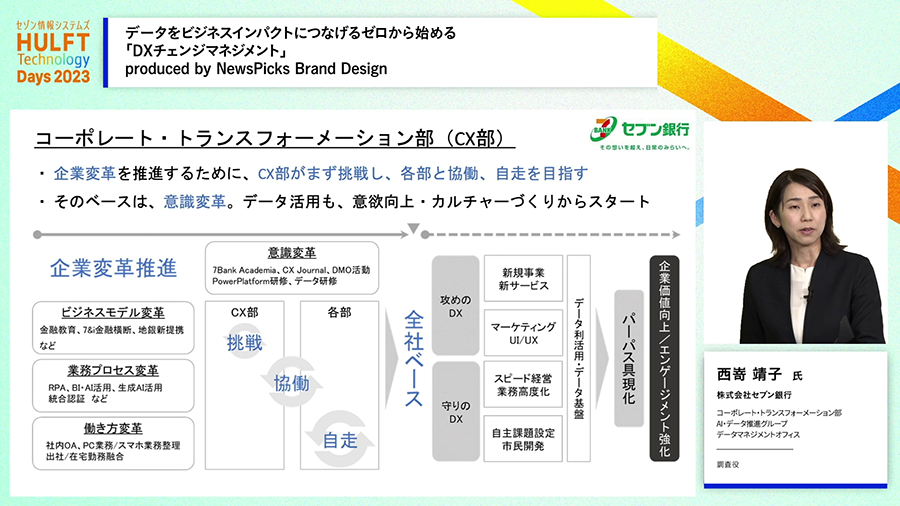
They are working to transform the company and realize DX, and are not just working on technical aspects related to data, but also on changing the corporate culture, changing employee awareness, and increasing motivation and culture so that the organization can take on new initiatives.
The company aims to ensure that everyone has the basic skills to utilize data, and then have highly skilled experts work on full-scale data utilization. To achieve this, it has introduced BI tools to all employees to work on data utilization, and has established a data platform that collects various data in a timely manner and can also use AI, enabling it to carry out advanced initiatives.
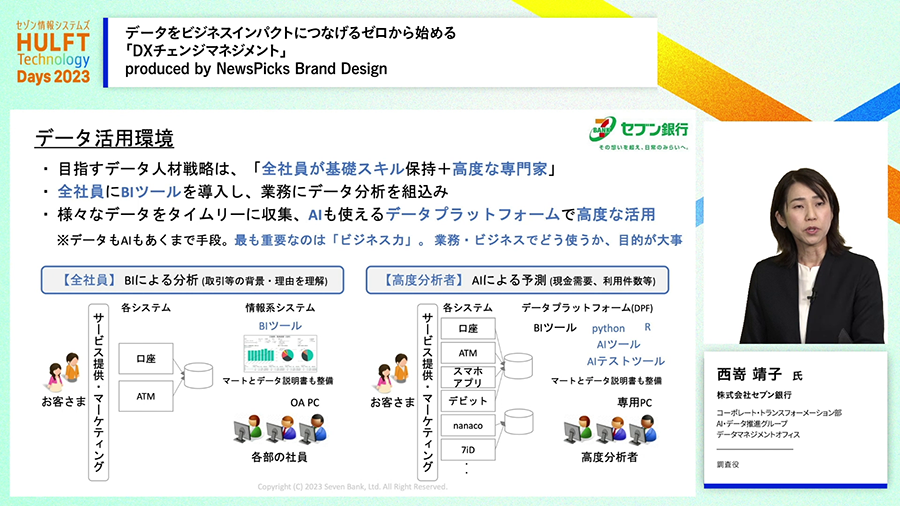
How is the company's data infrastructure being utilized to achieve results?
Next, each company introduced how they are utilizing the data infrastructure they have developed to achieve results.
They believe that the motivation to use data and the company's internal culture are the most important things, and they are focusing on efforts to improve these. They also have systems in place to make it easy to use data and tools when someone wants to use it, and to provide support when there is something they don't understand. A year and a half after launching an internal community to create a culture, they have been able to grow from a starting point of zero members to 248, increasing motivation to use data and improving skills. They also said that the data utilization environment is gradually being put in place.
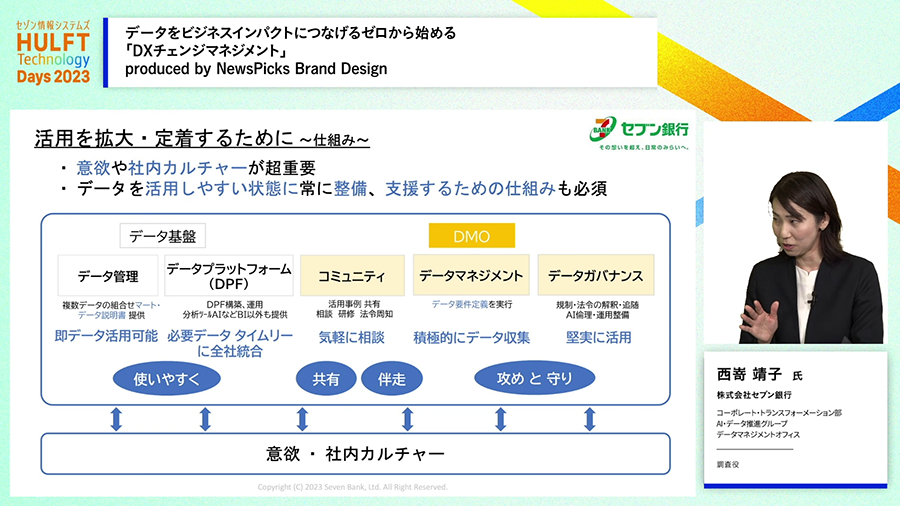
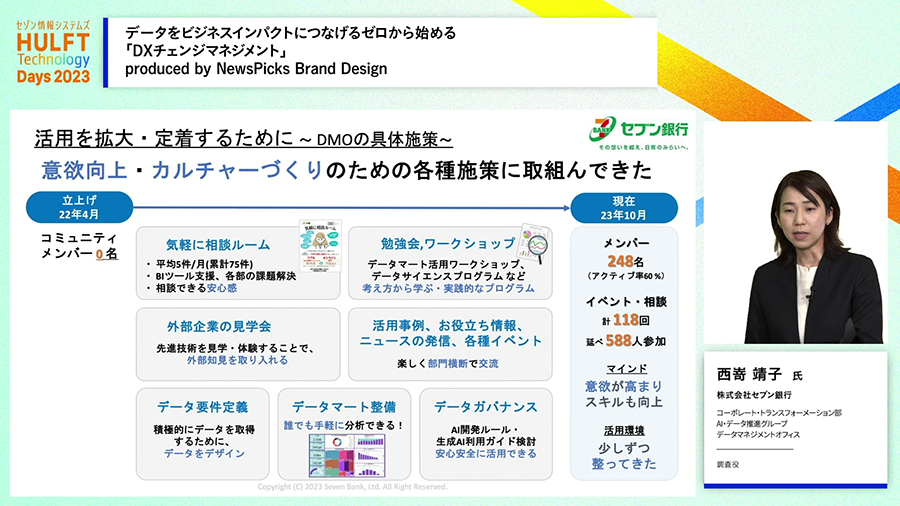
I think it's important to have a culture where people say, "We need this, let's make it," and to have a culture where people are willing to give it a try first, and where people can teach each other. When you try to do something, it's easy to get stuck, have bugs, or not know how to operate it. Instead of giving up at that point, I'm trying to create a culture where everyone can learn and teach each other.
At GooDay, everyone gathers every Wednesday from 5 to 6 p.m. to hold a dojo for Tableau, the BI tool that has been adopted company-wide, where they teach each other. The person at the center of this use has gone so far as to answer several questions from external users on the Tableau forum every week, and has even been recognized as a global ambassador. This kind of "culture of teaching each other" was not actually possible in the store's main business, but after working on data utilization, it has become possible there as well.
Next, we look at the efforts of GooDay, which has also set multiple skill levels for data utilization and implemented it company-wide, as well as working to develop high-level human resources.
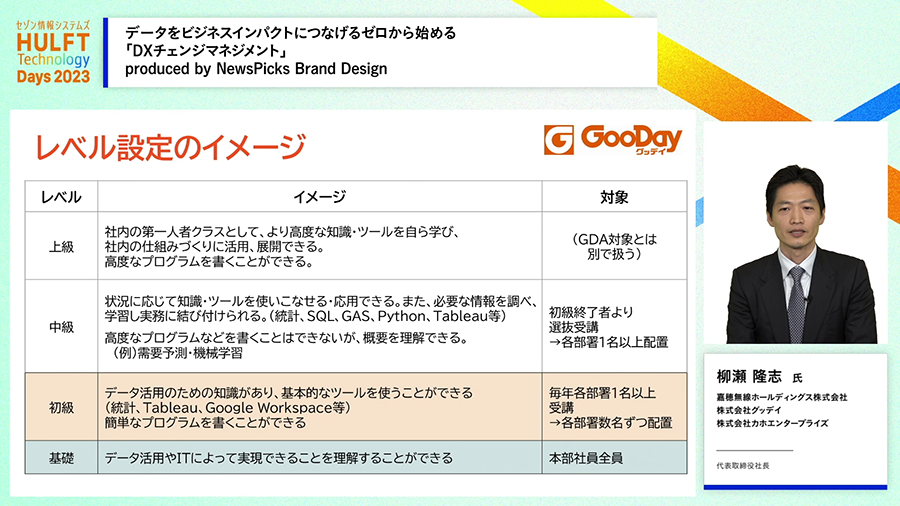
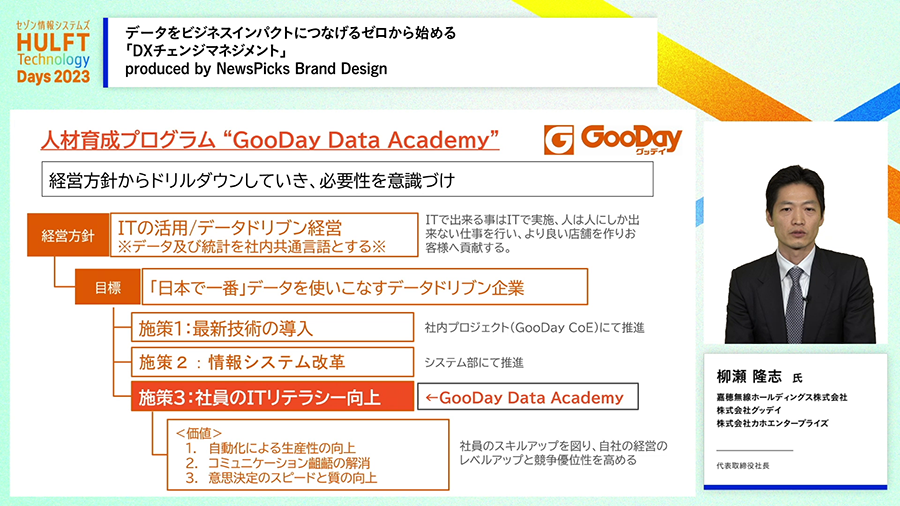
Everyone is required to have a basic understanding, and the skills set include the ability to use data using Tableau, which was mentioned earlier, as an introductory level of data utilization, intermediate skills such as understanding statistics, being able to write SQL and being able to use simple Python, and advanced skills such as being able to take on advanced challenges as a leader within the company.
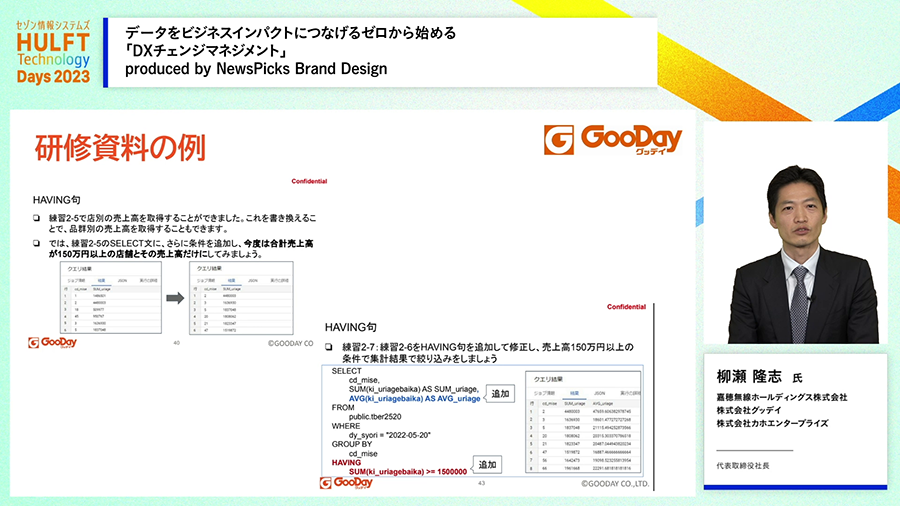
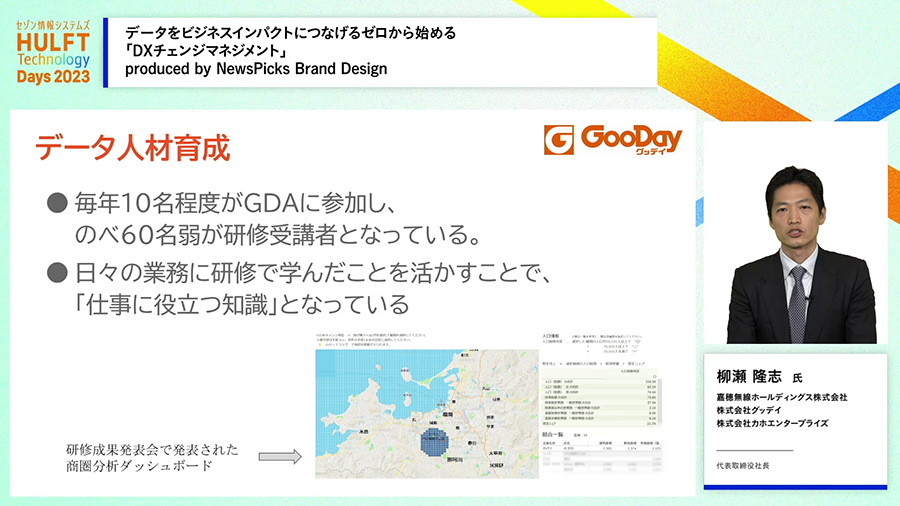
In training, for example, participants learn SQL using examples of analytical tasks that are likely to be needed in practice, and practice this for several hours each week during work hours for six months. At the end of the training, they apparently hold a presentation, and while many of the first presentations simply visualize data and are lacking in quality, participants were able to create something useful by providing comments and brushing up on the presentations. They said that it's important to actually do it, since you won't realize what you want to do unless you try it, and you won't know who to ask or what to ask.
Examples of successful results achieved through data utilization
Finally, we will introduce examples of how companies have achieved results by using data.
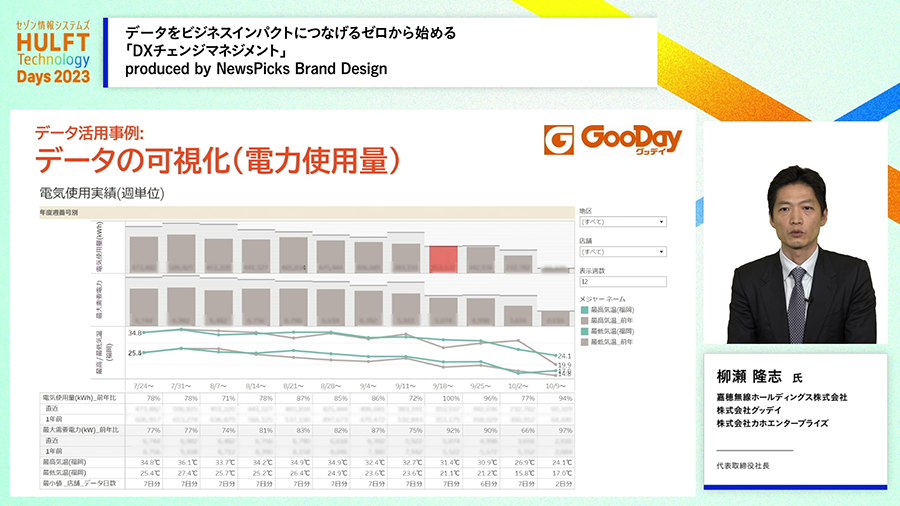
Recently, electricity bills have suddenly risen, causing problems for many companies. Good Day was also told that its electricity bills would increase by 40%. They therefore visualized data for each store every 30 minutes, aiming to reduce electricity usage by 20%, and in the end they were successful in reducing it by more than 20%.
Although the refrigeration in the refrigerated display cases cannot be turned off, the lights can be turned off, unnecessary electricity is turned off, and air conditioners are run in energy-saving mode. This is an example of how behavior changed when data was visualized, and what's more, being able to see the actual results of the improvement efforts in the data three days later was said to have motivated employees, and this alone had an impact of tens of millions of yen.
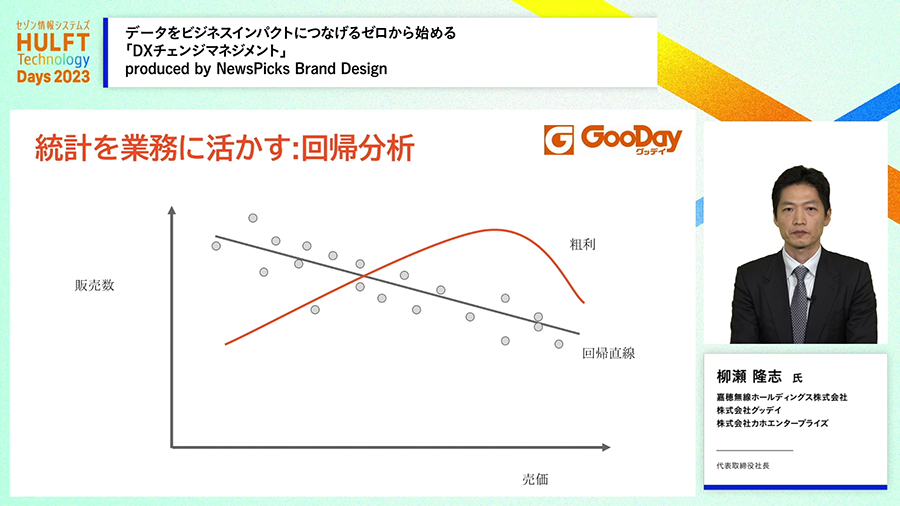
Next, they are working on using it to forecast sales and profits. They use regression analysis to determine what sales will be at different prices, and then find the price that maximizes gross profit. Regression analysis is not difficult, and many people know about it, but it is difficult to take it to the point where it can be put to practical use, even though it is useful in this way.
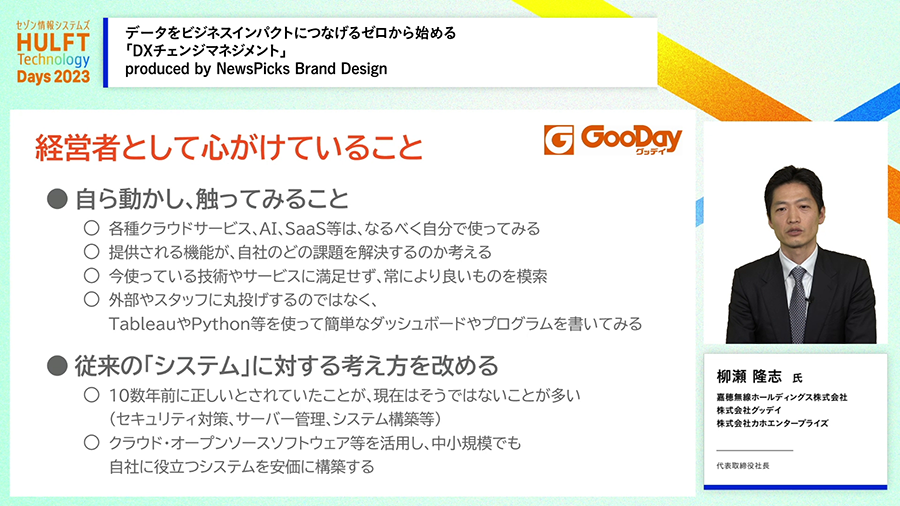
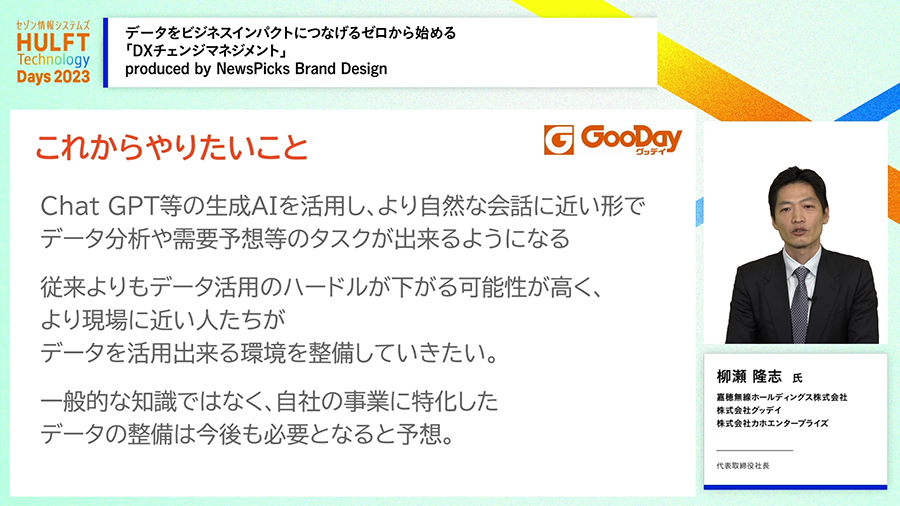
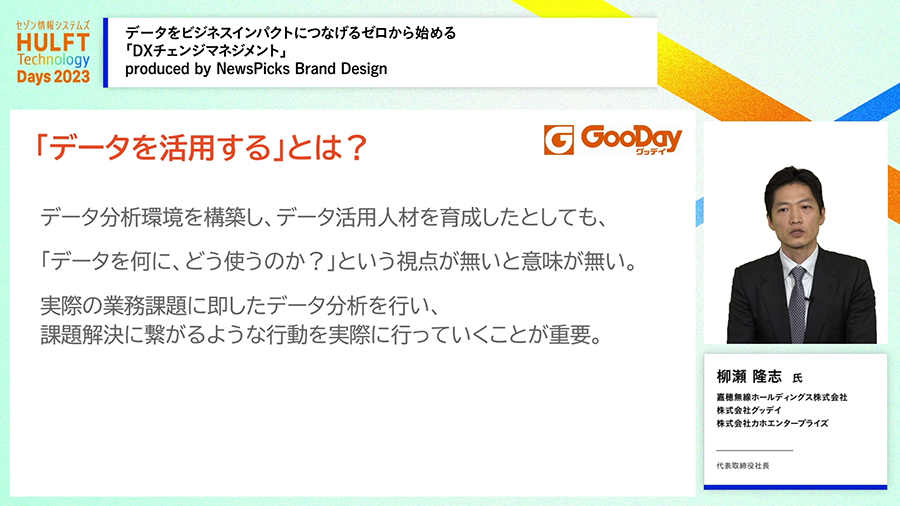
Although he is a manager, he is trying to gather information by using IT himself and understanding it. Knowledge helps him make decisions about its introduction and can be put to use in the company. Also, regression analysis is easy to perform, so it is not proposed as a project from outside, but if you understand the concept and how to do it, anyone can implement it and it will be useful to the company. Such things are useful, but they are not proposed from outside, so they have to do it themselves. He actually tries out such things and experiences them for himself. He thinks that it is more effective for those at the top to understand and pass it down to the lower levels, rather than having experts propose it from below.
In the future, they also plan to use ChatGPT to help people visualize data.
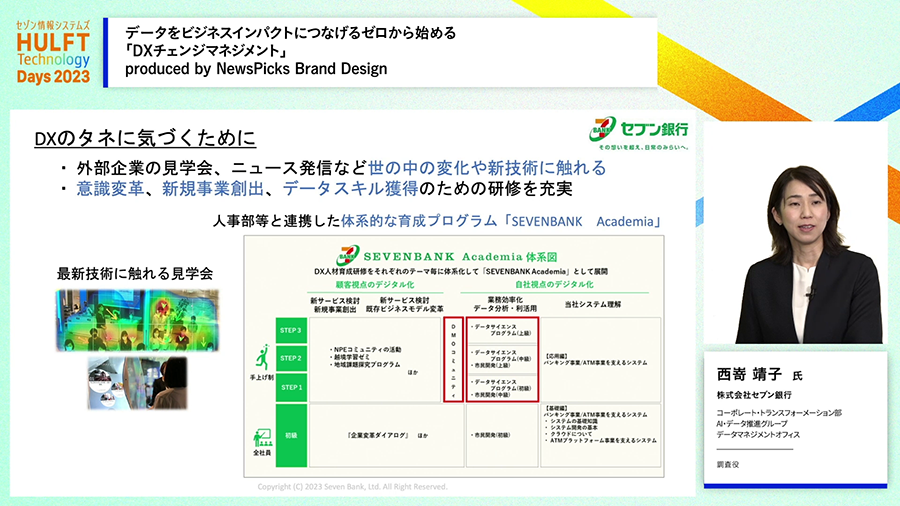
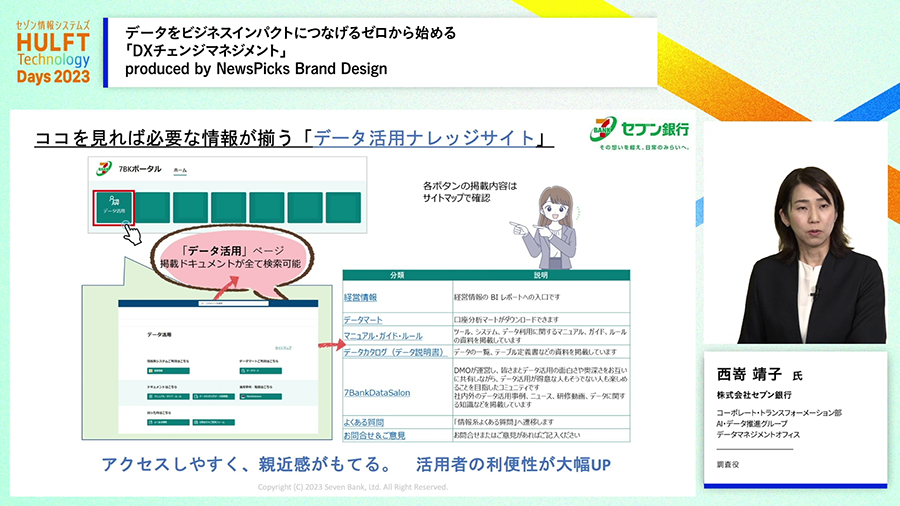
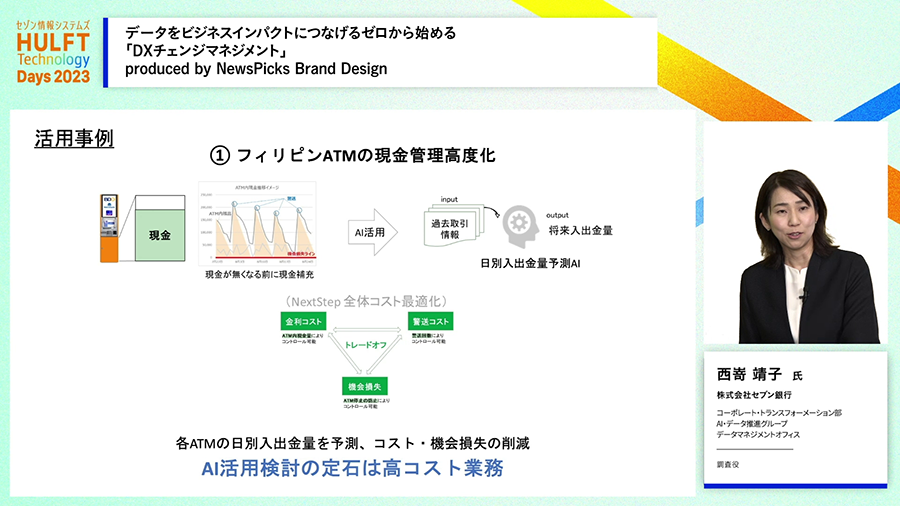
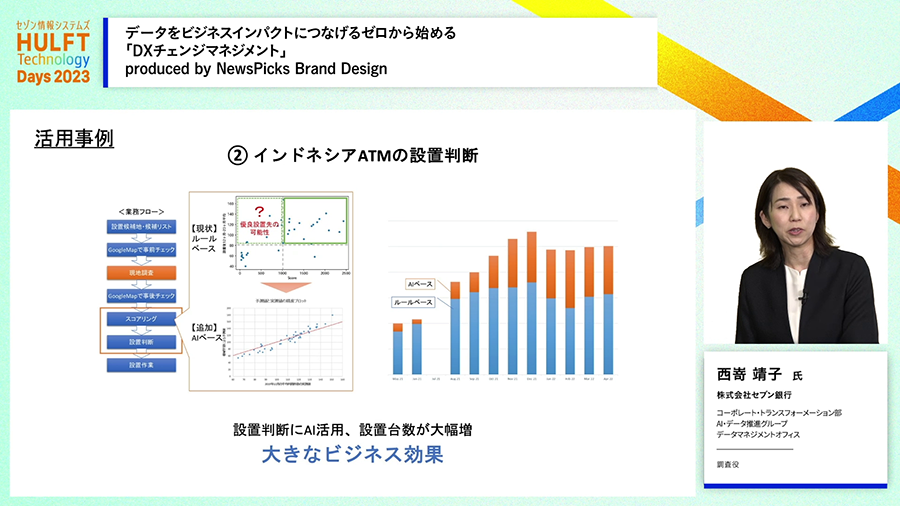
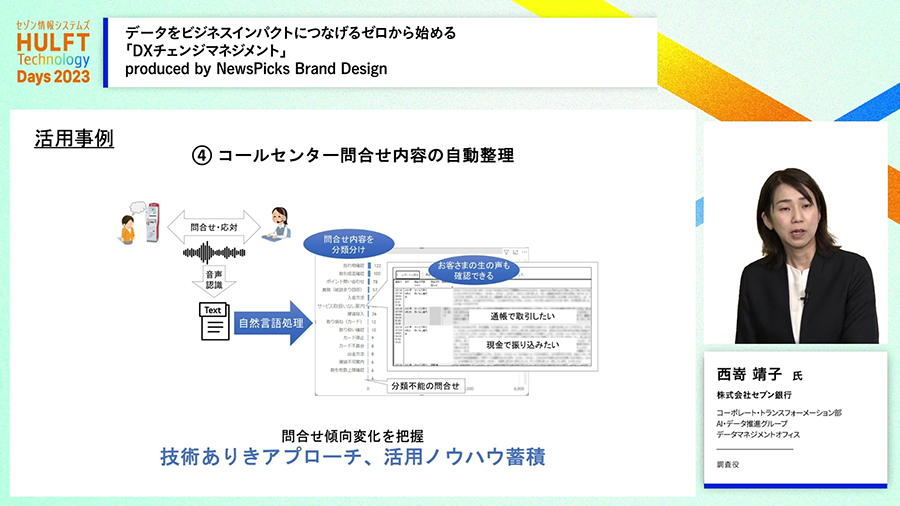
And finally, let's look at the efforts being made by Seven Bank. In order to achieve results with DX and to help employees become aware of the seeds of success, they are exposing them to changes in the world and new technologies through news and other means. They are also working to improve data skills through awareness reform and systematic training under a comprehensive in-house training system. They have also set up an internal portal that collects information that makes it easy to work on data utilization, such as links to BI reports, links and explanations to where the data is located, and ways to research unknown points.
As a result, efforts were introduced to optimize cash replenishment in ATM machines in the Philippines, decisions on ATM installation in Indonesia, and the realization of automatic sorting of inquiries at call centers. Furthermore, they stated that they will continue to work on this with the aim of establishing data utilization at each site.
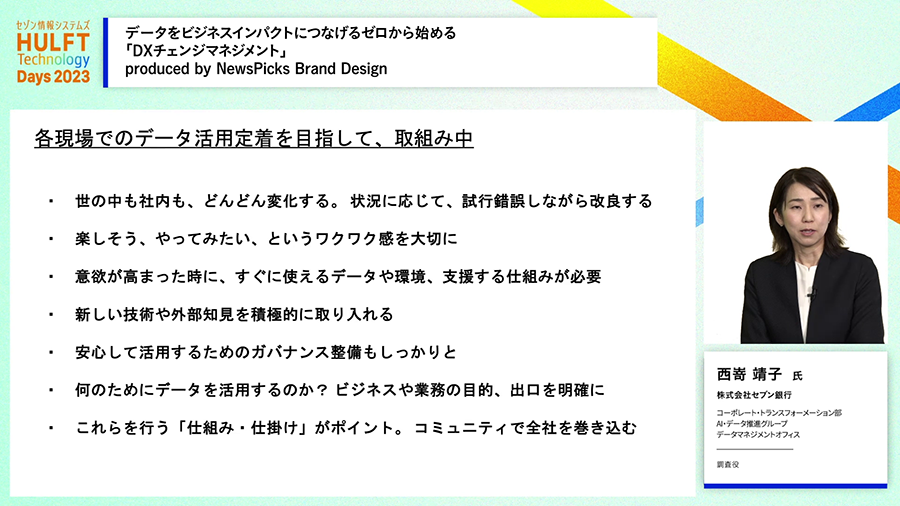
Finally, we asked for a message for those who are not making good use of data.
His final advice to everyone was that it is important to be interested in and try out the data, that it is important to try it out first, that you will see things by trying it out, and that it is okay to fail, so just give it a try and move forward little by little.
Key points for calculating and reducing CO2 emissions throughout the sponsor supply chain and decarbonized management using "Asuene"
Mr. Yoshihiro Iwata
Co-Founder, Director and COO of Asuene Inc.
Next, we will introduce the session by Asuene. The topic was related to greenhouse gas emissions, which has been covered in other session reports, and the basic circumstances are the same here.
While addressing environmental issues is often thought of as something that requires a certain mindset, it is now becoming an unavoidable issue in practice. This session also introduced the significant impact of making climate change risk disclosure mandatory for companies listed on the Tokyo Stock Exchange Prime Market. In the future, it is possible that this obligation will spread beyond the Prime Market.
When calculating emissions, the scope is divided into "Scope 1," "Scope 2," and "Scope 3," and we were given an explanation of what each of these is. Emissions from a company's production activities and the production of raw materials are easy to understand, but Scope 3 is more difficult as it covers a wide range of emissions, including emissions from travel for business trips and emissions from product distribution and disposal. Whether or not companies are calculating this difficult Scope 3 will likely become important in future transactions between companies, according to the presentation.
Even if a company is not required to calculate and disclose its emissions, it may find that its large business partners require this data, or that there will be a movement to improve its own emissions by doing business with suppliers with low emissions. If this happens, companies may find themselves losing their business partners to other companies in the future unless they are able to calculate the emissions required by their business partners. In fact, there are already movements to require suppliers to calculate and reduce their emissions.
Emissions are calculated by multiplying consumption by a coefficient per unit of consumption. For example, electricity consumption is multiplied by the standard coefficient for electricity in Japan. However, this does not show the difference in results between purchasing from suppliers that are advanced in environmental measures and those that are not.
This is not good for companies that want to reduce emissions by selecting suppliers, nor for companies that want to gain a competitive advantage over others through energy conservation. Calculations must be made using individual coefficients. And to do this, companies must be able to accurately calculate their own emissions and provide them to external parties.
In particular, it was explained that when calculating indirect emissions in Scope 3, where relationships with other companies become more significant, activities are classified into 15 categories, and calculations must be made using the appropriate calculation method for each. Even when calculating across the entire supply chain, a wide range of activities, from procurement, production, distribution, sales, and disposal, must be covered, and the necessary information must be obtained and calculated.
Asuene offers products that support such laborious emissions calculations and also provides related consulting services. It also offers products that perform similar checks on other ESG factors, such as human rights (such as checking whether there are any production activities in the supply chain that ignore human rights).
Finally, they also introduced how the system can be used in combination with HULFT Square, our "connecting" product. Asuene's product allows for easy-to-understand calculations of emissions using a sophisticated UI, but calculations require data to be the basis for the calculations, and as explained above, calculating emissions requires the collection of a huge amount of data related to corporate activities.
The necessary data is scattered across internal systems and various cloud services, and the data formats vary. By automatically collecting this data using HULFT Square, converting the data format, and linking it to Asuene's system, the amount of work required to compile the data is significantly reduced, calculation errors are reduced, and accurate figures are more easily obtained.
Sponsor electronic seal realized by GMO Sign Service collaboration to change contract procedures and promote digital transformation
Mr. Hirofumi Sato
Chief of Partner Group, Sales Section, Electronic Contract Business Division, GMO GlobalSign Holdings Inc.
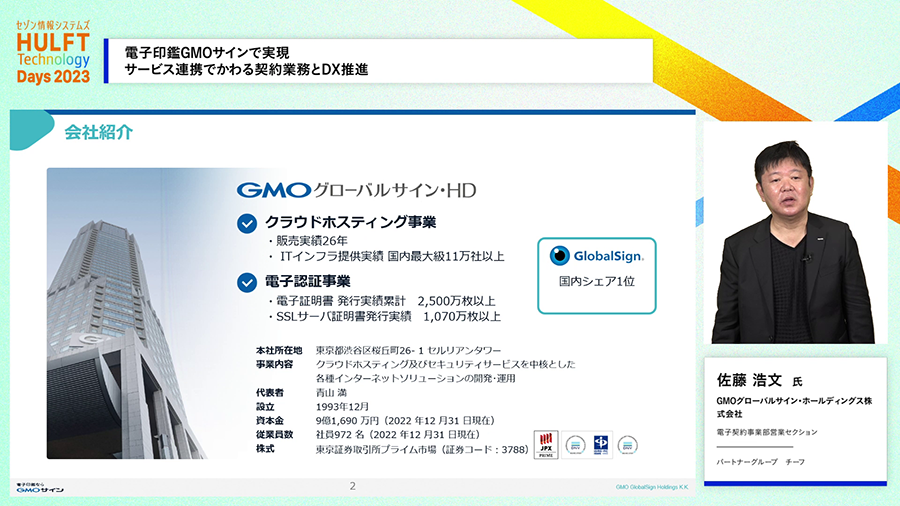
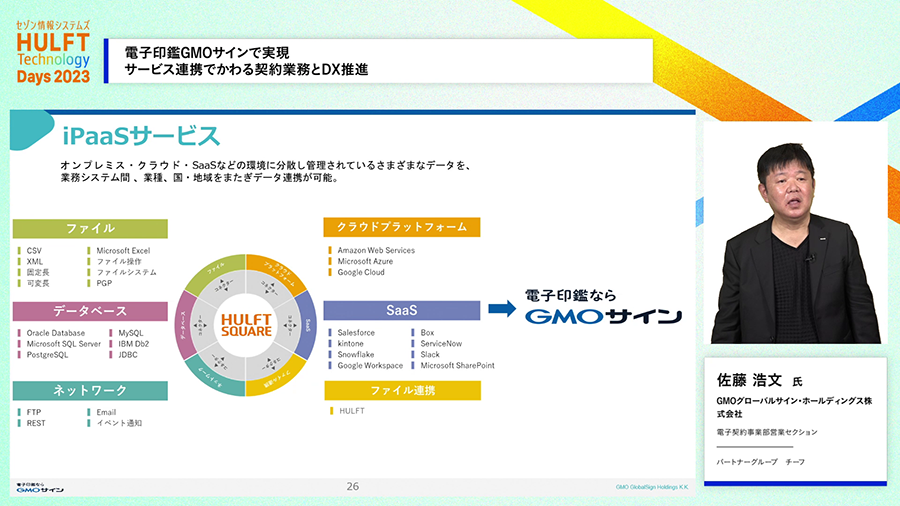
The next session was about electronic signature services, a technology essential for achieving a paperless society. First, we were given an introduction to the company's history. Before offering the electronic signature service, the company first ran a cloud hosting (i.e., rental server) business, and from there provided a service to provide server certificates. The electronic signature service is based on this initiative.
Currently, the government is working towards a policy of digitizing over 500 administrative procedures, which accounts for 90% of all administrative procedures. Local governments are also beginning to adopt electronic contracts, and even the private sector is moving towards paperless transactions and borderless transactions with overseas countries. There are situations where electronic transactions are necessary.
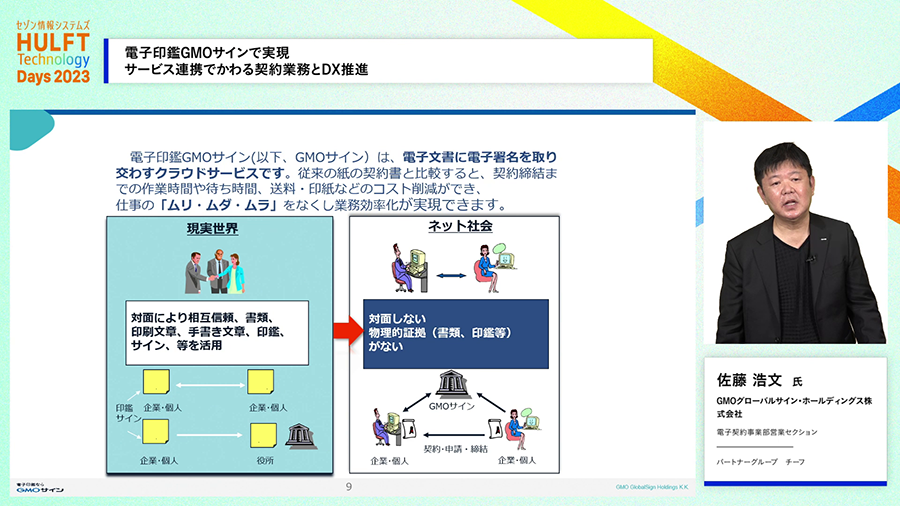
At first glance, digitization may seem easy to achieve. It may seem like it's okay to send a Word document as an attachment, or like it can be achieved by simply scanning a traditional contract. However, electronic data has the problem of being easily copied and altered. This makes it difficult to prove who created the document, whether it has been tampered with, or whether the contents of the document have been agreed to. This can cause problems, such as making it difficult to enter into contracts with other companies that are necessary for business.
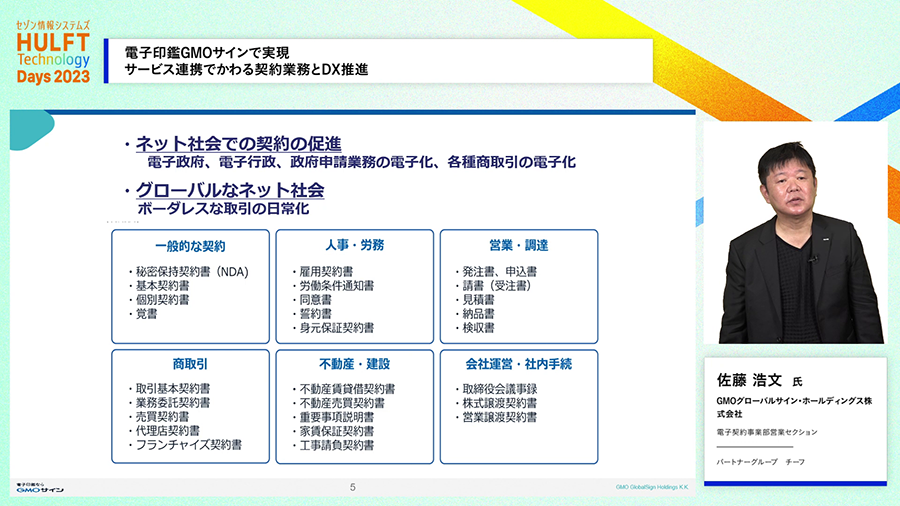
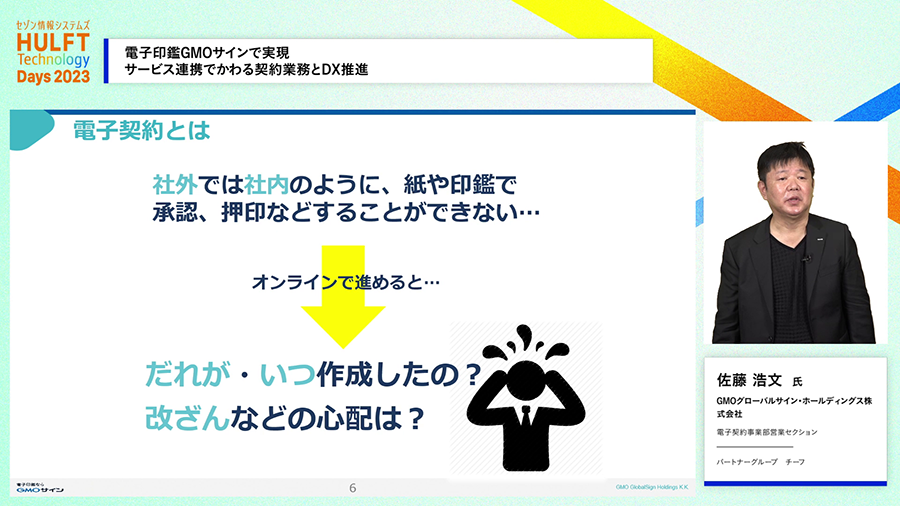
It is difficult to reproduce paper documents exactly as they are, and this has been addressed by signing and stamping documents. Even if a paper document has a signature and stamp, if it is scanned and digitized, there is a possibility that the content can be altered by image processing, or that a document that does not exist can be made to appear as if it existed. This may also be the reason why paper processing has tended to remain despite the advancement of IT.
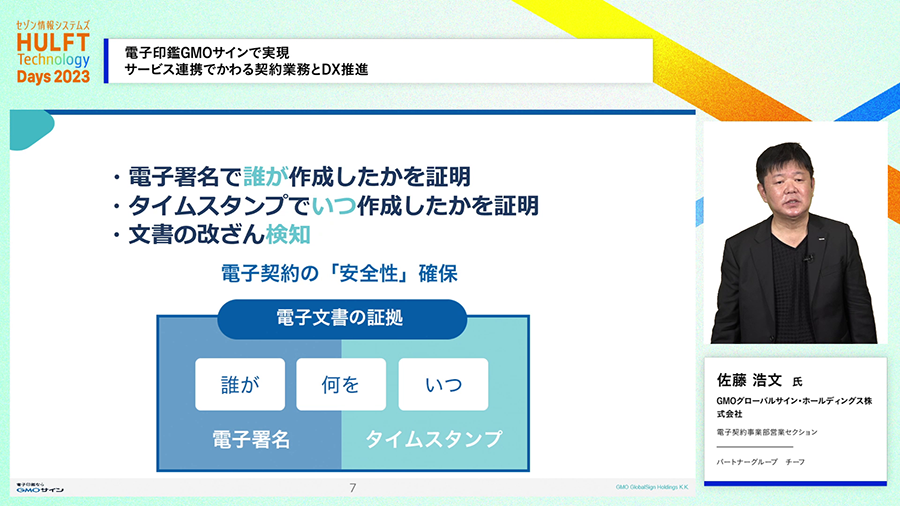
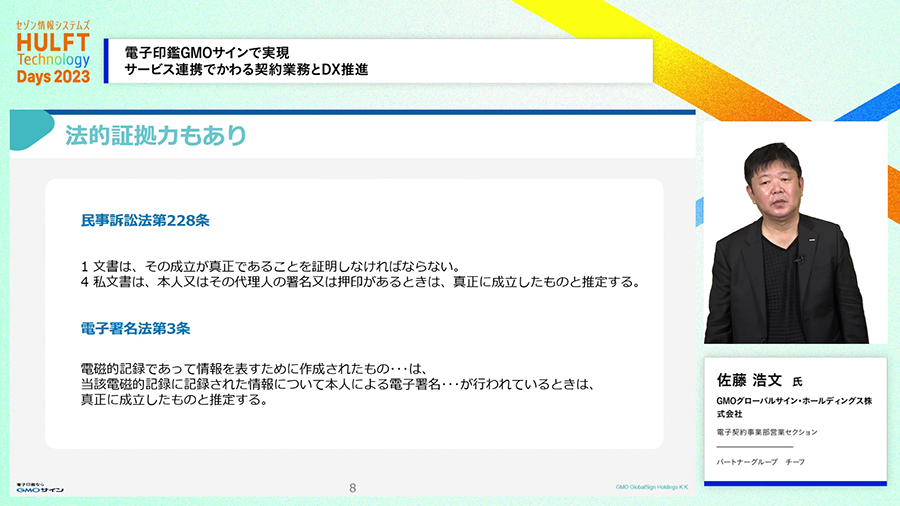
Therefore, electronic signature services use encryption technology (public key cryptography) to make it possible to verify things like "I created this document" or "I agree to the contents of this document." Even the slightest change to the content can be detected, so tampering can also be detected. Because this is a technical solution using encryption technology, in a sense it can be said to be stronger than traditional seals and signatures.
Furthermore, timestamp services (services that leave evidence that the data existed at a given time) are now being used to verify when it was created. Legally, electronic signatures are now treated the same as declarations of intent made by signing and sealing, and progress has been made in society to create an environment in which business can be conducted using electronic signatures.
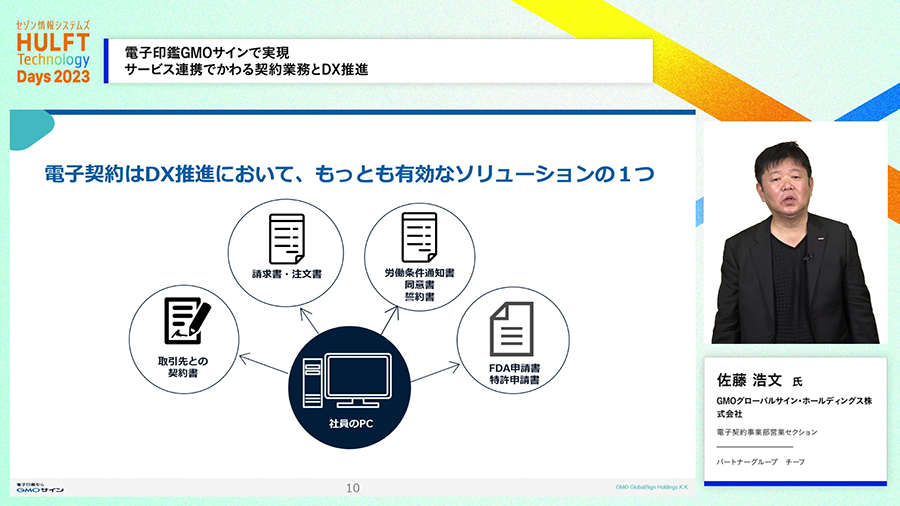
Eliminating paper is an environmentally friendly solution, improves work efficiency, makes remote work possible, and makes it easier to conduct borderless transactions with overseas companies. Traditional paper-based contracts require a great deal of work not only from the legal department, but also from the sales and development departments. Furthermore, the time required to get approval from the workplace to the president on paper is time-consuming, which becomes an obstacle to speedy transactions.
He said that utilizing electronic signature services is one of the most effective ways to promote digital transformation and is highly recommended.
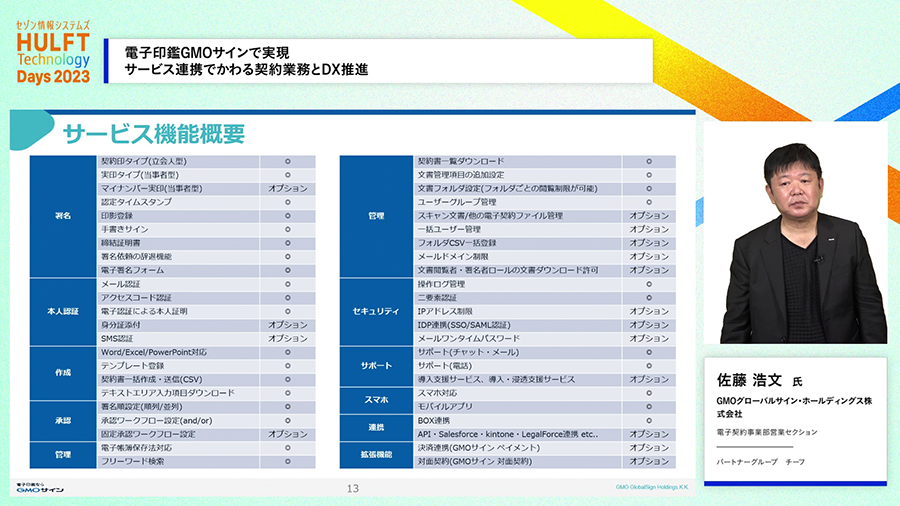
As explained at the beginning, we didn't start our electronic signature service from scratch. We have a long history of operating an electronic certification authority that provides "https" server certificates, and we leverage that technology and experience to provide a safe and secure service. For example, we implement measures to prevent the theft of the certificate authority's private signature key and constantly train ourselves to respond in the event of an incident. We incorporate these advanced measures to ensure safety and security into our electronic signature service.
We are adding new functions at a speed not seen by other companies, and our service that offers both contract seal type (witness type) and official seal type (party type) is rare. We also provide free support to those who do not have an account, eliminating any concerns and allowing users to use the service with peace of mind. We are working hard to improve the functionality of our service.
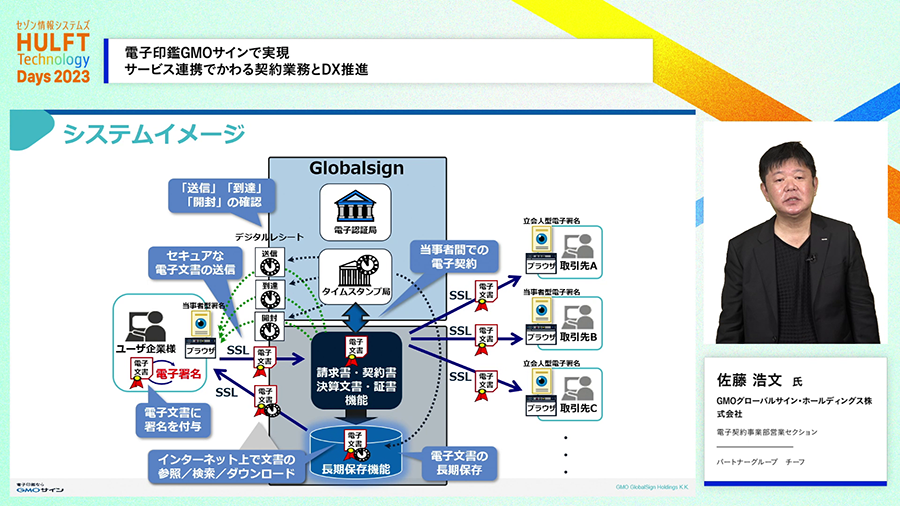
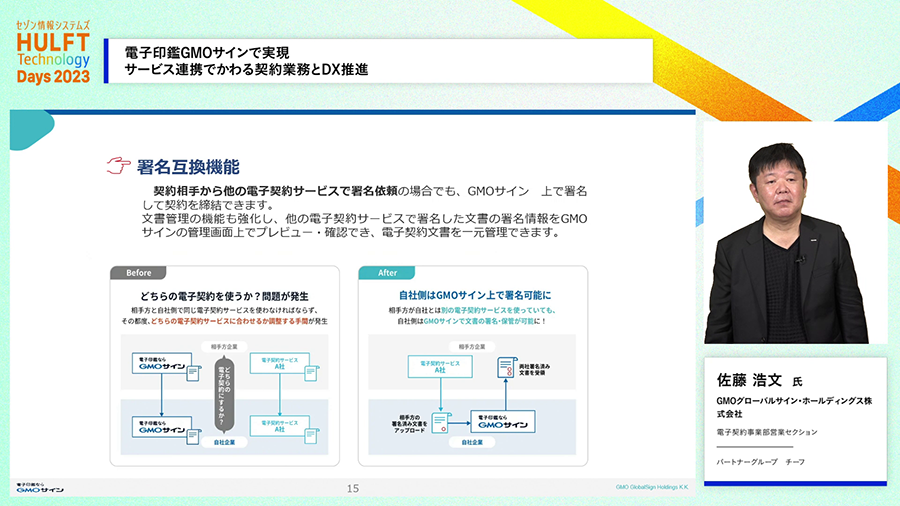
Furthermore, we also offer a convenient service that allows you to conclude contracts on GMO Sign even with documents that have been digitally signed using other companies' digital signature services, and allows you to centrally manage documents.
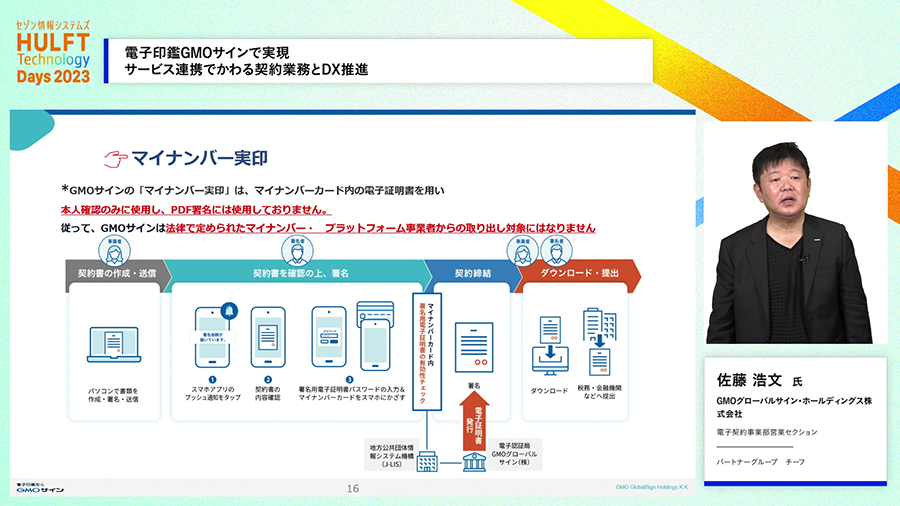
There is also a function that verifies identity with a My Number card and allows users to sign with it. The key point is that the My Number card itself is not used for signing, which allows for secure use for a long time. If information derived from the My Number card were used for signing, signed documents would not be able to be saved on personal computers, and if the service were to end, contracts could be ruined. This is a way to prevent such a situation.
In addition, even if a signature is not required, it can be used with just the timestamp.
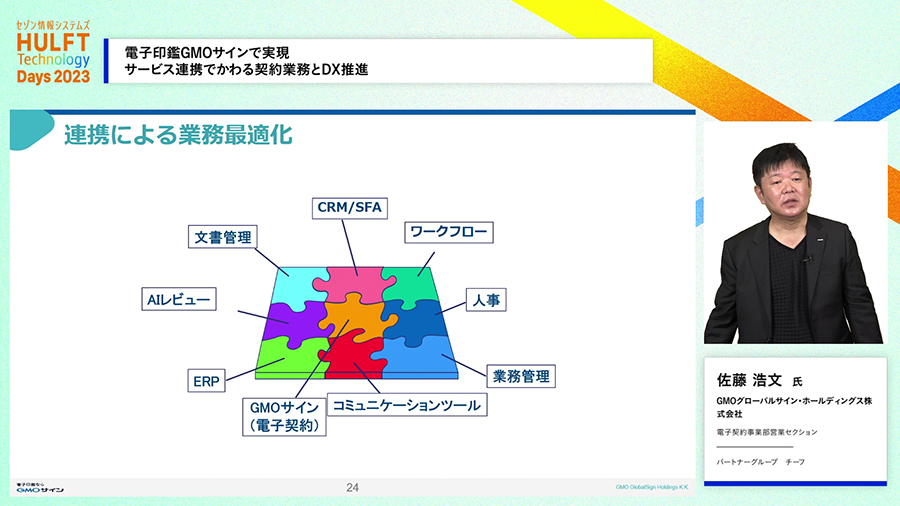
Electronic signature services are not used on their own; they must be used to attach electronic signatures and timestamps to documents generated through various other IT applications. Therefore, they must be used in conjunction with various internal systems and cloud services. GMO Sign itself partners with many services and supports integration with other services, as well as with the iPaaS HULFT Square. HULFT Square allows you to freely integrate and use a variety of internal and external data, and can even be used in conjunction with electronic signatures.
The key to streamlining sponsorship operations is collaboration! How to create valuable time to focus on core tasks
Junpei Kuroda
Atred Co., Ltd. Business Promotion Department Manager
In the next session, we were introduced to the use of workflow systems.
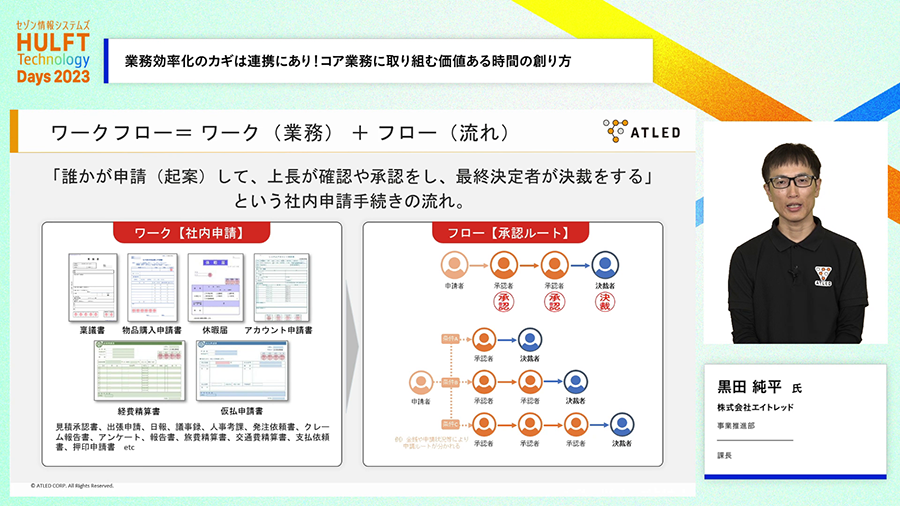
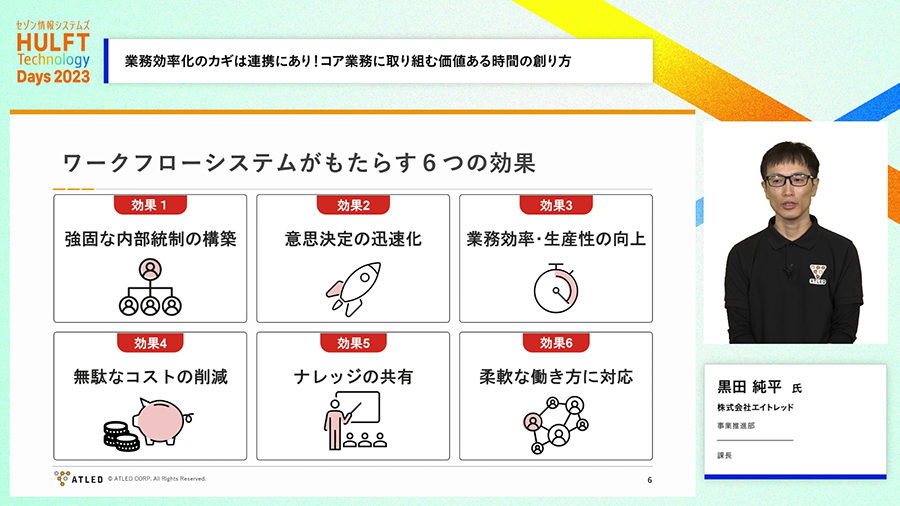
A workflow system is an IT system that manages the flow of work that spans multiple personnel, such as application flows. Workflow systems are characterized by the fact that they are used by all employees regardless of department or position, and are responsible for important tasks related to corporate decision-making. For this reason, many benefits can be expected from utilizing a workflow system.
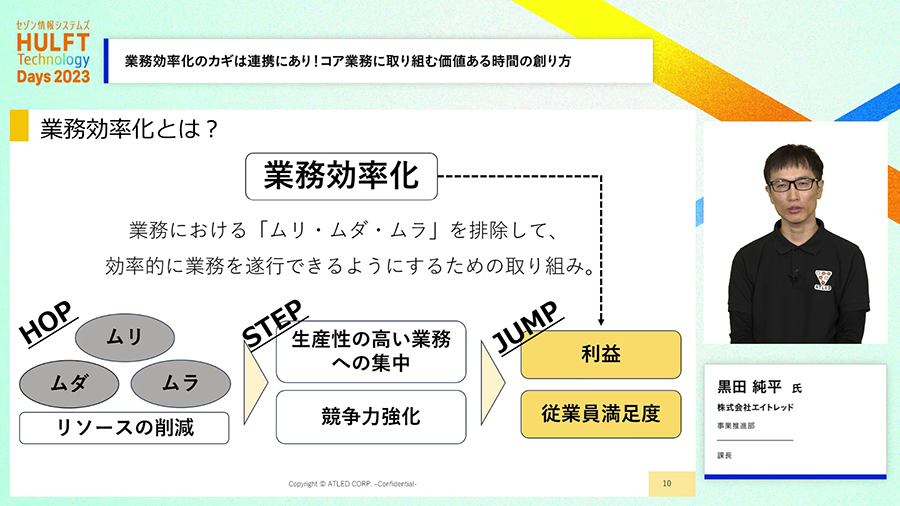
It is said that introducing IT will improve business efficiency, but what does that mean specifically? When I looked into it, I found that it is a system that enables work to be carried out efficiently by eliminating "unreasonableness," "waste," and "inconsistency" in work.
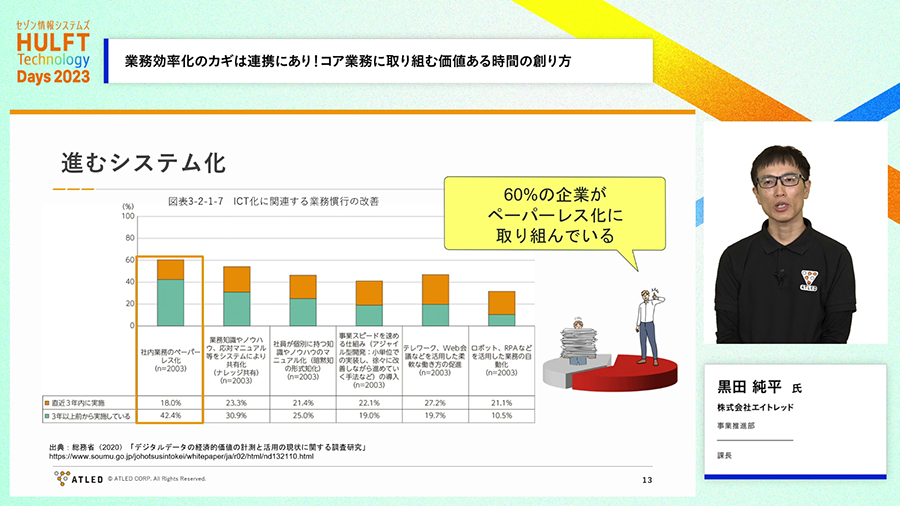
Nowadays, many companies are working to improve business efficiency by introducing IT, and various surveys have shown that many companies are working to go paperless. However, does going paperless actually improve business efficiency? Here are some interesting survey results.
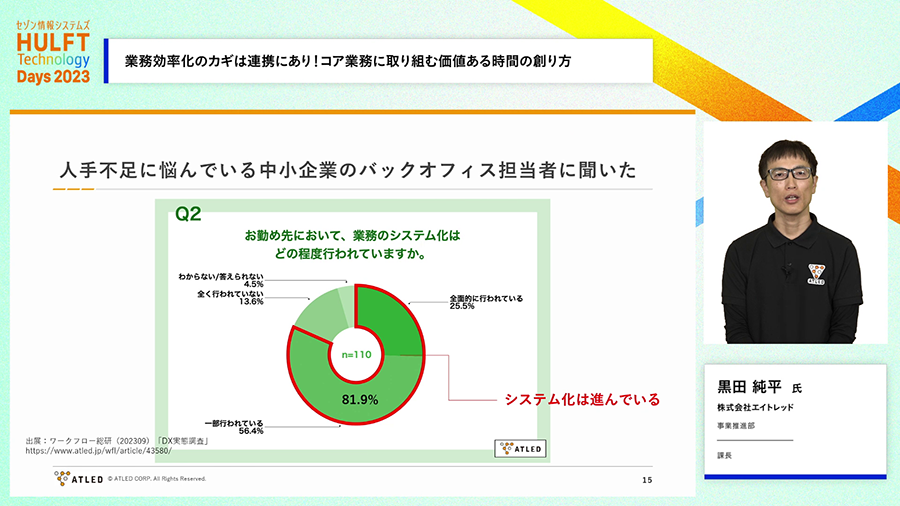
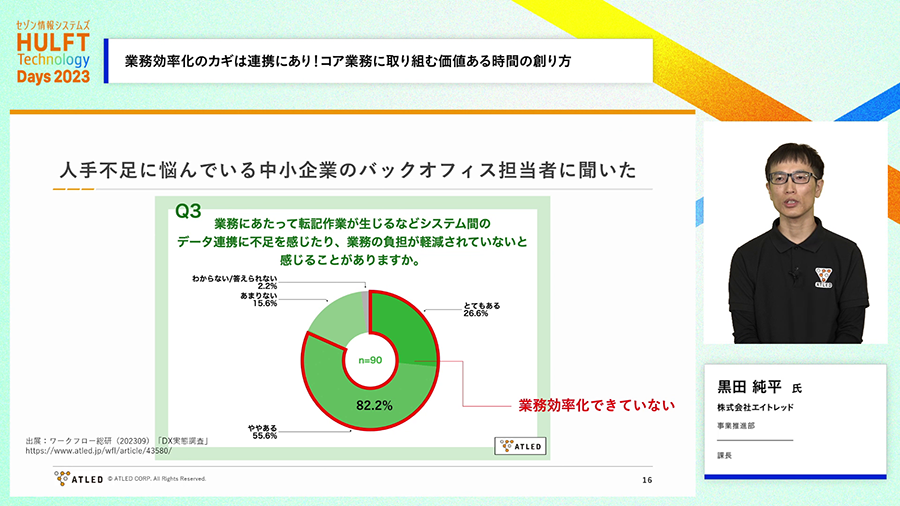
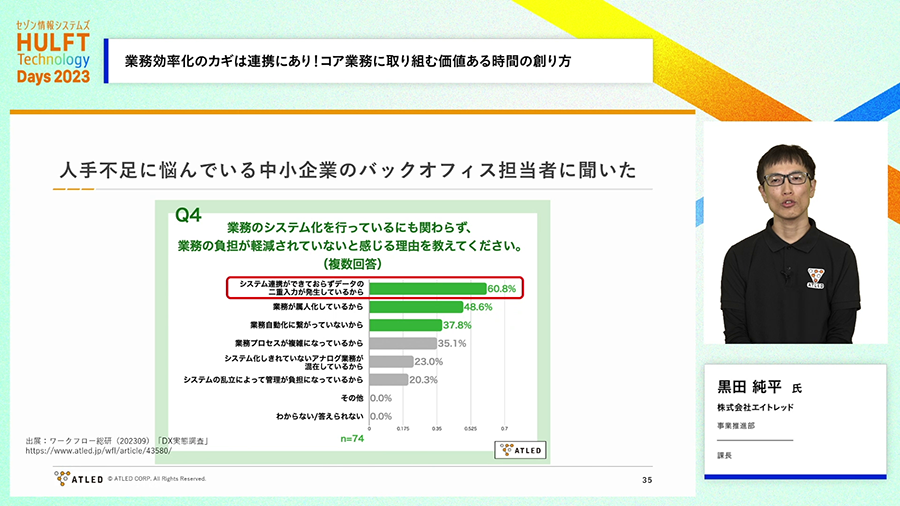
When we asked back office staff at small and medium-sized enterprises, many of them responded that while systems have been developed, the workload has not been reduced and they have not been able to improve work efficiency.
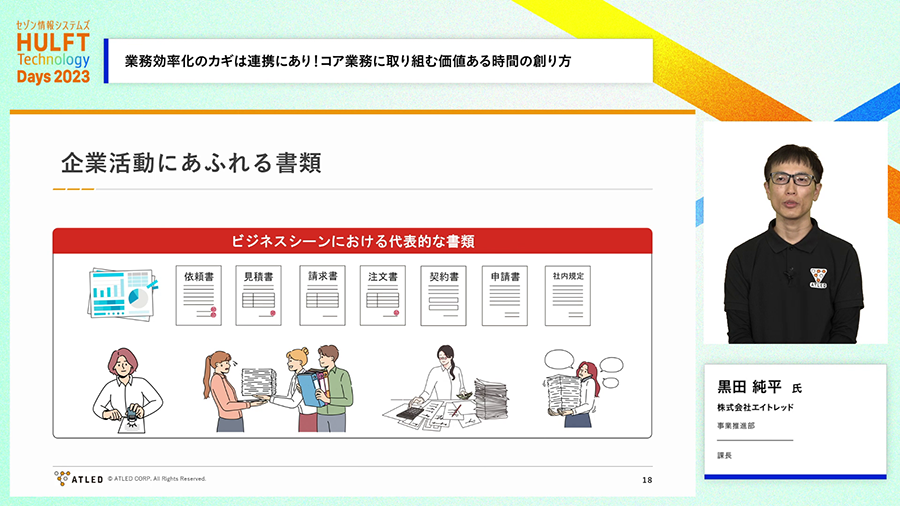
Corporate activities are overflowing with paper-based paperwork, whether it be paper documents or Word or Excel files. Simply digitizing paper documents will leave many of the paper-related tasks untouched. As a result, the work efficiency of the back office staff responsible for such tasks will not improve.
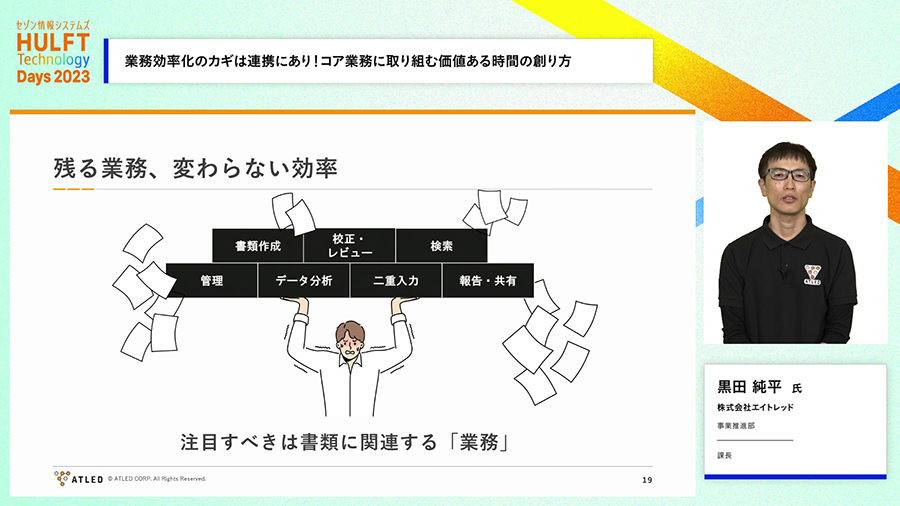
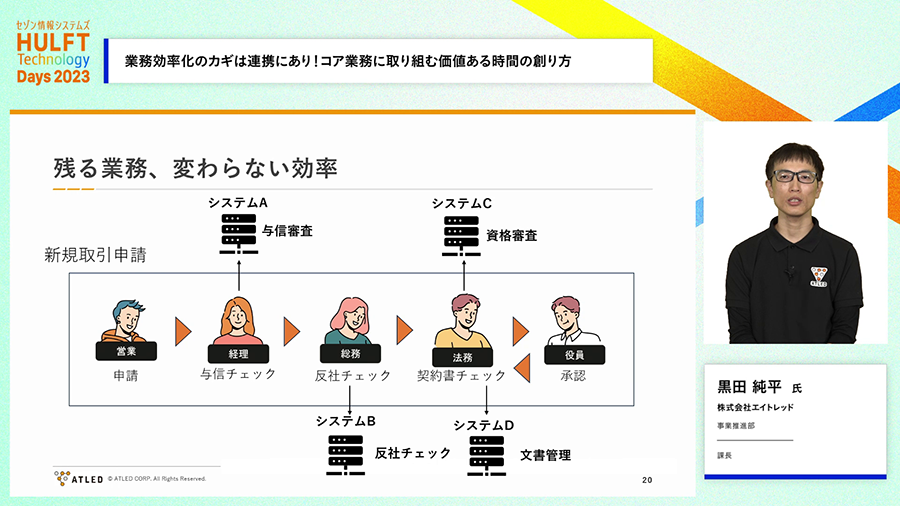
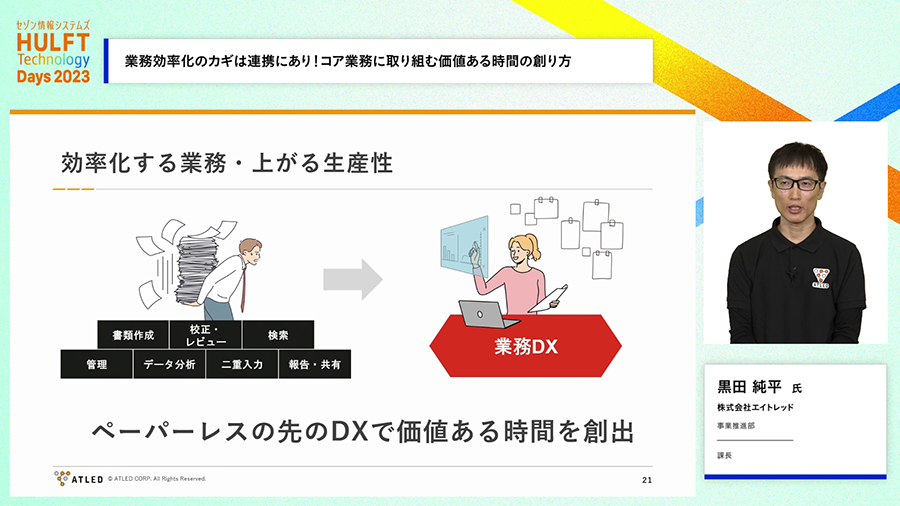
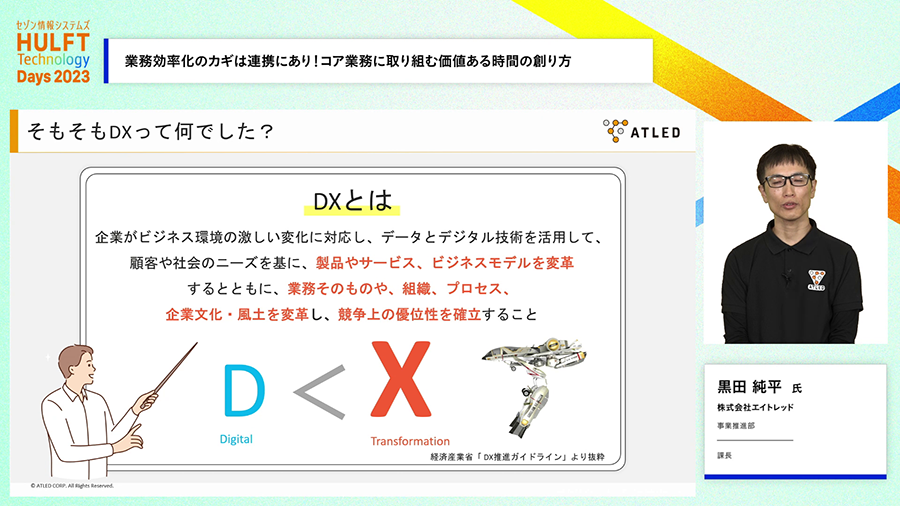
If you simply digitize the documents, the process after they arrive will remain the same, and each person in charge will have to refer to various systems to carry out their work. This process is not much different from when using paper documents. DX is not simply about digitalization, but about achieving transformation through digitalization. Unless you improve this, you cannot say that you have transformed your business operations digitally.
Additionally, surveys have shown that the average number of SaaS services implemented per company is now 8.7, and this number is expected to continue to increase. As a result, problems often arise as to how to use the similar functions offered by each cloud. In particular, many cloud services now offer workflow-like functions. As a result, different departments or tasks use different cloud workflow functions, which can be confusing for users and increase management costs for administrators.
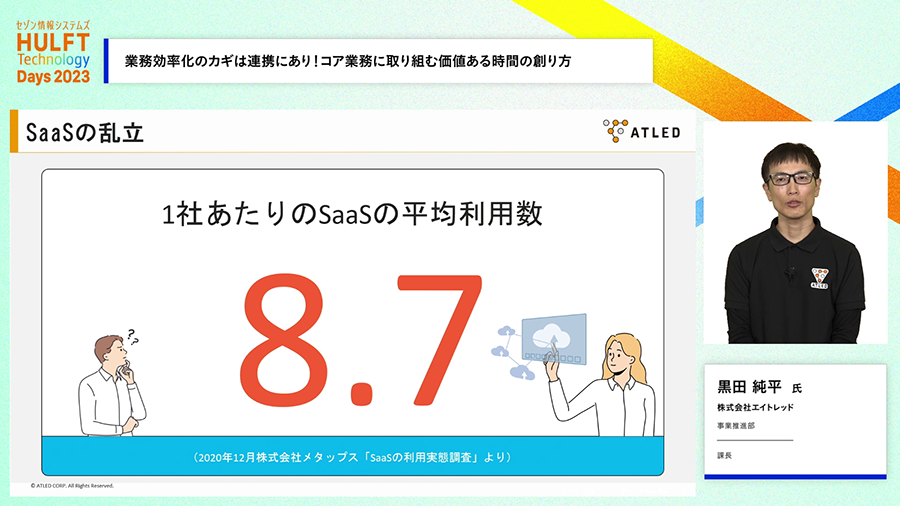
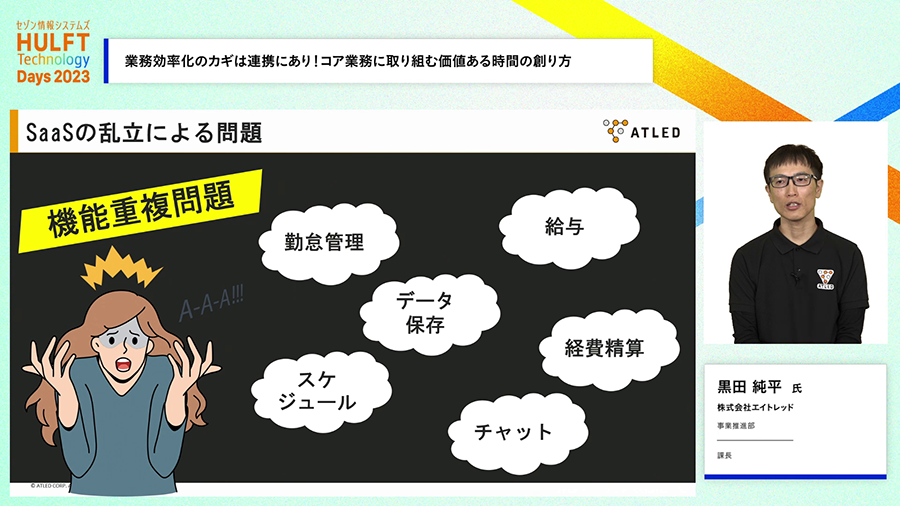
The survey also pointed out that the reason why work efficiency has not improved despite the introduction of systems is the need to enter data twice into various systems.Attread believes that although many cloud services now have workflow functions such as approval flow functions, it would be better to introduce a dedicated workflow product with solid functionality and standardize the use of workflows there to reduce the problem of double entry.
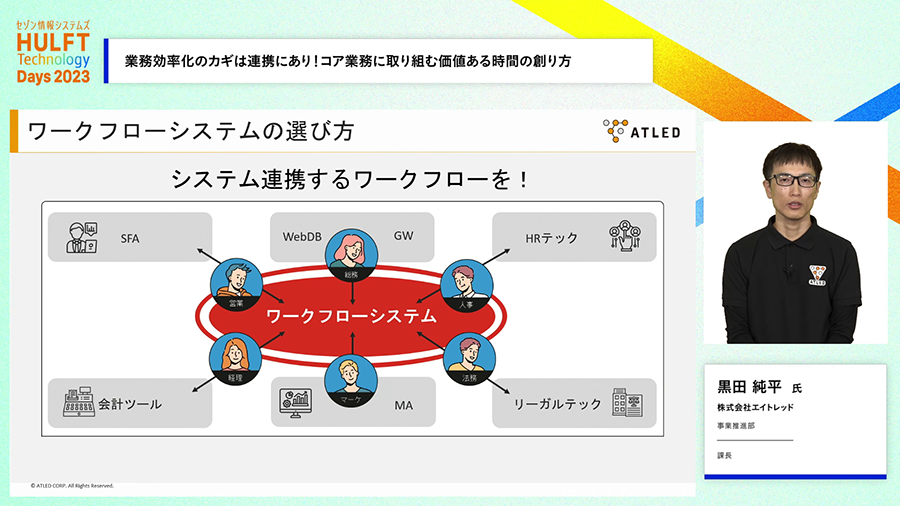
Next, we will look at an example of how a workflow system can improve business efficiency. In a credit investigation for a new transaction, the input information is referenced in a credit management system and an anti-social organization check system, and the investigation is automatically written back into a document, improving efficiency. Similarly, in response to the invoice system, the National Tax Agency database is automatically referenced. Work that was previously done manually on documents has now been automated.
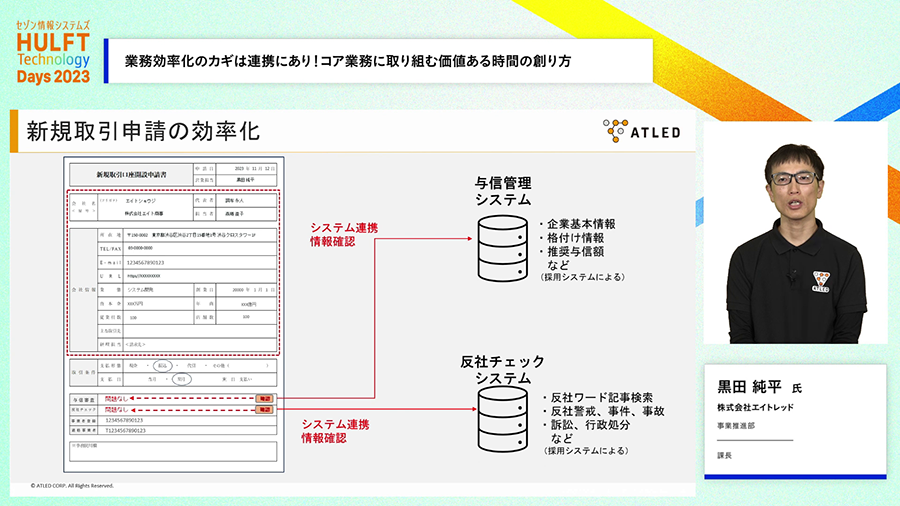
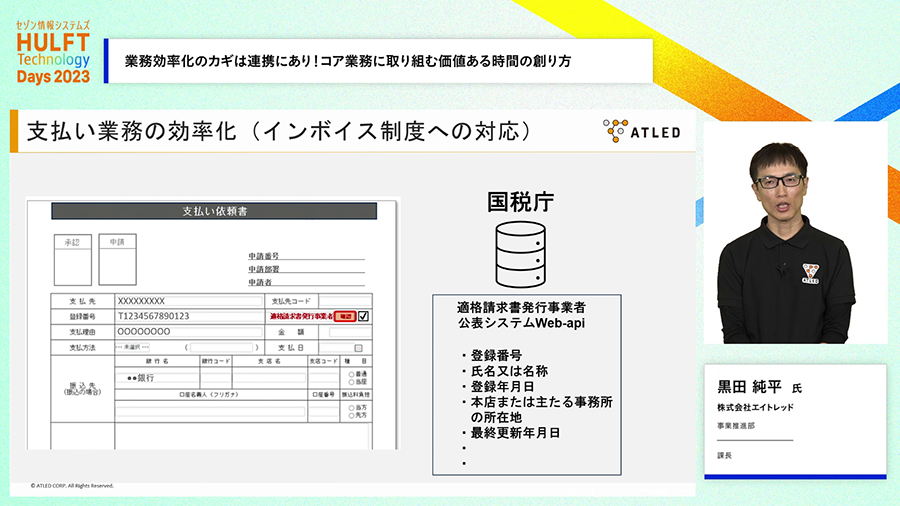
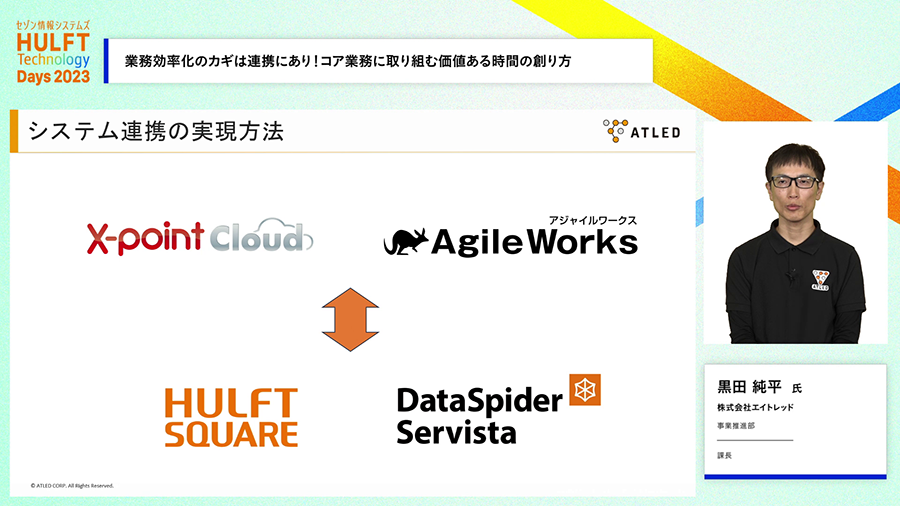
There are also dedicated products for the automatic integration of such data: our DataSpider and HULFT Square in the product category called EAI, ETL, or iPaaS. Since it is also possible to integrate with Eightred's workflow products, it is possible to use a combination of products such as data integration and ours, which have more advanced processing and integration functions with many partners, for automatic processing of data, while Eightred's products handle the workflow functionality.
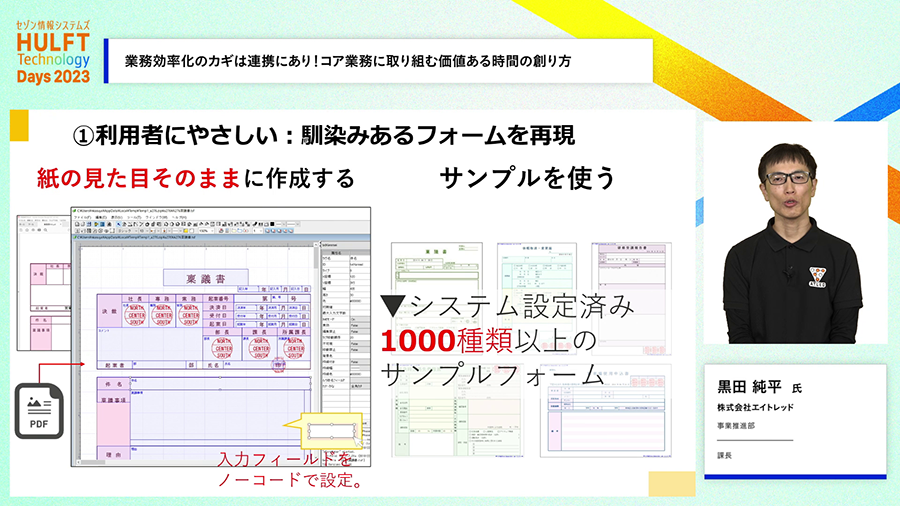
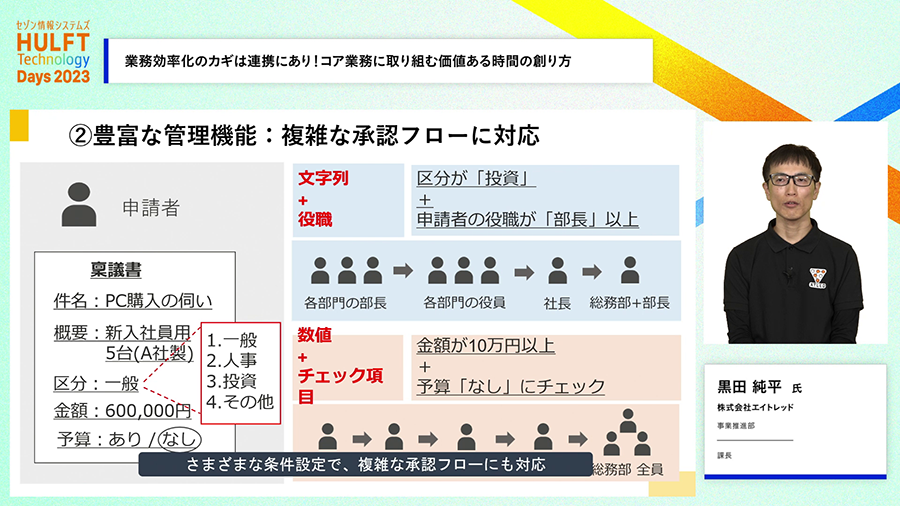
Unlike workflow functions that are added as an extra to cloud services, this is a dedicated product, so it has robust functionality that allows you to implement things like complex approval flows, which many products lack and would otherwise force you to give up on. It also comes with over 1,000 pre-prepared workflow samples tailored to Japanese business practices.
You can create the appearance without coding, and you can even create documents that look similar to traditional Excel documents.
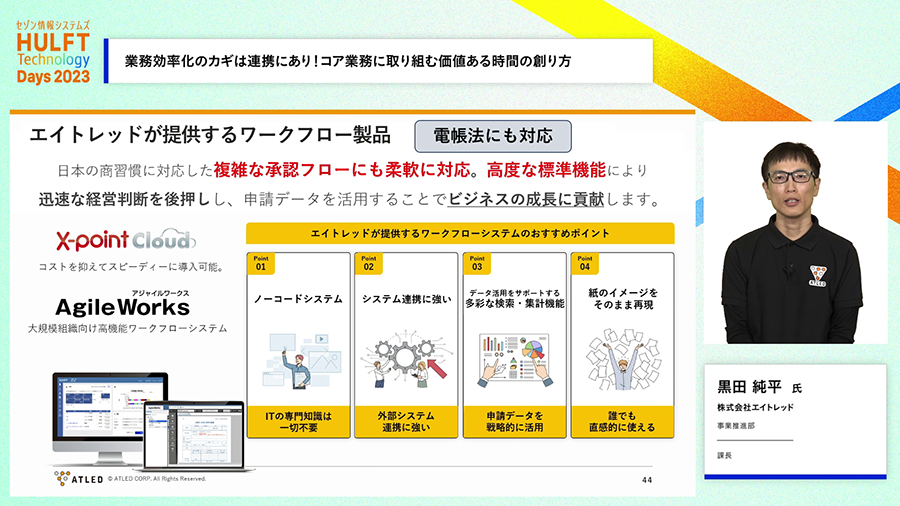
It also supports the creation of complex approval flows.
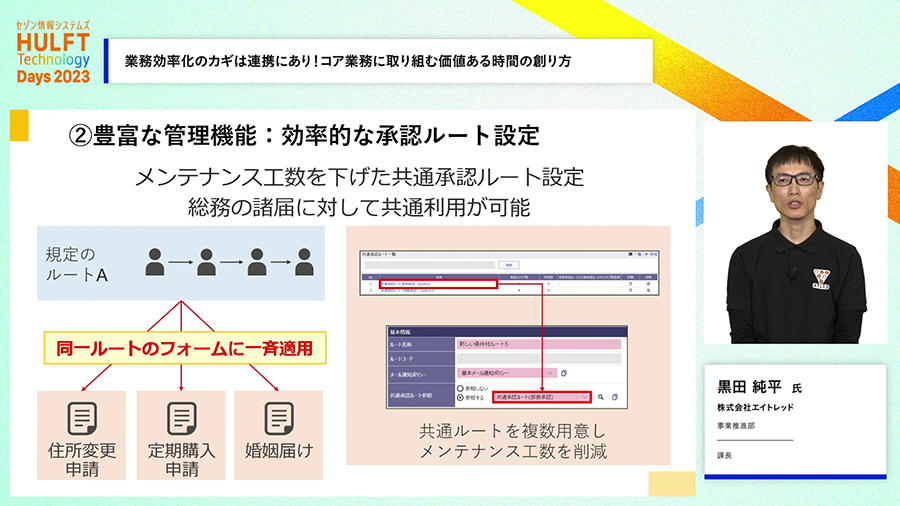
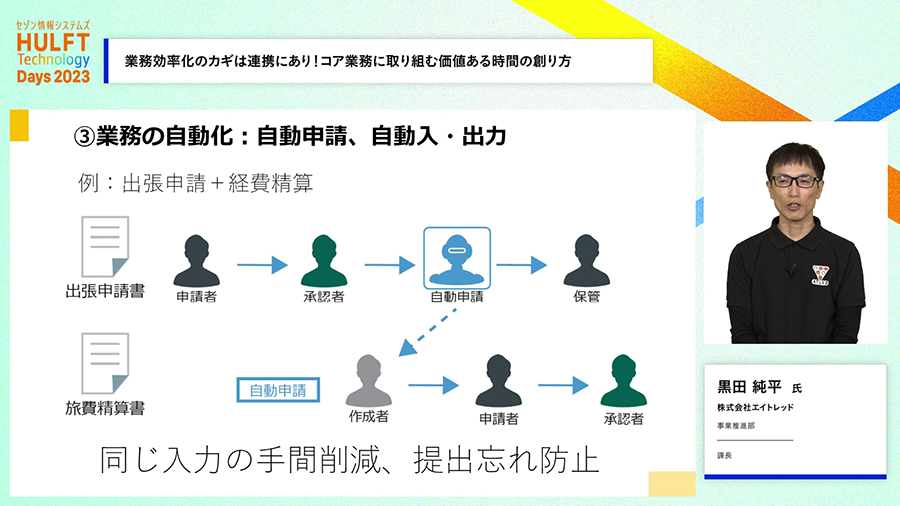
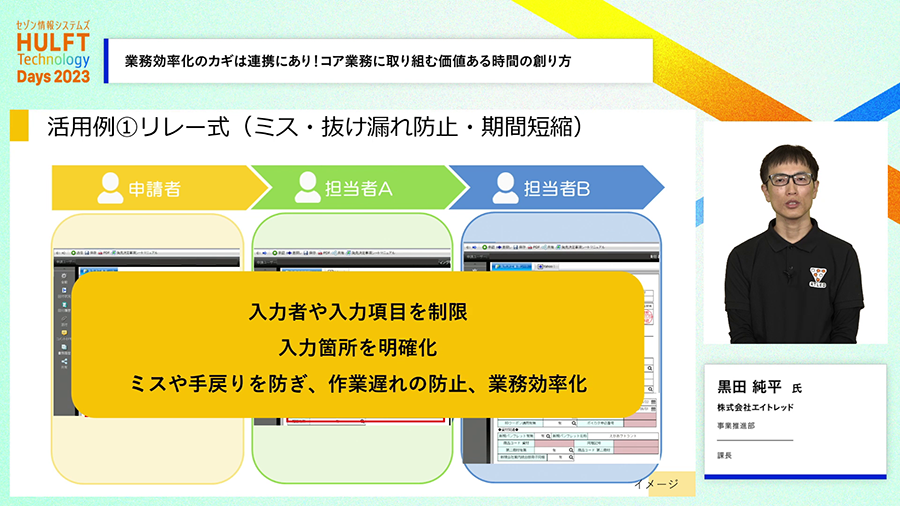
As mentioned earlier, it also supports the automation of some tasks, such as automating data entry. In addition, in application flows, for example, the system limits the items that can be entered by each person, preventing incorrect data updates and preventing mistakes and rework, and by making it clear which parts need to be entered, it prevents omissions and achieves greater work efficiency.
Accelerating collaboration between sponsored trade digital transformation platform "TradeWaltz" and other companies/PFs - Leveraging HULFT Square
Mr. Satoru Someya
TradeWaltz Inc. Global & Alliance Business Division, Marketing & Sales Division Executive Officer, COO, CMO
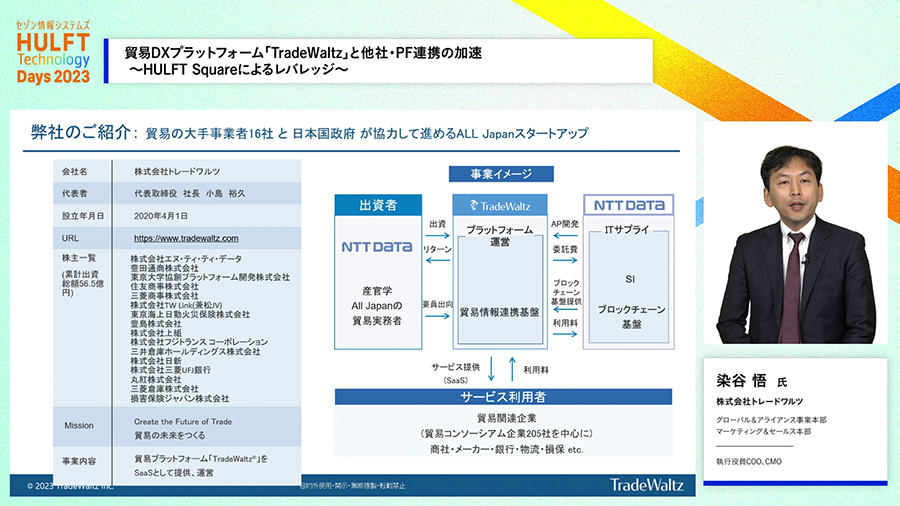
Next was a session by TradeWaltz, a company working to digitize many administrative tasks related to trade. TradeWaltz is a venture company established three years ago, but in fact it is a joint venture funded by many of Japan's leading companies and is well known to everyone.
Currently, Japan's trade volume is increasing year by year, and the amount of administrative work involved in trade-related procedures is also increasing. However, due to the high inefficiency of trade processes and a shortage of trade personnel, it is becoming difficult to support sustainable trade growth.
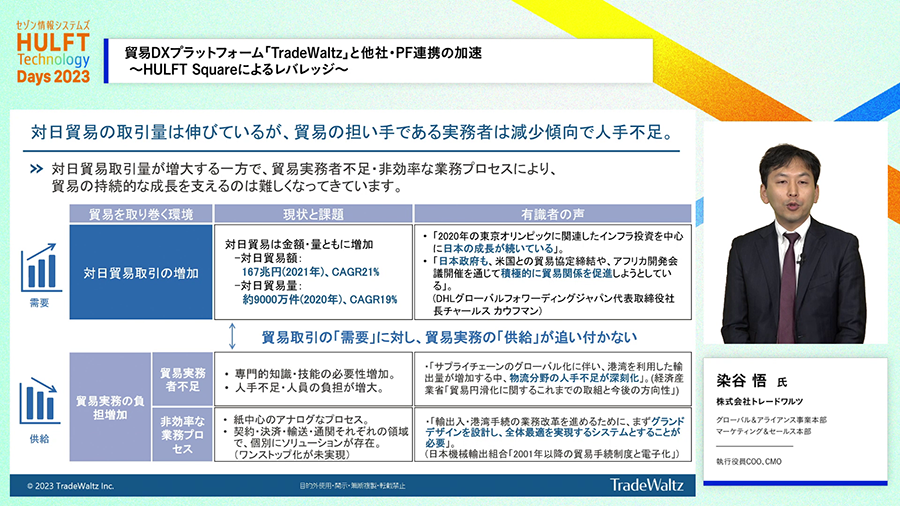
How did this happen? First of all, Japan's trade practices are inefficient and not as efficient as those of other countries. However, Japan is not the only country that has problems with inefficiency; other countries also have problems with inefficiency.
Furthermore, trade practices are inherently too complicated and inefficient to begin with. In the left (or second) diagram below, the circled entities are trade-related organizations, and you can see that a huge amount of PDF and paper documents are exchanged between them. Every time you import or export something, all this hard work goes on.
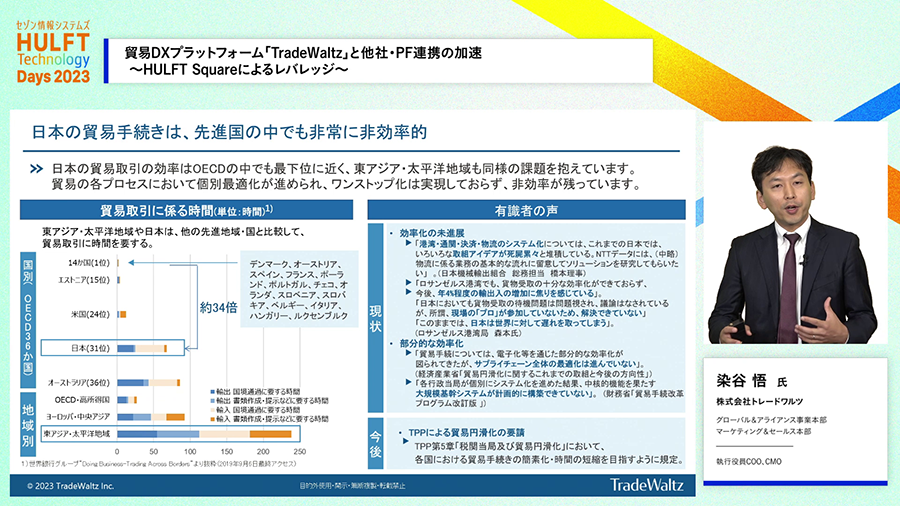
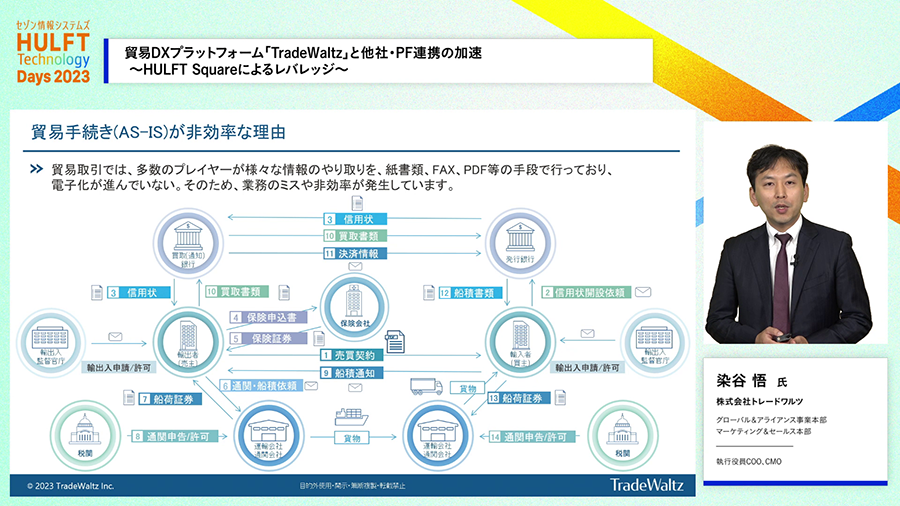
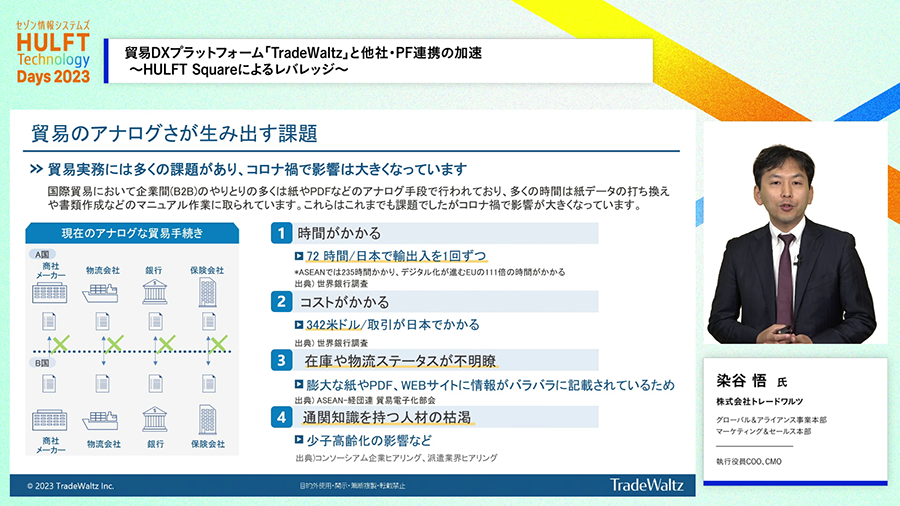
When you hear about the difficulties of trade, you might imagine the difficulty of transporting goods between countries. However, it seems that the reality is that even after a container has already been unloaded at a port, there are still a lot of difficult procedures, confirmation work, and changes of rights that need to be done.
As a result, it takes unnecessary time, incurs unnecessary costs, makes it impossible to check the current status of the cargo from an administrative standpoint (even if an accident has occurred, it is not immediately clear), and what's more, it becomes difficult to train and secure human resources in such an unreasonable industry.
TradeWaltz is trying to change this situation with the power of IT. They are building a platform for trade practices that spans the many industries involved in trade, converting procedures that have traditionally been handled in various formats such as paper and PDF into a common data format, and are working to build a platform on which trade practices can be completed.
While there have been attempts to solve trade practice problems in the past, they have not been very successful. This initiative therefore seeks to solve the problem in a way that has never been done before, by using blockchain technology.
Blockchain is used because it is a database without an owner (administrator). While a company could create a unified database, that company would inevitably become the boss and dominate the industry. Blockchain is a technology that can maintain the integrity of content without a privileged administrator, and it is completely transparent as to what data was registered and how. It is being adopted because it is suitable as a premise for asking many companies to participate fairly.
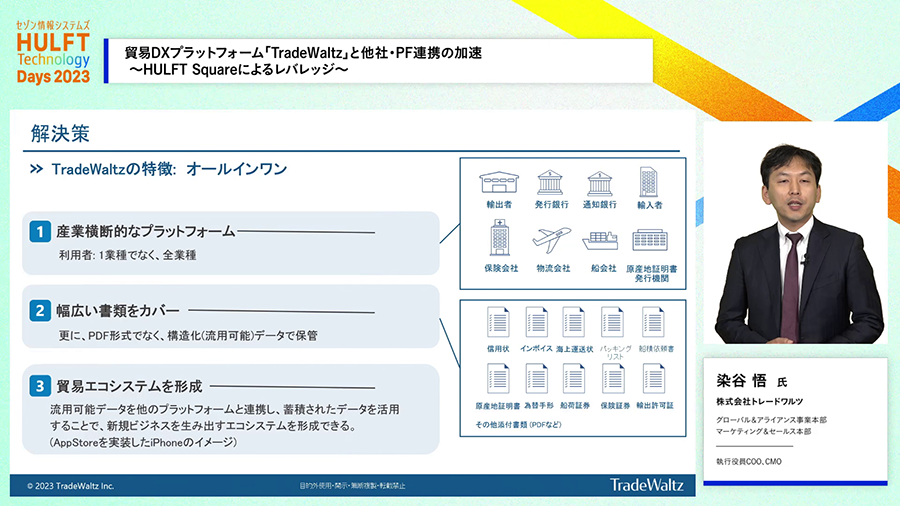
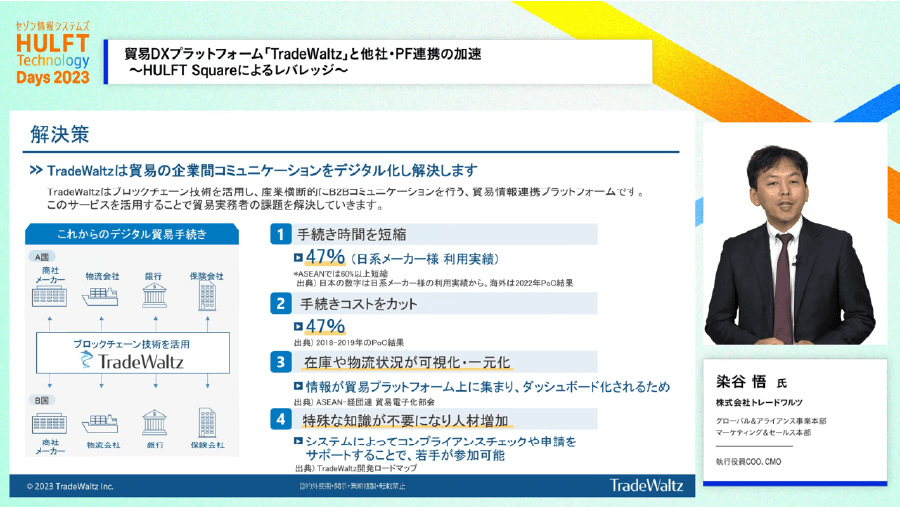
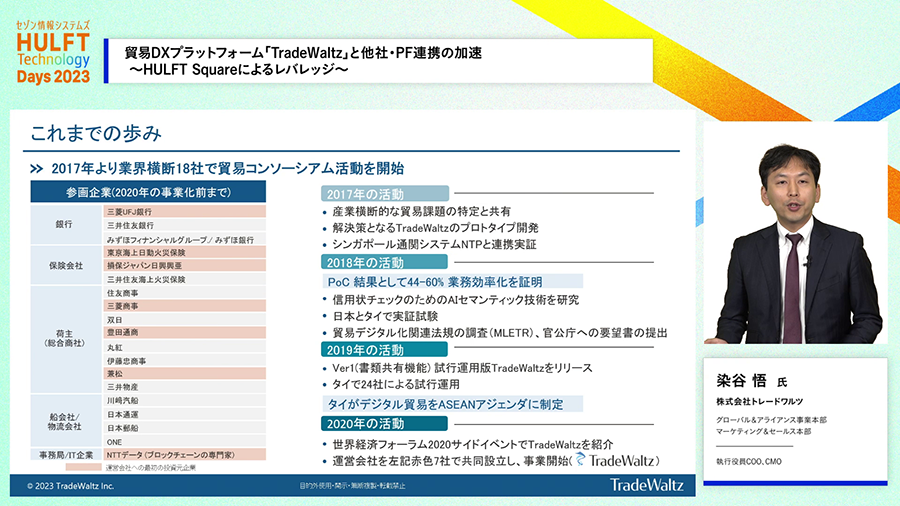
With this background, it started as a consortium of 18 trade-related companies. As the initiative progressed, it became apparent that some trade operations could only be handled by the government, and so Keidanren lobbied for the law to be amended to allow the private sector to take on these tasks as well.
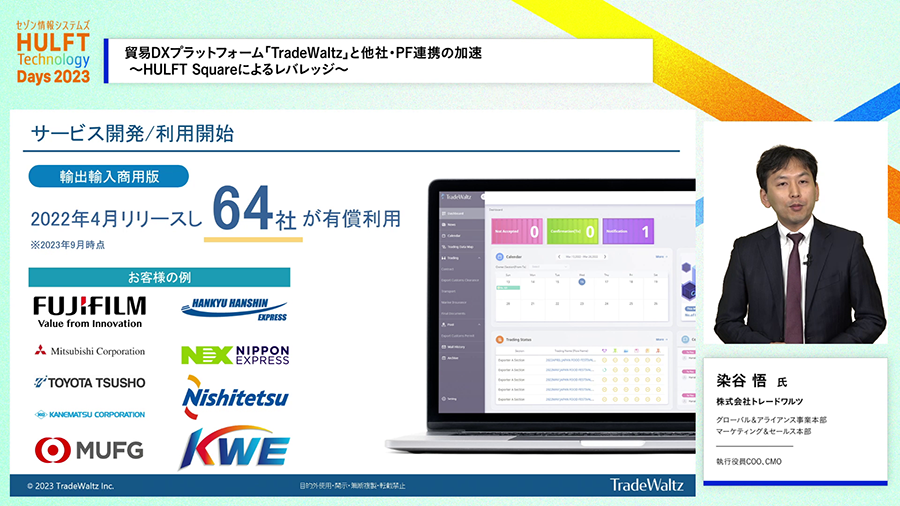
Currently, 64 companies are using the service for a fee, and the service is moving from the testing stage to practical use.
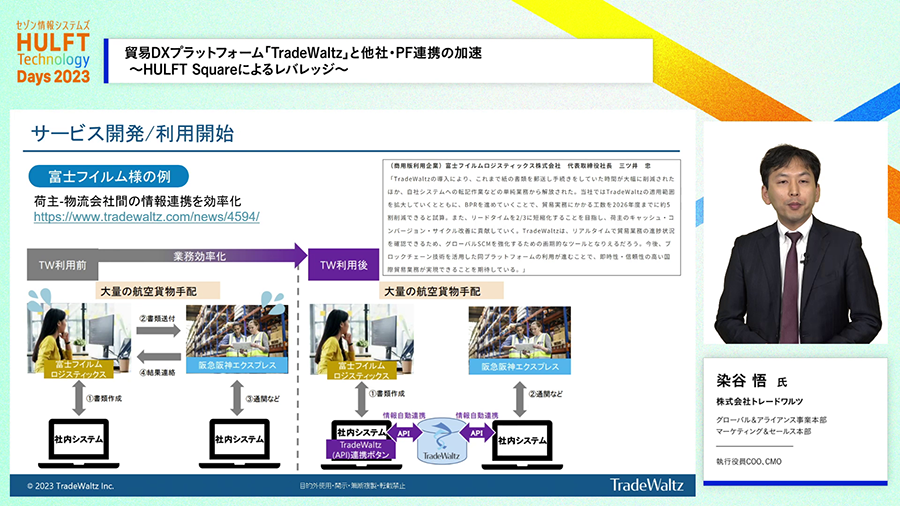
Actual use cases were also given. Conventionally, when a shipper arranges for air freight to be sent to a logistics company, they would manually create and send documents from their internal system, and the recipient would then re-enter the documents into their internal system. After delivery, the information would be extracted from the system, documents would be created, and the results would be sent to the shipper, who would then re-enter the results into their system, which required a lot of work.
Although this is clearly unnecessary, the explanation was that this kind of hassle is common in the world of trade. After implementing TradeWaltz, data is automatically shared from the shipper's system to the logistics company via TradeWaltz, eliminating unnecessary paperwork and streamlining the process.
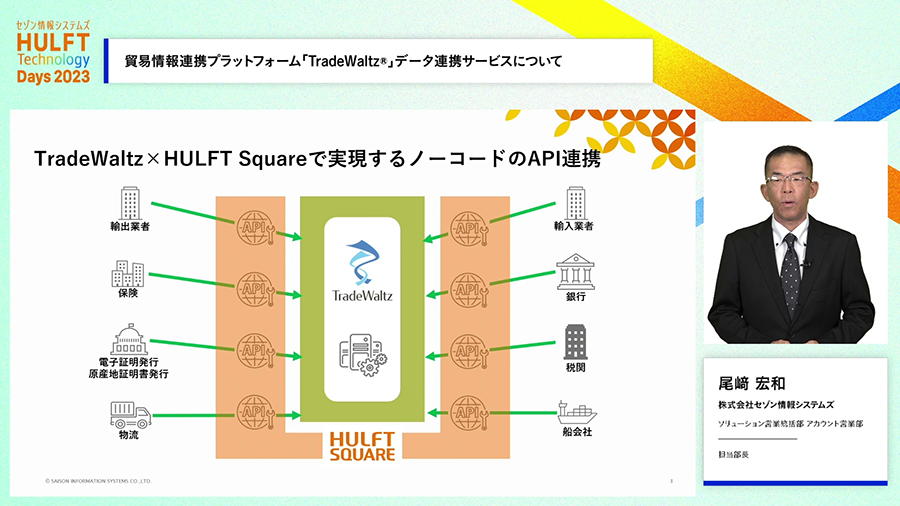
Finally, Ozaki from our company took the stage and introduced the collaboration between our company and TradeWaltz.
Although TradeWaltz is working to "connect" trade-related administrative tasks in an unprecedented way, a major problem still remained. This involved converting the data format between TradeWaltz and each company's system, and also figuring out how to access data in the systems of the companies involved and transfer it between TradeWaltz and the system. Naturally, each company's system is different, and so the data formats are completely different.
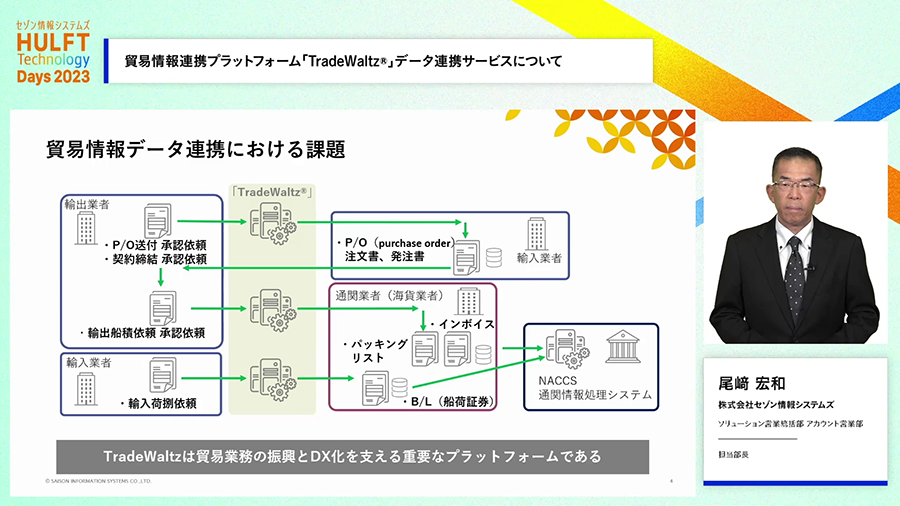
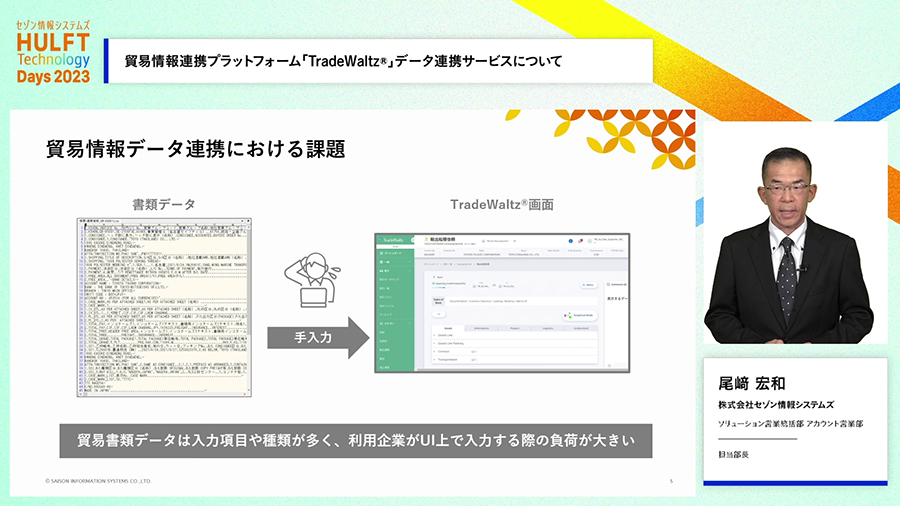
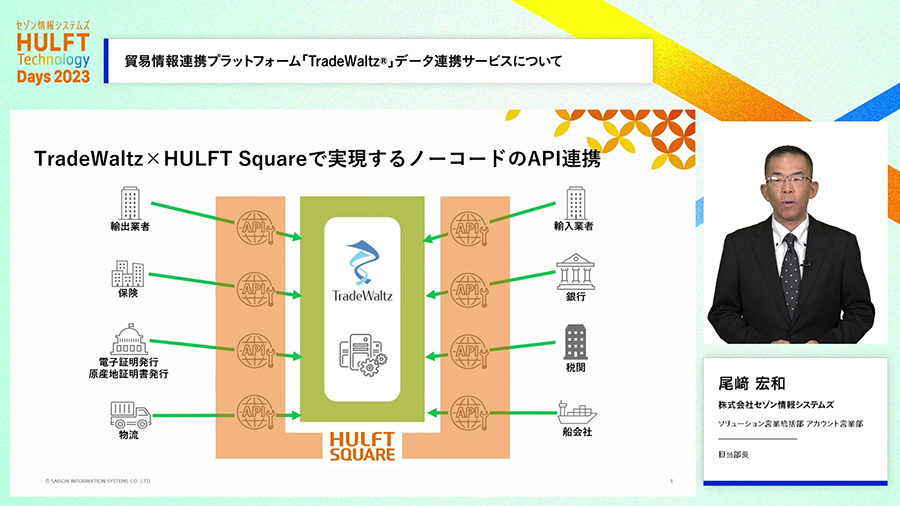
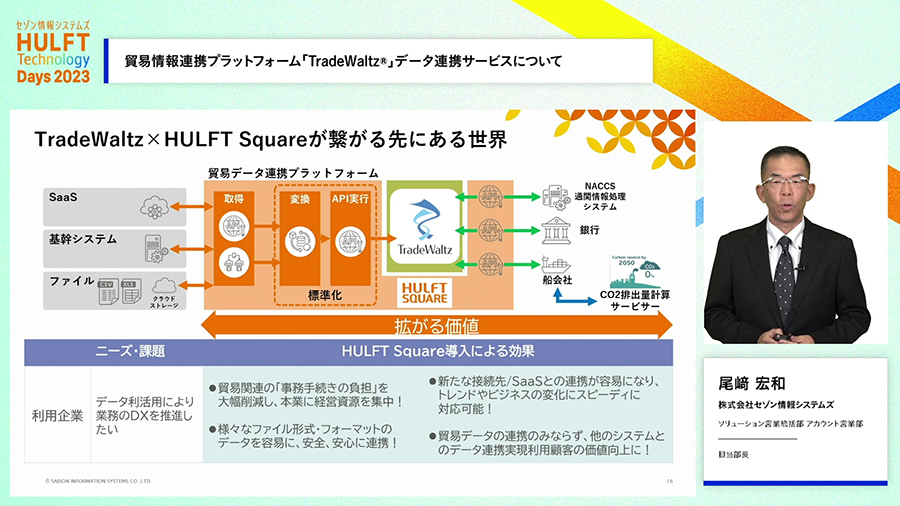
Not only do they need to access data in various formats in various locations, but they also need to modify connections that have been created to suit business needs. This is where they focused on the ability of HULFT Square and DataSpider to "connect" with a wide variety of systems and data using only a GUI. Our system handles the part that connects with external systems.
We have also conducted actual demonstration experiments of the collaboration, and confirmed that the combined products of both companies work well.
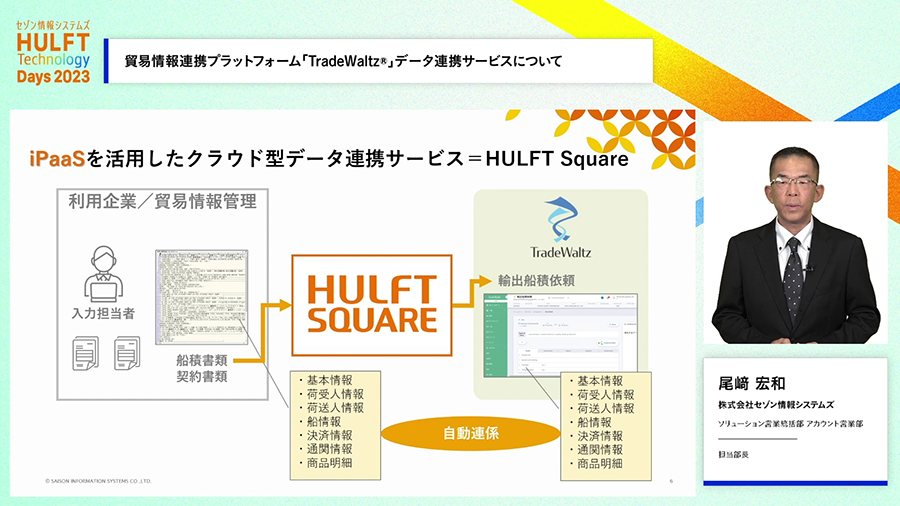
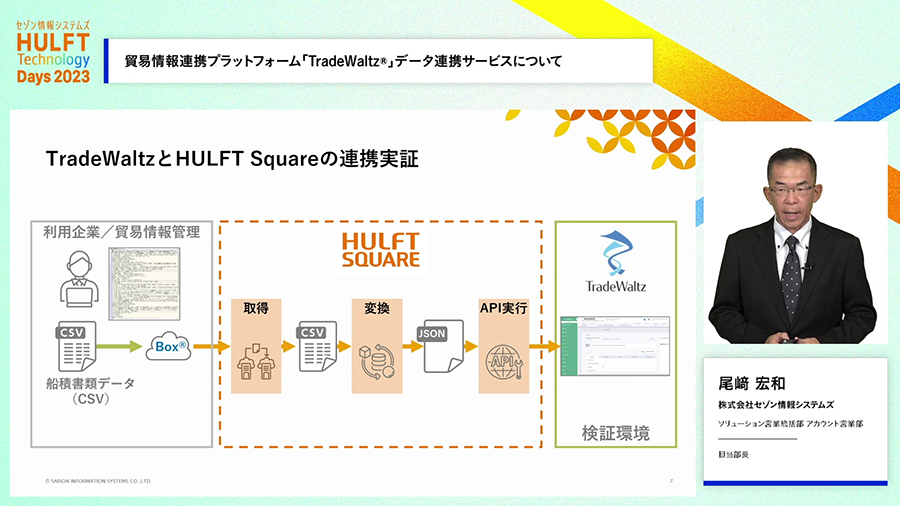
HULFT Square allows for API integration as well as file integration, database integration, and integration via the Internet, such as via Box or cloud storage. You can receive data in various formats, convert it, and even create business processes, and then reflect the results in TradeWaltz.
TradeWaltz is a collaborative partnership that realizes (or focuses on) a very wide range of inter-company collaboration that transcends the boundaries of companies and industries, and takes on the role of ``connecting'' that potential to each company's system.
HULFT Event Report List
- The 17th HULFT Technology Days 2023 was held again this year! (Business Day: Part 1)
- The 17th HULFT Technology Days 2023 was held again this year! (Business Day: Part 2)