

Introducing AI to bring out people's potential
The challenge of automatically optimizing millions of delivery routes
Nose Kozai Co., Ltd., a long-established company with over 50 years of history, sells and processes high-performance materials such as stainless steel and titanium. It has continued to grow thanks to its high level of technical expertise, covering everything from parts used in massive aircraft to products requiring detailed processing, and its customer-oriented service. The company's employees are imbued with pride and dedication to the technology they have inherited over the years. However, this has also led to the issue of some tasks becoming too individualized. The company employs 84 people. How did this Osaka-based manufacturing company incorporate AI into its operations?
How we improved business efficiency through the introduction of AI
First, please tell us briefly about Nose Steel's business and the two of you.
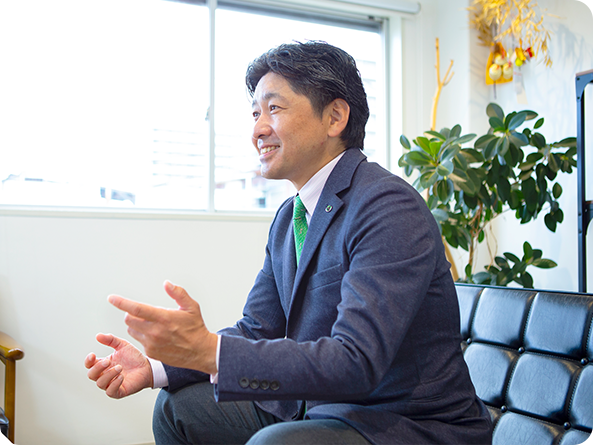
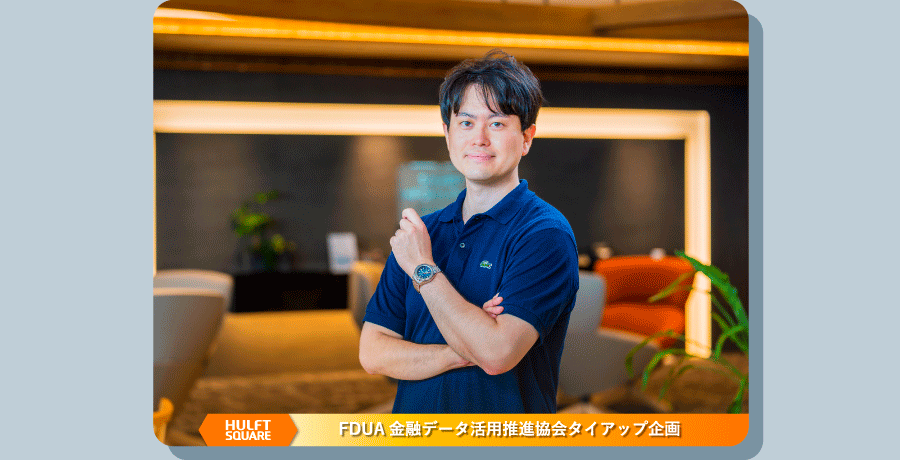
- Nose
-
Our main business is the processing and sales of steel materials such as stainless steel and titanium, and we deliver hundreds of thousands of products to approximately 3,000 companies every month. We have earned the trust of our customers with our high technical capabilities and quality, and our strength lies in our flexibility to handle non-standard customizations and extremely small lot products with short delivery times. In 2016, we expanded our business into the aviation industry. I became president in 2004.
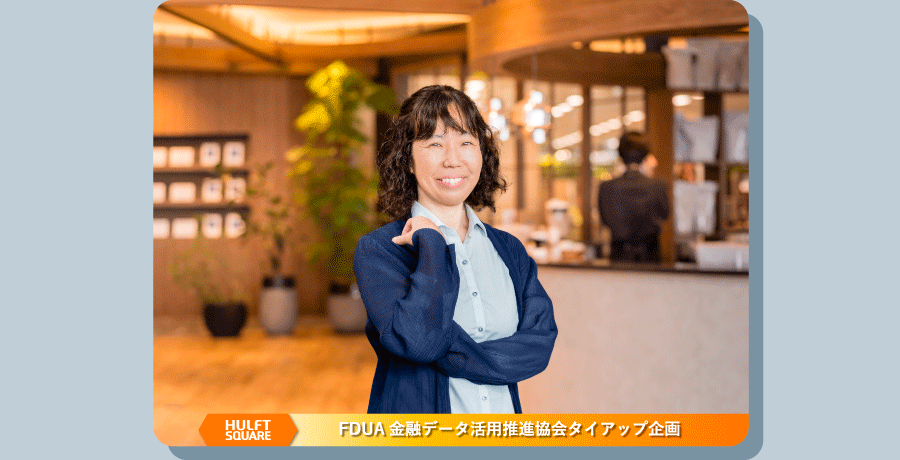
- Shibasaka
-
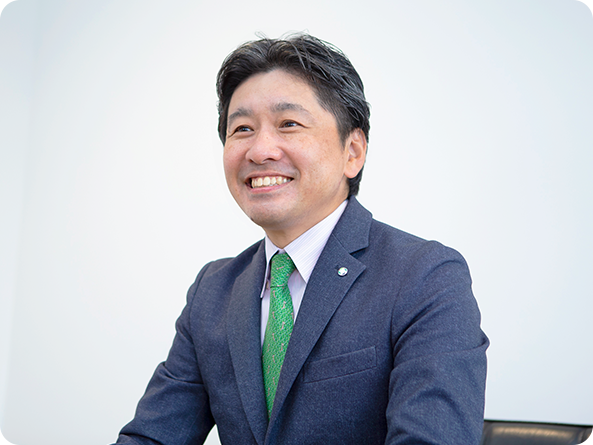
I joined Nose Steel 25 years ago and am currently the general manager of the General Affairs Division. I was in charge of general affairs and accounting, but I have always had an interest in data science, and as part of Nose's company-wide initiative to tackle digital transformation, I am promoting the introduction of AI as a project leader.
What was the process that led to this initiative?
- Nose
-
Since small lot and short delivery times are our strengths, our business goal is to deliver as many products as possible to as many customers as possible. However, the allocation of "which products to deliver, by whom, and on what route" has been highly dependent on individual talent, and has been carried out inefficiently.
- Shibasaka
-
Due to the small lot size and short delivery time, it was difficult to rely on external contractors, and the delivery volume was not consistent. With daily variations, delivery routes were created manually every day. There were many complaints from delivery drivers, and the burden on the employees in charge of distribution was heavy, so we felt we had to do something about it. So we consulted with Teikoku Databank, with whom we had a long-standing relationship.
- Nose
-
At first, it was just a casual inquiry like, "Can we automate this with AI?", but they were very interested. Things progressed surprisingly smoothly.
- Shibasaka
-
Introducing machine learning We were introduced to the efforts of the DEML Center (Data Engineering and Machine Learning), which was jointly established with Shiga University, which has the technology, and we immediately started a joint project.
Setting themes to be solved and actual efforts
How did the project with the DEML Center progress?
- Nose
-
The first thing we did was to clarify the problem that needed to be solved and set a goal. In our case, this was clear, so we quickly decided on the theme of "automating the setting of delivery routes using multiple trucks." Specifically, we needed to formalize the tacit knowledge that had previously relied on employee experience. Our goal was to eliminate information that "only one person knows" from the workplace.
- Shibasaka
-
In actual efforts, we worked with colleagues at Shiga University to develop an algorithm that minimizes delivery costs, which are determined by factors such as the number of trucks, travel time, and driver dissatisfaction index, while meeting constraints such as truck load capacity, operating hours, and traffic route regulations.
Did you make any new discoveries while building the algorithm?
- Shibasaka
-
We made many discoveries. For example, when we visualized two delivery routes calculated by AI on a map, we found that one of the destinations on Route A was located very far away, and that it was also near Route B. If we simply considered the distance, it would seem more efficient to take Route B to this destination, but in fact, this destination was near a highway interchange, and we found that it would ultimately take less time to take Route A.
- Nose
-
While automating delivery routes is a simple term, there are many physical constraints, such as whether the road is passable by large trucks or whether a detour is necessary because it is a one-way street. In addition, customer characteristics must also be taken into account. For example, each customer has their own circumstances, such as "customers here have to wait 15 minutes after arriving." By using machine learning to optimize and visualize hundreds of possible delivery routes while taking into account such constraints, we were able to make many discoveries.
Things to consider when introducing the system
Now, let me ask you about the experience of actually implementing the AI you developed in the workplace.
- Shibasaka
-
After repeated testing with Shiga University, we created a draft version and felt that it was of sufficient quality for on-site use, so we started a trial implementation. The thing we were most conscious of at the time was interpersonal communication. When you hear "introducing AI," you might imagine it taking away jobs from people. However, in our case, we weren't originally aiming to reduce labor costs, so we tried to raise awareness of the issues among our employees by explaining, "Our company currently has these issues, and we can solve them in this way by using AI."
Indeed, perhaps it is precisely because people work in the fields of manufacturing and creativity that they have an even more negative image of AI.
- Nose
-
I believe that the significance of introducing AI to a company like ours lies ultimately in people. AI will make operations more efficient. The time saved by this can be used to increase employee creativity. As a company involved in manufacturing, we want to have an environment where people can always demonstrate their creativity, and that is something we cannot compromise on. I have tried to make sure that everyone understands that we are promoting operational efficiency through AI in order to create opportunities for employees to take on challenges more freely.
- Shibasaka
-
I am currently attending graduate school at Shiga University in parallel with my work, where I am studying and researching data science. As a project leader, I would like to put into practice the idea that by effectively utilizing the time saved by streamlining work, I can not only improve my own skills but also contribute to the growth of the organization.
- Nose
-
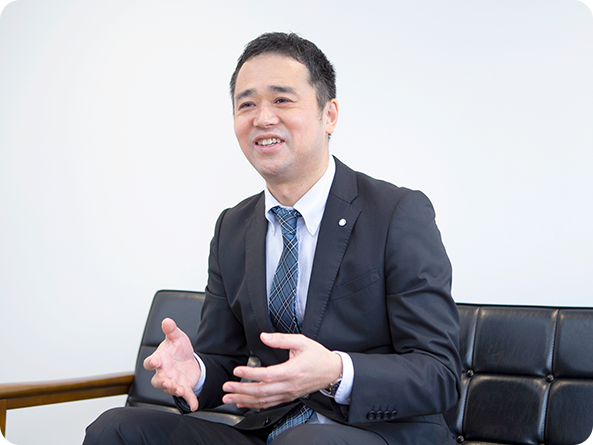
The most important thing for an organization is people. You often hear about the 4Ps of marketing (Product, Price, Promotion, Place). But I think the most important thing is people. Every organization and every business should have people at its heart. As a manager, I try to never waver from that.
Actual results and future vision
Have you seen any visible results as a result of introducing AI?
- Shibasaka
-
First of all, we were able to significantly reduce the costs of sorting. To put it in easy-to-understand numbers, we were able to reduce the number of delivery bases and trucks. But what's even more important is that we've seen a decrease in negative feedback from our drivers, which has increased their motivation. Although this is a qualitative measure, we feel that this is a very significant achievement, and we would like to continue to improve it so that we can ease the burden on our drivers and all other staff, even if only a little.
- Nose
-
Furthermore, the success of this project allowed even members who were initially skeptical of digital and AI to realize their benefits. Thanks to this, I feel there has been an increase in positive feedback, with people saying things like, "I'd like to participate in a project like this," or "I'd like to try something like this, what do you think?" I would like to create as many opportunities as possible for such members to take on challenges.
Are you actually starting any new initiatives?
- Nose
-
Today's topic was "optimizing delivery routes," but we've also begun working on a new theme: "base material storage *." Specifically, how can we effectively utilize the remaining parts of cut and milled materials and reduce scrap? We've begun developing an algorithm for this. Currently, we can't share data on which materials are left, how much of each, and where. This means that when a new order comes in, for example, people might think, "Oh, I remember there's this much material I used last week left over there, so let's use that," and the way materials are used becomes personal. We want to solve this problem and reduce waste as much as possible.
- The metal material to be joined or cut
- Shibasaka
-
Personally, I would like to establish data science as a business. The industry as a whole is still not very advanced in this area, so I would like to have a big impact not only within my company but also across the industry.
Finally, do you have a message for people who are thinking about incorporating data utilization into their work?
- Shibasaka
-
The fact that there is a lot of analog means that there is room for growth. Whether it's introducing AI or promoting DX, the important thing is whether you can take on the challenge with interest. Our initiative was a big challenge for the organization, but we found it very interesting, with many discoveries and learnings. I hope that many companies will experience this excitement.
- Nose
-
We hope to become a success story that shows that even a steel manufacturer like us, which at first glance seems far removed from the word AI, can take on this kind of initiative. We hope that our efforts will inspire more and more companies to take on the challenge of using data, and we want to stay at the forefront and leave a legacy of achievements.
*Titles and affiliations are those at the time of interview.
Related Content
-
Survival Strategy in an AI-driven Society: How will humans live in an artificial super-intelligence society?
-
Applicable AI that can quantitatively judge and evaluate core credit operations of banks - Tips for developing credit screening AI -
-
Grasp insights that cannot be grasped through numbers from text and qualitative information! ~ Characteristics of text classification AI ~