
Based on the IT trends of the past decade, what are the "Winning Strategies for Japan's IT" as envisioned by three domestic vendors? -HULFT Technology Days 2024 Panel Discussion Report -
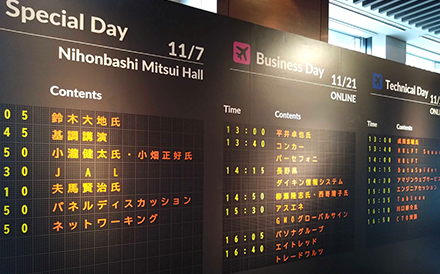
Saison Technology's event, "HULFT Technology Days 2024," was held in October 2024. This year's event was a great success, with many customers and partner companies in attendance.
One of the most talked-about events was a panel discussion featuring three Japanese software vendors, including Saison Technology. The theme was "He who controls the data controls AI." Panelists included Subaru Yasuda of WingArc1st Inc. and Masataka Isa of Cybozu Inc., and moderator was Ibiza Otani, editor-in-chief of TECH.ASCII.jp at Kadokawa ASCII Research Institute, Inc. The discussion, which also included Saburo Arima Saison Technology Co., Ltd., featured a lively discussion on "the winning strategies of Japanese software vendors" from three perspectives: past, present, and future (company names and titles omitted below).
[Panelists]
・Kohei Yasuda, CTO Office Manager, WingArc1st Inc. (center left)
-Masataka Isa, Deputy General Manager of New Business Division, Cybozu Inc. (center right in photo)
Saison Technology Co., Ltd. Executive Officer and CTO Saburo Arima (right in photo)
[Moderator]
- Mr. Ibiza Otani (left in photo), Editor-in-Chief of TECH.ASCII.jp, Specialized Media Division, Digital Media Department, Kadokawa ASCII Research Institute, Inc.
*Titles and affiliations are those at the time of interview.
Panel discussion by WingArc1st, Cybozu, and Saison Technology
HULFT Technology Days 2024 was an event held under the theme of "Smoothly transforming digital transformation. Utilizing AI starts with data integration." HULFT was launched in 1993 as middleware that enabled file transfer between systems in heterogeneous environments, and has responded to needs such as smooth integration of business systems, open systems, cloud computing, and the utilization of in-house data. 2023 marks the 30th anniversary of its launch, and the company will also launch a cloud-native data integration platform called HULFT Square.
With this history in mind, the event featured a panel discussion titled "He who controls the data controls AI: Three Japanese software manufacturers consider the winning strategy for Japan's IT industry."
Moderator Otani Ibiza has long been involved in reporting on the cloud industry as an IT journalist, and recently has been interviewing developers of generative AI and its use cases.
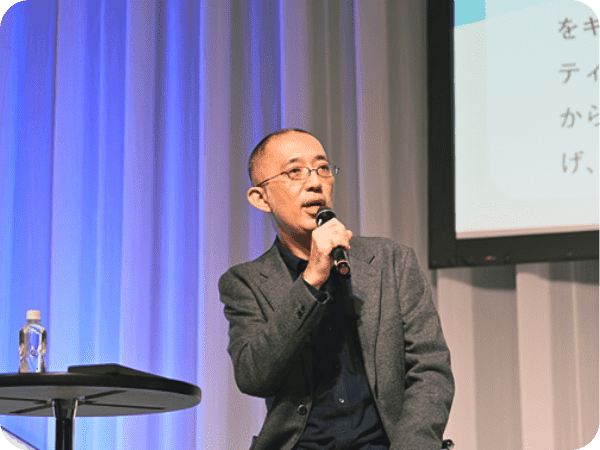
Panelist Yasuda Kohei, head of the CTO Office at WingArc1st, spent around seven years working on the business applications of image recognition and deep learning at venture companies and major corporations before joining WingArc1st. He is currently in charge of cross-product generative AI application strategies, technology strategies, and new service development in the CTO Office. WingArc1st currently operates its business on two axes: report and document solutions, and data empowerment solutions that promote corporate data utilization, centered on the data analysis platform "Dr.Sum" and the business-accelerating BI "MotionBoard."
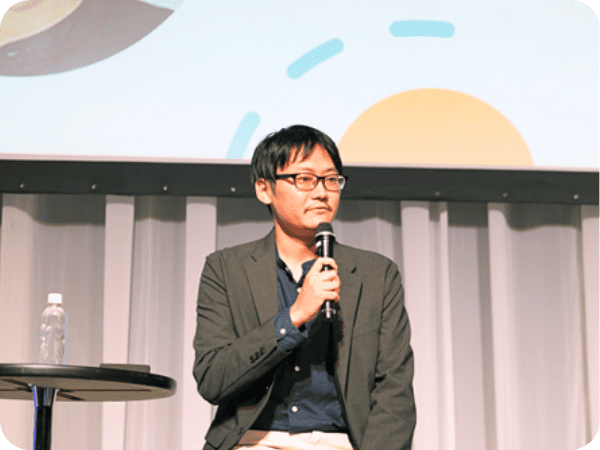
The other panelist was Masataka Isa, Deputy General Manager of Cybozu's New Business Division. Cybozu, which provided groupware, launched its cloud services business in 2011. In 2023, cloud business sales accounted for 87.6% of consolidated sales, reaching 22.283 billion yen, making it a leading Japanese cloud service.
Isa joined Cybozu in 2004 and spent the next 15 years promoting the company's solutions. He then moved to Soracom, an IoT company, where he worked on the cloud platform business for IoT operation and management. He returned to Cybozu in January 2024 and is currently involved in the planning and development of new products.
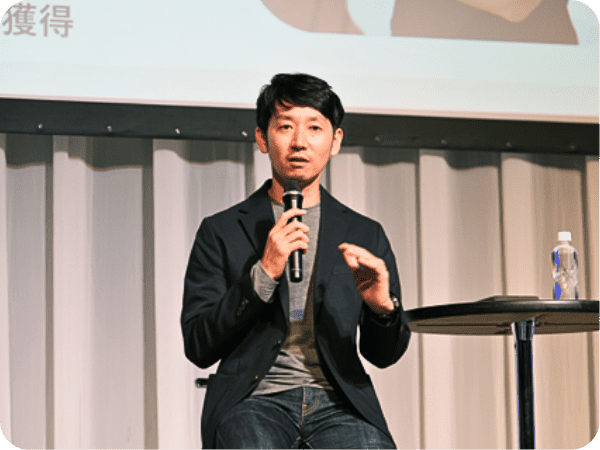
Saison Technology's Executive Officer and CTO, Saburo Arima, participated as a panelist. Arima is in charge of the HULFT development division, which includes HULHT Square, and also participates in meetings on human resource policies for the new era as a member of the "Human Resources Policy Review Committee for the Digital Age," which is being promoted by the Ministry of Economy, Trade and Industry.
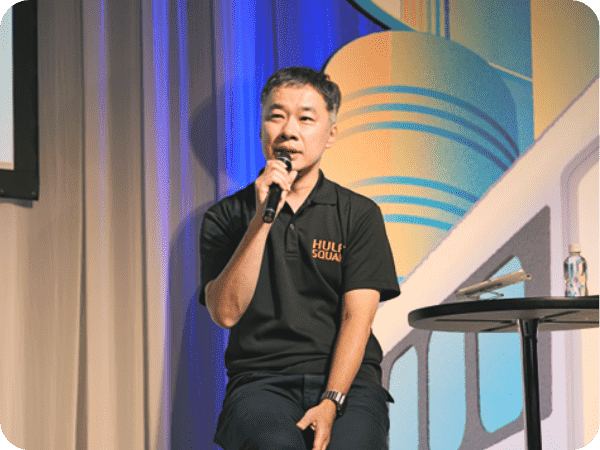
Members with deep knowledge of cloud services, generative AI, and the evolution of enterprise IT in general gathered to discuss the direction that Japanese software vendors should aim for.
Ten years since the domestic cloud became mainstream, and the strategies of each company have determined success or failure
The first thing moderator Otani said was, "Let's examine the strategies of each company over the past 10 years, focusing particularly on the domestic cloud computing sector." Otani explained his aim as follows, introducing a column he wrote for ASCII.jp:
"Twelve or thirteen years ago, when cloud computing first began to take off, there was a prediction that domestic cloud computing companies would not be able to compete with foreign companies. However, last year, I attended a Cybozu event and experienced the excitement. After seeing the many vibrant domestic cloud vendors and businesses that had achieved record profits, I began to form the hypothesis that even among domestic IT companies, the difference in survival depends on the strategy. I would like to examine this theory in this session."
The first to speak out was Isa from Cybozu. When Google Workspaces (then Google Apps) was released in 2007, Isa was thrilled to be able to use Gmail and apps for free with 1GB of storage, and he was happy to use it. However, when he heard the news that "a specialized organization for Google Apps for businesses would be established in Japan," he felt a strong sense of crisis. He looks back on the situation at the time as follows:
"We thought that Google Apps, an overwhelming service, would become popular all at once if it were available to businesses. It was a matter of life and death for Cybozu as well. The entire company decided to take on various new business ventures, and a group company started a hosted SaaS business. Although it was a different business from our current core business, we were determined to take on the challenge," says Isa.
In stark contrast was WingArc1st. When Yasuda interviewed people around him about the company's state 10 years ago, he found that the company consistently maintained the stance of "thinking about the customer in front of you first."
"Ten years ago, the Dr.Sum Ver. 5.0 development project was launched, and the seemingly absurd goal of 'analyzing 10 billion pieces of data in one second' was set. Of course, they were keeping an eye on the trends of foreign cloud companies, but as a domestic tool vendor, their priority was to 'develop an engine with overwhelmingly high performance and surprise our customers,'" says Yasuda.
セゾンテクノロジーは当時、クラウド時代の到来を受け、HULFTを活用してオンプレミスからクラウド環境へのスムーズなデータ連携に取り組んでいました。この取り組みが評価され、2015年にラスベガスで開催された「AWS re:Invent 2015」にて「Think Big」賞を受賞 しています(当時の社名はセゾン情報システムズ)。
This led Saison Technology to establish a subsidiary in San Mateo, California, USA in 2016. Looking back, Arima says, "Expanding overseas was essential to catch up with the development speed and methods that make US and overseas vendors so strong."
After repeated trial and error, we decided to enter the cloud/managed field in order to broaden the reach of HULFT and our non-programming/no-code development platform, DataSpider Servista In 2020, we began developing HULFT Square, which we continue to use today.
In response to these discussions, moderator Otani summarized, "You have each been able to discover business opportunities by forging ahead in your own unique positions."
Reconsidering the role and significance of engineers in the age of generative AI
The next topic was to confirm each company's current direction, with the focus being on "generative AI and engineers."
This theme is also based on an article published on ASCII.jp titled "Approximately 20% of 'potential AI talent' want to become AI talent," based on the results of an AI inside survey. Otani asks, "Among business people, approximately 20% want to become AI talent through reskilling, and these people are seen as holding the key to resolving the IT talent shortage. On the other hand, how do engineers themselves view AI, which is said to take away their core work?"
Yasuda of WingArc1st strongly agreed with this point, pointing out the "shortage of IT talent." As the hiring market becomes more limited and hiring becomes more competitive, the company is working on a strategy to acquire "talent with strong AI skills." They even hold programming classes for elementary school students, and guarantee interviews with all participating children. They are also collaborating with universities to recruit talent with excellent AI skills.
In fact, WingArc1st engineers are already using some AI in requirements definition and basic design. Yasuda comments, "Whether or not we use generative AI makes a huge difference in the initial speed, which leads to improved productivity."
Cybozu's Isa explains, "The company as a whole is working with an AI-based work style in mind, including back-office and sales operations." While GitHub Copilot is increasingly being used in product development, Isa says, "That doesn't mean that development engineers are aiming to become AI engineers." He honestly shares the situation, saying, "I think data scientists are starting to shift to AI engineer positions." "Data analysis is important for AI engineering, but I feel like the level of engagement is different from that of development engineers."

After listening to the two, Arima said, "Apparently, all overseas startups are using generative AI for development and programming." However, he is skeptical about whether generative AI will solve the IT talent shortage. A year ago, the Human Resources Policy Review Council, of which Arima is a member, said, "We can expect generative AI to solve the IT talent shortage," but that optimistic mood has now disappeared. The reason is that "generative AI alone cannot fully automate development work."
"At present, AI cannot automatically generate code from design documents written in Word or Excel. Engineers today are being asked to consider how to transform the processes before and after that, so it's time to seriously consider how to incorporate AI into the development process," says Arima.
Yasuda agreed, saying, "The document formats used for training generative AI, such as PlantUML and Mermaid, are also being reviewed. If you're going to use generative AI, it's easier to manage if you use those formats." In any case, this field is expected to continue to evolve and change due to AI, so engineers will need to be flexible in their response.
Who will dominate AI in the future? What is necessary to succeed in the AI era?
With generative AI expected to evolve further today, how should Japanese software vendors prepare for the future?
The clue came from a generative AI contest that Otani participated in. In 2024, Otani served as a judge for "AI Challenge Day," a generative AI contest attended by 10 Microsoft Japan partners. The winner of the first contest was Hitachi, and the winner of the second was ABeam Consulting, but Otani says that neither company "had a deep knowledge of AI technology."
"Hitachi's strength lies not so much in AI, but in data analysis. As a consulting company, ABeam Consulting excels at defining and extracting issues. While the other participating engineers focused on testing and creating technology, it was impressive to see them thoroughly focus on customer issues," said Otani.
If this is true, then what's important is not the technical knowledge or operational know-how of generative AI, but the underlying data and how to deal with the issues. Otani asked each company for their views on this point.
Arima stated his stance that "data is of course important, but it is even more important to clarify the purpose and significance of using generative AI," and continued:
"Once the data and purpose have been decided, the next question is data accuracy. Specifically, when and where did the data come from, who created it, and whether it was on-premise or cloud-based? Ultimately, it all comes down to the question of data reliability, so it's important to carefully maintain the origins and history of the data all the way down to the downstream." (Arima)
In response to Arima's opinion, Isa also pointed out the importance of data governance in the age of AI.
"When AI is assumed, how to think about data access rights is an extremely difficult issue. Even if AI instantly grasps all information within a company, major problems will arise if it makes a mistake in determining who to return the results to. When using data and AI within a company, it is necessary to handle everything, including data access rights," says Isa, adding, "If business processes have not been digitized, you need to make arrangements to collect highly accurate data with an eye toward AI."
Yasuda agreed with the two comments, and listed the following two things as "things that will not change even in the age of AI."
One is the importance of preprocessing, such as data cleansing. The importance of preprocessing has been known since the days of deep learning and machine learning, and it is said that "80% of whether or not AI can be effectively utilized depends on preprocessing." No matter how excellent the AI, it cannot demonstrate its capabilities unless the underlying data is properly prepared.
Another point is the fact that "if using AI becomes the goal, it will defeat the purpose." No matter how excellent a tool is, it must have a purpose for using it. If we forget that and use the tool becomes the goal, it will not lead to solving the problem. Yasuda advises, "If you deepen your understanding of your customer's problems, you can also use that understanding in data preparation."
Arima emphasized, "In order to advance data management, we need a system to understand where the data originates and how it has flowed, so that those who use the data can share the accuracy and precision of that data."
The key is how to build "trust from customers"
Looking at enterprise IT from the perspectives of the past, present, and future, what direction is being pointed towards for Japanese software vendors?
Yasuda said, "The most important thing is to look at the customer. Just as 'generative AI is the goal and cannot solve problems,' developer-oriented development will not benefit the customer. It is important to look at the customer throughout the entire value chain."
Isa also emphasized the importance of an ecosystem that includes various partner companies and customers, saying, "I believe that domestic companies cooperating in an ecosystem and pursuing the same vision will lead to growth in Japan's IT market as a whole."
Arima agrees with these opinions, saying, "I think the key to success is to gain customer trust." To achieve this, he continues, "it's important to monitor trends in the times and technology, move forward with development quickly, roll it out to customers, and speed up the cycle of receiving feedback."
Finally, Mr. Otani concluded the panel discussion by saying, "It may be difficult to achieve both reliability and speed, but overcoming that challenge will lead to victory." We look forward to your participation in the next session, as we will continue to consider meaningful themes together!