

Each of the three made their mark with their own unique information strategies. Murasaki Shikibu ・ Sei Shonagon ・ Izumi Shikibu ~Exploring the background behind the flourishing of women's literature in the mid-Heian period~
Murasaki Shikibu, author of The Tale of Genji, Sei Shonagon, author of The Pillow Book, and Izumi Shikibu, the famous poet. These women, who produced works that continue to inspire people to this day, all appeared in a very short period in the mid-Heian period. If this phenomenon is no coincidence, then what events and people's activities were behind it?
Historian and author Kozo Kaku says that the reason for this can be explained by looking back at Japan's history from ancient times to the Middle Ages with "information" as the keyword. He explained this using anecdotes about the personalities and lives of Murasaki Shikibu, Sei Shonagon, and Izumi Shikibu.
▼Profile of Kozo Kaku
Graduated from the Department of History, Faculty of Letters, Nara University. After a career as an academic, he became a researcher at the Faculty of Letters, Nara University in March 1984. He currently works as a lecturer at universities and companies, while also writing books based on his own unique historical perspective as a historian and author. He is also a lecturer at the National Research Institute for Domestic and Foreign Affairs, the Small and Medium Enterprise College, and the Political and Economic Forum.
・Representative works (new publications)
"Introduction to History as a Liberal Arts Education" (Business Press, 2023)
"Tokugawa Ieyasu's Study Method" (President Publishing, 2023)
"Ieyasu's Conquest of the Country: Sekigahara, the Battle of Sekigahara" (Tsuchiya Shoten, 2022)
・Supervision, translation, etc. (new publications)
"Reading it makes me feel better: Reverse biographies of great people who didn't try hard, Japanese history edition" (Supervised by Shufunotomosha, 2023)
"Comic Edition of Japanese History, Volume 87: Hideyasu Yuki" (Planning, composition, supervision, Poplar Publishing, 2023)
·others
"Sekiguchi Hiroshi's Newest Medieval History," with commentary by Kaku, is currently being broadcast on BS-TBS, every Saturday at 12 noon.
*Titles and affiliations are those at the time of interview.
The information revolution and dramatic changes in the political system in the "ancient" period created the fertile ground for the blossoming of women's literature in the mid-Heian period
As I have repeatedly mentioned in previous interviews, the important thing about studying history is to first stop and ask the question "why?", and then get your feet on the ground and think about the process of "what actually happened?"
For example, if we take the mid-Heian period, which is the setting of the 2024 taiga drama "To You Who Shines," the following question will arise: Murasaki Shikibu Including, Sei Shonagon or Izumi The question is why such a large number of outstanding female writers as Shikibu suddenly emerged in that era.
It's true that I've always wondered about it, but I've never really thought about it deeply...
So, let's take that as our theme this time. To give you a hint, the keyword is "information strategy." The sudden blossoming of women's literature in that era was due to major changes in Japanese language and society, which could be considered a kind of information revolution, as well as the existence of a certain class of women who made the most of this situation to gather high-quality information and output it in the way they wanted.
I will explain what this means step by step, but first I have one question: in terms of historical period divisions, is the mid-Heian period ancient or medieval?
At school, we were taught that the Heian period was the Middle Ages.
Unfortunately, this is incorrect. The division of Japanese history into ancient, medieval, early modern, and modern periods is actually simply a matter of applying the period divisions of European history, and there are discrepancies with Europe. However, if you try to force it to fit, Gosanjo The Middle Ages began in 1072, when the Emperor decided to put an end to regent politics and begin cloistered rule. This means that the period in which Sei Shonagon (c. 966 - c. 1025), Murasaki Shikibu (c. 973 - c. 1031), and Izumi Shikibu (c. 978 - date of death unknown) were active would still be ancient (although there are various theories about the dates of their birth and death).
In other words, The Pillow Book and The Tale of Genji were written at a very ancient time.
That's right. At a UNESCO conference held in Paris, France in 1966, the "List of Great People's Years" was published, and Murasaki Shikibu was the first Japanese to be included (several others were also selected). The commentary stated that it was hard to believe that The Tale of Genji was written by an ancient person, and that Murasaki Shikibu's full-length novel, The Tale of Genji, is a rare work, even on a global scale. This raises another question: why was such a work written by a woman, and why was it the first in the world to do so?
It seems the mystery is getting deeper...
History is a field where questions like "why?" and "why?" arise one after the other. When you have a question and can't find the answer no matter how much you think about it, you need to go back to previous eras and previous times and think about the process that led from the origin of the phenomenon in question to its outcome.
Let's go back to the topic. As you know, women's literature in the mid-Heian period was written using kanji and hiragana. Hiragana was invented based on kanji. Manyo-gana It is a uniquely Japanese script that is said to have been established around 900 as a further breakdown of the traditional Japanese writing system. Without this language, also known as women's writing, and even more so without the Japanese language, works like The Tale of Genji and The Pillow Book would probably never have been created. If that is the case, then by considering when and how the Japanese language was established in the first place, we may be able to shed light on one aspect of the background to the birth of Heian women's literature.
Think back to a previous era.
Yes. In the Asuka period Tenchi The Emperor Emperor Tenmu During the time of the Emperor, there was no written language in Japan yet. Of course, there was a language, but it is thought that it was almost entirely borrowed from the language of people who came from the continent and the Korean Peninsula. However, at that time, a major incident occurred that made the Japanese people feel a sense of crisis that they absolutely had to have a written language to record their own language. Baekgang In the Battle of Hakusukinoe, Japan Baekje The allied forces of Tang and Silla It was the first time that they realized that if they continued without their own language, they would not be able to unite as a single nation, and would be invaded and incorporated into the other country's system.
I see. So how did they create the Japanese language?
Native Japanese words were assigned to each of the broken down kanji, and each character was given its own meaning. What's important here is that they weren't simply replacing words, but were made to a level that even the Japanese people of the time could understand and use. If something is created that is too unusual for people in terms of character shape, pronunciation, or meaning, it will not be digested and will ultimately not be used. In fact, in the process of establishing hiragana and katakana, for example, the same character "a" was written in various forms and given various meanings and sounds, and the ones that did not suit people were eliminated.
Thus, the Japanese language began to be created during the reign of Emperor Tenmu (673-686) and was passed down to the next generation. Jitō It is believed to have been completed during the reign of the Emperor (690-697). The people of Japan at that time accomplished such a national project in a very short period of time.
Since words are "information" itself, it could be said that an enormous information revolution has been realized in a short period of time.
That's right. I think the reason they were able to do that can be summed up in one word: they were desperate. Just like at the end of the Edo period, Japanese people will work hard when they feel pressured, but conversely, they can't do anything without a sense of crisis.
In any case, the establishment of hiragana in the mid-Heian period through these circumstances was one major factor in the blossoming of women's literature. In fact, during the same period, another environment was created through similar circumstances that is thought to have ultimately created the soil for the birth of Heian women's literature: the regent system, which began as a result of the failure of the ritsuryo system imported from Tang China.
After Japan was defeated in the Battle of Baekgang, it adopted the Ritsuryo system in order to centralize power and become a first-class country. This meant forcing the powerful clans that made up the Imperial Court to give up their vested rights, and just like the story of the birth of the Japanese language, this was only possible when the country was facing a crisis that threatened its very existence.
However, the Ritsuryo system that was introduced in this way did not function well in Japan. This is because the Ritsuryo system was originally Imperial Examination This system was created in successive Chinese dynasties on the assumption that talented bureaucrats who passed the exam would run the country, but in Japan, which did not have an imperial examination system, there were no highly capable bureaucrats who could run the country in accordance with the Ritsuryo system.
The imperial examinations are said to have been the most difficult in the world, but was it at a level that even those considered elite in Japan at the time could not pass?
Among the Japanese up to this time, the only ones who could pass the imperial examination were probably: Kibi no Makibi and Abe no Nakamaro Under such circumstances, the Imperial Court, in order to fill the gap left by the absence of bureaucrats and make the Ritsuryo system function, established positions not stipulated in the Ritsuryo system, such as Sangi (councillor), Chunagon (middle counselor), and Naidaijin (minister of the interior). outside officer However, this did not go well. As a last resort, they decided to create new "officials outside the Ritsuryo system" with enormous power, such as regent and chancellor.
As you know, the regent government that began from there was a time when the Fujiwara clan entering the university Let the Emperor after This was a system in which the daughters of the emperor, who were the emperor's maternal relatives, monopolized political power for generations. Naturally, the daughters who would become emperors' wives had to be well-educated in order to gain the emperor's favor.
And at that time, a person with a high level of education who could help them, like a "tutor," lady-in-waiting As I will explain in more detail later, in the mid-Heian period, court ladies such as Murasaki Shikibu, Sei Shonagon, and Izumi Shikibu, who possessed education and abilities far beyond those of the average aristocratic man of the time, inevitably emerged from this change in the political system.
The three different "information strategies" seen in the lives of Sei Shonagon, Murasaki Shikibu, and Izumi Shikibu
In addition to the regent system, another official position was established to compensate for the dysfunction of the Ritsuryo system, and it became the breeding ground for female literary figures. Receipt "Receiving" is a hierarchy of people who are sent to various countries. Governor This refers to the highest rank of "shu," or magi. While they wielded great power as governors of each province, they were still low-ranking local officials and could not hope to rise to prominence at the national level. Interestingly, many of the outstanding female writers of this era, such as Murasaki Shikibu, Sei Shonagon, and Izumi Shikibu, had one thing in common: they came from families of this class (even if their husbands were also "shu").
Indeed, Murasaki Shikibu's father Tametoki Fujiwara teeth Echizen no Kami ・ Echigo Mamoru, Sei Shonagon's father Gensuke Kiyohara teeth Suo Mamoru・ Higo Mamoru, father of Izumi Shikibu Oe Miyabi He serves as the governor of Echizen.
Why did so many daughters of those who could not become central government officials become writers? If family environment was a common factor, what exactly was it? This is a question worth stopping to think about.
For example, Fujiwara Tametoki Hanayama Gensuke Kiyohara, a Chinese poet who taught Chinese studies to the Emperor, also wrote, Later selection He was a famous poet and one of the compilers of the "Wakashu" (Collection of Poems). As aristocrats of the lower middle ranks, they could not become "juro" without hard work. Similarly, among the lower ranks of the juro, there were many who, like them, honed their abilities and acquired culture.
At the same time, they knew that no matter how hard they tried, they would never be able to advance to the center of power, so it is not surprising that some of the "Zyō" tried to educate their daughters and send them to the center of power in their place as tutors for candidates for the position of emperor's wife, who were in high demand during the regent government.
Murasaki Shikibu, Sei Shonagon, Izumi Shikibu, and others all had fathers who were ambitious, cultured, and enthusiastic about education (their mothers were from a similar background), and they were able to access the most important and cutting-edge information of the time by poring over the Chinese classics and other materials that were collected at home. This was precisely why they were able to acquire a culture that surpassed that of their male counterparts and enter the world of creative writing. Conversely, if the regent government and the provincial court class had not been created as a result of the introduction of the Ritsuryo system, outstanding female writers like these probably would not have existed.
To summarize, the background to the sudden rise in women's literature in the mid-Heian period was first the information revolution that was the birth of the Japanese language, and then the emergence of a situation in which educated court ladies were in demand due to the regent government, and the formation of a class of courtiers who had easy access to the information necessary for acquiring an education.
That's right. In short, the environment and motivation for court ladies to input information were all in place during this period. Of course, how they selected and output information varied from person to person. Even when comparing the three women we've looked at this time, Murasaki Shikibu, Sei Shonagon, and Izumi Shikibu, we can see that their personalities and upbringings made a big difference.
Take Murasaki Shikibu, for example. Under the guidance of her scholarly father, she pored over his books and acquired a knowledge of Chinese classics and the art of waka poetry. She lost her mother at a young age, her older sister when she was a young girl, and her husband, whom she married at the age of 29, died of illness three years later. It seems she lived an unfulfilled life in terms of love.
As a result, her works reveal that, contrary to her gentle and soft exterior, she possessed an objective and cold observational eye, and that deep inside she harbored an impermanent view of the world, a strong ego, and hostility. She viewed Sei Shonagon, who had achieved fame earlier, as a rival, and in modern terms, she harshly criticized her, saying, "She writes kanji proudly, but on closer inspection she makes many mistakes and is nothing special," and "Nothing good will come of her in the future."
When I hear stories like that, I feel a sense of familiarity with them, as they are the type of people we still have today.
Although she was extremely good at her job, she was argumentative and conceited. I think this is a case that clearly shows the positive and negative sides of learning, or in other words, information gathering. Through her intensive study, or information gathering, Murasaki Shikibu not only acquired the culture required of a private tutor, but also the ability to write The Tale of Genji. However, on the other hand, because she was exposed to too much information that a woman of the time should not have, she was forced to endure misfortunes that an ordinary woman would never experience. Perhaps we can learn from Murasaki Shikibu's life that the positive and negative sides of information are two sides of the same coin.
In contrast, what kind of person was Sei Shonagon?
Sei Shonagon's personality was the polar opposite of Murasaki Shikibu's. Outwardly she was strong-willed and proactive. In an era when the idea that honing a woman's talents would make her unhappy was dominant, Murasaki Shikibu pretended not to be able to read the kanji character "ichi," but Sei Shonagon didn't mind at all. One day, Sei Shonagon said, Ichijo The emperor's wife Teiko from" Incense burner peak When asked, "What is the snow like?", blinds He responded by raising his arm. Bai Juyi She knew that there was such a scene in a Chinese poem, and she was showing it off as if to say, "Aren't I amazing?" It seems that she had the cheerfulness to make full use of the information and do something so candid.
On the other hand, internally, Sei Shonagon possessed a sharp sensibility and an almost genius ability to explain things, but at the same time, she also seemed to be constantly frightened, wondering if she had done the right thing or not. She was a perfect example of the "soft on the outside, strong on the inside" personality, and it seems that her way of using information was in line with this.
So, what about Izumi Shikibu?
When we look at Izumi Shikibu's life, we can see that she was a woman who believed that the world was for her and used everything to do what she wanted. cold spring The Emperor's Empress Masako She grew up in the harem, having served as a wet nurse for the princess. The harem was a place filled with love and lust, so Izumi Shikibu matured quite precociously, and coupled with her beautiful looks, she was known to have affairs with many men. As a result, Murasaki Shikibu described her as "having strayed from the path of humanity."
However, Izumi Shikibu herself had no regrets about being "out of place." She didn't care what conservative people thought of her. For better or worse, she was true to her desires, and seemed to have nothing on her mind but love and honing her senses and skills as a poet. For this reason, of the three people featured here, she was the most sensitive and highly receptive to information. In terms of poetry technique, Murasaki Shikibu, who was well-versed in classical Chinese, may have been superior. However, poetry is not about logic. I think Izumi Shikibu was superior in terms of the passion and emotion that can be felt from her poems themselves. In fact, even Murasaki Shikibu highly praised Izumi Shikibu as a poet, if not as a person.
Comparing the three people, we can see that while they all equally recognized the importance of information and utilized it, their strategies for seeking information and how to output it were different.
What can modern business people learn from the lives of these three people?
It's important to remember that just because the mid-Heian period created an environment in which women's literature could flourish, it didn't mean that everyone could become like Murasaki Shikibu or Sei Shonagon. Simply being able to read a little Chinese literature or compose waka poetry was not enough to fulfill the role of court lady required in the regent political system. Both Murasaki Shikibu and Sei Shonagon had knowledge of Chinese classics far beyond that of their male counterparts, and they read and memorized all kinds of books. Without that level of ability, desire to learn, and hard work, one would not have been accepted in the male-dominated aristocratic society of the time.
I believe this situation is relevant to Japan today. I hear from female business owners who I meet in interviews and lectures that in Japanese society, women are not recognized as equals unless they put in four times the effort, both in their personal and professional lives, rather than twice as much. In this respect, modern business people should reconsider the state of society today, which is not so different from the mid-Heian period.
Recommended Content
e-book: Learn business success tips from military commanders
This e-book analyzes the strategies of Tokugawa Ieyasu and Date Masamune, using the ingenuity of the Sengoku period to explore how to make the most of limited information. From their judgment and methods of utilizing information, you can discover practical business tips and gain a new perspective on success. If you're interested, please check it out at the link below.
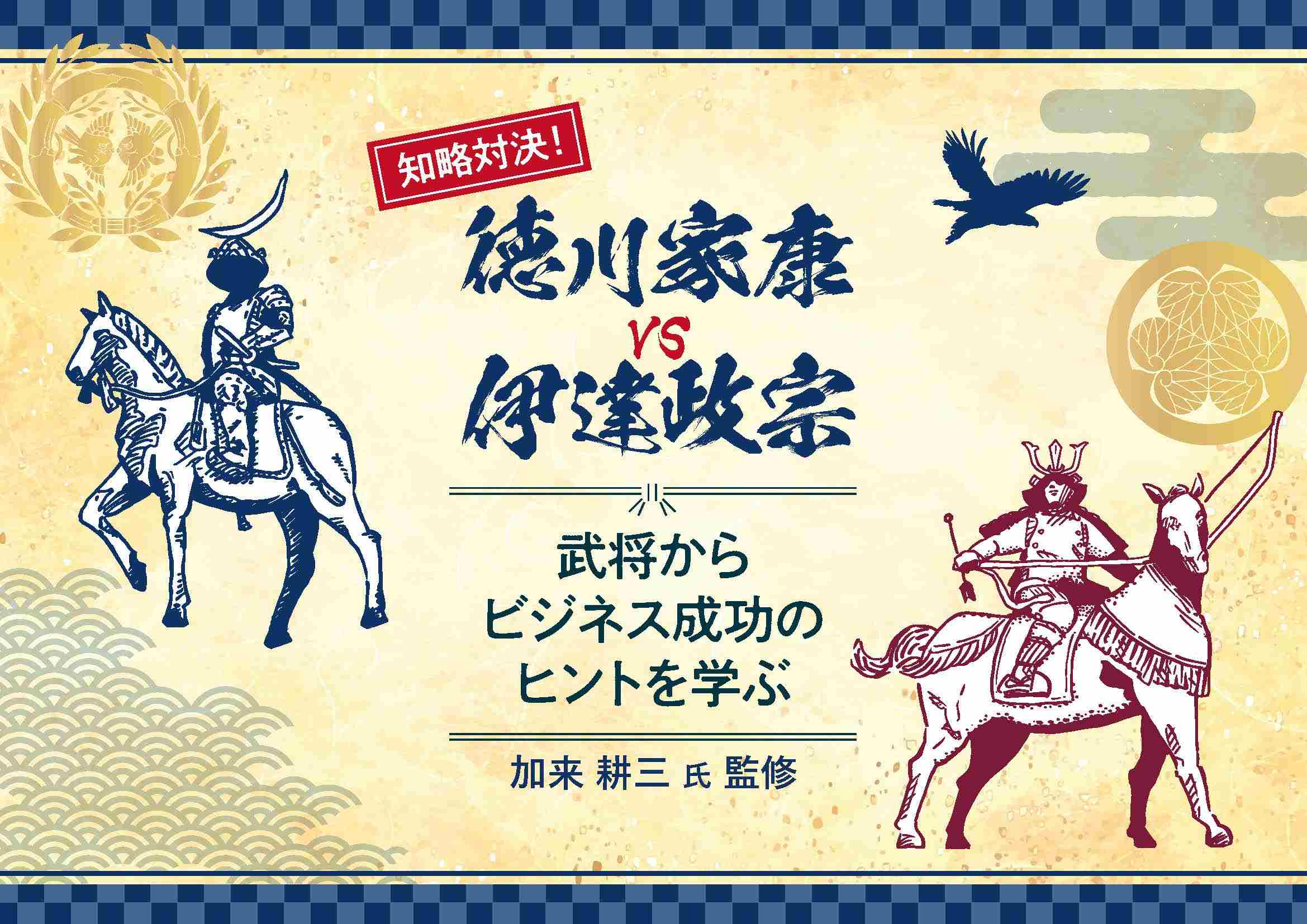
A battle of wits! Tokugawa Ieyasu vs Date Masamune - Learn business success tips from warlords
In modern business, differences in judgment determine success. How did Tokugawa Ieyasu and Date Masamune, who survived the Warring States period, interpret and utilize the limited information they had? This e-book introduces the perspective of turning information into a weapon through their ingenuity.
Saison Technology Official YouTube Channel "SIS☆STA"
We are introducing an interview video with historian and author Kozo Kaku on Saison Technology's official YouTube channel.
Please see also.

Related Content
-
What was the reason that a warrior born of peasant origins was able to grow so rapidly into a great advisor to the ruler of Japan? - Toyotomi Hidenaga's learning method of clarifying the skills and information to be acquired through problem awareness -
-
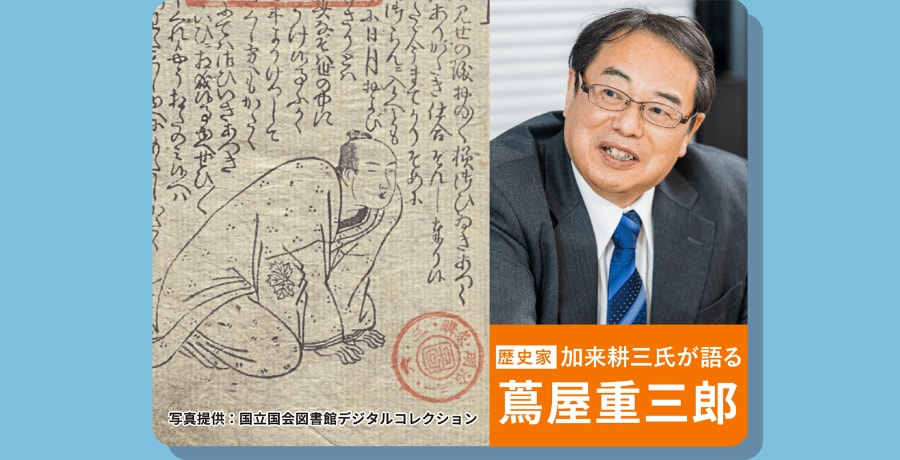
How did the "Edo Media King" discover so many exceptional talents and produce so many hits? ~A "backward information strategy" that gathers the information necessary to reach the goal~
-

The key to utilizing generative AI is to develop strategies that capitalize on a company's unique data and enhance its strengths
A leading expert on AI talks about the current state of Japanese companies and their future aspirations