
Exciting business life in the digital transformation era: Digital organization with the KonMari method
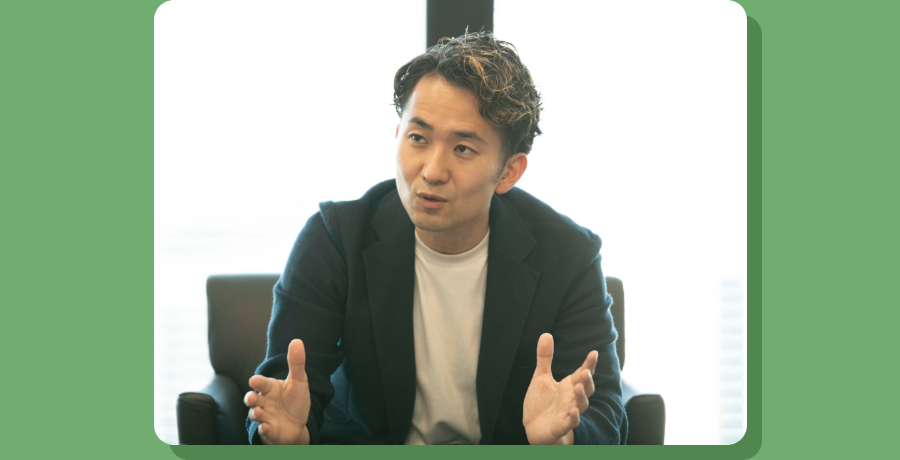
HULFT Technology Days was held in October 2024. On October 16th, Marie Kondo, a tidying consultant whose unique "KonMari® Method" tidying method has garnered worldwide attention, appeared on stage. Her book "The Life-Changing Magic of Tidying Up," published in 2010, became a huge bestseller, being translated into over 40 languages around the world, and she was named one of TIME magazine's "100 Most Influential People in the World" in 2015. She gave a talk entitled "Thrilling Business Life in the Digital Era: Digital Organization with the KonMari Method," in which she shared advice on organizing digital data using the KonMari Method.
▼Marie Kondo's profile
Tidying consultant
*Titles and affiliations are those at the time of interview.
Data cleanup is a topic of much discussion
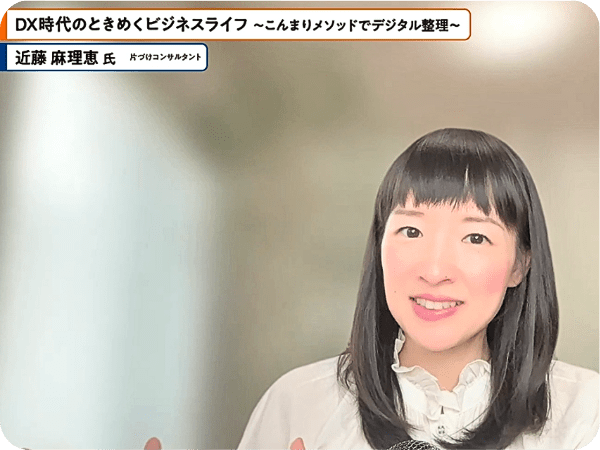
My interest in tidying up dates back to when I was five years old. I was so passionate about it that I once fainted after tidying up too much. I thought so much about what it means to organize the things in front of me and keep only the things I need, and how that would change my life, that I now work as a consultant specializing in tidying up.
In 2010, I published a book called "The Life-Changing Magic of Tidying Up," and since then I've received numerous comments from people all over the world about how they were able to tidy up their homes using the KonMari Method. Now, I'm increasingly hearing from people who have tried using the KonMari Method to tidy up their data as well. In fact, I once gave desk tidying lessons to business managers, and it seemed that once they'd finished tidying up their offices, they naturally wanted to tidy up their data as well.
Many people feel comfortable when their vision is clear, and once they realize this, they find it difficult to overlook the clutter of data in front of them. We hear from many such people that, after using the KonMari Method to organize their data, it has become easier to utilize the data, and it has been put to good use in their business. To be honest, rather than me applying the KonMari Method to data organization, it was actually my customers who taught me about it.
The KonMari Method values "excitement sensitivity"
The most distinctive feature of the KonMari method is the idea of choosing things that make you excited. When doing so, it is important to always touch the object, and check how your body reacts to each touch.
When I touch something that makes me excited, I feel like the cells in my body "kick up." Conversely, when I hold something that doesn't make me excited, my body somehow becomes heavy. This is a feeling that you can't get just by thinking about it or looking with your eyes; when you touch it, your body senses it and the answer becomes clear. This is a major feature of the KonMari Method.
However, this does not mean that the method cannot be put to use if you do not touch it. Strangely enough, once you have physically tidied up with the method in mind, you will begin to understand with your body what makes you excited. This process is called "honing your sensitivity to excitement."
In other words, your judgment will be honed by your own physical senses. When this happens, you will be able to judge for yourself what option will excite you, not only in physical matters, but also in situations where you need to make a decision in relationships or at work. You will then be able to sense this intuitively.
The theme of this article is data, which is certainly something you can't touch, but once you've finished tidying up your physical belongings, that is, once you've honed your sensitivity to excitement, if you start tidying up your data and organizing the things you can't see, it becomes easier to decide whether or not to keep something. This is not just my own experience, but something I've also come to realize from the feedback of many customers.
What is the KonMari Method?
Here, I would like to introduce the KonMari Method once again. The KonMari Method is not just a methodology for tidying up your home, but it places importance on honing your ability to judge what brings you joy through tidying up. Specifically, there are four key points to tidying up.
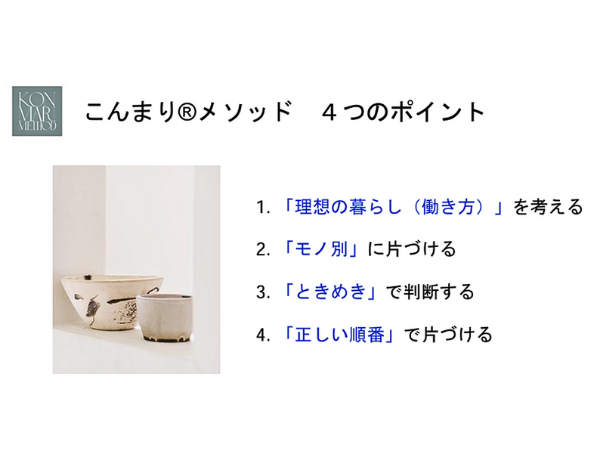
[1] Think about your ideal lifestyle
It can be difficult to get started on tidying up right away. So, before you start, take some time to reflect on why you want to tidy up. In other words, the first key point is to think about your ideal lifestyle.
This means taking the time to think about your goal, what kind of life you want to live after you've finished tidying up. The key is to think about it as specifically as possible, not just wanting to live a cleaner life or wanting to get rid of some vague feeling, but thinking about what you will do in your home after you've tidied up.
To put it in terms of tidying up your office, when you arrive at the office, you first think about what state your desk should be in and how you want to start working. One person, for example, first wipes their desk with a cloth, then lights an aroma that suits their mood that day and meditates for about a minute. Then, when they open their computer with their desk tidy and clear, the tasks they need to do that day are clearly visible, and only the data they need for work is displayed in a list.
In this way, I recommend that you first confirm your desire to tidy up in order to achieve your ideal state before starting to tidy up. The same goes for tidying up your home; it can take time and you may give up halfway through, but having an ideal state will motivate you to try harder.
[2] Tidy up by item
The second point is to organize things by item. This can be rephrased as arranging by category. People tend to organize things by location, such as in drawers, and that's certainly not a bad idea. However, the most recommended method is to organize things in the same category all at once.
For example, when tidying up your clothes, take all of the clothes you currently own out of storage and pile them up in front of you. Then, pick up each item one by one and choose what you want to keep. The benefit of tidying up by category is that you can get a sense of how much stuff you currently own.
When decluttering data, try decluttering photos first, or apps first. When decluttering data, it's easier to categorize it, so it may be easier to proceed.
[3] Make decisions based on excitement
The third point, which is also important in the KonMari method, is to judge by what makes you excited. When you hear the word "excitement," many people think it's vague and something that feels intuitive, but it's basically a criterion for whether or not having it makes you happy.
When I talk to business owners, they often point out that the word "excitement" is difficult to understand. Some have replaced it with words like "first-string" or "second-string." Some use expressions like "does it make you excited?", and in the case of business, some people interpret excitement as a criterion like "if you have this, you'll make a profit."
When judging something based on excitement, think of it as asking yourself whether having it will bring you happiness.
[4] Tidy up in the right order
The fourth point is to tidy up in the right order. Tidying up by category is the basis of the KonMari method, but even within the same category, there will inevitably be things that are more difficult and things that are easier.
A common example of people failing to tidy up is starting with mementos. If you start with things that are hard to throw away or let go of, such as gifts from others or commemorative photos, you often end up struggling to make progress. This is because you're tidying up in the wrong order. Here, we recommend starting with the easiest items.
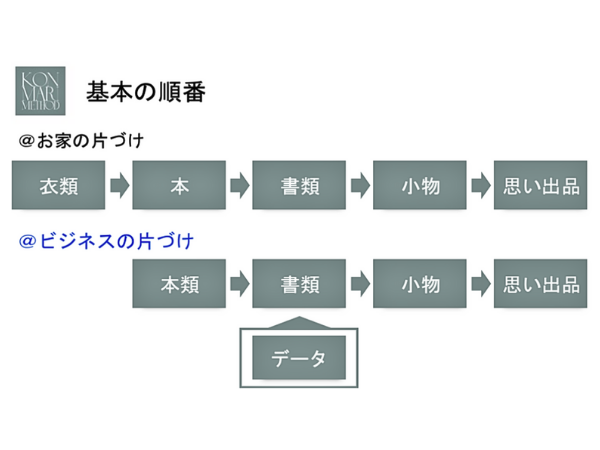
When tidying your home, the order is to start with clothes and other clothing, then books, small items, and mementos. Tidying in this order will actually gradually hone your judgment of what makes you excited. Once you get to that point, you'll be surprised at how easily you can put away things you thought would be difficult to put away, such as mementos. In fact, people who have successfully tidyed up often report being surprised that their senses have been sharpened and they have been able to clearly see the right answer for themselves.
When thinking about tidying up an office, since there is generally no clothing in most cases, the basic order is books first, then documents, small items, and mementos, but data itself is usually included in documents. In reality, it seems that in many cases people start tidying up data after tidying up physical documents.
When you have a huge amount of data, tidying it up can be a hassle. That's why we recommend starting by physically tidying up your office or workplace. Once your surroundings are tidy, you'll get a head start on tidying up, and it will be much easier to get your data sorted.
Secrets to tidying up your data
When it comes to things you can't touch, it can be different from physical tidying, which is limited by space and other factors. When tidying your home, the basic concept is to select all the things in your household, which will greatly change the amount of space you can use in your home. On the other hand, when it comes to tidying up data, you can put everything in a single folder, and even if you don't know where things are, you can find them by searching as long as you name them properly.
In other words, it can be said that when tidying up your data, you don't necessarily have to select everything. If you try to faithfully follow the basics of the KonMari method, you'll end up going through a huge amount of data one piece at a time, and some people may find it takes a lifetime to finish. To avoid this, set your goal as being able to always access the things that make you happy and that you need. It's okay not to be perfect and delete all the things you don't need and select them all.
How to interact with data during the COVID-19 pandemic
As you all know, opportunities to use digital tools have increased more than ever before, with people now able to work online after the COVID-19 pandemic. Amid this, we've received many inquiries from people who want to rethink their work style. With the ability to work remotely, more people are looking to start their own businesses and utilize their skills. It seems that more and more people are looking to declutter their surroundings, not just their homes but their workspaces as well, and rethink what their ideal lifestyle and work style is.
I'm not particularly good with digital technology, but I use my smartphone and computer on a daily basis for work and work borderlessly, including overseas. Our company itself is primarily a remote work environment, so we organize our data using services that help with data sharing and management. Personally, I'm trying to incorporate new technology little by little, for example by using a photo organization app that helps me extract and organize similar photos.
Recently, AI technology like ChatGPT has been all the rage, but I've been using it to study English. Since I'm not good at speaking English, I ask ChatGPT what words I can use to express myself naturally.
Although we live in a convenient digital world, when it comes to buying books, I'm a 100% paper person, not an e-book. For me, a paper book is an undeniable thrill, not just for the physical object itself, but also for the feeling of turning the pages and folding the edges. On the other hand, when it comes to shopping, I often find myself relying on online services, since I don't always have the time. While I try to touch and see things as much as possible before making a selection, I actively use online services, especially when buying from a second time onwards.
While the idea of choosing something based on what excites you remains fundamental, finding a balance between using digital technology and getting along well is also important. When it comes to work, ChatGPT, for example, is incredibly convenient, and many people find they can use the free time to get more done. However, it's important to think about how to allocate your free time using convenient tools to make your life more exciting. By being mindful of how people use their free time to find joy, such as taking time to relax and do nothing, or trying yoga, something you've always wanted to do, you should be able to see how to use your time in ways that don't just involve cramming in things.
Of course, there will be times when you feel excited about working in your free time, so I think it's fine to devote yourself to work.
The power of tidying up to gain confidence in your choices
AI technology will likely continue to make things more convenient, such as automating data sorting. However, I believe that what will ultimately remain, what cannot be expressed by AI, is what excites people.
What moves you emotionally often doesn't match up with rational judgment. It's important to gradually clarify what makes you excited, and hone your judgment and sense of excitement through tidying up.
Even in a world where data volumes are increasing and new technologies such as AI are becoming more widespread, we believe that tidying up will help people have confidence in the choices they make. We've heard from many people who have tidied up that they have made better choices in their lives, quitting their jobs to become independent, or cutting ties with people they don't like so they can spend more time on the things they love, and that their lives have become more exciting. Tidying up really does give you the power to believe in yourself. And once you understand what brings joy to you, you'll no longer have doubts about your life and will love it even more. As a result, your life will become more exciting.
In an age where AI technology and data itself are becoming increasingly important, why not try incorporating choices based on excitement into your work and life?