

Learn data utilization techniques from historical figures: "Seven lessons learned from Florence Nightingale"
▼Profile of Takeo Maruyama
Professor at Mukogawa Women's University. Ph.D. in Agriculture. Graduated from the Faculty of Agriculture, Kyoto University. Prior to his current position, he served as a visiting associate professor at Louisiana State University in the United States. In addition to "Nightingale Was a Statistician!", which was featured in the Asahi Shimbun's Tensei Jingo column, he has written statistics books such as "When the Wind Blows, the Barrel Maker's Profit is Only 0.8%!?" (PHP Shinsho) and "One-Point Lessons in Statistics for Beginners," as well as history books such as "Perry, Hepburn, and the Opening of Yokohama Port," which introduce the end of the Edo period from a scientific perspective, and "The Man Who Popularized Written Calculation." He is active in a wide range of fields, from writing to video production and live send, including the drama "Fukuda Riken," for which he wrote and starred, and the TV history program "Jimoreki TV," which is now available on Amazon Prime Video.
*Titles and affiliations are those at the time of interview.
"Seven Lessons from Nightingale"
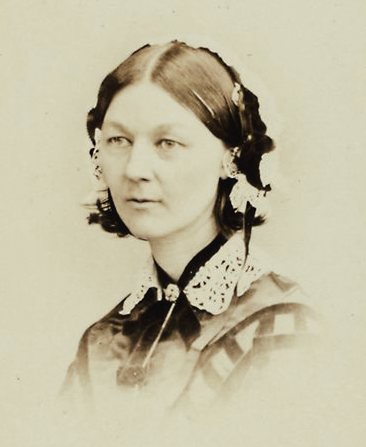
Nightingale is a model nurse. She became a national hero for her devoted care of British Army soldiers during the Crimean War, opened the world's first modern nursing school, and was a historical figure who influenced the founding of the Red Cross. However, it is less known that statistics underpinned her work, and that she invented the world's first color pie chart as a way to clearly communicate the results of data processing to a wide audience. What made her so great was, in fact, her meticulous statistical data analysis skills and the power of expressing them with emotive visual presentations. We asked Takeo Maruyama, author of "Nightingale Was a Statistician!", to trace her life and share seven lessons that businesspeople who work with data can take away from her.
1. The basis of data analysis is the high level of language skills and celebrity education
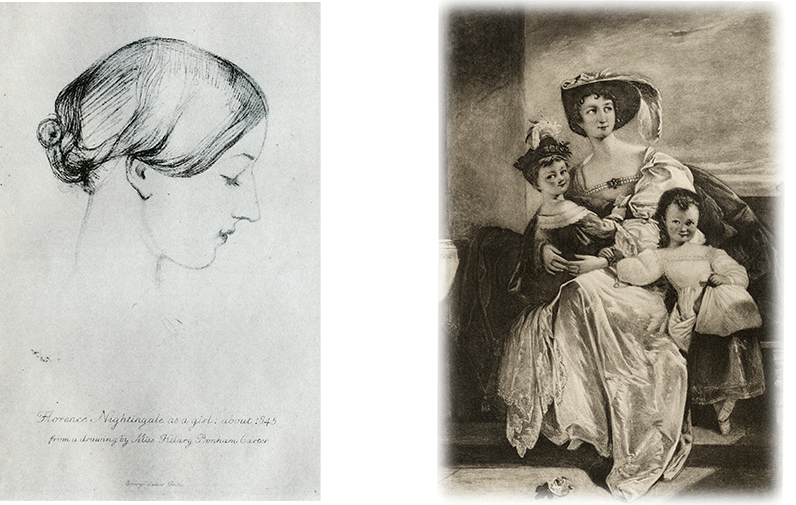
The foundation of data analysis and the expression of its results is, of course, language. Even those with a science background need a wide range of knowledge, but the ability to write logical sentences is especially important. Computer programs are also written texts that have a kind of story-like quality. In this sense, Nightingale was in the perfect environment to receive language education.
Florence Nightingale was born in Florence, Italy on May 12, 1820. Her parents were wealthy British people. They went on honeymoon to Italy, and their first daughter was born while they were in Naples, and their second daughter, Nightingale, was born in Florence. Nightingale's first name, Florence, is the English name for Florence. When they returned from their honeymoon, which lasted about three years, their family consisted of four people.
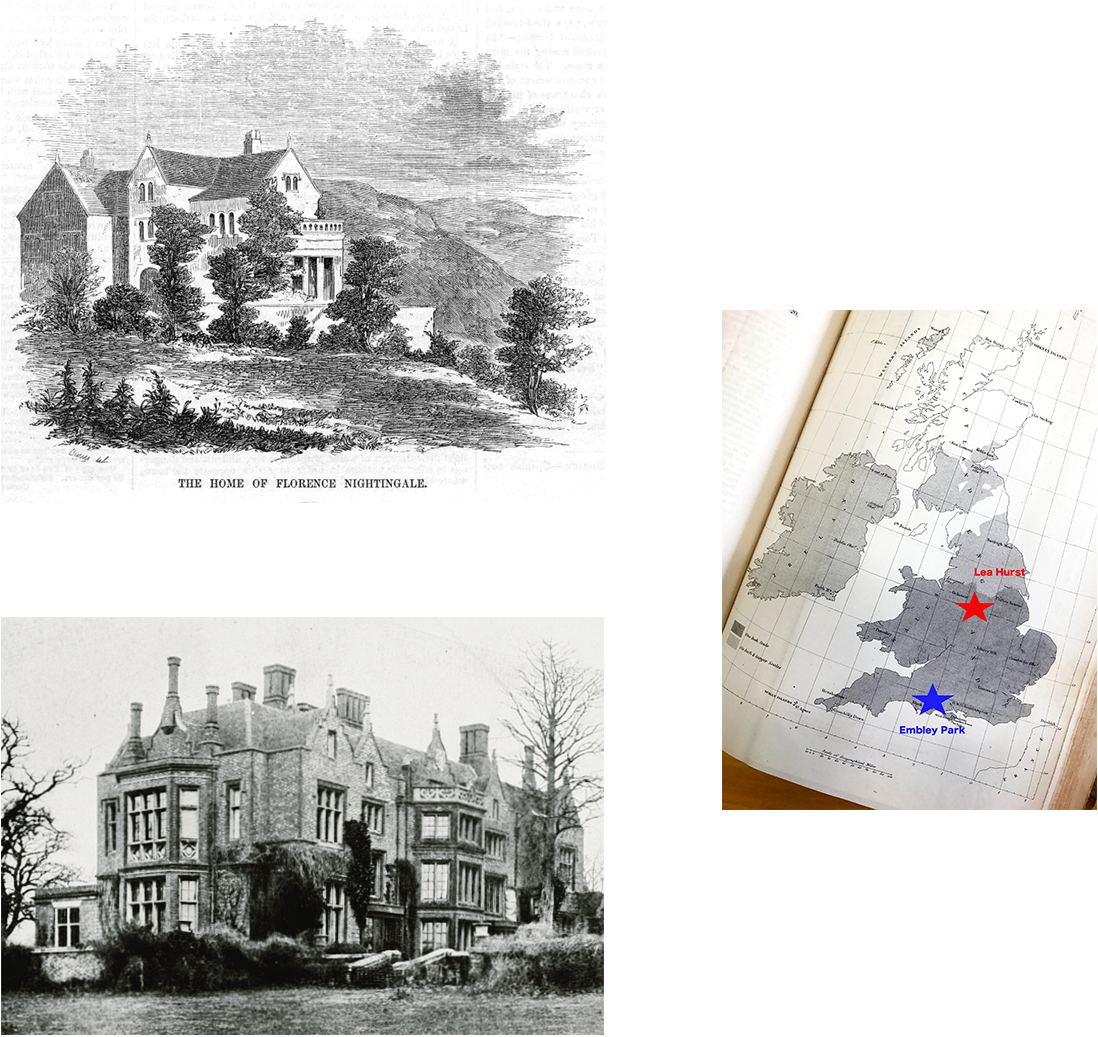
The groom built a mansion for his bride in the cool midlands of England in the summer. However, the bride complained about the cold winters and the distance to London. The kind-hearted husband prepared another mansion for her near the southern coast where it was warmer in the winter. The family traveled seasonally, enjoying a hotel stay in London during ball season. Nightingale is said to have taken piano lessons from her cousin in a hotel room.
At the time, children of celebrities were educated by private tutors rather than attending school. Her private tutor was her father, a Cambridge University graduate. Her father was passionate about education and taught his daughter Greek and Roman history, philosophy, and classical literature. By her teens, she had mastered Greek and Latin, translated and read the works of the philosopher Plato, and analyzed the philosophy of the ancient Roman statesman Cicero.
At a time when Cambridge and Oxford were the only universities in England, her father was a top teacher, and his dedication to education gave her the ability to write books of up to 1,000 pages.
2. Mathematical ability to objectively handle numbers and data
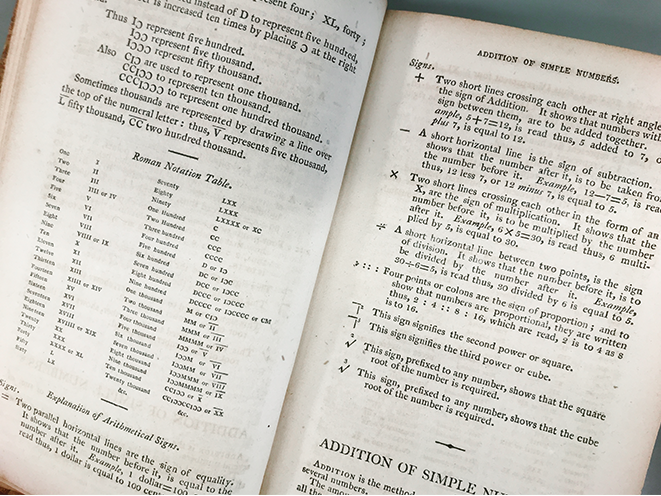
Who said that liberal arts students are bad at math? Nightingale, who cherished Greek and Roman classics, suddenly told her parents that she wanted to study math. She was around 20 years old. Since math was outside her father's realm as a staunch liberal arts student, she suggested that she study history and philosophy more. Her mother, who loved everything flashy and whose greatest goal in life was to send her daughter off to marry a celebrity, was also strongly opposed, urging her to train as a bride. But why did she want to study math? There was a reason.
In September 1837, when Nightingale was 17, her family embarked on a year-and-a-half-long trip to continental Europe. Since they were renovating their prized home, they figured they might as well travel. They toured various parts of France, going from Northern Italy to Switzerland. Finally, in Paris, they witnessed their daughters' high society debuts. But what made her parents so remarkable was that they visited hospitals, relief centers, and charitable organizations in each country. Nightingale experienced firsthand the diversity of politics and the gap between rich and poor. They also collected a variety of materials in the countries they visited. She wanted to use mathematics to organize the information she collected.
At the time, a Belgian scholar named Adolphe Quetelet had begun to calculate birth rates, death rates, crime rates, and other factors to compare regions. In other words, modern statistics was on the way. Nightingale wanted to process the data using Quetelet's mathematics.
"If he wants to do it that badly, then let him do it," said his aunt, stepping in to help him out. Apparently, a doctoral-level professor was brought in from Oxford University to teach him, as he wanted to do it at the very top of his class.
Mathematics is logic. But Nightingale's image is of kindness and sensibility. The multiplication of these opposing forces, logic and sensibility, would later bring about a revolution.
3. Creating new value through cross-disciplinary applications
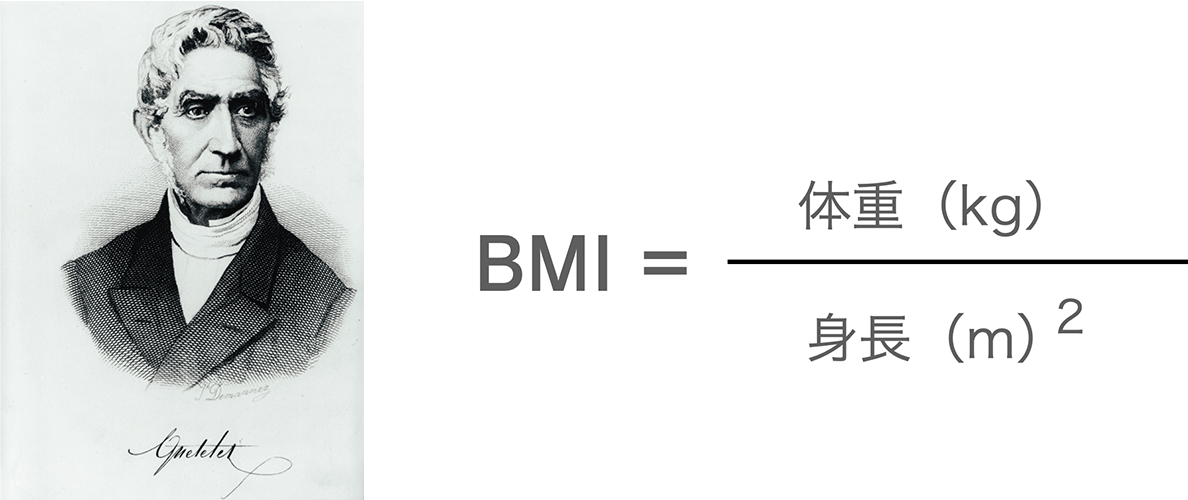
Adolphe Quetelet, whom Nightingale admired, was born in 1796 in the town of Ghent, Belgium. Having lost his father at a young age, he struggled to become a university professor and campaigned for the establishment of an astronomical observatory, which did not exist in Belgium at the time. "Well, then, why don't you try it yourself?" he was sent to the pioneering Paris Observatory, where he was taught by famous figures such as Laplace. After returning to Japan, he set out to build the observatory, but political instability, such as the July Revolution in France, meant that the observatory was slow to complete. Quetelet then decided to apply his valuable astronomical knowledge, which had gone to waste, to problems in human society.
In astronomy, averaging was commonly performed by performing the same observation multiple times and dividing the total by the number of observations. Quetelet applied this averaging method to human height and weight. He then considered dividing weight by the square of height. This is the BMI, a value still used today to assess metabolic syndrome. Since BMI has height squared (distance) as the denominator and weight as the numerator, it was likely inspired by Newton's law of universal gravitation in astronomy. He then calculated the average BMI for a group and concluded that this average represents the optimal balance between height and weight. In Japan, it is considered to be 22. With the publication of "On Man" by Quetelet in 1835, averaging, which was previously just a computational technique in astronomy, made its debut in human society. Due to the delay in completing his observatory, Quetelet applied astronomical data processing techniques to other fields. This is a good example of a data processing methodology from one field blossoming in another.
Nightingale took notice of the idea of averages and rates, which was popularized in human society by Quetelet. In 1860, Nightingale met her respected teacher Quetelet, who gave her a copy of his book.
4. The determination to never give up on your dreams even in the face of pessimism and a once-in-a-lifetime encounter
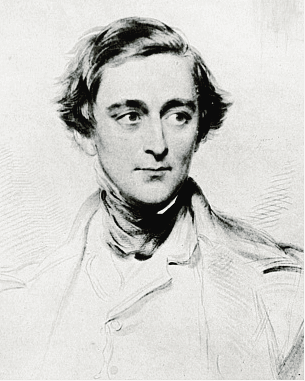
At the age of 25, Nightingale confessed to her parents that she wanted to pursue a career in nursing. However, nursing work in hospitals at the time was not modernized, and they did not understand. This marked the beginning of a season of troubles for her. Worried about her dejected state, her family encouraged her to accompany a couple they knew on a winter trip to Rome to cheer her up. This experience changed her destiny. In Rome, she was introduced to the young politician Sidney Herbert. Had she not been opposed to a career in nursing, this encounter would never have happened. In the midst of pessimism, there are also seeds of opportunity.
However, even after returning to Japan, Nightingale continued to live a depressed life. Finally, after turning 30, she practically ran away from home to attend the world's first nursing training facility, established by a German pastor named Theodor Flietner. After completing her nursing training, she toured hospitals in Paris, learning about nursing personnel management. After returning to Japan, under the care of Mrs. Herbert, she became the director of a nursing home for women. It was the summer of August 1853, when Nightingale was 33 years old. During her job interview, she is said to have suggested a nurse call system, a lift for delivering hot meals, and hot water faucets in hospital rooms. It wasn't until she was over 30 that her dream came true. No matter how old you are, you should never give up on your dreams. It's important to remember, "Even Nightingale..."
Her encounter with Sidney Herbert in Rome proved useful. After training in Germany, she decided to study nursing personnel management at a hospital in Paris, likely with a view to finding a position after returning to the United States. She did not overlook this small opportunity during the season of sorrow. Her efforts and enthusiasm must have been conveyed to the Herberts.
5. The determination and drive to seize opportunities with all your might
Two months after Nightingale finally found work as a nurse, war broke out between Russia and Turkey in October 1853. This was the Crimean War. Britain sided with Turkey in this war and entered the conflict in March of the following year. However, the war situation was not going well. As the difficult battle continued, on October 12, 1854, an article was published in The Times that would change Nightingale's destiny.
"No proper treatment is being given to the wounded on the battlefield, and there are a shortage of doctors. What's more, there are no nurses at all," was the pioneering article by a journalist reporting from the battlefield. When Sidney Herbert read the article, he immediately knew that she was the only one capable of doing the job. Herbert was Secretary of State for War at the time. Nightingale also realized that this was her calling. A letter conveying their feelings was sent at the same time. On October 21, 1854, a group of about 40 government-sponsored nurses, led by Nightingale, left London. This was nine days after the article was published. The two nurses' quick decision-making and action are certainly worth emulating.
It is fair to say that Nightingale would not exist today if it had not been for her encounter with Sidney Herbert in Rome. However, it is also true that there could not have been anyone else who was able to communicate well with politicians, was of upper-class descent, well-educated, and also skilled in nursing practice and the management of nurses. This was certainly a stroke of luck for both Sidney Herbert and the British people.
Projects in the world progress amidst a variety of intersecting and constantly changing conditions. At such times, there comes a moment when something just clicks. It seems as if Nightingale is teaching us that we should not miss this moment, but rather, when we feel that this is the right time, we should give it our all.
6. Passion and love that touches the hearts of many people
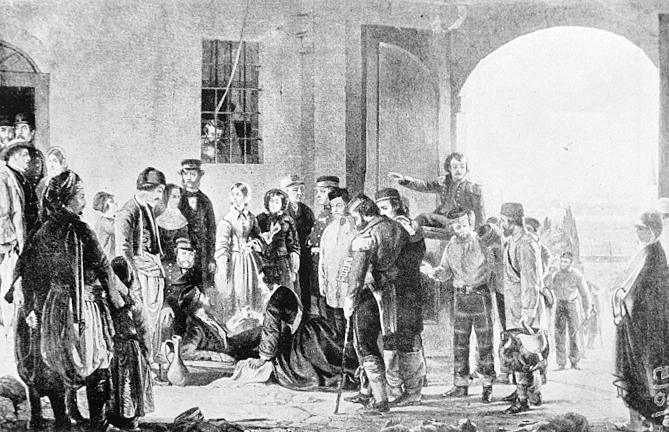
Nightingale's workplace was a temporary military hospital in Scutari, Turkey. There, she worked devotedly and was beloved by the soldiers who treated her. However, as she continued her work, a certain doubt began to grow in her mind. It seemed to her that in wartime hospitals, far more soldiers died from hospital-acquired infectious diseases caused by unsanitary conditions than from wounds sustained in battle. If hospital hygiene had been improved, many soldiers would not have had to die. She paid close attention to the hygiene of hospital rooms, ensuring good ventilation, and making nightly patrols with a lamp. Nightingale's exploits were reported daily at home by correspondents in the field, and she became a national hero. However, after the war, Nightingale escaped the welcoming public awaiting her return, crossing the English Channel under a false name. Returning home alone, she still had work to do: expose the Army's failure to properly sanitize wartime hospitals and reform Army hygiene. He was concerned about the young men who had been spared and hoped that such a thing would never happen again, so he met with Queen Victoria and asked her to appoint a committee directly under her authority to reform the Army's sanitary conditions. Only the King could change the Army.
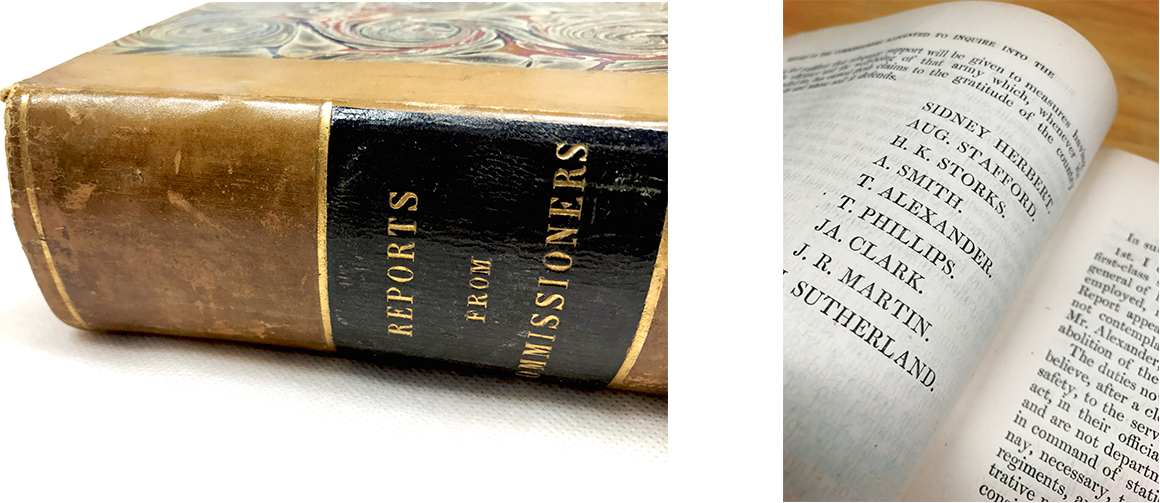
In the 19th century, women did not yet have the right to vote. Since she was unable to take center stage in politics, Sidney Herbert took on the role of chairperson of the committee in her place. She gathered experts in statistics, hygiene, architecture, and other fields, and was responsible for all practical operations. The driving force behind her activities was her feelings for the many soldiers who had died before her eyes. She was determined that the same mistake must never be made again. Her passion moved many people, including the Queen.
7. A presentation that combines logic and emotion to appeal to people's hearts
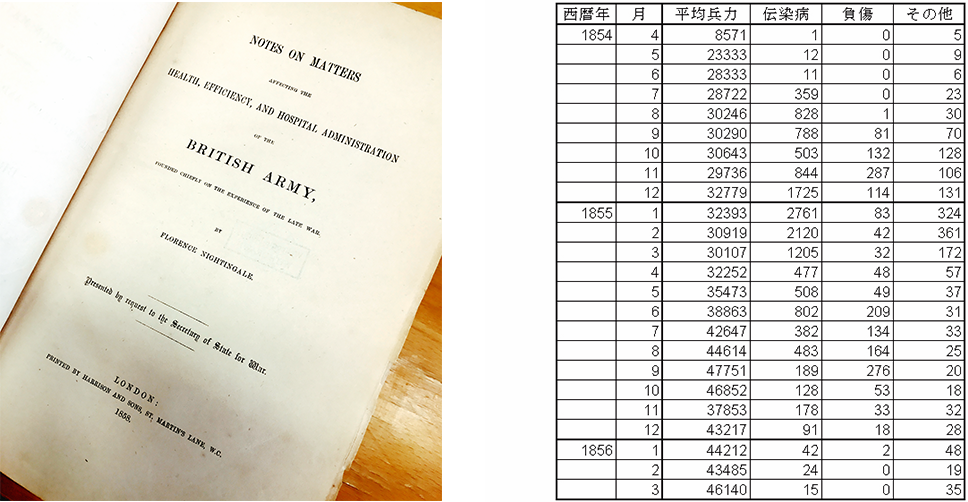
Nightingale's true achievement can be said to be her reform of army hygiene after the war. This experience served as the foundation for her subsequent work in nursing. To prove the army's failure, she used objective statistical data. She classified soldiers who died on the battlefield into three categories based on the cause: injuries, infectious diseases, and other causes. She then derived a time series of changes in each category. This is where her mathematics studies from her twenties came in handy.
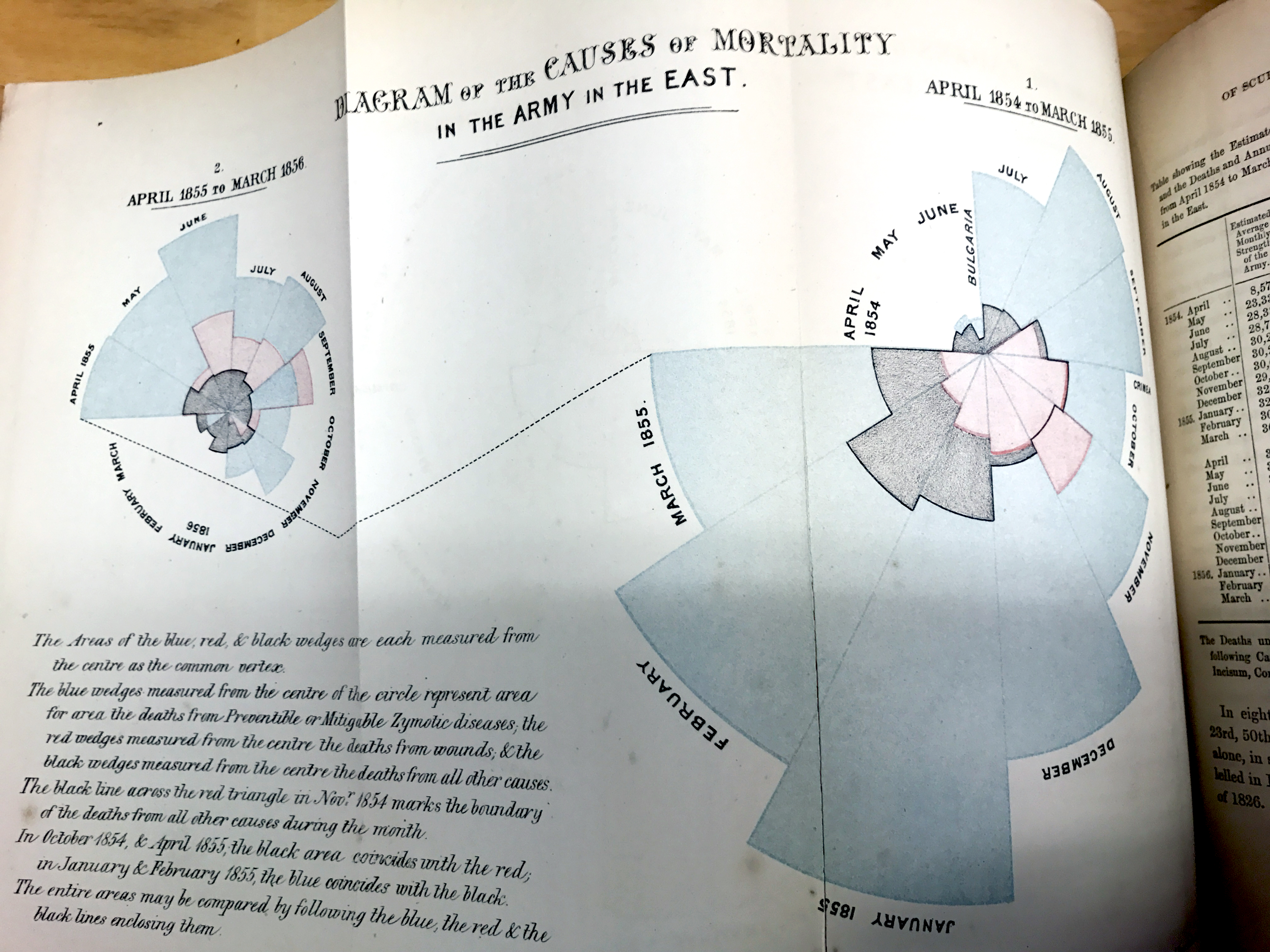
He felt that a table with only numbers would not convey the truth to people's hearts, so he created the world's first color pie chart, with different colors for each cause.
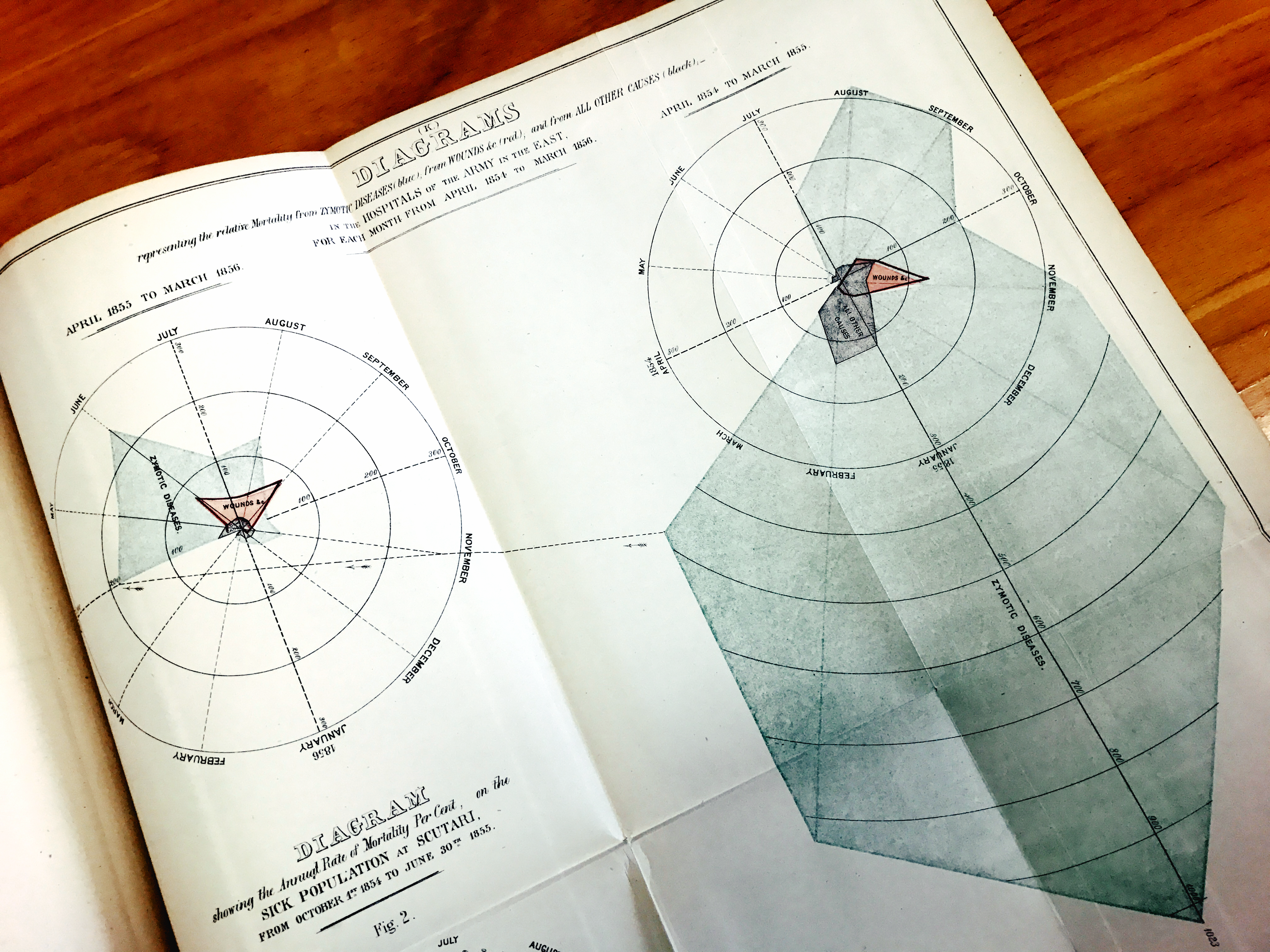
One circle represents the face of a clock. There are 12 markings on one circumference, which represent the 12 months of the year. The two circles represent the change in mortality rate over a two-year period. On the right, the 9 o'clock position on the clock is April, 10 o'clock is May, and after one full circle, the 8 o'clock position is March of the following year. Next, it moves to 9 o'clock on the left clock, and once again it moves around one full circle from April, completing two years.
The green areas represent deaths from infectious diseases, red from injuries, and black from other causes. By plotting this on a graph, it is intuitively clear that there were far more infectious diseases (green) than injuries (red). She also experimented with different ways to create pie charts. When the death rate is represented by the distance from the center of the circle, she came up with the "Bat's Wing" chart, which resembles the wings of a bat. She also came up with a format called the "Rose" chart, which resembles a rose flower, where the death rate corresponds to the area of a fan-shaped section by month.
Nightingale's report to Queen Victoria makes use of color pie charts, bar graphs, and numerous diagrams to make her analytical results intuitive and easy to understand. Inserting such illustrations into books was not common at the time, as it required a great deal of effort and expense. She was a pioneer in creating visual presentations that spoke directly to people's hearts.
lastly
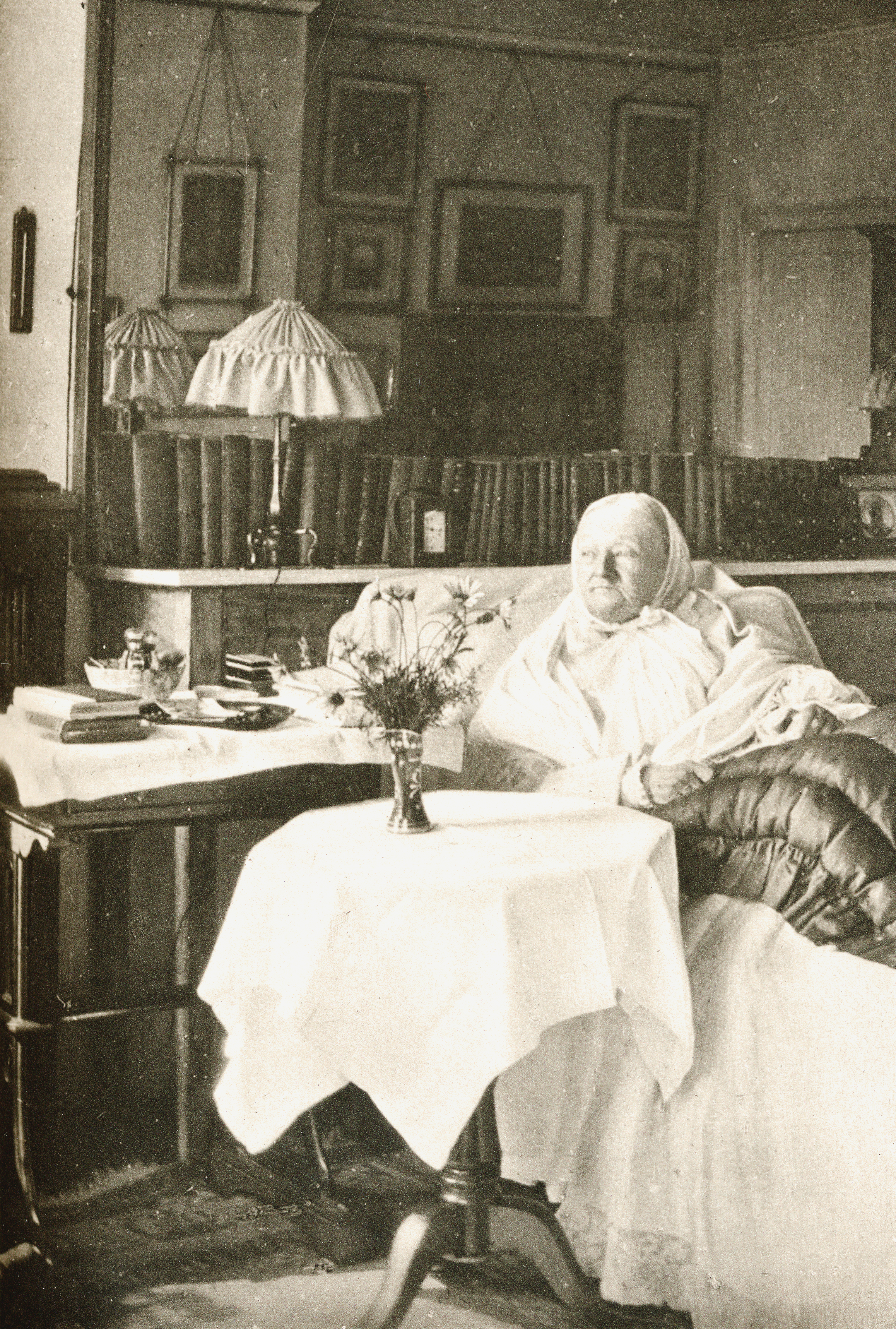
Let's summarize Nightingale's seven lessons.
First of all, language skills are essential. Training in one's native language is fundamental. Literature, music, and other arts also enrich writing. In the past, you had to be rich to become a scholar. However, we are now surrounded by a wide range of education that was once enjoyed only by celebrities.
The second reason is mathematics. No matter how many times Nightingale repeated, "There are definitely more deaths from infectious diseases!", it was not convincing. It was precisely because she had objective numbers and the mathematical ability to manipulate them that she was able to motivate people.
The third is application to different fields. Nightingale's idol, Professor Quetelet, took average calculations from astronomy and applied them to another field, human society. In today's specialized academic fields, each has developed its own unique technology. Applying these to different fields can lead to new developments. The fourth is to not miss the next opportunity, even when you're feeling down. Surprisingly, at times like these, the next opportunity can become visible all around you. Meeting people is especially important. Nightingale met Sidney Herbert in her time of despair.
The fifth point is that timing is important. The environment around you is constantly changing and in flux. But when the right opportunity comes along, you have to give it your all.
Sixth, a passionate heart. Nightingale poured her passion into reforming the army, thinking of the young man who should have survived. Never forget your love for people, and approach everything with passion.
Lastly, it's the multiplication of logic and emotion. Nightingale strived to create presentations that appealed to human sensibilities. Even inorganic logic can become more alive if it incorporates human elements such as sensibility and emotion. Nightingale taught us this multiplication of logic and emotion.
Related Content
-
What was the reason that a warrior born of peasant origins was able to grow so rapidly into a great advisor to the ruler of Japan? - Toyotomi Hidenaga's learning method of clarifying the skills and information to be acquired through problem awareness -
-
How did the "Edo Media King" discover so many exceptional talents and produce so many hits? ~A "backward information strategy" that gathers the information necessary to reach the goal~
-

The key to utilizing generative AI is to develop strategies that capitalize on a company's unique data and enhance its strengths
A leading expert on AI talks about the current state of Japanese companies and their future aspirations