

What can be achieved by connecting data?
Discover new insights with generative AI
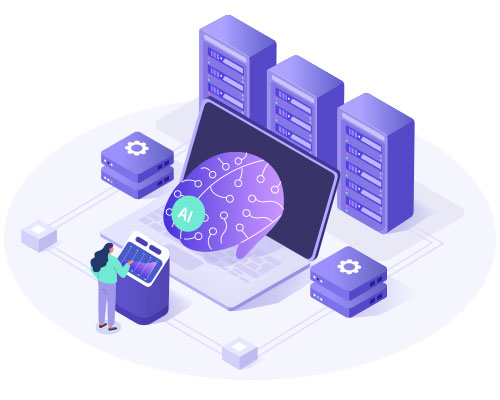
Generative AI is said to bring about major changes to business, but in order to utilize the answers it provides for business purposes, it is important to connect all data sources, such as the latest information and private data held by the company, and make it possible to extract reliable data (RAG: Retrieval Augmented Generation).
By connecting all data with RAG in mind, you can avoid hallucination and gain new insights from the answers generated by generative AI that can be used in your business.
Easily handle complex considerations that are impossible for humans
Generative AI excels at analyzing complex variables based on a variety of scattered data, deriving correlations and causality between the data, and gaining insights. For example, in the retail industry, it will be possible to identify winning patterns based on each store's best-sellers, location, product planograms, and weather conditions, all without the intervention of a data scientist.

Transforming into a data-driven organization
With the advent of AI, anyone can easily use natural language to access and analyze data. This will help us move away from businesses that rely on intuition and experience and accelerate data-driven business decision-making.

Respond with AI chatbots
By linking call center voice data, CTI system text, FAQ sites, and technical documentation data into a RAG, reliable answers can be obtained from generative AI. This can lead to improved response quality and shorter response times from operators, and can also alleviate labor shortages by improving the accuracy of responses from AI chatbots.
Increased work efficiency allows you to focus on your work
A wide variety of data is generated in corporate business systems. By linking this data, not only can you significantly reduce and streamline tasks such as duplicate entry, but you can also eliminate input errors. This allows you to focus on the thinking that only humans can handle.
marketing
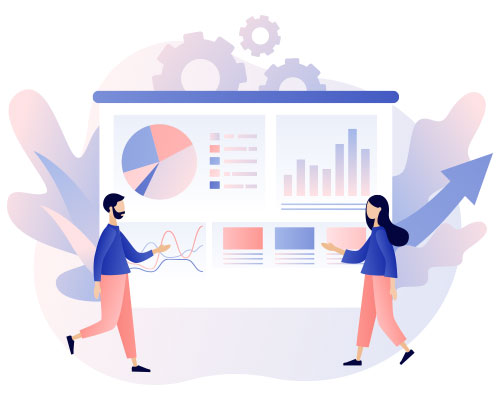
Marketing data is diverse, but because the data formats are different, there is missing information and inconsistencies. By connecting the data, matching it, deleting unnecessary data, and automatically returning it to each system, not only does work efficiency improve, but the accuracy of various marketing initiatives also increases.

Customer Support
Prompt responses to customer inquiries are an important factor in improving customer satisfaction. By linking data from knowledge bases, past FAQs, CRM, etc., you can eliminate operations that are dependent on individual skills and provide speedy, accurate customer support.
Human resources operations
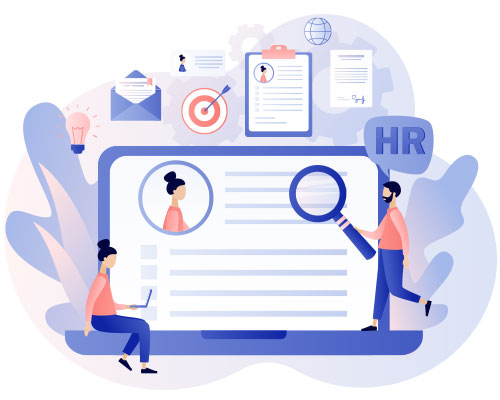
Before a prospective employee joins the company, HR personnel have to enter the same information multiple times into HR-related systems such as recruitment management systems, personnel management systems, and payroll systems. By linking the data from each system, repetitive tasks and registration errors can be prevented, significantly reducing the work time of personnel.
Open data creates new value
Open data is data that is available to anyone, such as demographic statistics and environmental information, made public by national and local governments. By combining your own company's data with open data, you can make new discoveries, gain new insights, and learn new things that can be used in decision-making. It can also be used commercially by private companies, and there are high hopes for business development that utilizes open data.
Use in private companies (financial industry)
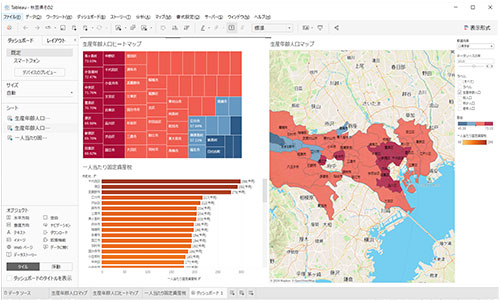
By aggregating and creating a dashboard of open data such as population composition, business establishment trends, and securities published by the national and local governments, you can achieve highly agile data utilization. This can be used for market exploration, such as target area planning, and capital demand forecasting.
Use in local governments
We will compile river and road information released by the prefecture and water level and rainfall information released by the city, and use the data to predict floods and damage. In addition to disaster prevention, this data can also be used in areas such as welfare, education, and transportation, and it is expected that the use of open data will improve the lives of residents.
Achieving DX for local government and administrative organizations while promoting in-house development