

What's the difference between an AI agent and an agent-based AI? We'll explain their characteristics and key points for their application.

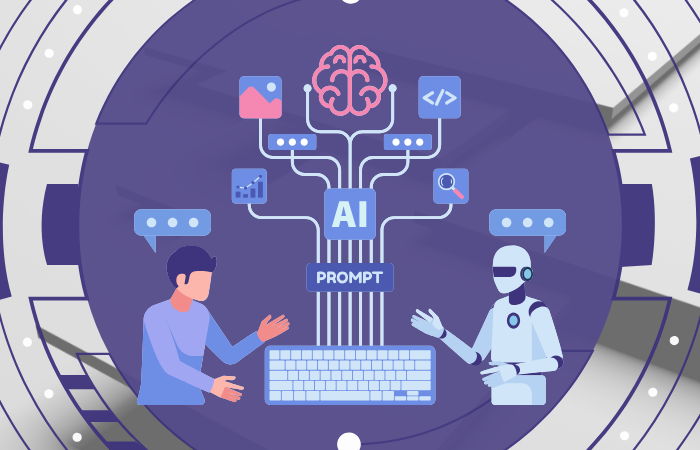
The difference between an AI agent and an agent-type AI lies in whether it operates on human instructions or operates autonomously. Since the advent of ChatGPT, generative AI has evolved from content generation to "agents" that handle tasks. However, there are many similar terms such as "AI assistant," making the differences difficult to understand. This column will explain these differences and their key applications in an easy-to-understand way.
Changes in trends related to generative AI
The concept of AI agents is not something that suddenly appeared out of nowhere; rather, it is an extension of recent trends in generative AI. Before delving deeper into the topic of AI agents, let's first review how the concept of "AI agents" came about by looking back at recent trends in generative AI.
▼I want to know more about generative AI
⇒ Generative AI | Glossary
ChatGPT: Acquisition of dialogue and generative abilities (2022-)
While research into natural language processing technology, which forms the core of generative AI, had been ongoing for some time, it was ChatGPT, announced by OpenAI in November 2022, that brought it into the spotlight.
A key feature of ChatGPT is its ability to converse and generate content using natural language. By presenting instructions (prompts) in natural language—that is, the language that humans normally use—it has become possible to generate "content" such as text creation, summarization and translation, and code generation.
In particular, it has attracted attention in the corporate world for its use in summarizing meeting minutes, brainstorming for business planning, and assisting with programming.
One limitation of this capability is that the generated AI is weak when it comes to the latest information and internal company information, and its answers tend to be vague and limited to generalities.
▼Learn more about ChatGPT
⇒ ChatGPT (Chat Generative Pre-trained Transformer) | Glossary
RAG: Acquisition of the ability to expand knowledge (2023 onwards)
RAG (Retrieval-Augmented Generation) is one method to overcome the knowledge limitations of such generative AI. It separates the answer process into "Retrieval" and "Generation," first searching internal documents and knowledge bases for the user's question, and then generating an answer based on the information obtained. This makes it possible to handle internal company information, which was difficult with ChatGPT, and also suppresses hallucination in the answer process by basing it on actual information.
Its applications within companies are wide-ranging, including the introduction of HR regulations and various procedures, the collection of proposal and technical documents, and the automation of inquiries in call centers. It is particularly effective in organizations where information is scattered and time-consuming to collect.
On the other hand, there are increasingly frequent cases where users fall into the "RAG swamp," where RAG accuracy remains high despite continued tuning. Furthermore, with traditional ChatGPT and RAG, the basic function is to "answer questions asked," meaning that actual actions such as creating tickets, submitting applications, and registering information in the course of business are performed by humans.
▼I want to know more about RAG (Retrieval-Augmented Generation)
⇒ Retrieval Augmented Generation (RAG) | Glossary
AI Agents: Acquisition of Autonomous Thinking and Execution Capabilities (2025 onwards)
AI agents are a concept that symbolizes the shift from "AI that answers questions" to "AI that gets things done." The AI itself plans its goals, calls on tools such as the web, APIs, and business SaaS, checks the results, and decides on the next action, repeating this process until the goal is achieved. In other words, it has the ability to think for itself and carry out tasks.
Common corporate uses include a series of processes from research to document creation, classification of inquiries and creation of tickets, and creation of standardized reports based on data analysis results. A key feature is its ability to cover a wide range of tasks, not just information output.
AI assistant, AI agent, agent-type AI
The concept of an "AI agent" is very broad, and if you attend AI-related events or exhibitions, you'll often find that AI services with completely different characteristics are lumped together and referred to simply as "AI agents."
Here, we will break down the broad definition of "AI agent" into "AI assistant," "AI agent (narrow definition)," and "agent-type AI," and delve deeper into their characteristics.
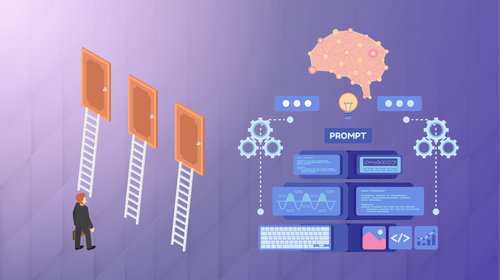
AI Assistant
AI assistants are entities that assist people with decision-making and tasks through conversation. The primary role is still human-led, with the AI functioning as a drafter and organizer.
The main use cases are basically extensions of the functions that ChatGPT offers, such as writing, summarizing, brainstorming, translation, and basic analysis. Therefore, it does not necessarily fit the broad definition of an AI agent mentioned earlier.
Influenced by recent trends, there are instances where AI assistant services that lack autonomous thinking and execution capabilities are advertised as "AI agents," so caution is advised when considering their implementation.
AI Agent
The AI agent constructs the necessary steps based on the goals and tasks given by the user. It then invokes tools with functions such as information retrieval, database and SaaS operation, and code execution, and carries them out until the task is completed. Model Context Protocol (MCP) is one of the important concepts for achieving smooth collaboration between the AI agent and the tools.
Generative AI (Large-Scale Language Models: LLMs) play a role throughout the entire sequence of actions of an AI agent. Specifically, this includes planning, issuing execution instructions, generating search queries, evaluating search results, and creating outputs. From the user's perspective, it appears as if a single AI is performing the tasks, without the user being aware of each individual action of the generative AI.
Specific use cases include travel arrangements, invoice processing, inquiry ticket creation, and report generation. The key here is not mere automation, but rather "proceeding while checking." Because intermediate results are evaluated and the next action is adjusted accordingly, it becomes easier to apply to tasks with many branching paths.
Agent-based AI
In recent years, a concept called "agentic AI" has emerged. While there are various definitions of agentic AI, it is generally used to mean "having the ability to achieve goals from an AI-driven perspective rather than a user-driven one" or "having the ability to achieve goals in cooperation with multiple AI agents."
The first point, "having the ability to achieve goals from an AI-driven perspective rather than a user-driven one," is a key characteristic that distinguishes it from AI agents in the narrow sense. An AI-driven approach means that the AI monitors the external environment, plans actions at the appropriate time, and executes tasks accordingly. For example, when an anomaly occurs in production equipment, it identifies the cause of the anomaly from sensor logs and maintenance records, notifies maintenance personnel, or orders replacement parts.
The second point, "the ability to work with multiple AI agents to achieve goals," means that, centered around agent-type AI, multiple AI agents with specific roles and functions collaborate and cooperate to perform tasks to achieve goals. For example, when a decline in profits is detected, a customer management AI agent identifies the cause from customer usage data, and a production management AI agent investigates whether various supply chain conditions are affecting costs and lead times. The "A2A (Agent to Agent) protocol" proposed by Google is a standard for facilitating this collaboration between AI agents, and can truly be called a concept for the age of agent-type AI.
Towards an era where agent-based AI becomes commonplace
While AI models are evolving at a dizzying pace these days, the effectiveness of RAG, AI agents, and agent-based AI is not determined solely by the model's performance. As the saying goes, "Garbage In, Garbage Out," the quality of AI output is greatly influenced by the AI's input—that is, the "data."
In order to drive business operations using agent-based AI, it is necessary to properly prepare the data itself, metadata, and data integration so that the AI can correctly understand the environment (operations, products, market, customers, etc.) and achieve accuracy that goes beyond the proof-of-concept stage.
▼I want to know more about data integration
⇒ data integration / data integration platform | Glossary
Data preparation
The purpose of data preparation is to ensure the data is in a "correctly usable state" before handing it over to AI. If the location of data is unknown, there are multiple instances of the same content, or the data is no longer being updated, no matter how much the AI searches, it will not be able to find the correct answer. First, we take inventory of the location of business data and organize unnecessary, duplicate, and outdated information.
Next, it's crucial to define the "Single Source of Truth." For documents, this could be the latest version managed by the HR department for personnel regulations, or the version managed by the sales planning department for price lists—determining the "place you ultimately trust." Ambiguity in the source of information will lead to inconsistencies not only in human operations but also in AI's understanding of the information.
Access control design is also part of data management. Implementing necessary access controls by department, job title, project, etc., and masking confidential information, to determine which data AI can access, is directly linked to governance.
Metadata organization
Metadata is crucial reference information for AI to find the right data. By ensuring that AI knows which documents or databases are up-to-date, which department owns them, and how they are used in its operations, it can correctly understand and utilize the information before it even accesses them.
The metadata that AI needs varies depending on the type of data. For example, for documents, information such as the creation date, update date, managing department, confidentiality classification, and file path/URL is required. For databases, important information includes the schema name, table name, field name, and the meaning of each field (such as a description of the coding system and information on join keys with other tables).
▼Please also see the following for information on metadata organization methods.
We will explain why generative AI needs metadata, what kind of metadata should be prepared, and specific preparation methods.
data integration development
data integration has two aspects: (1) data data integration in a location accessible to AI (Data to Data), and (2) data integration to allow AI to directly access data (AI to Data). Which type of integration is needed depends on how the RAG, AI agent, and agent-based AI are designed.
For Data to Data integration, in most cases, general RAG services and other services have restrictions on the data storage that can be referenced. Specifically, in many cases, data is uploaded to the service environment via a web browser, or various types of object storage in the public cloud (Amazon S3, Azure Blob Storage, etc.) are specified. In this case, data must be moved from the business system to these environments. Therefore, data integration is required to transfer data by batch processing, etc.
Regarding AI to Data linkage, this is necessary mainly when the AI is designed to execute "data integration tool" as in MCP. For example, if a tool is created to reference data from mission-critical system, core system, the process of extracting data from mission-critical system, core system via SQL needs to be made into an API so that AI can use it as a tool.
Depending on the design of the agent-based AI, it is necessary to identify and prepare the required data integration. Saison Technology's cloud-based data integration platform, "HULFT Square," can handle both cases. Please contact us if you are interested.

iPaaS-based data integration platform HULFT Square
HULFT Square is a Japanese iPaaS (cloud-based data integration platform) that supports "data preparation for data utilization" and "data integration that connects business systems." It enables smooth data integration between a wide variety of systems, including various cloud services and on-premise systems.
Finally
AI is moving from the stage of "answering questions" to the stage of "being entrusted with achieving goals." Organizing terminology and expectations to match your company's specific challenges, and solidifying the foundation of data, metadata, and integration, is the quickest way to successfully implement AI agents and agent-based AI in the field.
The world is full of various terms, and even the same expression "AI agent" can refer to a variety of things and roles. If you want to speed up human tasks such as creating meeting minutes, use "AI assistant"; if you want it to perform tasks autonomously based on human instructions, use "AI agent (in the narrow sense)"; and if you want the AI to autonomously decide what actions to take and act accordingly, use "agent-type AI."
While it's crucial to use AI correctly for its intended purpose, its performance is largely determined by the data. Developing not only AI models, but also data, metadata, and data integration is a vital step towards data and AI utilization that goes beyond mere proof-of-concept (PoC).
Saison Technology Online Consultation
If you would like to hear more about our data utilization platform, we also offer online consultations. Please feel free to contact us!
The person who wrote the article
Related Columns
-

"Data exists, but it can't be used": Challenges and approaches to data utilization in the real estate industry.
-
How to visualize cost management in Construction? We explain the challenges, methods, and system utilization.
-
Management speed is determined by structure: Reforming the decision-making process of a regional bank through data integration and AI.
Recommended Articles
-
What is the difference between AI agents and AI workflows? Explaining the key points for using them
This article will summarize the characteristics of both "AI agents" and "AI workflows," and explain, with specific examples, which is more suitable for which type of work, and what is needed to improve accuracy. -
How far should we tolerate AI lies? Measures to prevent RAG hallucination that IT systems should know
This document explains the root causes of hallucination (misinformation generation) that occurs in the "RAG" system, which utilizes internal company data, as well as technical methods to prevent it and how to cover the parts that cannot be prevented by technology through operational measures. -
Data exploration in the AI era: Vector search techniques and data integration methods explained
We will explain vector search techniques that support the AI era, as well as methods for data integration between data sources where data assets lie dormant and vector databases.