

How to visualize cost management in Construction? We explain the challenges, methods, and system utilization.

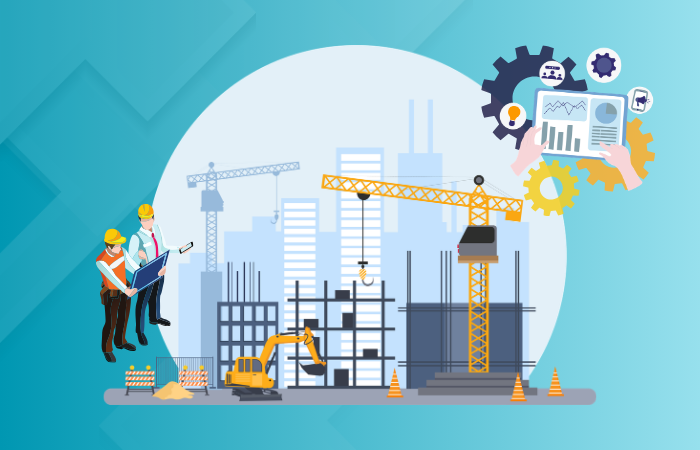
In Construction, costs tend to fluctuate easily due to changes in material costs, subcontracting costs, and additional work, and it's not uncommon for profits to deteriorate significantly before the company realizes it.
To prevent these risks, it is crucial to "visualize cost management" by continuously tracking the budget, actual results, and forecasts for each project.
This article explains why cost management visualization is required in Construction, how to implement it, the limitations of using Excel, and key points for utilizing systems.
Why cost management needs to be made transparent in Construction
In Construction, while the upper limit of sales is largely determined at the time of order placement, costs fluctuate during the construction period due to changes in material prices, additional work, and increased subcontracting expenses. In other words, it is difficult to significantly increase sales after an order is placed, so cost management is crucial to protecting profits. Therefore, the ability to quickly grasp changes in costs is key to securing profits.
Furthermore, in Construction, multiple projects often proceed in parallel, and a loss on one project can have a significant impact on the company's overall profits and cash flow.
In Construction, making cost management transparent means continuously tracking the budget, actual results, and forecasts for each project, and being able to make timely judgments about profitability. It's not simply about listing numbers; it's crucial to create a situation where site personnel, administrative staff, and management can all make decisions based on the same information.
By making things transparent, it becomes possible to detect signs of deficits early, and to quickly implement concrete measures such as additional billing or reviewing ordering conditions.
Three risks that arise from not being able to see the cost
Profit assessment is delayed.
If cost assessment is delayed, it becomes impossible to notice cost increases due to additional work, design changes, or rework. In Construction in particular, there are cases where profitability is only checked after the completion of the project, and it turns out that "it was actually a loss." However, at that stage, there are very few options left to take.
The purpose of cost management is not to compile results, but to protect profits during the construction process.
Early detection of signs of budget overruns allows for measures to prevent a decline in profits, such as considering additional billing or reviewing construction methods.
The process is becoming increasingly reliant on individuals and is becoming a black box.
In systems that primarily use Excel or paper, input rules often differ from person to person, and file management tends to become complex. Situations such as "not knowing which file is the latest version" or "only the person in charge understands the contents" are not uncommon.
Furthermore, if the basis for the execution budget and construction ledger becomes unclear, it becomes impossible to analyze why cost variances occurred, preventing improvements. There is also the risk of operations ceasing due to personnel changes or resignations, which can lead to a decline in the overall management level of the company.
Financial situation is deteriorating.
In Construction, it's common for material costs and subcontracting fees to be paid first, with revenue recognition and payments occurring later. Therefore, without knowing how much future payment will be incurred, it becomes difficult to create financial plans.
In particular, when multiple projects are underway simultaneously, a lack of visibility into the status of individual projects can lead to a deterioration in the company's overall financial situation.
Being able to manage estimated costs makes it easier to forecast future expenses and helps reduce the risk of cash shortages.
Three reasons why cost management is difficult in Construction
So why is it difficult to make costs transparent in Construction? The answer lies in the industry's unique structure, including accounting standards specific to Construction, long construction periods, and information fragmentation across departments.
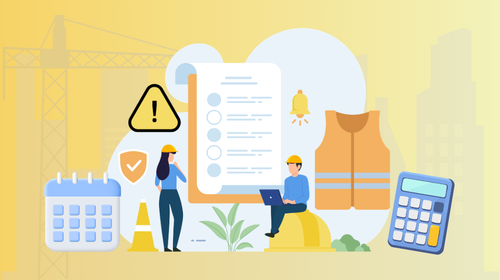
Accounting and contract structures unique to Construction
In Construction, the timing of revenue and profit recognition differs from that of other industries, due to practices such as the percentage-of-completion method and the completed-contract method. Furthermore, there are many unique accounting items specific to Construction, such as accounts receivable and advance payments, making it difficult to grasp the profitability of individual projects based solely on accounting figures.
Furthermore, billing dates and terms often differ for each subcontractor, which means it takes time to finalize the cost.
The construction period is long and the differences are difficult to see.
Construction projects can last from several months to several years, and small cost overruns tend to accumulate gradually. Even if the monthly changes seem small, they can manifest as a significant deficit upon completion.
Therefore, it is important to compare budgets and actual results not only at the time of completion, but also on a monthly and weekly basis to detect anomalies early.
Information from the field and administrative staff tends to be fragmented.
Typically, the field staff manages daily reports, progress reports, and order information, while the administrative department handles billing, payments, and accounting. When information is fragmented, duplicate entries occur, leading to transcription errors and increased verification time.
Furthermore, discrepancies in the figures seen by the field staff and the accounting department can lead to meetings becoming solely focused on reconciling numbers, preventing time from being spent on considering necessary countermeasures.
Four ways to visualize cost management
To establish effective cost management, it's crucial to continuously follow the cycle of "create a budget → collect actual data → analyze variances → make improvements." In Construction, additional work and price fluctuations are common, so it's necessary to operate with the understanding that the system, once created, must be continuously updated.
1. Create an execution budget.
Based on the estimate, we organize material costs, labor costs, subcontracting costs, and expenses on a project-by-project basis and create an execution budget.
Since estimates are often difficult to manage as they are, it's important to break them down into smaller units, such as work types or process units, to match the actual operational level. Also, when additional work or specification changes occur, instead of overwriting the budget, keep a record of the reasons for the changes and the increase or decrease in amount, which makes it easier to track down the cause of discrepancies later.
2. Collect actual costs.
Order, delivery, invoice, payment, and labor information are linked to the project code and compiled accordingly.
In Construction, it takes time for invoices to be finalized, so managing costs solely based on confirmed figures can lead to delays in understanding the actual situation. Especially with outsourcing costs, managing them as estimated costs from the time of ordering, rather than waiting for invoices, makes it easier to predict the completion of the project at an earlier stage.
3. Conduct a difference analysis.
We compare the budget with actual results and analyze the causes of cost overruns.
Identifying the causes, such as rising material costs, increased quantities, rework, and process changes, allows for concrete improvement measures. Instead of simply looking at profits and losses, understanding "what happened at which stage of the process" is the first step towards improving profitability.
4. Standardize the improvement process.
We will incorporate the analysis results into our quotation criteria and ordering rules, and use them for future projects.
For example, revising estimated unit prices and establishing rules for managing frequently occurring additional work can prevent the recurrence of the same problems. Cost management is not something that is done once a system is created; its accuracy is improved by continuously refining it while accumulating knowledge from each project.
Three key points for achieving visualization
To make costs transparent, it's crucial to manage data in a way that facilitates comparison and to establish a system for timely sharing.
Manage estimates, budgets, and actual results at the same level of detail.
If the management units for estimates, execution budgets, and actual costs are not aligned, it becomes impossible to identify where discrepancies occurred. For example, if estimates are measured at the work type level and actual costs at the account level, the process of rearranging the figures becomes time-consuming, rendering the analysis itself meaningless.
By standardizing management criteria such as work type and cost items, it becomes easier to compare budgets with actual results, leading to improved estimation accuracy and profit margins.
Linking orders, payments, and costs.
In Construction, the timing of invoice arrival and payment varies from one subcontractor to another, making it difficult to grasp the actual state of a project based solely on fixed costs.
Therefore, it is important to manage not only the amounts already paid, but also the amounts that have been ordered and have not yet been invoiced. Once you can grasp the estimated costs, it becomes easier to forecast profits and cash flow at the completion of the project. In addition, linking the process from ordering to payment to each project helps prevent omissions and double counting.
Share information in real time
In systems where data is compiled all at once at the end of the month, it's often too late by the time problems are discovered. By updating information on a daily or weekly basis, and ensuring that the same data is accessible to the field staff, administrative staff, and management, it becomes possible to identify signs of cost overruns at an early stage.
Another major benefit is that the number of meetings solely for the purpose of reconciling figures will decrease, allowing more time to be spent on concrete measures such as additional billing and process revisions.
Limitations of Excel-based cost management and key points for system utilization
Excel is easy to implement and effective for small-scale operations. However, as the number of projects and stakeholders increases, the burden of information sharing and updating increases, limiting the accuracy and speed of cost management.
In Construction, it is crucial to continuously collect cost data and grasp the progress of construction projects in a timely manner. Therefore, many companies consider using systems once they reach a certain size.
Common challenges that arise when using Excel
When using Excel, the following problems are likely to occur:
- Double entry and transcription errors are likely to occur.
- File management tends to become dependent on specific individuals.
- Simultaneous editing and version control are difficult.
- It's difficult to track the change history.
- Difficulty in integrating with other systems
In Construction in particular, information tends to be scattered across the field, administrative, and accounting departments, so collecting data itself requires a lot of effort, and in many cases the true situation only becomes clear at the end of the month.
Centralized management using a cost management system
A cost management system allows you to consolidate information from estimates and budgets to orders, invoices, and payments on a project-by-project basis. This enables you to grasp the differences between budget and actual results, as well as projected final costs, in a timely manner, allowing for early detection of unprofitable projects and prompt countermeasures.
Furthermore, the ability to standardize input rules through history management and access control makes it easier to prevent reliance on individual users and reduces the burden of audit compliance.
Advanced visualization through system integration
However, in many cases, the information necessary for cost management is scattered across multiple systems, such as accounting systems, attendance systems, and construction management systems.
Therefore, in addition to a cost management system in itself, a mechanism that allows data to be linked between systems is also important.
For example, by utilizing HULFT Square, an iPaaS, you can leverage existing systems to link data, reduce duplicate data entry, and enable real-time information sharing. By aggregating project-specific costs in a timely manner, you can achieve more accurate cost management.

iPaaS-based data integration platform HULFT Square
HULFT Square is a Japanese iPaaS (cloud-based data integration platform) that supports "data preparation for data utilization" and "data integration that connects business systems." It enables smooth data integration between a wide variety of systems, including various cloud services and on-premise systems.
summary
In Construction, profit management has become more important than ever, due to factors such as rising material costs, labor shortages, and increased outsourcing expenses. Failure to properly grasp costs can lead to delays in identifying unprofitable projects, potentially impacting cash flow and management decisions.
Therefore, it is crucial to review your company's cost management operations, organize the dispersion of information and the timing of cost assessments, and then establish a system that allows for timely tracking of budgets, actual results, and forecasts for each project, enabling early detection of discrepancies. Building such a system will be key to securing stable profits in Construction going forward.
Cost management is not merely about controlling costs; it's a foundation for supporting profits and cash flow, and for improving the accuracy of management decisions. Start by reviewing your current operations and creating a cost management system that suits your company.
The person who wrote the article
Related Columns
-

How to eliminate duplicate data entry? Causes, solutions, and key points for system selection.
-
"Data exists, but it can't be used": Challenges and approaches to data utilization in the real estate industry.
-

Management speed is determined by structure: Reforming the decision-making process of a regional bank through data integration and AI.

Recommended Articles
-

Data Integration strategy Construction to overcome the challenges of labor hour regulations.
We will address the fundamental challenge of "data fragmentation" in Construction and introduce Data Integration strategy that connects disparate systems with a "line." -

What is data utilization in Construction? A clear explanation of use cases and implementation methods.
This guide provides a clear explanation of the background behind the need for data utilization in Construction, specific use cases, implementation methods, necessary infrastructure, and challenges and solutions during implementation. -

Get an online consultation about data utilization
If you would like to hear more about our data utilization platform, we also offer online consultations.