

The importance of data integration in local government digital transformation and how to promote it


Digital transformation (DX) is attracting attention to improve the efficiency of local government operations and improve citizen services. Among them, data integration is a key factor in DX success. Currently, while many local governments are raising the issue of promoting DX, delays in data integration and information sharing are hindering operational efficiency and improving citizen services.
In this article, we will clarify the importance of data integration in local government DX and explain how to promote it specifically.
What is local government digital transformation?
Municipal DX (digital transformation) is a new initiative that aims to solve social issues faced by local governments by utilizing digital technologies such as IT.
Municipal DX is not simply about digitalization; it involves reviewing business processes and service systems and deepening the relationship between citizens and the government by making full use of cutting-edge technologies such as AI, IoT, and big data analysis. This allows local governments to improve the quality and efficiency of government services, increase the convenience of citizens' lives, strengthen their ability to respond to social and economic challenges, and contribute to the sustainable development of local communities.
Examples of DX in local governments
For example, one example of DX initiatives being undertaken by local governments is the introduction of online procedures. Administrative procedures that previously required citizens to visit a counter can now be easily completed from home or on the move through digitalization. Such measures will significantly improve the efficiency of counter operations, improving convenience for citizens and reducing the burden on local governments. They will also contribute to the development of infrastructure to improve operational efficiency and service quality across the entire local government.
DX is one of the pillars supporting the resolution of modern problems and the creation of value, with the goal of optimizing society as a whole. Understanding its significance and promoting it appropriately will be essential for organizations and regions to achieve sustainable development in the future society. It is important for all organizations, including local governments, to actively adopt digital technology and aim for transformation that adapts to the times.
The benefits of digitalization

Digitalization is key to streamlining and improving all aspects of business processes and citizen services. Introducing digitalization has a significant impact on traditional paper-based processes and manual data entry. Specifically, it is expected to reduce work time and human error. For example, providing application forms as online forms enables automatic detection of input content and speeds up data collection. This significantly reduces the workload of employees and enables accurate information management.
Furthermore, digitalization can be seen as a means of simultaneously achieving improved operational efficiency and citizen services. By digitally optimizing business processes, local governments and public organizations can significantly reduce the burden on their employees, allowing them to redirect their human and time resources to solving other important issues. In this way, utilizing digital technology can comprehensively improve administrative services, and is expected to increase the operational efficiency of local governments and citizen satisfaction.
The importance of data integration
data integration is a mechanism for centrally managing diverse data and sharing and utilizing information between related organizations and systems. Understanding the basics of data integration in local governments is important for realizing efficient government services in the promotion of digital transformation.
Data standardization and smooth data integration between systems are essential for local governments to provide effective, high-quality services.
Current status and challenges of data integration in local governments
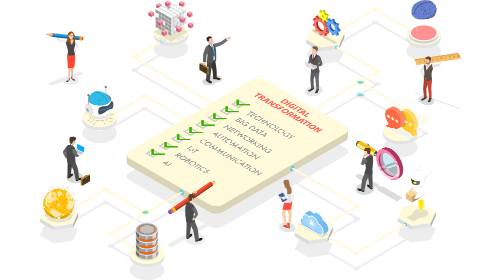
As digitalization advances, data integration within local governments has become an important theme in their efforts to improve operational efficiency and citizen services. However, current efforts face several challenges, and solutions are needed.
data integration faces a wide range of challenges, including technical barriers, operational issues, and concerns about privacy and security. In particular, ensuring compatibility between different data formats and determining responsibility for protecting personal information are major obstacles to collaboration between local governments. Addressing these challenges is essential to achieving the goals of local government digital transformation, such as improving operational efficiency and citizen services.
Shortage of human resources and technical capabilities in local governments
A lack of human resources and technical capabilities is a major barrier to promoting digital transformation in local governments. While digital skills are necessary to promote digital transformation, the reality is that local government employees often lack sufficient skills. As a result, it is not possible to develop the necessary human resources, and it is extremely difficult to secure a stable supply of such experts in the market. For example, due to a shortage of personnel with specialized skills in cloud technology implementation, API connections, and data analysis, many local governments are unable to build their own data infrastructure, resulting in vendor lock-in and a constant reliance on external resources and vendors.
Technical approaches to achieving data integration
data integration, which is at the core of local government digital transformation, requires a technological approach to smoothly integrate diverse systems and formats.
In particular, the use of cloud technology is a key element in promoting digital transformation in local governments, enabling the efficient collection and management of data both inside and outside the local government, and improving citizen services. Cloud servers also enable the centralized management of distributed data, providing an access environment that is both secure and fast.
Hybrid Cloud
Public clouds such as Amazon Web Services, Microsoft Azure, and Google Cloud are attracting attention as a way to efficiently and safely advance digital transformation in local governments.
Hybrid clouds, which utilize both on-premise and public clouds, are also becoming mainstream. By safely managing certain sensitive data on-premise while using the public cloud for operations that require scalability, flexible data management is achieved. This approach makes it possible to achieve both high levels of security and efficient cost management.
As an example, one local government is using a hybrid cloud to manage important data such as city tax data and personal information on-premises. At the same time, they have adopted a system where general data analysis for certain citizen services is performed in the cloud. This initiative not only contributes to improving citizen services, but also leads to a significant reduction in operational costs.
By adopting a hybrid cloud, local governments can achieve optimal data management that is secure, scalable, and efficient, which will be key to advancing local government digital transformation effectively and sustainably.
However, data integration between on-premise and cloud requires more advanced knowledge and skills, which is why no-code development for data integration is gaining attention.
▼ Want to know more about hybrid cloud?
⇒ Hybrid Cloud | Glossary
No-code development
As local governments are required to digitize, "no-code development" is attracting a lot of attention. This is an attractive option for local governments because it does not require programming knowledge and allows systems to be built relatively quickly and at low cost. Previously, specialized knowledge and outsourcing costs were barriers that slowed the progress of digitalization, but the introduction of no-code is beginning to resolve these issues. System development will be easier to in-house, improving both citizen services and operational efficiency, further accelerating local government-wide initiatives.
▼I want to know more about no-code development
⇒ No-Code Development | Glossary
Successful examples of promoting digital transformation in local governments using no-code
No-code development makes it possible to promote digital transformation in municipalities while minimizing vendor dependency, and many municipalities have reported success stories. These efforts have made administrative operations smoother, and there are hopes that they will be introduced to other municipalities.
As part of the "Smart Highland Promotion Program," which promotes digital transformation in administrative affairs and infrastructure, Nagano Prefecture is promoting flood predictions and other measures to improve the lives of residents using data integration platform. This data integration platform was built using no-code development, allowing for in-house operation by local government employees and new construction. In addition, because data on rainfall, water levels, and other factors required for flood prediction had to be collected from each city, town, and village, the data integration platform also enabled automatic data collection through automatic website crawling.

Case study: Nagano Prefecture DX Promotion Division
Nagano Prefecture has formulated the Nagano Prefecture DX Strategy, which embodies the maximum utilization of cutting-edge technology, and is promoting DX through the "Smart Highland Promotion Program." This article introduces a case study of the construction of data integration platform that can be used by 77 municipalities, which will enable data collection while reducing the burden on municipalities.
The person who wrote the article
Related Columns
-

"Data exists, but it can't be used": Challenges and approaches to data utilization in the real estate industry.
-
How to visualize cost management in Construction? We explain the challenges, methods, and system utilization.
-
Management speed is determined by structure: Reforming the decision-making process of a regional bank through data integration and AI.

Recommended Articles
-

Solutions for local governments
Introducing DX cases of data utilization and business automation in local governments by issue -

iPaaS-based data integration platform HULFT Square
iPaaS, data integration platform, is gaining attention in the age of AI. Check out the product details of "HULFT Square," which meets the needs of this era. -
Contact form
If you would like to know more about local government digital transformation initiatives, please contact us here.