

Did you know that there are products that sell really well during recessions? (Everything is an opportunity in this world)

This is Watanabe from the marketing department.
This is a column that casually writes about various topics related to data, IT, etc.
There has been a lot of news recently that makes people anxious about the future of the economy (April 2025)
As I write this (early April 2025), there is a lot of uncertainty about the future of the economy, with the wild fluctuations in global stock prices making the news.
Given the current situation, I thought that there might be more talk in the world about the future being tough or pessimistic.
It is certainly undesirable for economic activity that the outlook for the future becomes uncertain, but I would like to introduce the idea that "a recession is not necessarily a bad thing."
If the economy is in a recession, there are things that will sell.
When you hear that the economy is heading for a recession, what do you think will happen to your company? You might think things like, "Will sales fall next year?" or, "Will sales quotas be tightened to protect sales?"
However, even when the economy is in a recession, things can happen that are completely different from the gloomy outlook. Even when the economy is in a recession and you wonder what will happen in the future, before you know it, your company's products start selling like hotcakes, and far from being gloomy, the economy can actually boom like never before.
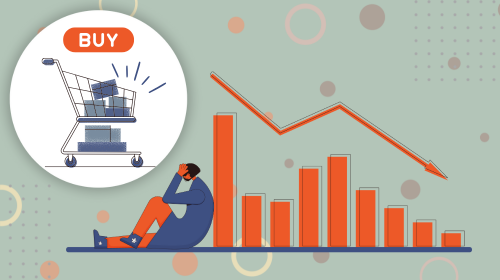
Earthenware pots sell well in recessions
As a concrete example, it is known that when the economy is in a recession, sales of pot-related products such as clay pots increase. Why does this happen?
When the economy is in a recession, salaries decrease and people feel anxious about the future. More people want to save money rather than spend it. When it comes to food, more people want to avoid expensive eating out.
However, simply giving up eating out can be suffocating. So, why not try hotpot at home instead? More and more people are starting to eat hotpot, and when the economy is in a recession, sales of hotpot-related products, such as clay pots, increase.
In other words, recessions don't just bring about tough times.
Let's think of the recession as an opportunity
This phenomenon is not limited to eating out and clay pots, but similar phenomena are occurring in many areas of the world. I'm sure that even in the fields and industries that you are involved in, there are probably some areas where you can see opportunities because of the recession.
Thinking again about eating out, which we mentioned in the previous example as being on the "stricter side," restaurants that offer "great value for money" or "restaurants that sell menu items that leave you feeling very full" may actually become popular as places people go to because they are eating out.
Think again, it's just that economic conditions have changed.
Why does this happen? Theoretically, it can be explained as follows:
- Income effect: When income increases, consumption increases, and when income decreases, consumption decreases.
- Substitution effect: Products with high cost performance are more likely to be preferred than products with low cost performance.
- If the increase due to the substitution effect is greater than the decrease due to the income effect, sales will increase during a recession.
However, a simpler or richer way of understanding customers is to think that the economic situation has changed, so "what people want now" has evolved, and "what the world wants has changed."
Donabe pots are likely to sell because more people are choosing to eat hot pot because it's more cost-effective than eating out, but there's probably more to come. As hot pot seems to be trending, companies are launching new products, and as the product lineup expands, information about hot pot dishes also becomes more abundant, leading to more posts about hot pot on social media. This could lead to more people finding hot pot fun regardless of the economic situation, and we could see the spread of new, never-before-seen styles of eating hot pot. We can see this as a case where a new reality has emerged due to "change," and what sells has changed.
Think about whether this is an opportunity for your company.
If you think about it this way, your image of recessions and economic turmoil will probably change.
Main products that have been selling well even before the recession may have to go on the defensive when the recession hits, as the traditional "presumptions that a product is selling" change. However, if you rethink it from a new perspective, it may just be that what sells and what doesn't will change, or even the same product may just be perceived differently, and the way it sells and the reasons for people to buy it may change.
Rather, it may be possible to see this as an opportunity for changes to occur that could become opportunities and get ahead of other companies.
Moreover, unlike during economic booms, competitors are likely to be weaker, and the hurdles to business expansion are likely to be lower (e.g., it will be easier to open new stores). If you can find a winning strategy, it may be easy to suddenly achieve success.
Making the most of opportunities by "connecting"
Let's recap. A recession is a recession after all, and existing businesses will likely face many challenges. However, depending on how you look at it, it can also be an opportunity for change in the world. So, if this is an opportunity, what should you do to make the most of it?
Change your way of thinking and think that a recession is not just a recession. Imagine that we are in a new situation and that different things are now selling. Are products that weren't selling before now selling? What about different customers or different sales methods?
- Change your mindset and realize that a recession isn't just a recession.
- Imagine that we are in a new situation and different things are starting to sell.
- Are products that previously didn't sell well now selling well? What about different customers or different sales methods?
If we see this change as an opportunity, then we must adapt our business to it. Whether we can adapt to change, and whether we can adapt quickly, will be put to the test.
Furthermore, as business activities are now often inseparable from IT, the ability to quickly deploy IT to meet identified opportunities and quickly change existing IT utilization will also be required.
We would like you to use our "connecting" technology as well.
Our "connecting" technology, cloud service "HULFT Square" and package software "DataSpider" can be used as a means to realize IT that can respond quickly and flexibly to change.
Requiring large-scale system development every time a new request is made would be costly and time-consuming, but by making good use of existing in-house IT systems and the various cloud services that have been introduced, and "connecting" systems through data integration as needed, new business needs can be met.
Furthermore, because it is a no-code product, the people who know the business best can take the lead and quickly create the necessary IT, giving your company an advantage in terms of both cost and speed.
"Connecting" technology that is useful in good and bad economic times
Furthermore, the "connecting" technology itself is an example of a product that can be used in both good and bad economic times.
When the economy is booming, there are more aggressive IT initiatives. To take on new challenges, companies are seeking new IT systems, new technologies (such as machine learning and generative AI), and new cloud services. However, even if "new things" are introduced, they often struggle to produce results unless they are combined with existing IT systems and existing internal data. By flexibly linking new and old IT with "connecting" technology, we can assist in the success of aggressive IT.
Conversely, during recessions, new IT investments often need to be curbed. It is necessary to take on the challenge of changing economic conditions while making use of the IT assets already in place. Therefore, instead of expensive new system development or new cloud deployments, companies can revive existing assets by effectively "connecting" them and effectively implementing in-house no-code solutions, allowing them to respond quickly to opportunities for change while also reducing costs.
The future is uncertain (April 2025)
As of the time of writing (April 2025), a series of "unpredictable events" are occurring all over the world. There are concerns about the possibility of a major global economic downturn. It is unclear whether the world will actually experience major disasters in the future, or whether these fears will be unfounded, but at the very least, it is clear that the future has become unpredictable.
Such a situation cannot be said to be desirable for economic activity, but if you think about it, a recession can also be an opportunity, and in fact, there are even businesses that actually flourish when the economy is in a recession. In order to see a recession as an opportunity and to find and take advantage of that opportunity, you need the ability to adapt to change.
In order to adapt to change, IT must also adapt to change. By creating an IT environment that allows you to quickly recreate linked processes using a GUI and freely link systems and data as needed, you will be able to stay ahead of your competitors in the face of future changes. We hope that you will use our "connecting" products to get through the "world where the future is no longer predictable" that lies ahead.
The person who wrote the article
Related Content
-
When we think of spring, we think of cherry blossoms, but there are some surprising facts about the origins of the Somei Yoshino cherry tree, such as the fact that its roots are unknown.
-
I always find the "Yamazaki Spring Bread Festival" interesting in many ways – the possibilities of "adding a little something extra."
-
When the aurora appears, earthquakes occur, and when diaper sales lead to beer sales - it's surprising to see "unexpected correlations" in the world