

Considering why there have been so many accidents involving social infrastructure: "Safety and Security" may be reevaluated in the future

This is Watanabe from the marketing department.
This is a column that casually writes about various topics related to data, IT, etc.
There have been a series of accidents involving social infrastructure, which has become a hot topic.
As I write this (July 2025), there are many news stories about accidents involving the social infrastructure that supports Japan.
In January 2025, a road collapse caused by a sewer in Yashio, Saitama Prefecture (a tragic accident) became a hot topic, and in September 2024, a potentially catastrophic accident occurred on the Tohoku Shinkansen when a coupler came off while the train was in motion. Following this, despite an investigation into the cause and measures being taken, another coupler came off again in March 2025. Furthermore, just after these accidents, on July 1, 2025, an incident occurred in which the train was forced to suspend operations due to a malfunction in the pantograph while in motion.
Don't you feel like we've been seeing a lot of unprecedented accidents recently? What's more, it's shocking that we're seeing a string of unbelievable accidents on the Shinkansen, a train that Japan built with the utmost in technology and in the relentless pursuit of safety and security.
Japan has become a prosperous country thanks to the world's recognition of its "high-quality manufacturing" after the war. The trust around the world in the high quality, safety and security of Japanese-made products has surely supported Japan's development. In this article, I would like to consider this issue and think about what we can do in the future.
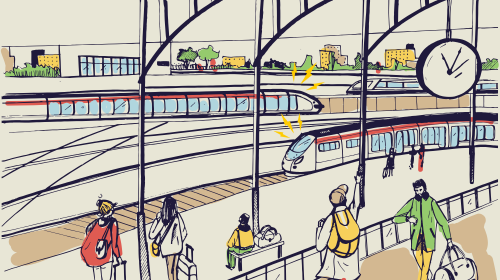
"I didn't even think about it" until the series of accidents started
The first thing to consider is that people probably "didn't even think about it" until the series of accidents started. For example, before the road collapse accident in Saitama Prefecture, had anyone ever thought, "Roads are things that can collapse?" I think most people probably didn't.
Furthermore, if you were to ask whether you have ever felt grateful for "roads not collapsing," I think most people would say no. You probably also rarely think, "I'm grateful that the couplers and pantographs on the Shinkansen are working properly again today," or "I'm grateful that water is flowing from the tap again today."
Some of you may be thinking, "What am I talking about? It's only natural that things like that should be done properly." I understand that, but there's something a little strange about "not even caring."
Let's use a high school club as an example.
I've thought up a concrete example that will help you visualize what it's like on the scene. Imagine you're in a high school light music club and you have to perform a live show at the school festival.
Who do you need to perform live and what do you need to do? You might imagine that you need someone to play guitar, or that you can't find someone to play drums, or that a reserved person tends to play bass. But just having people on stage to play music isn't enough to make a live performance.
In addition to the performers, you will also need someone to handle the lighting during the performance, and above all, someone to sit in front of the mixer, adjust the sounds coming in from the various microphones and instruments, and send them through the speakers to the venue. A PA is also needed when the drama club performs on stage.
It's rare that someone who goes to a live concert will say, "The PA was amazing today," but without the PA, the concert wouldn't be possible. Furthermore, operating a PA requires knowledge and can be quite difficult. If the PA makes a mistake, the sound can be inaudible during the performance, or feedback can ruin the performance.
Even if I play guitar and he plays drums, and I think, "Well, I guess I'll do the PA," and I take on the role, I rarely get praised even if I do it well, and yet when I make a mistake I'm often told, "It's your mistake."
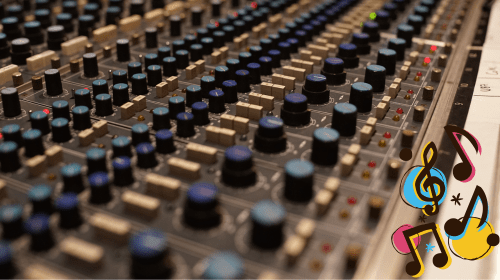
It's even more difficult in business
The above explanation uses club activities as an example, but similar situations in the workplace can often be even more difficult.
For example, in the case of PA, they are often told that they don't play any instruments and don't contribute to attracting audiences to the live show, and that from next year they should use equipment that can be rented for half the budget, and that they won't get a raise because they expect to do it without making any mistakes. Furthermore, the spotlight tends to be on the performers on stage, and yet if they make a mistake and feedback occurs, it's said to be the PA's fault.
It sounds terrible when written like this, but we may be doing something similar. For example, we have never felt grateful for the water supply, sewer pipes, couplers, or pantographs, let alone "not even caring" about them. And yet, when an accident occurs, we complain.
Why "one after the other"?
The next thing to consider is why there are so many incidents and accidents happening now.
When an accident occurs, the question becomes "Who is to blame?" and the process of searching for the person responsible begins. For example, it was this person's mistake that caused the accident.
Furthermore, when it comes to measures to prevent recurrence after the accident, it seems that the tendency is to blame the person who caused the accident for lack of awareness, or for lax supervision and management, and to say that we will be stricter in the future. At least, I think that is the way the general public tends to blame others. However, with this kind of thinking, high levels of quality, reliability, safety, and security cannot be achieved.
In 1955, Japanese products meant "cheap and poor quality"
If high-quality manufacturing could be achieved simply by having a strong mindset of "high awareness" or "we will be stricter," then Japan would have been known around the world for its high-quality manufacturing even before the war. However, in reality, until just after the war, "Made in Japan" meant "cheap and poor quality." For example, in the movie "Back to the Future," there is a famous line uttered by "Doc from 1955" who travels back in time:
"Oh no, that's why it breaks. It's made in Japan."
In response, "Marty from 1985" replies, "Made in Japan is the best, what are you talking about?", to which Doc replies that he can't believe it. The reality of "Made in Japan in 1955" was so far removed from "the image of Japanese products after that" that it was even made into a joke in Hollywood movies.
Where does Japan's high quality and reliability come from?
So, when and where did the Japan we know as "a country known around the world for its manufacturing" come from?
Following Japan's decisive defeat in the war, immediately after the war, many sectors began to reflect on why Japan had not been able to match the United States. This reflection also occurred in the manufacturing industry, which led to the introduction of "scientific quality control methods" by Dr. Deming, who had come from the United States. This then became established throughout Japan as the quality improvement movement known as the QC movement. This was the beginning of "Japan's manufacturing" as Japan was a pioneer in the world and thoroughly committed to "scientific quality improvement activities."
In other words, Japanese manufacturing, which is known for being "high quality and unbreakable" and "safe and secure without causing accidents," was the result of a new approach that began after the war.
Why is this happening now?
Now, with that in mind, let's think about the current situation again.
Just as we are not grateful for the water that comes out of our taps, we do not seem to show enough respect for the people who maintain the safety and security of society every day, not just the Shinkansen. Yet, we take high quality and safety for granted, and when there are problems, we complain. Because we do not understand the scientific efforts that have supported Japan's high quality, we have also misunderstood the "causes of what has happened." At the same time, we have continued to live in a social environment that has forced relentless and severe cost cuts.
Decades have passed since then. The safety and security infrastructure that had been built up over the years has deteriorated, the people who supported safety and security with their specialized skills have begun to disappear, and the accumulated knowledge and experience from the past has disappeared, both physically and mentally, which is why we are now seeing serious accidents.
What efforts may be necessary in the future?
Given this current situation, what should we do, and what should business do in the future?
Isn't it necessary to return to the basics of "high quality" and "safety and security"?
As I have already written, the high quality and safety that have supported the global trust in "Made in Japan" are fundamentally engineering issues, realized through specialized skills and specialized fields. When accidents occur in society, or problems arise with a company's own products, it is necessary to return to these basics.
If you are in the manufacturing industry, it may be time to reconsider achieving high quality through traditional quality improvement activities or safety engineering initiatives.
This may sound like an old-fashioned statement. In fact, while engaging in QC activities in itself was a way to gain a competitive advantage on a global scale in the 1960s, that is no longer the case. Japanese-style manufacturing know-how has already spread throughout the world, so simply engaging in quality improvement activities will not give a business an advantage these days. However, if a quality problem or accident is occurring right now and needs to be resolved, the steps that need to be taken to resolve it should be the same as they were in the past.
In software development (IT), the idea is to thoroughly improve processes and conduct software testing in-house. Compared to the manufacturing industry, efforts to develop high-quality software are less widespread, but developing high-quality software is just as difficult if you develop software by writing code and then removing defects ad hoc. If you're creating software in a field that requires safety and security, you need a development process that ensures high quality from the very beginning, even before the code is written.
A "quality and safety crisis" is a recurrence of a "quality and safety opportunity."
Now that accidents have finally become a reality, the value of quality, safety, and security will likely be reassessed more frequently. In other words, I believe that "quality, safety, and security will become business opportunities."
I told the story of how, in my high school light music club, "I wasn't rewarded for being in charge of the PA." Even if I did it perfectly, they didn't say thank you, but if I messed up, they would say mean things. So I decided not to do the PA anymore and just play my instrument. What happened then was that we started having more equipment problems and PA issues. Only then did people finally start to appreciate my "doing the PA properly," and they started to say thank you and give me drinks as a thank you for my hard work.
Similarly, as social infrastructure begins to experience accidents, people may begin to think that safety and security are not something to be taken for granted. When people experience the pain of an accident, they will come to appreciate the importance of things being "built properly" and "built to ensure safety and security."
Furthermore, business competition is becoming increasingly fierce on a global scale these days. While success in the battle to be at the forefront of the world, such as competing with the world in generative AI, is spectacular, it is becoming increasingly difficult to survive.
If "safety and security" will no longer be a given in the future, then businesses that survive by being supported for being "well-built" - for example, businesses that quietly continue to be supported for a long time because "the bridge they built was the only one that did not collapse in earthquakes or floods" - will likely be more likely to be supported.
HULFT has earned trust as the foundation of "safety and security"
So, are there any IT products (precedents) that have actually been successful based on this approach? The answer is yes. Our product, file integration middleware "HULFT," has been supported for many years for precisely this reason. It has been adopted and used for many years by all banks in Japan, and has a long track record in fields where mistakes are not tolerated.
In fact, it's just a product for file transfer, isn't it? It is not so easy to create a product that is based on file transfer and has "ironclad safety and security". data integration platform However, it is not so easy to create a product based on that is "ironclad safe and secure". The reason why HULFT has become the overwhelming de facto standard in Japan is that it has been supported as a means of providing "a high level of safety and security" that would require a great deal of cost and time if developed in-house, but can be maintained immediately by simply purchasing the product.
▼ Want to know more about HULFT Products?
⇒ HULFT 10 | Product Introduction Page
Conclusion
In 1985, Back to the Future was about "all good things being made in Japan." However, we now live in an age where even the Shinkansen, which was supposed to be one of the "good" Japanese-made products, is having accidents. However, it can also be said that this is precisely why we are now in a period where we need to reconsider what it means to be "well-made."
The future may finally be one in which your "good work" will be noticed. And if you need "good work IT" as the foundation to support your good work, we hope you will consider our products as a means to achieve this.
The person who wrote the article
Related Content
-
When we think of spring, we think of cherry blossoms, but there are some surprising facts about the origins of the Somei Yoshino cherry tree, such as the fact that its roots are unknown.
-
I always find the "Yamazaki Spring Bread Festival" interesting in many ways – the possibilities of "adding a little something extra."
-
When the aurora appears, earthquakes occur, and when diaper sales lead to beer sales - it's surprising to see "unexpected correlations" in the world