

Will a future where "nuclear fusion" and "alchemy" are combined come? - Thinking about the possibilities of "connecting"

This is Watanabe from the marketing department.
This is a column that casually writes about various topics related to data, IT, etc.
Interesting news: The great potential of "connecting"
Today's topic may seem a little far-fetched.
We provide products that "connect" IT through data integration, and I would like to talk about how "connecting" has inherent potential in a wide range of fields. I would also like to briefly discuss the situation in which there are many things in the world that are "unknown/understood" and "not being able to make an impact," yet we still need to take on new challenges.
Here are the recent news stories we'll be talking about:
In other words, the topic is about a paper that claims that it is possible to make money by turning mercury into gold using nuclear fusion. This sounds almost like alchemy, and it may seem like a difficult story to understand.
First, let me explain what this means. First, there may be a lot of things that you "didn't know" (or misunderstood).
How the Age of "Alchemy" Ended
As you all know, "alchemy" is "something like an ancient superstition."
In the Middle Ages, before science and technology took hold of the Earth, when the geocentric theory was still believed, people believed there was a secret way to transform base metals (cheap metals) into precious metals (expensive metals). Those who tried to find such a method were called alchemists.
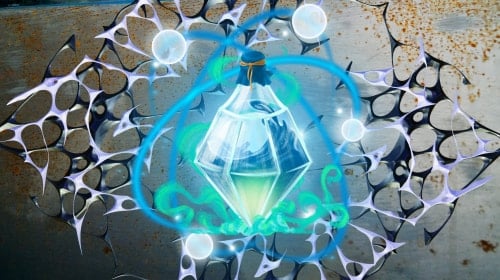
It wasn't considered "unreasonable" at the time.
Nowadays, it is treated as nonsense that is not worth believing, but this is only possible now that we have the answer, and it is a kind of hindsight. It is difficult to properly understand what lies ahead in the great changes of the times.
At that time, science as we know it today did not yet exist. Even if you studied properly and became an intellectual at the time, the "theory of the four elements" (that all things are composed of the elements of fire, air, water, and earth), which had been believed since ancient Greece, was assumed to be correct. Based on this premise, it seemed possible to transform "lead" into "gold" by rearranging the four elements, and in fact it was not clear why this was impossible.
In fact, chemical reactions can dramatically transform substances into completely different materials, such as turning sand into clear, beautiful glass or ore (stone) into shiny metal. Given these phenomena, it was difficult to conclude that lead could not be transformed into gold.
The difficulty of making the right decisions, taking into account the difficulties of being human
However, even if that is the case, if you try for 10 or 20 years without success, and if no one has succeeded for hundreds of years, it seems like there is no way you can understand anything.
However, there was the theory of the four elements that has been believed since ancient Greece. Textbooks at that time never said "it's impossible." It seems that it's not that you can't do it, but that you're just ignorant and powerless. The thought process that says you can't achieve your goals because you're not trying hard enough is still common today.
Furthermore, there were conspiracy theories that the method of generating gold was hidden from the world as secret knowledge, and there were also scammers who pretended there was a way to convert it, which made things even more complicated. Even now, when something becomes popular, there are people who will deceive those who are not familiar with it.
For example, it is believed that there was a fake alchemy demonstration that, based on current knowledge, simply produced "brass." First, copper was prepared, and then the copper was immersed in a "secret liquid," which simply plated it with zinc, making it "shining silver," and then when it was heated over a fire, the zinc and copper reacted to produce brass, which "shined gold." It seems possible to do something similar.
Of course, they didn't have any money, but they could have said things like, "We're almost there," or "We can't show you any more," and so on, and so humanity believed the lie for a long time.
It is often said that we live in an age of uncertainty, where we have to tackle new things in a situation where there are many things we don't know and the future is uncertain. When we face the reality of why a business isn't going well, the difficulty of making the right decision is similar to the situation where people have always believed in alchemy.
Modern chemistry was born out of this situation.
Alchemy was not all in vain. Humanity has spent many years searching for a way to create gold, and the accumulated efforts have advanced humanity.
They made a major contribution to the development of chemical laboratory equipment and procedures. Arabic alchemists discovered sulfuric acid and hydrochloric acid (as well as nitric acid and aqua regia), and they also revealed the procedures for synthesizing various substances, which spread throughout the world. They aimed for something that was "absolutely impossible," but they still gained a lot by "taking something very seriously." Looking back, the new business ventures they undertook at were completely ridiculous, but the lessons they learned from their efforts were invaluable.
Eventually, some alchemists came to the conclusion through their experiments that the four-element theory was wrong, and this gave birth to modern-day chemistry. Chemical experiments revealed that elements combine in whole-number ratios to form compounds (the law of multiple proportions), and this phenomenon was suggested to be caused by the fact that matter is made up of ultimate particles (elements), a theory that was published in an academic paper (the atomic theory announced by the Englishman John Dalton in 1805).
In a time when the world believed in alchemy and the theory of the four elements, it must have taken intelligence and courage to assert that "the theory of the four elements is wrong." Nowadays, most of us don't believe in alchemy, but the people who realized it was wrong are truly great. This is different from saying with hindsight that "alchemy is occult." It is truly difficult to "do something new" and "break into new territory."
But "element transformation" is possible
Now that knowledge of science (or chemistry) has spread widely in society, it is common knowledge that alchemy does not exist. In other words, many people probably think that "it is impossible to create gold from lead."
However, as science advanced further, the story changed even further. It became clear that atoms have an internal structure, and that both lead and gold are roughly made up of the same elementary particles (i.e., the same materials), such as electrons, protons, and neutrons. It became clear that all elements are made of the same materials, and that they only differ in the number of elements.
- Gold atom: 79 protons (atomic number 79) + 118 neutrons, etc.
- Lead atom: 82 protons (atomic number 82) + 126 neutrons, etc.
Since the number of protons in an atomic nucleus determines which element it is, if the number of protons can be changed, element transmutation is possible. Specifically, it is not impossible to convert gold into lead (increasing the number of protons in the atomic nucleus from 79 to 82) by bombarding it with neutrons and protons using a particle accelerator.
"Something like alchemy" was actually possible
Those with a science background may have known this, but I think that more than half of Japanese people probably believe that "it is impossible to transform lead into gold (because alchemy does not exist)."
Just like the fact that "it is actually possible to turn lead into gold," there are many "unknown technologies" in the world, and many hidden possibilities.
- There are many hidden technologies and possibilities that people don't know about or understand, and they make you wonder, "Can something so amazing really be possible?"
So why isn't "gold creation" taking place?
So now, "elemental transmutation" is possible. However, even though such an amazing thing has become possible, no efforts have been made to "produce gold through elemental transmutation," and it is not even talked about. Why is this?
Although elemental transformation is possible, the cost of elemental transformation is so enormous that "even if we convert it into gold, it is not expected to be economically profitable."
Not just with element transmutation, but in many cases, humanity has discovered new possibilities but has not yet put them to practical use because they believe that there is no prospect of them being profitable or that they do not know how to make money from them.
- There are many amazing things that are technologically possible, but are buried because they are not viable as a business.
Nuclear fusion is also an elemental transformation
Next, I would like to introduce another topic, "nuclear fusion," which I think is important because "if you understand one thing (element transmutation), you can clearly understand other things."
What image do you have when you hear the term "nuclear fusion"? You might think of "enormous energy" or "a dream technology that has yet to be realized." In fact, nuclear fusion can also be understood as a type of "element transmutation" (as explained above).
I think it's easier to understand the phenomenon as "when you transmute elements, a huge amount of energy is released as a bonus."
- Transmutation of "too light elements"
- When elements lighter than iron are converted into heavier elements, a huge amount of energy is released.
- Transmutation of "too heavy elements"
- When elements heavier than iron are converted into lighter elements, a huge amount of energy is released.
"Nuclear fission (transmutation of elements from elements that are too heavy)
Uranium (atomic number 92, with 92 protons) is the heaviest element found in nature. Its nucleus is too large and unstable, so it can break into two, either spontaneously or when bombarded with neutrons.
When this happens, one uranium atom is transformed into two lighter elements, releasing a huge amount of energy in a process known as a nuclear fission reaction. Nuclear power plants produce radioactive waste (radioactivity) because the fission reaction causes the fragmented uranium nuclei to produce a wide variety of complex, unstable substances.
Nuclear fusion (transforming elements from elements that are too light)
Hydrogen (atomic number 1, with one proton) is the lightest element. In the same way, if multiple elements that are too light are combined together and "transformed" into a heavier element, a huge amount of energy can be produced. This is nuclear fusion. Unlike nuclear fission, no extra material is produced after the fission, and unlike uranium, which can only be extracted in small quantities, there are large amounts of materials that can be used as fuel (deuterium and lithium). For this reason, nuclear fusion has been said to be the dream energy. However, there are some problems.
The atomic nuclei of elements that are too heavy are inherently unstable, so if an opportunity is given to cause them to split, they can undergo nuclear fission on their own. However, it is generally believed that lighter elements do not spontaneously fuse (although there is a field called "cold fusion" that seeks to find the conditions under which spontaneous fusion occurs), so it is necessary to "forcefully combine atomic nuclei together," which requires the realization of "unimaginably intense high temperatures and pressures."
In fact, nuclear fusion itself has already been realized.
For this reason, it is difficult to put nuclear fusion into practical use, and many people believe that nuclear fusion has not yet been realized, but nuclear fusion itself has already been realized.
The first one has been put to practical use as a "hydrogen bomb." This is a method that uses the tremendous energy generated by nuclear fission to achieve the "intense high temperature and pressure" required for nuclear fusion. However, this method does not seem to be useful for generating electricity or other purposes.
For over 50 years, efforts have been underway to achieve "ultra-high temperature and pressure" using alternative methods for power generation. Research and development has continued on the mainstream methods of "confining hydrogen plasma in a strong magnetic field" and "irradiating fuel pellets with a strong laser beam."
Using these methods, we have already succeeded in "producing nuclear fusion itself." Furthermore, we have also succeeded in generating electricity using the energy generated by nuclear fusion. Some people may think that nuclear fusion itself has not yet been achieved, but in fact it has already been achieved.
- We have already succeeded in creating nuclear fusion, and in generating electricity using the energy generated by nuclear fusion.
If that is the case, then why is it said that practical application of nuclear fusion power generation is still a long way off?It is because, although nuclear fusion can be achieved, "there is still no prospect of it being profitable."
- The energy generated by nuclear fusion is still smaller than the energy input from outside to cause nuclear fusion (except in limited circumstances such as laser fusion).
The hurdle to becoming "profitable" is much higher.
- Not all of the energy generated by nuclear fusion can be used to generate electricity, so even including losses in power generation, the amount of energy needed must exceed the energy input.
- Furthermore, it cannot be said to have been "put to practical use" unless it can cover the costs of building and maintaining the fusion power plant itself, the costs of preparing the fusion fuel, and the costs of supporting the lives of the people involved.
Research and development into nuclear fusion reactors is progressing every day, and performance records are being broken every day, but it is thought that it will still be some time before they can be put into practical use in this sense.
So what if we combined "nuclear fusion" and "alchemy"?
In other words, both "nuclear fusion" and "alchemy (transforming elements into gold)" are technically possible, but they are difficult to put into practical use because they are "not viable as a business." Although they are necessary for the future of humanity, it will be difficult to put them into practical use in the near future, so perhaps humanity will live on the moon.
But if you think about it, what directly prevents practical application is not the technology, but whether it is viable as a business (whether it is profitable). In other words, even if you are losing technically, if you can find a way to win on the business side, you may be able to turn the situation around.
The idea of "combining" things that are not profitable
If that's the case, then perhaps it's possible to make it profitable by combining "nuclear fusion power generation" and "element transmutation (to make gold)," which are not profitable on their own? This is the news we discussed at the beginning of this article.
- By combining Initiative A (nuclear fusion power generation) and Initiative B (producing gold through elemental transmutation), which are not profitable individually, can the overall project be made profitable?
In nuclear fusion research and development, efforts to achieve "nuclear fusion between deuterium (D) and tritium (T)," which has relatively mild reaction conditions, are the mainstream. In this fusion reaction, the element is converted into helium (He), generating a large amount of energy and also "producing a large amount of neutrons (n)."
The paper introduced in the article makes good use of neutrons. The idea is to bombard mercury with neutrons and convert some of the mercury (mercury-198) into gold (gold-197).
They are also considering how to combine them. Neutrons are also necessary for a fusion reactor, so they cannot be wasted, but this idea aims to kill two birds with one stone by ``colliding them with mercury-198, which actually increases the number of neutrons'' (the original neutrons + neutrons ejected from the mercury).
With the current level of technology, "it is clearly not possible to break even through electricity generation itself," but if "income from selling the gold produced" is also added, it is a somewhat surprising proposal that even with the current level of technology, it may be possible to discuss the possibility of reaching the break-even point.
Other possible combinations
The ideas in the paper also face hurdles to practical application. For example, there is the problem that neutrons react with mercury other than mercury-198, which poses a major problem of simultaneously creating unwanted substances. It is unlikely to change the world's situation immediately. However, as a new idea, it has the potential to accelerate research and development of nuclear fusion.
Furthermore, there are other initiatives that can be "combined."
High-level radioactive waste generated by nuclear fission is often thought to have no disposal method, but in fact there is a way to dispose of it (there are many unknown technologies out there). In the same way, it is possible to use a nuclear fusion reactor to "expose it to neutrons" and turn it into a different substance, meaning it is possible to make a side income by running a business that "eliminates" troublesome substances through element transmutation.
Gold is not the only "element that sells for a high price." Many substances, such as rare earths and rare metals, sell for a high price. If we can successfully create a method to produce rare substances other than gold (perhaps even better than the plan to produce gold from mercury), we may see a similar rapid advance in the practical application of nuclear fusion reactors, even though power generation from them is not profitable.
The possibility of "connecting"
The potential of this approach would be something like this if it were generalized:
- By combining Initiative A (Technology A) and Initiative B (Technology B), can we create greater value for our business through a combined approach?
We develop and provide products related to data integration, but we are not just focusing on a means of linking data between IT systems; we are also focusing on the possibilities that arise from "connecting" various things. We believe that our products are a means of realizing the possibilities that can be unleashed around the world by "connecting."
I have introduced the fact that there are many amazing technologies out there that have yet to see the light of day. In addition to amazing technologies that could change the world, I believe that each company also has technologies that are not quite making the most of or products that have been developed but are not selling as well as expected. I believe that by skillfully connecting and combining these with something, it is possible to bring out their hidden potential.
Similarly, on the user side, there are also possibilities that can be realized by combining them. Let's say your workplace has introduced a cloud service, but you find that a function is difficult to use and that another cloud service would be better, or that the Excel you've been using before is much easier to use.
Common opinions such as "Cloud service A has its good points, but there's something missing," "Cloud service B also lacks something," and "Excel is useful, but these days you can't run your business on Excel alone" are also cases where there is "something missing in A" and "something missing in B."
If the world is full of "things that are just a little lacking," then there must be many ways in which good results can be achieved by cleverly "connecting" and "combining" things. To achieve this, it is important for "those in the field" to be able to "innovate on their own," such as by being creative on the ground and discovering and trying out possibilities for combining things with unexpected things. This is why we are focusing on providing no-code and low-code products.
Conclusion
Today's topic may seem a little far-fetched, but I introduced how there are many technologies and possibilities hidden in the world, and how ``combining'' them can lead to the realization of an amazing future.
I wrote this article hoping to make you realize how broad and deep the possibilities of "connecting" are. I hope you will also think about the possibilities of "combining things well," and consider our products as a means to achieve this through "connecting."
The person who wrote the article
Related Content
-
When we think of spring, we think of cherry blossoms, but there are some surprising facts about the origins of the Somei Yoshino cherry tree, such as the fact that its roots are unknown.
-
I always find the "Yamazaki Spring Bread Festival" interesting in many ways – the possibilities of "adding a little something extra."
-
When the aurora appears, earthquakes occur, and when diaper sales lead to beer sales - it's surprising to see "unexpected correlations" in the world