

I always find the "Yamazaki Spring Bread Festival" interesting in many ways – the possibilities of "adding a little something extra."

This is Watanabe from the marketing department.
This is a column that casually writes about various topics related to data, IT, etc.
"Spring-like" topics
This time, I thought I'd talk about something "spring-like" to match the season. So, today's topic is the "Yamazaki Spring Bread Festival."
⇒ Yamazaki Baking Co., Ltd. | Spring Bread Festival 2026
You might be wondering why I'm not going to write about the weather or flowers (I do have plans to write about those on another occasion, so please look forward to that as well), but I decided to write about this topic because I think it has become a well-established symbol of spring in Japan, and I thought that if you go to a local shop after reading this, you might be able to experience what I've written about and think about various things.
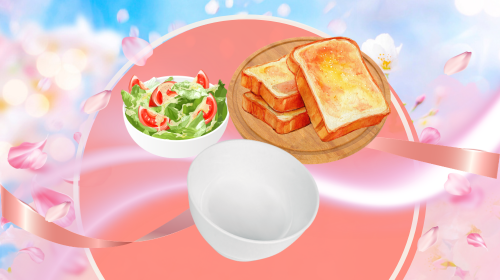
What is the "Yamazaki Spring Bread Festival"?
As you probably already know, but just in case, I'll explain. The "Yamazaki Spring Bread Festival" is a sales promotion campaign that Yamazaki Baking Co., Ltd. holds every spring.
This campaign has been held every year since 1981, even before the bubble economy era. From early February to the end of April, Yamazaki products such as bread are sold with point stickers attached, and if you collect 30 points by pasting the stickers onto a card, you can exchange them for "white tempered glass tableware made in France."
It's been going on for almost half a century now, an exceptionally long period, and I think many people feel like it's been going on since before they were born. In other words, it's something that's an exceptionally long-running success. In the early days of the internet, there was a classic joke online that the "Three Great Festivals of Japan" were the "Yamazaki Spring Bread Festival," the "Toei Manga Festival," and the "Kao Hair Care Festival." Now (as of March 2026), while the other two festivals have been suspended, the "Yamazaki Spring Bread Festival" shows no signs of ending, and it even feels like it has become a spring tradition in Japan.
I've known about the existence of this for a long time, and for a while, although I'd occasionally notice people around me collecting the stickers in the spring, and it was a hot topic online every spring, I never actually collected them myself. However, during the COVID-19 pandemic (which apparently is quite common), I decided to try collecting stickers myself, thinking, "I want to try something I've never done before." I discovered that there were many interesting things about it, more so than just getting a plate for collecting enough points. That's what I'll be writing about today.
"Why that score?" "We didn't realize there were so many products."
In some parts of the internet, there's a culture of enjoying discussing "strategies" for the Spring Bread Festival, such as which breads offer the lowest cost for earning one sticker. There are always some people who make the unromantic suggestion that it's cheaper to just buy your own plate, but the fun lies in discussing strategies and strategies, and in the act of sticking stickers onto the sheet and thinking about how many more points you need (or talking about it on social media).
If this event appealed to economic rationality, such as offering an opportunity to acquire plates at a low cost, I don't think it would have lasted for nearly 50 years. I believe the reason it has continued for so long is because "there is enjoyment in participating itself." In that sense, it truly is a "spring festival." Furthermore, I feel that the charm of the system of placing point stickers on a card has increased precisely because we are now in the digital age.
"Why that score?"
Another interesting thing to consider when visiting the stores during the event is "why each bread has that score." Some volunteers have created score lists and even done cost-performance calculations, but I recommend actually going to the stores and thinking about it yourself, as it's more fun.
For example, even with the hugely popular "Lunch Pack," the scores aren't consistent, with some receiving 1.5 points and others only 0.5 points, showing a significant difference. You might reach for a loaf of bread as you normally would, only to realize, "Huh, it only got 0.5 points?" and then compare it to the scores of others, realizing there are so many other kinds of bread out there, which can make you reconsider why you chose to buy it in the first place.
With Lunch Packs, the most standard options like "jam and margarine" are given a score of 0.5, while the "slightly unusual" ones that you wouldn't normally pick up are given a score of 1 or 1.5. It feels like the store is saying, "Try this bread too, while you're here for the Spring Bread Festival." And when you buy it, you might realize, "I didn't usually eat this, but it's delicious too."
In other words, the score assigned to each loaf of bread is determined with a specific intention in mind. If you look around the store with this in mind, wondering "Why does this bread have this score?" (What intention is behind this score?), you'll notice many things.
For example, bread bearing the name "Levain," which they seem to want to establish as a brand, has a good point distribution relative to its price. For instance, Levain's butter rolls are worth 2 stickers, cost just over 150 yen, and are easy to eat every day, so you can accumulate points efficiently. Or perhaps the intention is to encourage people to eat them regularly.
There must be a reason behind every score, so when you look around the bread section, you can think about all sorts of things about "why things are the way they are."
"I didn't realize there were so many products."
Another thing I've noticed is that Yamazaki products are surprisingly common outside of the bread section. For example, I've only just realized that they sell a four-pack of "French Crullers" in the sweets section. When you think about it, their famous "Marugoto Banana" is also made by Yamazaki, so it's natural that they have a variety of products in the Western confectionery section, but I don't usually pay that much attention to it.
While French Crullers aren't particularly cost-effective in terms of the number of stickers they receive, they weren't bad as something to eat with coffee while staying at home during the pandemic, so I bought and ate them regularly for a while.
Similarly, there are other products in the area where puddings and jellies are sold, which gives you a chance to realize that there are a variety of products available.
In the bread section, I was reminded of the variety of savory breads available, and during the COVID-19 pandemic, when restaurants were closed, I realized how convenient savory breads were as a quick lunch, which led to a personal trend of eating them.
"Daily Yamazaki"
When you start thinking about it that way, the whole picture becomes more interesting than just calculating the points on the stickers, and if you go to a "Daily Yamazaki" store, where Yamazaki products are the main focus throughout the store, you'll notice even more things inside.
First, you'll see that Yamazaki products are available in bento boxes, rice balls, and beverages, and you can earn points from those as well. From now on, I'll be interested in the entire store, just as I have been.
Since items with high sticker scores are likely to be "being promoted in some way," if you look at products that you wouldn't normally see in regular stores, you can certainly find a variety of "delicious things to try."
For example, the "pudding crepe," which is a crepe filled with pudding, is something I tried for the first time through that process and found delicious, so it has become a regular purchase for me whenever I see it at Daily Yamazaki. You need to be careful because the juice tends to drip when you eat it, but I think it's something I can generally recommend.
Another dish that has become a regular for me is "French Toast (Ham and Cheese)," which is sweet French toast with ham and cheese sandwiched inside. I was able to make such discoveries just by looking at and analyzing the point stickers.
However, since these favorite products aren't generally sold at other convenience stores, I've started to wonder where Daily Yamazaki stores are located. For example, I've come to know that there's one inside Urawa Misono Station so I can buy it before watching a soccer match at Saitama Stadium, or that there's one on the way back from a live show in Shibuya, or one on the way back from a live show in Tenkubashi, or even one near Akasaka Station, which is a bit far from our office.
It's simply an existing product with a sticker stuck on it.
So, even after many years, I've continued collecting stickers aimlessly, and now, at the beginning of March, I've somehow accumulated around 14 points. I'll probably get a plate again this year.
Also, while I find it interesting that all the "various things" I've written about so far are happening, when I think about "how they managed to achieve it," I think it's amazing that they basically just "put point stickers on existing products" and didn't do anything more than that.
Of course, it's necessary for sales representatives to visit each store to have them stock the "cardboard inserts" and "replacement plates," and it's also a lot of work to order replacement plates from France and distribute them to every corner of Japan. We don't mean to imply that this is something anyone can do easily.
From the perspective of "us, the actual bread buyers," the only essential changes are two things: "the bread has a point sticker on it" and "you can exchange it for a plate." Moreover, there aren't any exciting new products appearing in the spring, and the products being sold are basically the same.
Yet, simply by "carefully considering the scores and placing stickers on each product," it becomes a topic of conversation online that everyone can enjoy, the sales floor suddenly becomes more interesting, and a kind of conversation even arises through the score stickers, such as "This product is highly recommended, so you should definitely try it" and "It's certainly delicious."
The potential of "connecting" that we believe in
These days, we often hear people say things like, "Do something new," and there's a lot of talk about the market and marketing. But you don't need to do anything so elaborate; you can achieve all of this just by "putting a sticker on an existing product."
We offer products that "connect"; the IT explanation could be "products that enable data integration However, I think it is a bit difficult to understand why it is so important to link data, or why a "specialized product" is needed to do so. But why is it so important to link data, and why do we need a "specialized product" to do so?
For example, let's say your company decided to implement kintone because it wanted to utilize the cloud. After successful implementation and successful use, a common request that arises with any cloud (or business system) is "we want to do a little more."
For example, "I wish I could link this Excel sheet with the data," or "I do the same operations and data input/output every day, so it should be possible to automate it" (like importing and exporting data every time, or endlessly copying and pasting data into PowerPoint or Excel), or "I wonder if the data could be automatically sent to the business system that generates the monthly reports we create every month," or "I wish the data was connected to the sales department's Salesforce," or "I wonder if the production management system data could be directly output to kintone," or more recently, "I want to link it with a generation AI."
There are actually many requests (when you think about it) for things like wanting to combine the cloud or business systems you're currently using with other systems in just one specific way. And it's not uncommon for even a small connection to yield surprisingly significant results. To address these numerous "connection" needs in the world, we offer "DataSpider" and "HULFT Square" as a means to freely create solutions using "no-code" methods that can be easily used by people on the ground.
The example of how so many things can happen just by "attaching score stickers" is, I believe, a prime example of the general possibility that "new things" can arise simply by "connecting" things, even just a little. We hope you will consider using our product as a means to realize such wonderful possibilities through the use of IT.
The person who wrote the article
Related Content
-
When the aurora appears, earthquakes occur, and when diaper sales lead to beer sales - it's surprising to see "unexpected correlations" in the world
-
"Miraculous comebacks" really do happen (quite often) - Kataller Toyama's miraculous J2 survival
-
How the "Four Great Ramen of Niigata" were born ~ "New things" are born from "trial and error"