
Strengthening manufacturing competitiveness through the fusion of IT and OT - Integrate scattered information!

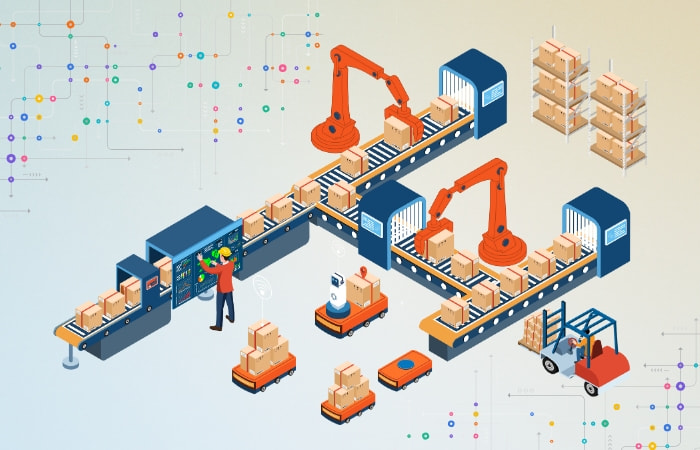
Many companies are accelerating their efforts in manufacturing digital transformation, which combines information technology (IT) and operational technology (OT), as it not only improves production efficiency but also enables the creation of new business value.
This article explains the key points for building a smart manufacturing infrastructure through the fusion of IT and OT. As customer needs continue to shift from "things" to "experiences," accurately capturing large amounts of information and using it to make management decisions will directly lead to stronger competitiveness. By establishing a solid infrastructure, you can quickly resolve issues you've had with inventory management and quality control, and build a foundation that supports sustainable growth.
The Role and Importance of IT and OT
As global competition intensifies, there is a demand for manufacturing processes that can respond quickly to customer needs. In order to revive the manufacturing strengths that Japan's manufacturing industry once possessed, smooth integration of IT and OT is essential. Organically linking IT and OT and maximizing the collaboration between people, equipment, and systems has become a survival strategy for companies.
Differences in the definitions and usage of IT and OT
IT (Information Technology) is responsible for operating information systems and databases, managing servers in cloud environments, and promoting business efficiency and data utilization. IT compiles information such as sales and inventory plans for the entire company, and forms the foundation for formulating management strategies using big data and AI analysis.
In contrast, OT (Operational Technology) refers to on-site operational technology such as production line control and equipment operation management. It is a very real technical field that supports on-site operations, utilizing machine control and programmable logic controllers (PLCs).
As such, because IT and OT handle different types of data and have different purposes, when integrating the two, it is important to design systems and operational flows with a deep understanding of each other's roles, rather than simply combining the two half-heartedly.
Benefits of IT x OT integration
By linking IT and OT, it will be possible to evaluate the production status of factories in real time, and detect and address any abnormalities at the factory early. Furthermore, it will be easier for management and administrative departments to make accurate decisions to reduce costs and improve quality by utilizing on-site data.
For example, if a warning sign is detected, engineers can quickly identify and resolve the problem, minimizing the impact on products. Furthermore, by aggregating information from across the supply chain, a system can be put in place to respond flexibly to fluctuations in demand and reduce excess inventory and unnecessary lead times.
Because of these benefits, the fusion of IT and OT not only improves production efficiency, but also makes it very worthwhile to actively pursue it in order to differentiate from competitors.
Applications to production management systems and energy optimization
Linking IT and OT makes it easier to input real-time data into the production management system, creating a system that allows for constant comparison of plans and results. This makes it possible to visualize bottlenecks on the production line, reduce waste, and make smooth schedule adjustments.
At the same time, tracking the power consumption of equipment operating within a factory will make it easier to effectively optimize energy consumption. For example, one possible method would be to automatically shut down some equipment when the line is not in operation, thereby reducing power consumption and cutting costs.
Achieving both improved productivity and energy conservation is essential for continuing business while also being mindful of the global environment, and is an essential strategy for demonstrating a strong presence in global competition.
A system for improving quality and achieving predictive maintenance
Combining IT and OT data makes it easier to accumulate and analyze information that was previously difficult to grasp, such as the machining accuracy of each part and the vibration status of machines. This makes it possible to detect trends in defect occurrence at an early stage.
If signs of failure can be detected, parts replacement and maintenance can be carried out in advance, preventing sudden line stoppages and the production of large numbers of defective products.In terms of quality control, real-time measurement can reduce product variation and maintain a high level of quality.
Establishing such a predictive maintenance system not only makes it possible to optimize maintenance costs and human resources, but also has a significant effect in terms of building a stable production system.
Key points for building a smart manufacturing platform
In order to establish a foundation for data integration, it is essential to select the appropriate technology and establish an operational system.
A unique requirement in the manufacturing industry is the wide variety of data handled on-site. By linking a wide range of information, such as operational status information from sensors and PLCs, as well as environmental data and work-in-progress lot management, more accurate analysis and decision-making can be achieved.
On the other hand, as the volume of data increases, the demands for processing speed and security also increase, so the selection of infrastructure technologies must be done carefully. At the same time, clarifying post-implementation operations and building an organization that is premised on continuous improvement are the keys to achieving long-term benefits from utilization.
▼I want to know more about data integration
⇒ data integration / data integration platform | Glossary
Selecting a data collection and visualization solution
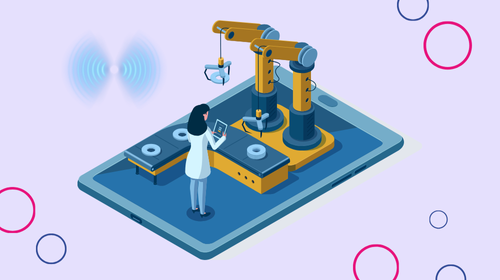
Various vendors offer solutions that collect accurate data from sensors and PLCs and visualize it in real time. First, it is important to determine which solution will be most effective in light of your company's manufacturing process.
As the number of tools introduced increases, operational management may become more complex, so how to create an integrated management screen is also an important consideration.Another important factor in promoting data utilization is whether the UI is easy for field workers to use.
Ultimately, we aim to establish a series of processes that will enable smooth data collection, analysis, and report creation, and create an environment that can be used for decision-making across the entire company.
Utilizing AI and building an advanced analytical platform
With the recent advances in big data and machine learning, efforts to use AI to predict signs of production process and equipment failure with high accuracy are attracting attention. For example, automation of visual inspections using image analysis technology and early detection of quality problems using anomaly detection algorithms are being put into practical use.
To utilize AI, preprocessing such as data standardization and cleansing is essential. It is also necessary to have a system in place that can flexibly respond to changes in the environment by regularly training and updating the model.
Building an advanced analysis platform will not only enable preventive maintenance, but also provide hints for new product development and service proposals, which is expected to increase added value not only at the manufacturing site but across the entire company.
Network Protection and Risk Management
As IT and OT integration progresses, network boundaries become blurred, raising the risk that cyber attacks may extend to manufacturing sites. In addition to the introduction of firewalls and intrusion detection systems (IDS/IPS), it is important to protect networks by segment. Specifically, it is effective to separate the network used by business terminals from the network used for equipment control and restrict mutual access.
It is also important to clarify the procedures for dealing with failures in order to prevent damage from spreading. If you have disaster prevention and backup plans in place that allow for quick recovery even if the system stops working, you can minimize the impact of sudden accidents.
Furthermore, by conducting regular tests and drills as part of risk management and having security and operations personnel work together to share issues, you can improve your ability to respond in an emergency.
Dealing with cyber attacks targeting the OT field
In recent years, there has been an increase in cyberattacks that directly shut down manufacturing lines, and there have been reported cases where the damage has led to delays in production schedules and reduced quality. In particular, attacks that exploit vulnerabilities in control systems have serious implications for the safety of equipment and personnel.
To prevent these, it is essential to regularly conduct vulnerability assessments and apply software patches. It is also necessary to strictly restrict access to critical equipment and manage the risk of infection via external devices such as USB memory sticks.
To minimize damage when a problem occurs, early detection and initial response are crucial. Constantly monitoring system logs and operational status, and establishing an operational flow that allows for rapid response when an abnormality is detected, are essential for improving security levels.
Steps to successful IT x OT integration
The benefits of data integration can be maximized not only by adopting new technologies, but also by establishing organizational structures and implementation processes.
The first step is to foster a culture of regular communication and data sharing, with a focus on collaboration between the IT department and field departments. By having management proactively set policies and secure the necessary budgets and resources, it is possible to achieve a unified vision throughout the organization.
Rather than rushing to introduce the technology alone, it is necessary to focus on educating and improving the skills of the personnel involved in operations. Providing easy-to-understand training to field operators who are unfamiliar with the latest IT will help the technology to be smoothly adopted in the field.
Ultimately, the ideal situation is for the entire company to have a sense of ownership in IT x OT collaboration and to implement a continuous improvement cycle. A culture of quickly incorporating requests and improvement proposals from the field and continually updating systems and operational flows will bring about a true competitive advantage.
Establishing a project structure and governance
IT x OT integration projects require both management leadership and on-site practical knowledge. Clear division of responsibilities and schedule management are required to ensure orderly progress toward a unified goal.
As a governance system, it is important to regularly check the progress of the project and provide an opportunity to identify risks and issues early on. It is also a good idea to incorporate a system that promotes information sharing among responsible parties and prevents delays in decision-making.
Furthermore, by having management and on-site leaders take the initiative in sharing success stories, it helps raise awareness within the company and promotes horizontal expansion. As a result, the project progresses more quickly and the benefits of implementation become visible sooner.
Start small and expand to the entire company
Rather than making a large-scale investment straight away, the trick to reducing risk is to start small and implement it on a limited scale as a test. This makes it easier to discover issues and try out improvement measures at an early stage, which increases the level of perfection of the final implementation.
If a certain level of success is achieved in the pilot project, it can be easily rolled out to the field or other locations based on that success story, which will help to dispel any resistance or anxiety about implementation.In addition, by horizontally spreading the know-how gained during the project, it will be possible to quickly implement the system and clarify its cost-effectiveness.
When rolling out the system to the entire company, it is also important to standardize the system and establish best practices. If different factories or departments use different tools and processes, data analysis becomes complicated, so it is best to operate under a common framework as much as possible.
▼I want to know more about starting small
⇒ Start small | Glossary
The results of DX in the manufacturing industry as seen in implementation cases
Through actual implementation examples, let's see the specific results and problem-solving processes that companies can achieve by utilizing data through collaboration between IT and OT.
OMRON Corporation
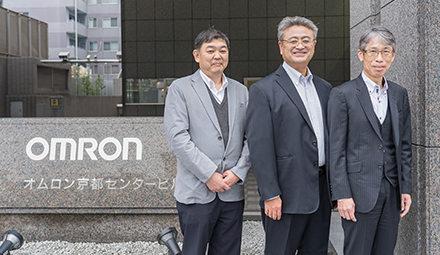
data integration platform that supports factory traceability systems
OMRON Corporation, a leading automation company with a wide range of businesses, including control equipment, electronic components, and healthcare, with a focus on factory automation, built a traceability system to visualize the operating status of factories as part of its efforts to identify the scope of impact caused by malfunctions that occurred at manufacturing sites and to improve on-site work.The company built a system that converts information obtained from different environments at each site, such as Excel and existing distributed systems, into an appropriate format and smoothly data integration with the upper-level traceability system.
Nikkiso Co., Ltd.
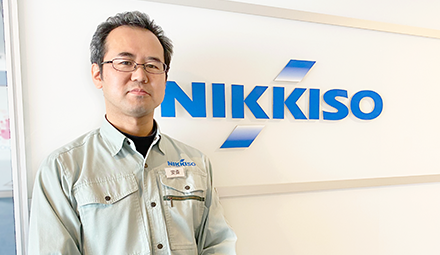
Aiming to digitalize factories, centralize data integration and create a foundation for data utilization
Founded in 1953, Nikkiso Co., Ltd. manufactures specialized industrial pumps, CFRP aircraft parts, and hemodialysis medical equipment, focusing on the three main fields of industry, medicine, and aviation. The company's Aerospace Business Division, which is expanding globally and has established a factory in Vietnam, aims to further expand its business, and has implemented ERP/PLM/MES at multiple factories to promote digitalization and operational efficiency in its factories. Utilizing technology to link systems with existing mission-critical system, core system, Nikkiso has achieved a rapid development and an environment that can be operated efficiently.
Nissin Foods Holdings Co., Ltd.
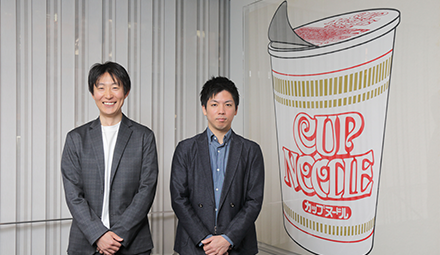
Establishing a data analysis platform that utilizes generative AI to contribute to "data-driven" management
Nissin Foods Holdings Co., Ltd., which creates a new food culture with innovative technology and ideas, is promoting business transformation using digital technology to achieve the goals set out in its Medium- to Long-Term Growth Strategy 2030, and is working on five measures, including cybersecurity. One of these is to "establish a foundation that contributes to 'data-driven' management," and in order to achieve this, the company has established a data integration /analysis platform. data integration platform has been built to aggregate data from each partially optimized system and input it into a DWH.
summary
In manufacturing DX, which aims to combine IT and OT, the key is to tackle the issue from both a technical and organizational perspective.
By leveraging the strengths of both IT and OT and promoting data integration in a mutually complementary manner, it is possible to bring about major changes in operational efficiency and quality improvement on-site, as well as in the formulation of management-level strategies. Japanese manufacturing sites are renowned for their meticulous technical capabilities, so adding the power of technology to this will further accelerate the creation of new value.
The key to successful implementation is to reduce risk by starting small, establish a governance system, and build a cross-organizational collaboration system. It is important to foster a culture where frontline staff and management are aligned, share data, identify problems, and work together to implement solutions.
Global competition and environmental requirements are expected to continue to intensify, but the DX of manufacturing through the fusion of IT and OT will surely be a major force in helping Japanese manufacturing to once again lead the world. Let's take this opportunity to further strengthen data integration foundations and evolve into manufacturing that can flexibly respond to changes in the market.
The person who wrote the article
Recommended Content
-
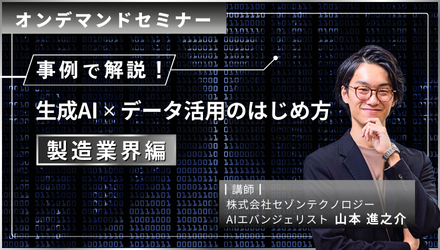
How to get started with generative AI and data utilization in the manufacturing industry
We will introduce an approach that allows you to quickly get started with "generative AI x data utilization" using use cases from the manufacturing industry that can be immediately applied to your business. -

List of other manufacturing industry implementation cases
Saison Technology has many other examples in the manufacturing industry besides those introduced in this column. Be sure to check them out! -

Get an online consultation about data utilization
If you would like to hear more about our data utilization platform, we also offer online consultations.
Related Content
-
The Use of Generative AI in Talent Management: From Intuition to Data-Driven Approaches
-
What is CDC (Change Data Capture)? – A method for securely and reliably transporting data from on-premises systems.
-

data integration techniques for character code conversion—preparing for a mix of SJIS, JEF, and Unicode.