

Future disaster prevention digital transformation realized through data integration platform (Part 1)

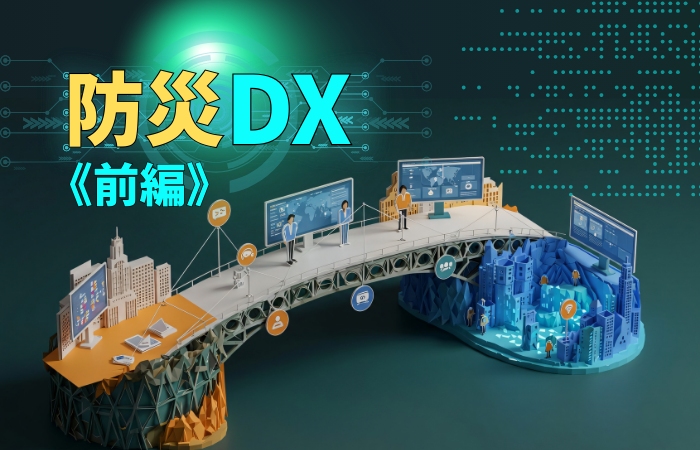
With the increasing frequency of natural disasters and the resulting widespread damage, digitalization of disaster prevention has become an urgent issue. By centrally handling the diverse information held by local governments and private businesses, it will become possible to implement rapid and accurate disaster prevention measures.
This article introduces an overview of disaster prevention digital transformation, issues surrounding data utilization, and the role of data integration platform.
What is Disaster Prevention DX?
Disaster prevention DX refers to efforts to improve response capabilities and efficiency in the event of a disaster by utilizing data and introducing digital technology in the field of disaster prevention.
In recent years, natural disasters such as large typhoons and heavy rains have occurred almost every year, and the expansion of damage has become a social issue. In response to this situation, it has become difficult to respond quickly using traditional paper-based and decentralized information management alone.
Disaster prevention digital transformation involves preparing for disasters by utilizing not only data collected by local governments and companies themselves, but also data held by private disaster prevention apps, meteorological agencies, infrastructure providers, etc. Initiatives to strengthen data integration are being promoted by the Digital Agency, and there is a growing movement for national and local governments to work together to build new systems and conduct demonstration experiments, aiming for more practical disaster response.
▼I want to know more about data integration / data integration platform
⇒ data integration / data integration platform | Glossary
Data challenges in the disaster prevention field
During a disaster, it is necessary to constantly grasp the latest information and respond appropriately, but it is not easy to consolidate data scattered across different institutions and platforms. Furthermore, while there are many disaster prevention systems and services, each has its own unique format and operational policy, making it difficult to integrate information.
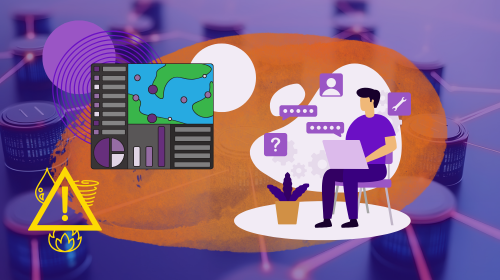
Issue 1: Data collection and decision-making take time
Disaster-related information, such as weather data from the Japan Meteorological Agency, river information, and damage reports from local governments, is updated simultaneously on many websites and systems. Checking all of these sources of information requires manpower, and the time required to gather information can lead to delays in decision-making.
Issue 2: Different data formats make it difficult to share data
The systems used by municipalities and companies often have different formats and database structures, and are scattered across on-premise and cloud platforms, making it difficult to centralise and use information. These technical inconsistencies hinder the rapid sharing of information in the event of a disaster.
Issue 3: It is time-consuming to enter the same information twice
As the number of apps and systems provided by local governments and private companies increases, it is becoming increasingly common for residents and staff to have to repeatedly register the same information. This not only places a burden on residents and staff, but also increases the risk of missing updates or providing incorrect information.
What is data integration platform that supports disaster prevention digital transformation?
data integration platform is a mechanism for smoothly exchanging information between multiple systems, and its role is to circulate data converted to common specifications across disaster prevention apps and systems developed by local governments and companies.
In fiscal year 2024, demonstration experiments were conducted in Joso City, Ibaraki Prefecture, and Koto Ward, Tokyo, and other locations, advancing efforts to simultaneously link multiple existing apps. This has simplified the information input required by callers, and has led to cases where appropriate, individualized support for residents has become possible.
What is data integration platform?
The data integration platform is designed to aggregate data held by various local governments and private businesses and handle the different formats in a unified manner. This platform allows for cross-sectional reference of multiple information sources, which was previously difficult to grasp, and allows for centralized management of emergency information and disaster situations. It is expected that the platform's functions will expand as a forum for the exchange of a wider range of information, with an eye toward linking with the new comprehensive disaster prevention information system (SOBO-WEB) and the disaster information sharing system (L-Alert) being promoted by the national government and the Digital Agency.
Benefits of data integration
As data integration progresses, the speed at which information flows will improve dramatically, which is expected to lead to more efficient work by local governments and related organizations.
Advantage 1: Automatic data linkage
By switching from manually transferring data between systems to automatic linking, the amount of work and errors involved in inputting data can be significantly reduced. Data is updated in real time, allowing the latest information to be shared immediately after a disaster occurs. This has the major benefit of making it easier to come up with effective countermeasures before the damage spreads.
Advantage 2: Data standardization
By converting and managing the different data formats used by each local government and institution into a standardized common format, barriers to system integration are removed. This measure reduces the inconvenience and conversion effort caused by differences in database structure, and makes it easier to share the same item definitions. This creates a highly scalable environment that can be used smoothly by a variety of participants.
Advantage 3: Centralized data entry
This method allows you to cover the traditional system where you had to enter the same information multiple times into multiple systems with just one input. It reduces the time and human costs involved in duplicate input, allowing disaster prevention personnel to allocate their resources to more advanced judgment and support for residents. The more centralized this system is, the more likely it is that confusion will be minimized even in the event of a disaster.
Finally
Disaster prevention digital transformation using data integration platform is one of the most important areas in Japan, where natural disasters occur one after another. By collaborating with governments, businesses, and local communities to aim for consistent data utilization from normal times to disaster situations, it has the potential to simultaneously reduce disaster risk and achieve rapid recovery.
In the second part, we will explain how to proceed with the introduction of a data data integration platform data integration platform in the disaster prevention field in order to deploy it on a small scale.
The person who wrote the article
Related Columns
-

"Data exists, but it can't be used": Challenges and approaches to data utilization in the real estate industry.
-
How to visualize cost management in Construction? We explain the challenges, methods, and system utilization.
-

Management speed is determined by structure: Reforming the decision-making process of a regional bank through data integration and AI.
Recommended Articles
-

The importance of data integration in local government digital transformation and how to promote it
data integration is a major obstacle to digital transformation in local governments. This article explains how to promote it successfully. -

Successful examples of promoting digital transformation in local governments using no-code
We will introduce a case study of the construction of data integration platform that can be used by 77 cities, towns, and villages, realized by the Nagano Prefecture DX Promotion Division. -
Future disaster prevention digital transformation realized through data integration platform (Part 2)
We will explain the step-by-step process to successfully implement data integration platform for disaster prevention digital transformation.