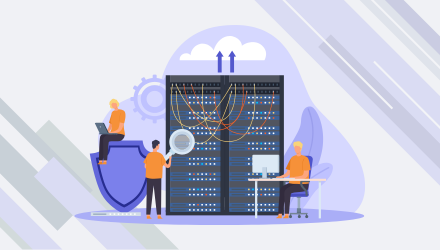

The importance of sustainability management and the use of non-financial data in the era of SX

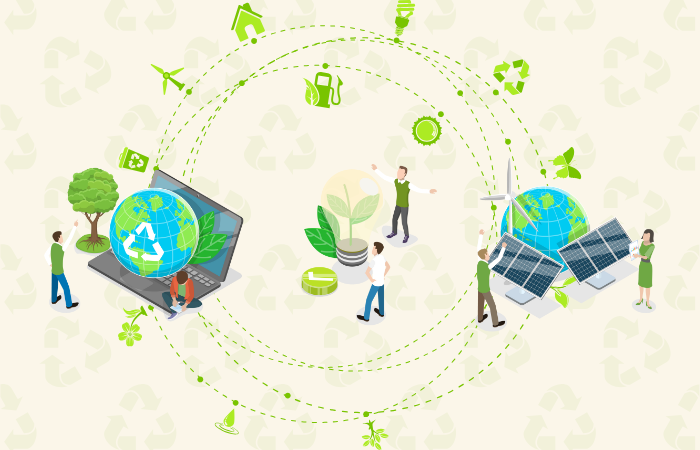
In recent years, sustainability initiatives have become essential for corporate management, and the concept of SX (Sustainability Transformation) has been attracting attention. In order for companies to continue creating value over the long term, they are required to tackle environmental conservation and social issues head-on, and there are an increasing number of factors that cannot be fully evaluated using traditional financial indicators alone.
In particular, the use of non-financial information is of great significance in terms of improving corporate value and strengthening employee engagement. Diverse stakeholders, including investors and consumers, are beginning to evaluate companies' initiatives more comprehensively, making the disclosure and use of non-financial information an important management strategy.
Sustainability Transformation (SX) Overview
SX (Sustainability Transformation) refers to a transformation that places sustainability at the center of management by reviewing corporate activities across a wide range of areas, including the environment, society, and governance. Many companies are accelerating their efforts to manage their businesses with an emphasis on ESG (environment, society, and governance) indicators, and we are moving into an era in which the social value and risks of a company, which could not be captured by traditional financial indicators alone, are directly linked to the success or failure of management.
One of the major factors behind this trend is the establishment of laws and regulations, such as the Corporate Sustainability Reporting Directive (CSRD) in the European Union, which treat non-financial information on an equal footing with financial information. Companies are now being asked to take explicit responsibility not only for productivity, but also for environmental considerations and ways of resolving social issues. In this way, SX is rapidly gaining attention as an approach to achieving both long-term improvements in corporate value and social contributions.
Differences from DX and GX
Words similar to SX include DX and GX.
Digital transformation (DX) refers to the reform of operations and business models through the use of information technology. In the context of sustainability, DX is positioned as one of the means for implementing SX strategies.
GX (Green Transformation) refers to greening measures aimed at realizing a decarbonized society. Meanwhile, SX is a broad concept that aims to achieve sustainable growth and problem-solving for companies and society as a whole, encompassing not only the environment but also social and governance areas. In other words, SX encompasses GX and can be thought of as a framework that comprehensively captures new value creation and social change.
The key to accelerating SX is non-financial information
To promote SX, not only financial indicators such as sales and profits but also non-financial information that shows the qualitative elements of corporate activities are important.
Non-financial information refers to information that includes elements that are difficult to quantify, such as human capital, organizational culture, and customer loyalty. As corporate evaluations become more multifaceted, companies are no longer simply asked about revenue and asset valuation, but also about how seriously they are addressing social issues. By properly managing and utilizing this non-financial information, companies can gain a more accurate understanding of their actual situation while also enabling constructive communication with stakeholders.
Furthermore, because this information complements financial data, a comprehensive analysis of both is a shortcut to measuring true corporate value. Non-financial information is directly linked to corporate culture and risk factors, and can be considered an important indicator that influences the direction of long-term corporate activities. Understanding both financial and non-financial aspects provides a clearer picture of sustainability management and serves as a basis for bringing about organizational behavioral changes.
What is non-financial information? How is it different from financial information?
While financial information primarily focuses on numerical data such as financial statements, sales, and profit margins, non-financial information includes elements that evaluate a company's social impact and vision. For example, many aspects of a company's GHG (greenhouse gas) emissions report promoted by the Ministry of the Environment, employee satisfaction survey results, and contributions to the local community are difficult to quantify. However, as stakeholders seek to evaluate companies more comprehensively, non-financial information is becoming increasingly relevant as a new standard of value that complements financial aspects.
Establishing KPIs as a sustainability implementation strategy
To effectively utilize non-financial information, it is important to have a system for setting and monitoring quantifiable indicators. Specifically, KPIs such as greenhouse gas emission reduction targets, employee turnover rates, and progress in human resource development can be set and resources allocated systematically. This makes it easier for management and employees to work toward the same goals, allowing for steady progress in sustainability initiatives.
Integrated management of non-financial information and examples of implementation
We will look at how to organize and manage non-financial data across the entire company and achieve SX through specific measures.
For companies to accelerate sustainability management, a process for collecting, analyzing, and utilizing non-financial information is essential. For example, by simultaneously understanding ESG indicators and financial indicators and establishing a system in which related departments can work together to implement the PDCA cycle, it becomes possible to create new social value. Specific initiatives include responding to climate change risks and co-creation projects with stakeholders. The results of these efforts not only strengthen the company's philosophy, but also lead to improved corporate branding and better evaluations from investors.
Furthermore, building an integrated management system minimizes duplication and omissions of information scattered throughout the company, facilitating rapid decision-making. Because non-financial information requires a cross-departmental perspective, it is important to create a system that allows collaboration not only between individual departments, but also between management, IT departments, and stakeholders across the entire supply chain. This type of integrated management is the core process that speeds up transformation in the SX era.
Data integration for monitoring KPIs
Establishing a system that can centrally manage non-financial and financial indicators makes it possible to understand a company's management status from multiple angles. For example, if the system that manages ESG data is linked to the accounting system, it becomes possible to instantly analyze the relationship between investment efficiency and environmental impact. Monitoring KPIs in real time and planning appropriate improvement measures based on the results is essential for sustained improvement of corporate value.
Visualization of human capital, including work styles and talent management
Visualizing human capital, the foundation of corporate growth, is a crucial initiative in the era of SX. For example, capturing employee motivation, engagement, and skill maturity from both quantitative and qualitative perspectives and correlating these with actual productivity and turnover rates clarifies the priorities that an organization should address. This helps create a work environment where employees feel motivated, enabling the company to simultaneously achieve sustainable growth and improve its social reputation.
Visualization of the entire supply chain, including calculation of Scope 3 emissions
Recent climate change countermeasures require companies to calculate Scope 3 emissions (greenhouse gas emissions in the value chain other than their own company). By visualizing data across the entire supply chain, companies can accurately identify which processes place the greatest burden and implement effective reduction measures. As a result, companies can improve their reputations while contributing to improving sustainability across the industry through cooperation with business partners and stakeholders.
What is the data integration platform needed to achieve SX?
The data infrastructure that supports SX requires an environment that can consistently manage and analyze a wide variety of information.
By integrating a wide range of information into a single platform, companies can support strategic decision-making from both financial and non-financial perspectives. It is important to build a platform that allows easy participation from business and IT departments, as well as group companies and external partners. By preventing data silos and strengthening company-wide data governance, companies can expect to simultaneously improve sustainability and management efficiency.
In order to quickly comply with regulatory requirements in Europe, Japan, and other countries, it is essential to have an environment where data can be used in real time while maintaining its integrity and security. The optimal method will vary depending on the size and type of business of the company, but multifaceted consideration is required, such as a hybrid model that combines on-premise and cloud environments, or a system that enables data integration with external suppliers and group companies.
Identifying available data
First, clearly identify what data exists within your company or group and determine whether it is useful in the context of SX. In addition, information from business partners and industry associations, as well as open data published by local governments and government agencies, can also be used to gain useful insights for sustainability management. Recognizing the existence of these diverse data sources can broaden the scope of your analysis and measures.
▼I want to know more about open data
⇒ Open data | Glossary
Data from internal on-premise and cloud environments
Existing data operated on-premise, such as a company's mission-critical system, core system and human resources management systems, is also an important source of information for SX. Meanwhile, cloud-based SaaS services are constantly offering new functions, which are useful for rapid analysis. Creating a system that manages both environments in an integrated manner and facilitates the import and utilization of data will strengthen the execution capabilities of SX.
Data from external group companies, business partners and partners
Information throughout the supply chain is essential for calculating Scope 3 emissions and risk assessment. How to collect and standardize information provided by group companies, business partners, and partners is a major challenge in deepening SX. Creating a system that allows mutual benefits to be shared and building relationships that allow for the transparent exchange of data will improve the accuracy and execution speed of SX as a whole.
Publicly available open data
Open data available from public institutions, such as weather and demographic data published by government agencies and statistical information compiled by industry associations, can be a powerful tool to support a company's sustainability strategy. Combining this data with your own company's own data allows you to more specifically examine the impact on local communities and future regulatory risks. Appropriate use of open data can also help create new business models and build a resilient management foundation.
Creating an environment for data collection and integration
A key step in implementing SX is the process of accurately collecting data in a variety of formats and integrating it into a form that is easy to use across the organization. Data transformation can be particularly time-consuming when data sources are dispersed, but by developing and automating a data pipeline, efficiency can be significantly improved. Having a platform for safely and comprehensively handling data also makes it possible to check non-financial information in real time and use it to inform decision-making.

Data conversion and processing
Data collected from different systems and business partners often comes in a variety of formats, so it needs to be normalized to a common standard. Specifically, it needs to be converted into a format suitable for analysis and reporting, including standardizing units, adjusting time series, and adding metadata. Automating and standardizing these processes prevents human error and enables stable and continuous use of SX-related information.
Data accumulation and management
When storing data, it is important to create a secure, high-capacity environment using a data lake or data warehouse. Non-financial information is often necessary to understand long-term trends, so how to archive past data is also a major consideration. Efficient data accumulation and management is essential to support the foundation of machine learning and advanced statistical analysis.
Exposing a Data Interface
To create an environment where those who need accumulated data can access it when they need it, it is effective to make the interface public through an API or similar. Introducing an open API makes it easier for analysis teams and affiliated companies to combine data from new perspectives. As a result, the level of data utilization throughout the organization improves, supporting the goal of SX: solving social issues and creating new businesses.
Creating an environment for data analysis
To make decisions using integrated data, analytical tools and human resource development are also important. It is necessary to introduce the necessary visualization functions, reports, automated predictive models, etc., while taking into account the different analytical needs of each department. Having such an analytical infrastructure in place will help foster a data-driven culture throughout the company, from the management to the field level.
BI (Business Intelligence)
BI tools are a powerful solution for visualizing a company's data in real time and making management decisions in a short time. By being able to view both financial and non-financial indicators on a dashboard, everyone from top management to field personnel can act with a consistent understanding. Rapid decision-making also helps differentiate from competitors and greatly contributes to accelerating SX promotion.
AI/ML (machine learning)
By utilizing AI and machine learning, it is possible to automatically extract patterns and trends from large amounts of data, making it easier to perform future predictions and risk analysis. The range of applications is wide, including risk simulations for business sectors affected by climate change and medium- to long-term performance forecasts for human capital. This makes it possible to implement proactive measures and further enhance the value of sustainability management.
Platform-wide considerations
When building a data infrastructure for SX, it is essential to consider not only the technical aspects but also the operational structure and governance aspects. Introducing a new system requires securing costs and skill sets, and at the same time, a framework must be established to ensure the accuracy of the data and the validity of the analytical technology. Ultimately, by making it easy for the entire company to use data, the aim is to instill a sustainability mindset into the organizational culture.
Is in-house development and operation possible?
The decision to develop a data infrastructure in-house or partner with an external vendor depends on the resources and skills a company has. While in-house development allows for flexibility in reflecting unique requirements, it also tends to require greater burdens such as training specialized personnel and maintaining the system. On the other hand, using an external vendor offers speedy implementation and access to the latest technology, but requires consideration of the balance with the degree of adaptability to the company's specifications.
Are the data and analytical results consistent and reliable?
When collecting data from diverse sources, it is necessary to pay attention to consistency and duplication. By verifying that analytical methods are free of bias and implementing highly transparent processes, it is possible to obtain information that stakeholders can use with confidence. In SX in particular, the reliability of non-financial information is likely to be directly linked to social evaluation, so it is necessary to establish a system for improving data quality, such as a double-check system.
Are the data and analysis results available to everyone?
Simply hoarding valuable data and useful analysis results will not lead to company-wide SX promotion. It is essential to have a system that allows easy access not only to management but also to field staff and each department, and that can be used for decision-making as needed. It is necessary to select tools that take into account educational programs and usability, and to create an environment in which data utilization is firmly rooted in the corporate culture.
summary
In the SX era, the integrated use of data, including non-financial information, will directly lead to the sustainable growth of companies and the improvement of their social value.
The use of data to support sustainability management is no longer an "optional initiative" for companies. As evaluations based on a combination of financial and non-financial indicators become commonplace and legal regulations, particularly in Europe, become stricter, companies are being forced to clearly demonstrate their social responsibility. In this context, a major turning point will be whether companies can smoothly analyze and strategically utilize a wide range of information obtained through open data from the public and private sectors and collaboration with business partners.
For companies to put SX into practice, it is essential to develop a data integration infrastructure and improve data literacy throughout the organization. By setting KPIs based on integrated information and continuing to implement and verify them, it is possible to simultaneously solve social issues and generate profits. This sustainable acquisition of corporate value not only earns the trust of investors and customers, but is also expected to increase resilience against future uncertainties.
The person who wrote the article
Recommended Content
-
Free your sustainability staff from the burden of data collection and transcription!
We will introduce a solution that streamlines the process from data collection to classification and template transcription, reducing the time required to prepare data for input into calculation tools. -
What is data utilization? Basic knowledge to increase business value
We will explain the key points for increasing business value by organizing the basic concepts, benefits, approaches, and main challenges of data utilization. -

Get an online consultation about data utilization
If you would like to hear more about our data utilization platform, we also offer online consultations.