

What are the accounting efficiency improvements you should tackle right now? -data integration that enables quick management decisions through sales data analysis -


In recent years, as many companies have been implementing back-office reforms, the need for greater efficiency in accounting departments has also increased. One method of achieving this has been gaining attention: data integration, which smoothly connects various systems. Not only does this relieve the burden of manually managing documents and numerical data, it also helps build a foundation for accurately understanding financial situations and supporting swift management decisions. Another important point is that it allows accounting staff to focus on the strategic roles they should be working on.
In this article, we will introduce the importance and benefits of data integration to promote the efficiency of accounting operations, as well as selection points to consider when introducing tools.
The importance of improving accounting efficiency through data integration
First, let's look at the importance of data integration and how it can improve the efficiency of accounting work. Being able to understand data will make work flows and internal communication smoother.
▼I want to know more about data integration
⇒ data integration / data integration platform | Glossary
The risk of waste and personalization hidden in paper and Excel management
As a company grows, transactions and accounting processes tend to become more complex, and traditional paper or Excel management methods are prone to input errors and unnecessary confirmation work, and often make it difficult to track history. Furthermore, when work is concentrated in the hands of a few staff members and know-how becomes personalized, there is a high possibility that work will be disrupted when those staff members are transferred or leave the company. To avoid such waste and risks, a system that automatically links data by linking systems is required. Establishing data integration reduces cumbersome transcription and double entry, significantly shortening work time.
The problem of "siloing" systems and its impact
As a company grows, various departments may introduce different systems, but if these systems are not connected, "silos" will occur. When information is dispersed due to silos, not only will data inconsistencies and duplicate entries occur, but information sharing between departments will also be hindered. Unconnected data increases the effort and time required for accounting staff to cross-check data, and can also hinder rapid management decision-making.
▼I want to know more about siloing
⇒ Siloization | Glossary
data integration for business growth that goes beyond business efficiency
As data integration advances, it becomes easier to integrate multiple business systems and manage them centrally. The benefits of automatically linking data include reducing human error and increasing transparency in audits and compliance with laws and regulations. This reduces the burden on accounting staff and leads to the creation of a system that allows them to focus on more strategic analysis and management support. In addition, accurate figures can be reflected instantly, making it possible to provide the data required by management and other departments in a timely manner. This increases the speed and accuracy of management decisions, directly leading to stronger corporate competitiveness.
Major issues weighing on accounting operations

We will explain the background behind the increasing complexity of accounting work and identify common problems that arise within organizations.
The background to the increasing complexity of accounting workflow
With an increase in transaction volume and diversification of business types, it is natural that the entire process, from accounting entries and invoicing to financial settlement, becomes more complex. In particular, when tax reforms and the introduction of new systems occur at the same time, it becomes necessary not only to carry out simple daily accounting procedures, but also to prepare for these changes and review internal processes, which requires time and money. Furthermore, the more transactions with external parties, the greater the scope of document checking and management, and the more procedures there are. If this complexity is left unchecked, it can lead to poor communication between personnel, increasing the likelihood of omissions and delays in work.
Resistance to change and lack of IT literacy
It's not uncommon for people to be reluctant to change familiar ways of doing things when introducing new systems or changing operational rules. In particular, for staff with many years of experience using traditional paper-based methods, resistance will intensify if the benefits of increased efficiency through IT are not clearly communicated. Furthermore, differences in the level of proficiency in system operation among individuals can lead to a series of unexpected problems, which pose a risk of hindering productivity improvements. To solve these problems, it is important to thoroughly examine the workflow from the ground up and to thoroughly plan and implement training and support at the time of implementation.
Examples of accounting tasks that can be automated through data integration
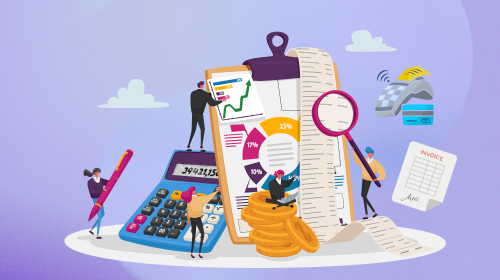
Let's understand specifically what accounting tasks can be automated through data integration.
API integration with accounting software and expense settlement systems
The introduction of data integration typically leads to increased automation of highly repetitive tasks such as invoice processing and expense accounting. By linking accounting software and expense reimbursement systems via API, it becomes possible to automatically import expense detail data into the accounting software. This not only prevents manual transcription errors, but also updates expense information in real time, making closing procedures and the creation of monthly reports more efficient. The integration process itself is automated once set up, so once the system is established, it is attractive in that it significantly reduces daily operations. In addition, once this integration infrastructure is in place, it also makes it easier to adapt to the invoice system, a new system that is becoming increasingly important.
▼I want to know more about the API
⇒ API|Glossary
Data integration with invoicing tools and POS registers
Automatically linking your invoicing tools and POS registers that manage sales data to your accounting software will streamline the recording of accounts receivable and inventory management. This allows for instant, centralized management of sales totals from multiple channels, such as physical stores and online shops, allowing managers to grasp and analyze the latest figures whenever they want. This not only reduces the effort required for transcription and aggregation, but also helps prevent human error. By linking and utilizing these systems, you can free up accounting staff from routine tasks and create an environment where they can focus on more strategic analysis and reporting.
When considering systemization, efficiency can be increased by considering combining it with tools such as not only accounting software and expense reimbursement tools, but also POS registers, inventory management systems, and even iPaaS, EAI, RPA, and AI-OCR.
Collaborative measures aimed at responding to the invoice system
As invoice processing becomes more electronic and compliance with the Electronic Bookkeeping Act progresses, the number of check items required with the introduction of the invoice system is also increasing. By integrating systems early, you can create an environment where necessary information such as registration numbers and transaction details can be automatically recorded and managed, reducing the hassle of future audits and tax returns. The more data formats are standardized, the more work efficiency will improve across the entire company.
6 benefits of data integration for accounting departments
Next, we will summarize the major benefits that can be gained by introducing data integration.
1. Reduction of work time and labor costs
By linking systems, data can be exchanged automatically, significantly reducing the time required for manual input. This is expected to reduce overtime and optimize outsourcing costs, allowing accounting staff to allocate their time to more advanced tasks. As a result, it will also lead to a review of labor costs across the company and improved productivity.
2. Significantly reduces human error
Automating the transcription of invoice and expense data minimizes input and calculation errors. Because the system automatically processes even large volumes of data, it reduces the time and confusion required for checking, improving the accuracy of work. The fewer errors there are, the smoother the process will be during audits and tax matters.
3. Work becomes less dependent on individuals
By establishing data integration platform, accounting processes become visible, reducing the risk of relying on specific personnel. Since anyone can access the necessary information and work proceeds based on rules, work handovers and vacation arrangements are smooth. Preventing reliance on individuals strengthens organizational strength and leads to stable business operations.
4. Speeding up management decisions
Since accounting entries and sales information are updated in real time, management can quickly obtain the data they need for decision-making. This allows daily cash flow and investment decisions to be made in real time. The more accurate and timely the data, the easier it is to develop strategies and improve services ahead of competitors.
5. Strengthening invoice handling and internal controls
As the invoice system becomes more widespread, there is an increasing need to record and manage transaction details in detail. By introducing data integration and properly managing electronic transaction data with facial recognition and time stamps, the risk of losing supporting documents will be significantly reduced, making it easier to respond to subsequent audits. This will also help build a robust internal control system that will help detect fraud and errors early on.
6. Ability to focus on core and strategic business
By outsourcing routine tasks to the system, accounting departments can redirect the time they previously spent on high-value-added tasks such as new initiatives and business analysis. In fact, when conducting sales analysis or monitoring various KPIs, linked data makes it easier to create quick and accurate reports. The more such positive initiatives are implemented, the more the accounting department will function as an engine supporting the sustainable growth of the company.
How to streamline accounting operations with data integration

Let's take a look at the steps to actually implement data integration.
Identify your company's accounting workflow
First, start by looking at which tasks in your current accounting work take up the most time and effort. It's important to get an overall picture by talking to on-site staff, such as whether paper-based or system-managed data is the norm, and which flows involve duplicate entry or extraction work. By conducting this kind of analysis, you'll be able to clearly see which areas need improvement as a priority.
Confirming system requirements and internal structure and preparing for implementation
In addition to basic requirements such as compatibility with current systems, API integration, and whether to use the cloud or on-premise, you must also consider your company's operational structure. Avoid resistance and operational mismatches by getting input from not only the decision-makers but also the staff who will actually use the system. The best approach is to prepare for implementation in stages, taking advantage of trial implementations and vendor demos.
Selection of iPaaS, EAI, RPA, AI-OCR, cloud services, etc.
There are a wide variety of tools that can be used for accounting work, including iPaaS and EAI tools that specialize in processing and linking data between systems using API integration, AI-OCR that scans paper documents and converts them into text data, and RPA that automates routine tasks. Using cloud services reduces the burden of updating to the latest version and maintenance, making it easier to address the issue of a lack of in-house IT resources. However, each tool has its own strengths and functionality, so it's important to choose the optimal combination based on your company's business operations.
Establishing operational rules after implementation and continuous improvement
It is not enough to simply introduce a new system; it is essential to take steps such as documenting operational rules and regularly inspecting the actual operational status. Since keeping the person in charge too fixed can lead to a recurrence of dependency on individual personnel, it is also important to consider strengthening the system through knowledge sharing and rotation of personnel. Increasing the utilization of tools through an accumulation of small improvements will sustain the effects and form the foundation for promoting DX throughout the company.
Points to note when introducing data integration tool and cloud services
We will introduce points to consider when introducing tools and services, such as operational and cost aspects.
Assessing operational costs and support systems
To maximize the benefits of data integration, it is essential not only to simply implement the system, but also to continuously monitor its operation and support system after implementation. The frequency of updates and compatibility between systems also have a significant impact on operational costs and maintenance efforts. There is also a risk that the system will suddenly stop working due to compatibility issues, so it is advisable to always work closely with the vendor and IT department.
In addition to the initial implementation cost, you also need to comprehensively evaluate monthly fees, additional support costs, and the costs associated with updates. Whether or not a vendor has a solid support system is directly linked to the speed and quality of response when problems occur, so when selecting a vendor, it's important to check the level of support for inquiries and the level of help desk functionality.
The importance of in-house training and skill development support
When introducing a new tool, it is necessary to consider the company's IT literacy and the cost of staff learning, and to make sure there are not too many unfamiliar functions and operations. It is also necessary to improve the basic IT literacy of employees themselves. Therefore, it is desirable to create an environment in which the effects of the introduction can be easily realized by providing training for all staff and training opportunities to increase their proficiency. Active support from upper management also increases the motivation to learn at the site, which speeds up the system's adoption.
Advantages and disadvantages of arranging services with the same vendor
It's true that using accounting software, expense reimbursement systems, inventory management tools, and other software from the same vendor makes it easier to build a highly integrated and unified environment. However, this also means that the service scope may be limited, leading to risks of insufficient functionality and reduced flexibility in terms of cost. It's important to carefully assess how well the vendor's scope of offerings matches your company's requirements.
data integration tool that absorb differences between vendors
Given the increasing complexity of IT system functions and business requirements, it would be extremely difficult to standardize accounting software and expense reimbursement systems provided by the same vendor. iPaaS and EAI excel at data integration in such situations, making it possible to flexibly data integration between complex systems.
What is iPaaS?
Integration Platform as a Service (iPaaS) is a cloud-based data integration service that helps businesses data integration efficiently. It provides a toolset for seamless data integration between various systems and applications, including accounting software and expense reimbursement systems, enabling automated and flexible data flow across multiple systems.
▼I want to know more about iPaaS
⇒ iPaaS | Glossary
What is EAI?
EAI (Enterprise Application Integration) is a technology that aims to seamlessly integrate the many different applications that exist within a company and facilitate data integration. Many modern companies have implemented a variety of applications to streamline operations such as sales, inventory management, accounting, and customer management. EAI provides a wide range of pre-set connectors and an intuitive interface for linking these applications, making it easy to set up even without technical expertise.
▼I want to know more about EAI
⇒ EAI|Glossary
Summary: Innovate accounting operations through data integration and accelerate business growth
Improving the efficiency of accounting operations through data integration is an initiative that directly leads to improved productivity across the entire company. When considering implementation, it is important to clarify current issues and implement in stages, taking into account the optimal tools and operational structure.
By automating data integration companies can further strengthen their competitiveness by redirecting the time and human resources they have saved to new businesses and advanced analysis. Accounting reform will help accelerate the growth of the entire business, going beyond the boundaries of the back office.
The person who wrote the article
Recommended Content
-

iPaaS-based data integration platform HULFT Square
iPaaS, data integration platform, is gaining attention in the age of AI. Check out the product details of "HULFT Square," which meets the needs of this era. -
Why we recommend iPaaS for data integration | A thorough explanation of iPaaS
We will thoroughly explain why iPaaS is suitable for data integration, how it differs from traditional methods, and how it is actually used. -

Get an online consultation about data integration
If you would like to hear more about our data utilization platform, we also offer online consultations.
Related Content
-
The Use of Generative AI in Talent Management: From Intuition to Data-Driven Approaches
-
What is CDC (Change Data Capture)? – A method for securely and reliably transporting data from on-premises systems.
-

data integration techniques for character code conversion—preparing for a mix of SJIS, JEF, and Unicode.