

Maximizing Profits by Utilizing Expense Reimbursement Data: A Guide to Promoting Offensive and Defensive Digital Transformation

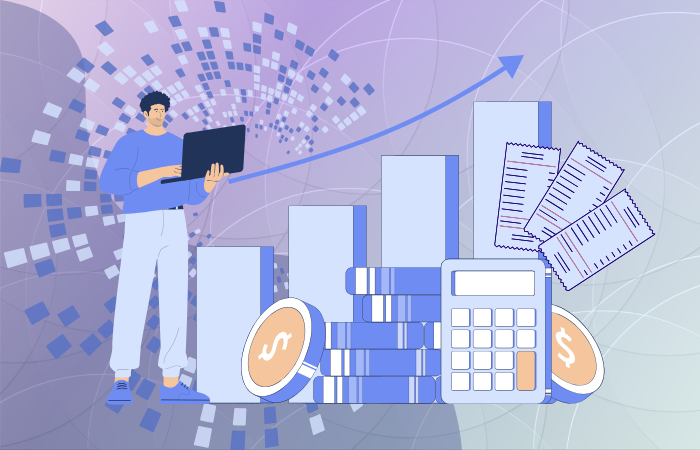
In many organizations, expense reimbursement is viewed as a clerical procedure for processing incurred expenses after the fact. However, in today's digital age, the data accumulated in expense reimbursement systems is an important asset that increases the resolution of management and provides hints for future growth.
In this article, we will summarize the new business value that data integration brings and specific examples of business efficiency improvements from both offensive and defensive perspectives based on expense reimbursement data.
Current state of data utilization in expense reimbursement
Recently, many companies have introduced cloud-based expense reimbursement systems in an effort to streamline back-office operations. By utilizing leading SaaS services such as Concur, it has become common to eliminate the circulation of physical documents and digitize expense application and approval workflows. However, in many cases, the results of introducing these systems are limited to localized benefits such as going paperless and reducing the burden of data entry work.
Essentially, expense reimbursement systems store live data that shows the actual state of a company's activities, such as when, who, where, and for what purposes funds were invested. The current situation, where this data is locked up in an independent system, means that its value is not being fully utilized. Information generated in the expense reimbursement workflow is not simply processed as a basis for journal entries; it must be appropriately combined with other business data to create value that supports organizational decision-making.
The current challenge is that the standard integration functions provided by expense reimbursement systems alone are insufficient to meet complex internal needs. For example, tasks such as checking the consistency between the information entered by the applicant and supporting documents, and data conversion to mission-critical system, core system, still rely on manual human work and individual settings. The first step in utilizing data is to eliminate these divisions and build a system that allows data to flow seamlessly.
Aggressive DX: Strategic use of expense data to generate profits
Using data from an offensive perspective means viewing expenses not simply as costs, but as investments that will generate future profits. By combining expense data with sales and market trends, it becomes possible to visualize previously invisible return on investment.
Correlation analysis between entertainment expenses and sales data
In many companies, managing entertainment expenses tends to be biased toward whether they are within the budget. However, by data integration and matching the sales and profit results held by the accounting system with expense data, it becomes possible to evaluate the quality of spending. For example, by analyzing each individual's entertainment expenses and their sales results side by side, it is possible to understand the behavioral characteristics of employees who maintain high profit margins.
If you can analyze what targets and when to invest expenses that lead to successful sales and share this knowledge across the entire organization, you can expect to significantly improve the productivity of your sales activities. At the same time, you can also identify areas where the ratio of expenses to sales is excessively high, providing concrete information for making decisions on reallocating resources to activities with higher growth potential.
Utilizing external data to improve market development efficiency
Another effective method is to overlay your company's travel and accommodation data with external market data, such as corporate statistics and target company lists, on a map information system. This analysis can highlight strategic gaps in the market that have high market potential but have not been visited by sales representatives in the past.
This also helps verify the hypothesis that salespeople are simply visiting easy-to-reach locations or existing customers. By identifying areas where there is potential demand, you can strategically deploy business trips and campaigns, and more, allowing for proactive resource allocation based on data.
Optimizing sales structure through travel cost analysis
By combining travel records obtained from travel expense settlement data with total working hours from the attendance management system, it is possible to get a detailed understanding of the balance between each person's travel time and customer contact time.If it becomes clear that travel time is exceptionally long in a particular area, putting pressure on sales negotiation time, this may not be a problem of individual ability, but rather a structural issue in the setting of sales territories.
Based on the results of this analysis, you can consider restructuring your territories and actively introducing online business negotiations, thereby minimizing the costs and time lost associated with physical travel. Utilizing data to improve your work environment is an important measure for maximizing profits while reducing the burden on the field.
Defensive DX: Improving business quality and strengthening governance
From a defensive perspective, the aim is to minimize the need for human verification and strengthen internal controls by automatically ensuring data integrity.

Automated document verification and input matching
A major burden on accounting staff is the task of verifying that the amounts and dates manually entered by applicants match the details of the attached receipts. By introducing an AI-OCR solution to this process and building a system that automatically collates the scanned supporting data with the application values, it is possible to simultaneously improve the accuracy and speed of the work.
By skipping manual checks for items where the content is a perfect match and only extracting and checking items where there are discrepancies or doubts, it is possible to significantly reduce the amount of pointless communication where people point out simple mistakes. As the data becomes more accurate, subsequent accounting processing and data registration in mission-critical system, core system will also be able to proceed more smoothly.
Prevent fraud by checking with approval data
In order to strengthen governance, it is important to link expense reimbursement to data from the preceding processes of purchasing management and approval systems, rather than completing the process on its own.We will implement a function that automatically determines whether the expense claim is based on a pre-approved approval number, and whether the payment amount deviates from the amount estimated or ordered.
By imposing these systemic restrictions, a system can be put in place to prevent fictitious invoicing and duplicate payments. Treating the expense claim process as a single continuous workflow and ensuring data continuity is a surefire way to eliminate any room for fraud.
Compliance with the invoice system and ensuring accuracy
Since the invoice system was introduced, the task of verifying the validity of registration numbers has become a heavy burden on accounting departments. The efficiency of verification work will be dramatically improved by providing a function that automatically compares numbers read from supporting documents using AI-OCR with the National Tax Agency's website for publishing information on qualified invoice issuers in real time.
If the system can determine in the background whether the number exists and whether the business is valid as of the application date, the risks associated with complying with the law can be minimized. The essence of defensive DX is to create an environment in which anyone can proceed with processing accurately without relying on specialized knowledge.
The role of data integration platform that balances offense and defense
The biggest obstacle to implementing the offensive and defensive measures mentioned above is the fragmentation of systems. When expense reimbursement systems, accounting systems, attendance management, SFA, and even external market statistical data are all separate, collating and processing information takes a huge amount of time and effort. A cloud-based data integration platform called iPaaS (Integration Platform as a Service) can solve this problem.
The reason why data integration platform is necessary is that it acts as a hub that flexibly converts the unique data formats of each system and delivers them to the necessary locations in real time. For example, detailed expense data output from Concur can be converted into the journal entry format required by your company's mission-critical system, core system and automatically registered, or it can be combined with external data for analysis using BI tools, all without the need for individual program development.
In particular, Saison Technology's cloud-based data integration platform, "HULFT Square," allows for no-code development of data integration, enabling quick configuration changes to adapt to changes in the business environment. Furthermore, by supporting the implementation of advanced AI-OCR solutions, we also support the accurate digitization of handwritten documents and documents with complex layouts, and their incorporation into business processes.
Offensive DX requires advanced analysis using data visualization and generative AI, while defensive DX requires accurate automated matching. The foundation that supports both of these is the concept of Data Integration. Having a platform that connects scattered data and organizes it into a usable form allows companies to respond flexibly and quickly to change.
▼I want to know more about data integration platform
⇒ data integration / data integration platform | Glossary
Finally
Renovating your expense reimbursement system is not just about digitizing clerical work. It is an important project to organize information that is lying dormant within the company and increase management transparency. The time saved by reducing manual input and automating confirmation work should be used for more value-added analysis and strategy planning.
Eliminating data gaps and building a system that smoothly links systems not only improves on-site convenience, but also directly leads to increased competitiveness for the entire organization. We hope that the utilization methods and importance of data integration platform explained in this article will help promote data-driven management at your company.

Saison Technology Online Consultation
If you would like to hear more about our data utilization platform, we also offer online consultations. Please feel free to contact us!
The person who wrote the article
Recommended Content
-

Includes collaboration examples | A thorough explanation of how accounting work can be automated using cloud accounting!
We will provide a comprehensive explanation of the background and benefits of the increasing automation of accounting tasks, particularly through cloud accounting, as well as selection points that should be kept in mind when implementing it. -

What are the ways to streamline accounting operations that you should work on right now?
We will introduce the importance and benefits of data integration to promote the efficiency of accounting operations, as well as selection points when introducing tools. -

What is system integration? How to choose the best integration method for your company
We will explain the basics of system integration, its types, and the key points to consider when choosing the method that best suits your company's operations.
Related Content
-

The Use of Generative AI in Talent Management: From Intuition to Data-Driven Approaches
-
What is CDC (Change Data Capture)? – A method for securely and reliably transporting data from on-premises systems.
-

data integration techniques for character code conversion—preparing for a mix of SJIS, JEF, and Unicode.