

What is the Modern Data Stack? A comprehensive look at the latest data infrastructure and its components

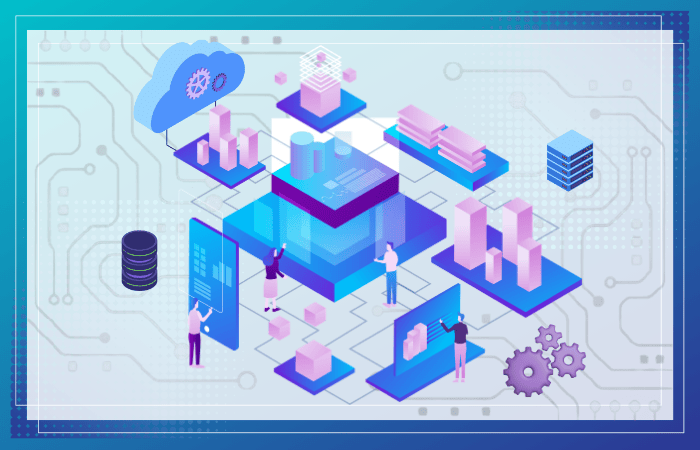
In recent years, an increasing number of companies are working to improve business efficiency and create new value through data utilization. In doing so, it is important to build a flexible data infrastructure that is in line with the times. In this regard, an approach known as the "modern data stack," which combines multiple tools based on the cloud, is gaining attention.
The modern data stack makes it easier to collect and analyze data, handles unstructured data, and processes it in real time, making it easier for business and specialist teams to make data-driven decisions.
In this article, we will organize the definition and characteristics of the modern data stack, as well as its specific components, the benefits of implementation, and collection strategies.
What is the Modern Data Stack?
The modern data stack refers to a flexible data infrastructure built on the cloud. While traditional on-premises environments require significant server management and expansion, the use of the cloud allows for flexible resource allocation.
What's unique about this service is that it combines specialized SaaS tools rather than a single, huge system. You can select data warehouses, ETL/ELT, real-time collection platforms, BI tools, and more as needed, and quickly set up a cutting-edge environment. This makes it easy to handle large amounts of data, and makes it easier to achieve advanced visualization and advanced analysis using AI.
Features and Benefits of the Modern Data Stack
A key feature of the modern data stack is that by combining cloud-native tools, you can achieve the following benefits:
- Flexibility and scalability: Clear separation of functions makes it easy to introduce and replace new tools, allowing for rapid response to technological innovations.
- Cost-effective: Reduce costs by using only the amount of computing resources you need, when you need them
- Real-time performance: By introducing tools that enable real-time processing, it becomes easier to meet analytical needs that require immediacy.
- Global compatibility: Because it is cloud-based, there are fewer restrictions on collecting data from bases in each country, making it suitable for global data utilization.
Differences from conventional data infrastructure
Traditional on-premise data infrastructures require large initial investments in hardware and software purchases and maintenance, are difficult to scale out, and can easily take time and money to handle unstructured data or large volumes of data.
On the other hand, the modern data stack mainly uses services running on the cloud, so it can flexibly respond even if data volume increases. In addition to reducing server downtime and maintenance burden, it also simplifies integration between tools, allowing you to build a state-of-the-art analysis environment in a short period of time.
Because the necessary tools are optimally selected and integrated each time, there is less dependency on specific vendors, and it is easy to introduce the optimal services to meet requirements, which is a major difference from traditional platforms.
Why the Modern Data Stack is Gaining Attention
In recent years, the amount of data obtained from various online services has exploded, and companies are under pressure to analyze it quickly. However, traditional systems have limitations in scalability and do not easily support real-time analysis or integrate with new technologies.
In this situation, the cloud-based modern data stack is attracting attention as a means of achieving both scalability and speed of implementation. Furthermore, its major appeal lies in the ease with which it can be operated and managed by a small number of people, and the ease with which the tools can be used without specialized knowledge.
As a result, the adoption of the modern data stack is spreading from startups to large corporations, and it is becoming established as the foundation that supports data-driven management.
Key Building Blocks of the Modern Data Stack
A modern data stack is made up of a group of tools that share several functions. The general flow is to first store the collected data, then process it into a form suitable for analysis, and finally visualize and utilize it using BI tools.
The optimal tool configuration will vary depending on the data handled on-site, the scale of analysis, and the frequency of data ingestion. However, basically, a robust data pipeline can be built by combining tools for data collection/ingestion, storage, processing, analysis/visualization, and monitoring/quality control.
Data collection and import
This is the phase where information is collected from various data sources and transferred to a data warehouse or data lake. Using tools that can ingest log data and event data in real time allows for immediate analysis of customer behavior.
Quality and timing are important when utilizing BI, and if an appropriate pipeline is established, data usage within the company will proceed smoothly. Since a loss of consistency at this initial stage will affect subsequent processes, it is important to select a highly reliable data import platform.
for example HULFT Square is a cloud-based data integration platform that can integrate a wide range of SaaS, and DataSpider Middleware like this is well suited for integration with on-premise environments.
▼I want to know more about data lakes
⇒ Data Lake | Glossary
Data Storage
This is an area where collected data is stored securely in large volumes, and cloud-based data warehouses and data lakes are common. These are highly scalable and can handle data on a scale of several terabytes to petabytes.
Typical storage options include Snowflake, BigQuery, Redshift, etc. One of the most attractive features is that it significantly reduces infrastructure management, allowing you to use the computing resources you need on demand according to your company's situation.
By creating a storage environment that is both scalable and cost-optimized, you can efficiently handle future data increases and make it easier to share data across your organization.
Data conversion and processing
This step uses ETL/ELT tools to convert raw data into a format that is easier to analyze. In recent years, there has been an increase in cases where ELT is used, where transformation is performed after data is imported into storage, rather than ETL.
For example, the goal is to organize unstructured data such as log data and event information into a table format, and to remove duplicates to make it easier to maintain consistency. Because the quality of processing is directly linked to the accuracy of analysis, it is necessary to thoroughly clarify business requirements at the design stage.
There are also data pipeline management tools that can be used without the skills to write code, and efficient data preparation can be achieved by experts and staff working together to operate them.
Data analysis and visualization
This is the phase where information with business impact is extracted and visually represented using BI tools, etc. By creating graphs and dashboards, staff and management can intuitively understand the data.
For companies that need to expand the scope of their analysis or consider short-term measures, real-time visualization is the key to increasing the speed of decision-making.
From the perspective of data science, it can also be applied to modeling AI and machine learning. In recent years, it has also been attracting attention as a platform for utilizing generative AI in business. For example, HULFT Square acts as a bridge, importing the data necessary to build RAG (Retrieval-Augmented Generation) from existing systems and SaaS, and converting it into a form that is easy for AI to use.
Data Monitoring and Observability
This is a system that monitors whether the data pipeline is operating correctly and whether data quality is being maintained. Early detection of problems minimizes the business impact of system failures or data loss.
Additionally, tracking the behavior of seemingly similar data and detecting anomalies is important from the perspective of data security and compliance.
To smoothly utilize data throughout the organization, it is essential to have a system that enables daily monitoring and rapid troubleshooting.
In this area HULFT DataCatalog Metadata management tools like these help clarify where data resides and what it is defined as.
Key points for data collection in the modern data stack
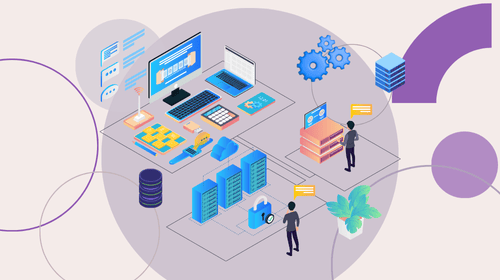
One important point to keep in mind when collecting data is that one of the characteristics of the modern data stack is that it is easy to incorporate information from any data source. However, collecting all data without thinking can result in waste in the operational and analytical processes, so it is important to first clarify the collection requirements.
There are times when you need to choose between real-time and batch collection methods, and when handling data from outside, it is important to create rules that take into account security risks and legal compliance.
By comprehensively organizing and prioritizing these, you can smoothly proceed with data collection using a modern data stack and build a data foundation that is tailored to the business challenges your company faces.
Clarifying collection requirements and setting priorities
Before starting data collection, it is important to identify the necessary indicators that are directly linked to business goals and clarify what to collect. By focusing on the data that will ultimately be used, rather than collecting all the data, you can avoid waste.
When setting priorities, consider the time costs, technical resources, and ensuring the quality of the data. By prioritizing the most important data, you can anticipate early results after implementation.
To achieve this, communication between departments is essential. It is effective to share the items to be collected and handling policies, and proceed with the optimal scope and schedule.
Using real-time data vs. batch data
Real-time data collection is effective for analysis and alerts that immediately reflect user behavior, while batch processing allows for periodic processing of large amounts of data, reducing system load while ensuring reliable aggregation.
The choice of which tool to use depends on the purpose of your analysis. If you need real-time analysis, you should use streaming tools, while if you mainly need daily or weekly reports, batch processing is the way to go.
To achieve both speed and accuracy in decision-making, set up pipelines that are appropriate for each purpose.
Security and governance considerations
When collecting data, it is necessary to take into consideration the sensitivity of the information being handled and the privacy risks involved, and to implement strict security measures and authority management. Lax handling could lead to violations of personal information protection standards.
To strengthen governance, it is essential to establish operational rules such as keeping access logs and encrypting data. Thoroughly adopting methods that comply with laws and industry standards will increase the reliability of the entire organization.
Data quality and standardization of data definitions are also part of governance. If the collected data is unusable, significant corrections will be required later in the process, so it is important to establish a solid data management system from the very beginning.
Business Benefits of Implementing a Modern Data Stack
The adoption of a modern data stack brings benefits to companies from multiple perspectives, particularly in terms of accelerating data utilization, reducing costs, creating new business models, and promoting innovation.
Furthermore, by sharing data across the entire organization, each department can act based on common indicators, which not only facilitates smooth collaboration between departments but also enables advanced strategic decisions that bring together internal knowledge.
As a result, you can expect to be able to respond quickly to market needs and improve customer satisfaction. Let's take a closer look at the main benefits.
Improved scalability
A modern cloud-based data stack can automatically scale resources to handle sudden spikes in data volume and access, ensuring stable handling of temporary load increases and ensuring user experiences and business opportunities are not missed.
You can quickly access AI and machine learning projects that require large-scale data analysis, creating an environment that makes it easier to create new business value.
Improved cost efficiency
On-premise environments require huge initial investments depending on the server scale, but the Modern Data Stack allows you to start with cloud usage-based billing, so you can get the functionality you need without having to pay large amounts out of pocket.
As a result, the barrier to entry is lowered, making it possible for even small teams to take the plunge and start using data. Overall, this results in significant cost savings, allowing you to invest more in business growth, which is a major benefit.
Democratizing data and empowering organizations
A modern data stack combines and integrates easy-to-use tools that don't require specialized knowledge, making data accessible to a wide range of users across an organization. This allows everyone from the field to management to share common metrics in real time and use them to make decisions.
It also fosters an environment where team members can discuss data while looking at it and consider optimal measures. As a result, a data-driven mindset will permeate the corporate culture, leading to more appropriate decisions being made repeatedly. The benefits will be more than just increased sales and reduced costs.
Faster decision-making
Real-time data and frequently updated dashboards allow managers and business personnel to instantly grasp the situation and quickly take the next step.
Accelerated decision-making directly leads to improved customer satisfaction and the speedy launch of new projects, making it an engine of growth for the entire company.
summary
The modern data stack is a flexible, scalable data infrastructure that utilizes the cloud, and is essential for utilizing data with agility. This creates an environment that is easy to scale up and optimize costs, and allows for quick demonstration. When implementing, it is essential to consider factors such as the priority of data collection, the need for real-time processing, and ensuring security. The key to success is to clarify which functions to prioritize, taking into account your operational structure and budget. As the value of data utilization continues to increase in the future, the modern data stack is expected to be adopted in a wider range of areas. Choose the optimal configuration that suits your company's situation and use it to help you achieve a data-driven vision.Reference information
For more information on the products mentioned in this article, please see below.
- HULFT Square | Cloud-based data integration platform
Easily integrate a variety of data sources, primarily from the cloud and SaaS - DataSpider | data integration middleware
Flexible integration of complex systems, including on-premise environments - HULFT DataCatalog | Metadata management tool
Gain a comprehensive understanding of data assets to support governance and quality control
The person who wrote the article
Recommended Content
-

Why we recommend iPaaS for data integration | A thorough explanation of iPaaS
We will thoroughly explain why iPaaS is suitable for data integration, how it differs from traditional methods, and how it is actually used. -

What is the data utilization infrastructure like in the age of generative AI?
This webinar explains how to overcome the two barriers to data utilization and the challenges to widespread adoption. Please take a look. (Viewing time: approximately 20 minutes) -

Get an online consultation about data utilization
If you would like to hear more about our data utilization platform, we also offer online consultations.
Related Content
-

Eliminate financial data silos! What is an autonomous decentralized architecture using iPaaS?
-

Data analysis is moving from the BI era to the AI era: Three reasons for accelerating the democratization of data
-
Automated classification of product masters using generative AI: How to bring a new perspective to your analysis