
A reliable ally for data integration! Efficient conversion and effective utilization through ETL

What is ETL, which links and effectively utilizes accumulated data?
With the advent of the big data era, the amount of data generated by companies knows no bounds. However, how many companies are actually able to utilize the various data collected from business applications and core systems at a company-wide level? The vast amount of diverse data that accumulates daily is wasted if processing and converting it takes up too much time and it cannot be used for business purposes.
In order to efficiently utilize the data scattered throughout a company, an environment is required where data can be quickly converted into information that can be used for business.In this article, we will introduce cross-sectional, efficient, and reliable data integration using ETL (Extract/Transform/Load) tools.
1. We want to utilize the vast amount of data available within the company! Challenges with data integration
Because systems scattered throughout a company operate independently, the accumulated data is fragmented and unable to link together the necessary information. This often results in data duplication and inconsistencies between systems, requiring a lot of time for correction and management. The time spent extracting, processing, and converting data means that by the time it is time to perform analysis, which is the original purpose, the data is no longer up to date.
Therefore, it is necessary to link data efficiently across systems. However, data integration is a major hurdle because it requires complex and highly skilled IT engineers, as well as cost and time for development.
2. What is ETL?
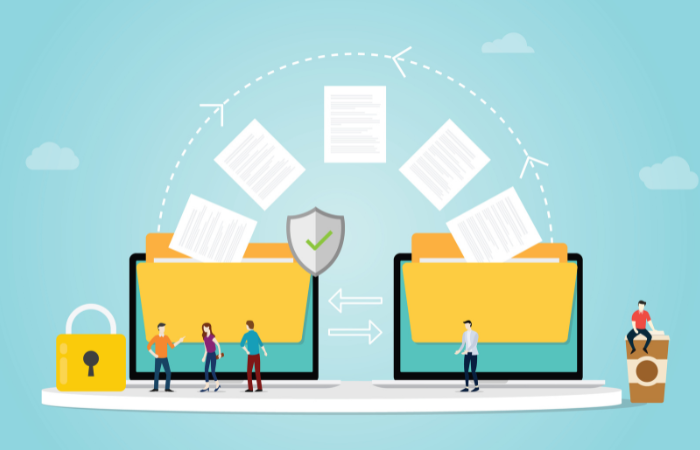
ETL is an acronym of three words: extract data, transform it into an easy-to-use format, and load it into another system. An ETL tool is a tool that performs this task.
Specifically, they perform a series of tasks, such as extracting necessary data from a company's core information systems and customer management systems, converting and processing it to make it easier to analyze, and writing it out to a data warehouse where it will be stored.
3. Three benefits of using an ETL tool for data integration
3-1. Accurate and efficient data extraction
ETL tools have pre-built functions that make it easy to link data between systems. For example, if you want to extract data from a database, you can use the pre-built functions in the ETL tool to quickly and easily extract data from existing systems. In addition, automating data processing and aggregation reduces human error.
3-2. No programming required
ETL tools are non-programming and visually easy to understand, so they are often used with a GUI (Graphical User Interface).
It is possible to intuitively build a data integration system using the IDE's User Interface. Unlike systems that are built by programming from scratch, there is no need to secure personnel with specialized knowledge. Visual operations allow you to flexibly change processing as needed.
3-3. Flexible data processing and format conversion
By using ETL tools, you can convert data into a format that suits your current business operations without making changes to your existing system environment, such as converting character codes or standardizing data formats. In addition, ETL tools automatically perform a process called data cleansing during the data processing process, which involves correcting and supplementing errors and missing data and optimizing it. This improves data quality and makes it possible to convert data into data with greater business accuracy.
4. DataMagic Strong in "Data Conversion"
"DataMagic" is an ETL tool that can process and convert data without programming and at a low cost. "DataMagic" is not only strong at extracting and exporting data, but also at converting data.
In addition, it has the following features:
- Code conversion: It is possible to unify different character codes between systems.
- Layout conversion: You can convert existing formats to new formats in bulk.
- Cleansing: Eliminates invalid data and connects to various RDBs
summary
As mentioned above, by using an ETL tool, you can data integration between different systems and convert it into the data format required for your business, even if you do not have specialized knowledge.Why not try using an ETL tool to make more efficient use of the data stored within your company?
»Connect different systems! ETL tool "DataMagic" realizes high-speed data conversion
File Sharing: A Beginner's Guide Column List
- File Sharing: An Introduction
- The dangers of "shadow IT" that you should be aware of before using data integration services
- File sharing services: 5 things you need to know when selecting one
- Pitfalls of free file transfer services! Information leakage prevention
- Understand the roles and types of protocols used for file transfer
- Is a file sharing service the best option for sending and receiving large files?
- The ever-increasing volume of data is making file transfer a struggle.
- Three benefits of large-capacity file transfer software that prioritizes ease of use
- Four things to be aware of when data integration
- How to data integration?
- file transfer via HTTP? ISDN will end in 2020
- MFT enables file transfer that FTP cannot.
- No more need for USB flash drives? 3 ways to transfer data over LAN
- Improve business efficiency with data integration platform! Three benefits
- Convenient! How to use Bluetooth for file transfer
- How to use file transfer services that you may have thought you knew about
- Key points to consider when choosing data integration middleware
- Recommended file transfer services to improve business efficiency
- A reliable ally for data integration! Efficient conversion and effective utilization through ETL
- How to data integration with Salesforce
- data integration middleware makes your work more efficient
- This is recommended! data integration service that is conscious of security
- Efficient data integration and siloed system integration through EAI
- When integrating systems with overseas bases, improve work efficiency with English-language tools!
- Three benefits of centrally managing system integration
- A DI platform that data integration scattered throughout the company