

An interview with the developers of "HULFT Ver. 8.4" from the perspectives of development, quality control, and documentation
In March 2019, we released the latest version of HULFT, our file integration middleware used by many companies, for the first time in three years. This latest release, HULFT Ver. 8.4, features enhanced functionality aimed at improving usability for many members, including developers, quality control and document creation. We spoke to members involved in the release of this new version about the process that led to this release, the key features of Ver. 8.4, as well as their approach to their everyday work.
Enhanced functionality that can provide benefits to many customers
This is the first new version released in three years, but what specific functional improvements have been made?
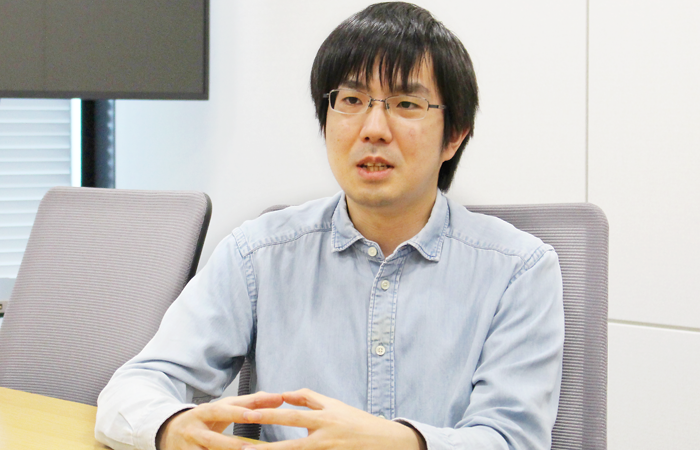
Software Engineer, Product Development Department HULFT Division
Akira Onodera
A member of the Product Development Department, he has been involved in the development of the Windows version of HULFT since HULFT Ver. 8.0, and is currently in charge of HULFT-WebConnect.
*Affiliations are as of the time of interview.
Onodera
This release includes enhanced functionality, including stronger data integration with the cloud, enhanced security, and business automation and efficiency improvements. The first, cloud integration, primarily includes speeding up low-volume, high-frequency transfer processing to address the needs of environments requiring more real-time performance, such as IoT, as well as support for Amazon Linux 2, which is supported by AWS. The second, security enhancement, strengthens data governance functions, such as the ability to set communication security modes for each destination. Finally, the third, business automation and efficiency improvements, include the provision of a new installer that simplifies installation, improved log output functions to streamline operations, and the publication of product help on the web, making it readily accessible via a search engine.
What were you conscious of when making this release?
Onodera
Based on customer requests, we have implemented features that will provide benefits to many people. This time, we have simplified the installer functions, targeting those installing HULFT for the first time. Whereas previously there were around 13 steps, the new version can be installed in just 4-5 steps. Furthermore, while the previous version of HULFT was focused on transferring relatively large files and batch processing, one key point is that we have made improvements such as speeding up small-volume, high-frequency transfer processing in order to meet the demands of the IoT era. We have also enhanced the functionality to enable seamless integration with SFTP, which is used by many companies in file transfer field.
Over 40,000 manual and automated inspections performed
From the perspective of quality inspection, were there any challenges you faced with Ver. 8.4?
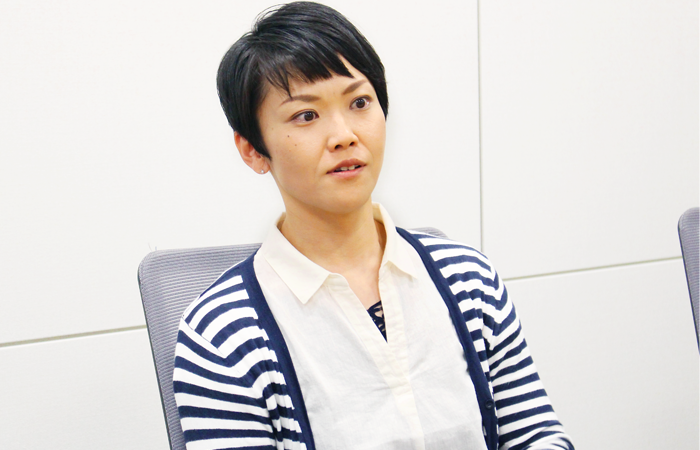
HULFT Division Customer Service Department
Quality Management Group Quality Management Engineer
Kazumi Kano
In addition to general HULFT testing, we also handle analysis of customer inquiries and post-release failures.
*Affiliations are as of the time of interview.
Kano
This new version release was compatible with multiple platforms simultaneously, so there was no reference platform, and we had to simultaneously create the same behavior for a single function on both mainframes and open systems. Because the development languages, such as C and assembler, and the development team differ for each platform, there were occasional cases where detailed technical specifications were interpreted differently. From a quality control perspective, we were solely responsible for inspecting the development products for each platform, so it was easy to grasp the differences. We proceeded while asking for them to coordinate well.
What do you do in your inspection work?
Kano
When I joined the company mid-career last year, the mainframe version was just being inspected. In addition to manual inspections, there are many automated inspections, with a total of over 40,000 inspection items, giving the impression that the inspections are quite detailed. In fact, two weeks after joining the company, I was actually doing work such as inspecting tapes as they were being taken in and out at the data center, and I was surprised at how detailed the inspections were. I now realize that this is necessary to maintain high quality.
HTML manual published on the web and Google searchable
As a documentation team, were there any new initiatives you undertook with HULFT Ver. 8.4?
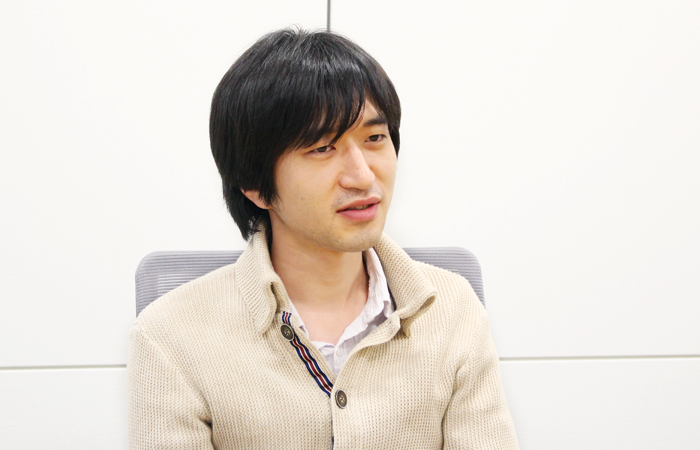
Technical Documentation Group, Customer Service HULFT Division
Technical Documentation Engineer
Yohei Tanaka
Responsible for the Japanese language for HULFT Ver. 8.4 related documents in Japanese, English and Chinese, including instruction manuals, revision information, and release documents.
*Affiliations are as of the time of interview.
Tanaka
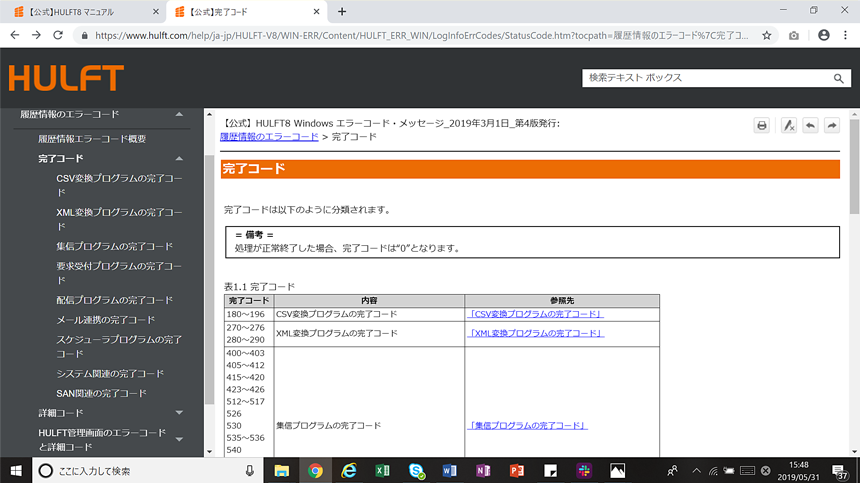
Until now, PDF versions of the manuals were published on a webpage that could only be viewed by customers who had a support contract. This time, for the first time, we have published HTML versions of the manuals on the web. By searching for HULFT error codes or anything else you want to know on Google, you can quickly find the information you need. Publishing manuals has become a common trend, even overseas, so we decided to make them available on the web, albeit belatedly. There was actually some discussion within the division about whether or not to make them available, but there were also benefits, such as the convenience of customers being able to search for them and the ease of changing or modifying the content compared to PDF, and in the end, the decision has been well received not only within the division, but also by our partners and customers.
HULFT8 Windows version Web manual screen
Maintaining high quality through thorough source review
What do you keep in mind during your daily development?
Onodera
HULFT is a solution that boasts safety and security, and we place great importance on quality even during development. Even in a source code review, for example, in my open-source development team, at least two other people check the source code written by others, and we mutually point out any problems with the writing style. Even something as simple as the way source code is written, even if it's not seen by customers, can potentially become a breeding ground for bugs, so we make sure to spend time on reviews. We also strive to maintain high quality by checking tens of thousands of items during the development phase, even in addition to automated testing. We also point out whether the source code is clean, but to be honest, the definition of clean is difficult, and it often sparks debate among team members. Even if I think something is good, others may say it's not clean. I believe that by working together to improve each other in this way, we can create something even better.
When it comes to mainframe development, are there any differences compared to open systems?
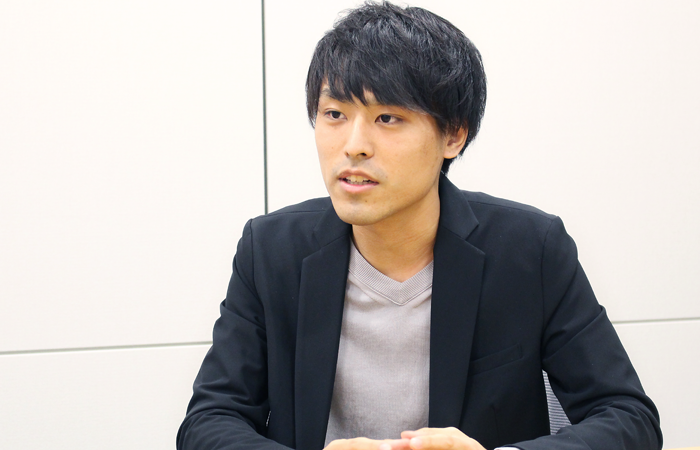
Software Engineer, Product Development Department HULFT Division
Ryota Arai
Since joining the company, he has been a member of the Product Development Department. He was involved in the development of the mainframe version of HULFT for HULFT Ver. 8.4, and is currently in charge of HULFT-WebConnect on the same team as Onodera.
*Affiliations are as of the time of interview.
Arai
I was in charge of HULFT Ver. 8.4 project for mainframes, but the approach to source code creation is completely different from that of open systems. To begin with, each line is limited to 80 bytes, and variable names can only be 8 bytes long, which inevitably leads to poor visibility. Therefore, I make an effort to include as many comments as possible to make the code as easy to understand as possible. Personally, HULFT Ver. 8.4 was the first project in which I was involved from the beginning of design to the end of development. This time, I was entrusted with a single function, and I created it with two priorities in mind: user ease of use and source code that would be easy for other members to maintain in the future. I am very grateful for the environment that allows young members to take on a single function and take on new challenges. The environment also provides thorough reviews from the design stage. I realized that this is a workplace that has a strong commitment to quality while also being mindful of human resource development.
The quality department is the last line of defense to prevent problems from occurring
Initiating testing from the perspective of the first user
What are your thoughts on your daily work related to quality inspection?
Kano
As a quality control department, we have a heavy responsibility as the last line of defense to prevent any problems, but we are also in the position of being the first to touch the developed product, so we try to start by inspecting it from the perspective of the first user. Even if it works properly, we will be sure to point out any parts that are difficult to use from the user's perspective, and we are not only involved in inspections after development, but are also actively in communication with development from the design document stage.
What is the basis for quality control standards?
Kano
Regarding quality control standards, we classify inspection items based on the company's knowledge accumulated over many years, taking into account factors such as fault rankings, and hold quality meetings when a certain threshold is exceeded. In addition to our internal knowledge, we are also participating in an open group called Open Dependability through Assuredness (O-DA), which has defined a framework and guidelines for developing high-assurance architectures. We plan to incorporate these standards as we create a system that will lead to further quality improvements. We are currently in a transitional period where we are discussing how to ensure quality for new methods such as agile development. We intend to continue to improve our inspection techniques while considering new quality standards that are in line with the times.
Easy to understand and quick response
Pursuing manual creation that is "close to the customer"
Please tell us about the working process in the documentation team.
Tanaka
The documentation team values the keyword "being close to the customer," and believes that it is important to pursue clarity while also moving forward with a sense of speed.In addition to creating manuals to provide to customers, we also create design documents for the manuals and ask the development and inspection departments to review them to prevent technical omissions and mistakes.
Furthermore, with this web release, we were once again asked about the persona, or the image of the user who will use the manual. We have heard positive feedback from customers who are familiar with the current manual, but we thought that the manual should also be easy to use for those who are experiencing HULFT for the first time. Although we have made some improvements this time, we feel that there are still issues to be addressed in this area.
It seems that we will also need to compromise on the manual along with target setting.
Tanaka
In terms of being close to our customers, we believe that speed is important. If there is any problem, we can make corrections and provide them immediately, and it is also important to act quickly to create supplementary pages separate from the manual. We would like to continue this policy to lead to continuous improvements even after the release.
Future Plans
Please tell us about your future plans.
Onodera
We are currently implementing new functions for HULFT-WebConnect, and are working hard on development so that we can provide a system that enables safe and secure file transfer to even more customers. HULFT is already being used by many customers, but we believe we can also promote its value to customers who have not yet used it. After defining the personas of those who will use it, we will also focus on UX to ensure an easy-to-use experience, so we hope you will look forward to that as well.
Arai
We live in an age where technology is changing rapidly, so we need development that can keep up with the changes quickly. We will continue to ensure high quality as before, but we also want to develop with a sense of speed so that we can quickly deliver good products to our customers. Of course, this is not an easy task, but as a development department, we want to respond with a sense of speed.
Kano
Quality is something we must give the most thought to, not just at HULFT, but in all departments. While making use of the know-how we have cultivated up to now, we are currently working on quality for a new era, not only thinking about quality and verification methods for new development methods such as agile development, but also thinking about how to think about quality from different perspectives than before, such as UI and UX. In addition to ensuring quality, we would like to continue working on measures to bring products of attractive quality to the world.
Tanaka
Of course, we strive for clarity and clarity so that information is conveyed without misunderstanding, but as the development team mentioned, it's also important for the documentation to keep up with the trend of rapid releases. To achieve this, we would like to consider unconventional methods, such as releasing specific features early and developing documentation within the market. We also want the documentation team to be involved in projects from the planning stage, working to create documentation that provides the optimal user experience for each persona.