

The "imagination and reality" of data scientists discussed by people active at the forefront of business and education

The job of a data scientist involves using knowledge of statistics and information engineering to collect, process, and analyze various types of data, including big data, and use it to solve problems and make decisions. As artificial intelligence and machine learning have attracted social attention in recent years, the term has become more commonly used as a related occupation. However, there are still very few opportunities to see what kind of backgrounds and goals people have aspiring to become data scientists, and what kind of work they do.
We spoke to Takaya Osari, who works as a data scientist at Teikoku Databank Ltd., teaches at Shiga University and other national universities, and is also involved in nurturing the next generation of researchers, and Kohei Momose, who graduated from the university's Graduate School of Data Science and joined the Japan Research Institute, Ltd. in 2021, where he is currently working as a data scientist, about the topic of "The imagination and reality of data scientists."
▼Profile
Takaya Osato
Teikoku Databank Ltd. Product Design Department Product Design Section Assistant Manager
Specially Appointed Lecturer, Data Science and AI Innovation Research Promotion Center, Shiga University
Mr. Kohei Momose
Japan Research Institute, Limited, Data and Information Systems Division (Information Utilization Systems), Data Science Group
*Titles and affiliations are those at the time of interview.
▶Press Release: June 8, 2023 Saison Information Systems Announces Progress of Data Scientist Training Support
Data scientists work behind the scenes to help with decision-making
In recent years, it has become a "democratized" field that anyone can learn.
First, please give us a brief introduction to your backgrounds and current affiliations.
- Osato
-
I majored in mathematics at university and graduate school, and joined Teikoku Databank as a new graduate in 2011. After developing a model to predict corporate bankruptcy and working on joint research with universities at the company, I continued on to a doctoral program at graduate school as a company dispatch, graduating in 2019. In the same year, Shiga University and Teikoku Databank established the DEML Center, a joint research hub, and I was given a position as a specially appointed professor at Shiga University, where I supervise students and conduct practical joint research with companies.
- Momose
-
After graduating from the Department of Economics at university, I enrolled in the Graduate School of Data Science at Shiga University, which opened in 2019, as part of the inaugural class. After graduating, I joined the Japan Research Institute, a comprehensive information services company for a major financial group, where I was responsible for the maintenance and operation of data analysis platforms for about a year and a half. From autumn 2022, I will be part of the newly established Data Science Group, a department that handles projects for the entire financial group. This is a very rewarding job for a data scientist who wants to be directly involved in financial economics at one of Japan's largest financial groups.
What exactly is a data scientist's job?
- Osato
-
With artificial intelligence like ChatGPT being a hot topic these days, data scientists may have a glamorous image, but in reality, their work is often behind the scenes. They utilize data, present facts through numbers, and help people make decisions and take actions more efficiently. In order to produce figures that can be used as evidence, it is important to discuss with decision makers what indicators have potential and how to create them. Data scientists are active in situations such as designing data-based processes, so they don't often appear in the spotlight.
What motivated you two to pursue this type of work?
- Osato
-
In my case, it all started with baseball. I often played catcher, but ever since my middle school coach told me that "baseball is all about probability theory," that idea has always been in my head. At university, I initially majored in mathematics with the hopes of becoming a teacher, but through statistics lectures I began to think, "Wouldn't it be interesting to analyze baseball data?" and in graduate school I immersed myself in research using baseball data. I started using baseball data in my first year of master's studies, and in my second year, I worked on utilizing baseball data as an intern for a year at a company that collects baseball data. This led me to want a job that uses data to make things better, and that's where I am today.
- Momose
-
I found studying economics at university fascinating and considered going on to graduate school, but I wasn't aiming for a research career and was unsure about my career path. So, I consulted with a famous professor of statistics who was taking my classes, and he told me that receiving a master's level education with a practical perspective is common overseas and that he thought it would be a good career option. He advised me that Shiga University's Graduate School of Data Science offers a great environment and is highly recommended, so I decided to go on to graduate school.
Is it common for economics majors to aim to become data scientists?
- Momose
-
Although it doesn't seem to be mainstream, econometrics and other fields are very similar, and I think it has been gaining popularity recently. While there has long been a pattern of people who are good at mathematics and majored in it at graduate school tackling data science at a theoretical level, in recent years there has also been an increasing pattern of people with practical experience in the field relearning it and combining it with domain knowledge. In that sense, data science is becoming a "democratized" field that anyone with any background can study.
- Osato
-
That's right. Of the approximately 40 students at Shiga University's Graduate School of Data Science, about half are employees seconded from their companies, and they conduct research with the aim of solving specific problems for their companies. I think it's a great way to utilize data science, as the student exchanges are now directly linked to solving corporate problems.
What do you teach at Shiga University, Professor Osato?
- Osato
-
While working at Teikoku Databank, I was involved in the development of the Regional Economic Analysis System (RESAS), an open system jointly developed by the Cabinet Office and the Ministry of Economy, Trade and Industry. While the official statistics stored on e-Stat (the government's comprehensive statistics portal) are formatted for human readability, they are not easily readable by systems. My role was to "polish the data," preprocessing the data into a format that can be read by systems. Through this project, I was reminded that data scientists spend too much time polishing data and not enough time on the important part of utilizing it. The reason data polishing tends to take up so much time is that, despite being an essential skill for data scientists, it is rarely taught systematically at universities and other institutions. Therefore, I give lectures on data polishing every year at Shiga University in an effort to improve this situation.
What did you study at Shiga University, Momose?
- Momose
-
In addition to attending lectures, I also participated in investment contests with my classmates and attended study groups, acquiring a wide range of knowledge and skills, from data science to data engineering and value creation in business. During my time at university, I also worked at the DEML Center, a research facility jointly operated by Shiga University and Teikoku Databank, where I participated in joint research on delivery optimization with a company that sells and processes high-performance materials.
I was in charge of data collection and processing, which I automated using Saison Information Systems' DataSpider. When I joined the company, there were many situations where I wanted to automate data collection and processing using low-code/no-code methods, so I was very grateful to have had the opportunity to experience this while I was a student.
What did you think after using DataSpider in class?
- Momose
-
If you just want to manipulate data, I honestly feel that programming is faster and easier. However, trying to do a variety of things can take time and effort, but DataSpider's GUI makes it easy to do, which is very convenient. I think it will also be easy to explain and hand over to people who don't normally program.
I also believe that the ease of use of a product is not just a matter of the product itself, but also of support. In that regard, the staff in the marketing and development departments at Saison Information Systems were all excellent and easy to talk to. Their friendly attitude, even towards students, and treating them as equals, is something I hope to emulate as a working member of society (laughs).
Do you think you will still use DataSpider after you enter the workforce?
- Momose
-
Even if a proof of concept (PoC) produces good results, there are often high hurdles to overcome before it can be put into practical use on-site. By using DataSpider, it seems that these hurdles can often be lowered.
What was the most memorable experience for you during your time at the Shiga University DEML Center?
- Momose
-
Originally a liberal arts major with little experience in development, I learned a lot from the advice I received from the engineers at Saison Information Systems, and it has been useful to me since I entered the workforce. What was particularly striking was the frequent arguments that broke out between the engineers during meetings, with comments like "It should be like this," and "No, it should be like this." They were all excellent engineers, but their ways of thinking and values differ greatly, so I learned that it is important to find the best method through discussion and then implement it.
After graduation, would you like to continue to be involved with Saison Information Systems as an alumnus through the community and other means?
- Momose
-
Yes, definitely. I recently spoke at the "DMS Cube Festival 2023," which was attended by many HULFT and DataSpider users, and it was a very meaningful opportunity to interact with a variety of people. I'm very grateful to be able to be involved in a community outside of work, which helps me broaden my horizons.
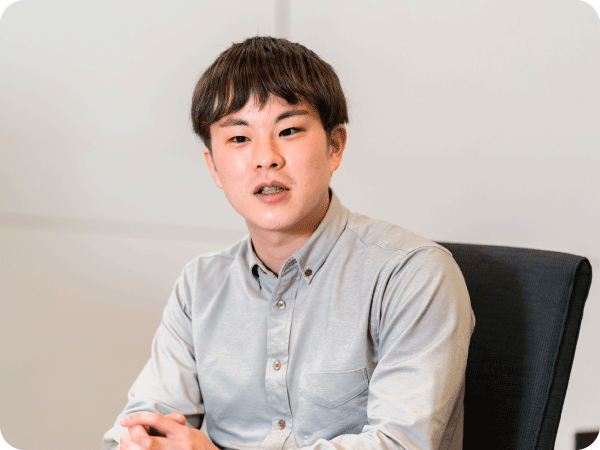
Kohei Momose, Japan Research Institute, Limited
What is required in the field is "highly explanatory and motivating"
Data scientists who can create "things that can be maintained and operated stably"
How are you using what you learned at the Shiga University DEML Center in your current job?
- Momose
-
In addition to my knowledge of data science and data engineering, I feel that the experience I gained working on projects with a variety of people at the DEML Center, including employees of partner companies, university professors, my classmates, and juniors, has been useful in my work as a preview of what I will be able to do after I join the company. I believe that the reason I was able to smoothly take on actual projects without being intimidated after joining the company is because I was able to experience things during my student days that one would normally learn after entering the workforce, such as the practical use of DataSpider mentioned earlier.
Another thing is that I still frequently interact with Mr. Osari, as well as my professors, classmates, and juniors from the Graduate School of Data Science, and people of a wide range of ages and industries that I met at the DEML Center. I enjoy being able to casually ask questions like, "How's it going at your company?" and this has been very useful in my work.
What gives you joy and a sense of accomplishment while working as a data scientist?
- Osato
-
The greatest joy is seeing the figures calculated through discussions actually being put to use and making people happy. I was truly happy when the Ministry of Economy, Trade and Industry adopted the data and indicators I created in their decision to select companies to support as Regional Future Driving Companies. I think the best part of being a data scientist is being able to have a major impact on people's behavior.
- Momose
-
I've only been working as a data scientist for a few months, so I think I'll be experiencing that great joy for a while, but there were plenty of interesting and amazing things. For example, I was approached by someone within the company who wanted to predict something, and after carefully building a predictive model, I came across some things I didn't quite understand, so I decided to consult with the client. Even people who aren't familiar with data science started to offer suggestions like, "Maybe this is actually linked to that project?" or "Couldn't we use that data?" This got me thinking, and I thought, "If that's the case, let's try analyzing it like this." It really brought home to me how fascinating data science is, as you can see the direction from on-site perspectives and communication like this.
On the other hand, are there any things that are different from what you imagined before becoming a data scientist, or things that you feel don't work out?
- Osato
-
In my graduate school research, I created hundreds of mathematical formulas for predicting a single phenomenon, with accuracy differences of just a few percent, and studied which prediction formula was most plausible. However, after joining a company, what was required was not a difference in accuracy of just a few percent, but whether the model had the explanatory power to motivate people. For example, when using a corporate bankruptcy prediction model to explain to a sales representative that "that company seems to be in trouble," it would be difficult to convince them by simply saying, "That's what the artificial intelligence said." However, if you also present the fact that "the company has recently been in trouble and its credibility has declined," it would be easier to gain their understanding.
If we're talking about simple prediction accuracy, then naturally, AI-based learning models are superior. However, in the real world, it's necessary to develop models that are highly explanatory and will motivate people, even if it means sacrificing some prediction accuracy. When I first joined the company, I felt a gap in that respect. - Momose
-
The first thing I realized after entering the workforce is that it is more difficult and important to create something that can be maintained and operated stably than to create something amazing. When I was a student, I dreamed of creating something amazing using high levels of expertise and technical skill. However, even if you create something like that using your own skills, if that person were to leave, it could easily cause trouble for everyone in terms of maintenance and operation, which could ultimately be a negative for the company. Therefore, I feel it is important to look at the human resources and environment within the company comprehensively and hone your ability to create something that can be maintained and operated stably.
Another thing I feel strongly about is that, naturally, data scientists need to continue studying throughout their lives. Based on this premise, the Data Science Group has established a support system for obtaining qualifications and participating in training and conferences. I myself am taking a course for working adults at the National Institute of Informatics outside of work, with support from my company.
On the other hand, I was pleasantly surprised to find that it was easier to work than I expected. As it is a financial group company, I had imagined it would be a strict workplace, but there is no dress code, a flexible working hours system, and telecommuting is also possible. Many of my superiors, colleagues, and project associates are frank and curious, making it a very enjoyable work environment.
As a data scientist, what do you want to work on or achieve in the future?
- Momose
-
Now that I've joined a major financial group, I want to take on the challenges of projects that can only be tackled here. Also, in recent years, building a data analysis platform has become important in addition to modeling, so I would like to actively take on such projects and improve my system engineering skills.
- Osato
-
I have already experienced many projects and have become something of a data science leader within the company, and my role is gradually shifting from player to manager. I believe that my job going forward will be to secure talent by training data scientists within the company and hiring data scientists, and to create an environment and opportunities where data scientists can thrive within the company. For example, I would like to implement internships with affiliated universities and establish a cross-appointment system within the company that allows university faculty to work for the company while also being affiliated with their university. I would like to act as a leader in the development of data scientists and make society better through Teikoku Databank's efforts.
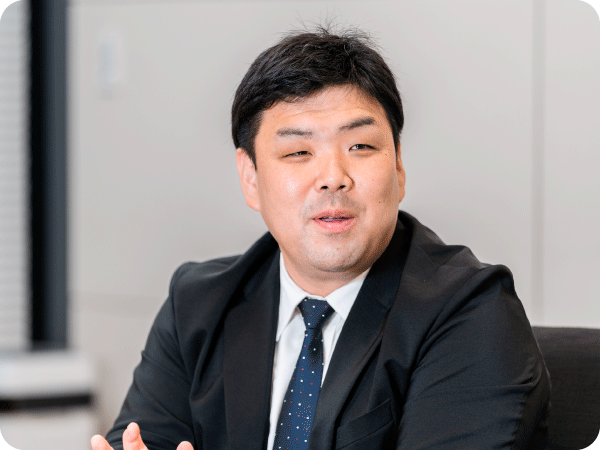
Specially Appointed Lecturer, Data Science and AI Innovation Research Promotion Center, Shiga University
Takaya Osato
Finally, please give us some advice or a message based on your experience for those who are aiming to become data scientists.
- Momose
-
I'm not in a position to say anything arrogant, but I believe that being a data scientist is all about basic academic ability, so I think it's a good idea to study it thoroughly while you're a student. As I mentioned earlier, data science is no longer just for people with a specific background, but has become a field that everyone involved in business should study. On the other hand, studying after entering the workforce can be quite difficult, so I recommend cramming as much as you can while you can.
- Osato
-
While that's certainly true, it's difficult to continue studying the basics without a goal, so I think it's important to have motivation. No matter how much knowledge and skills you acquire about data, if you don't have domain knowledge of the topic you're working on, you won't be able to perform good analysis, and you won't be able to communicate appropriately with decision makers or people in the field. You absolutely need the motivation to want to solve this kind of problem in this field with this kind of data. For those who want to study data science, it's a good idea to start by having a vision of the field you want to work in and how you want to use data to make the world a better place, in order to continue your studies.
Saison Technology Official YouTube Channel "SIS☆STA"
Saison Technology's official YouTube channel "Sys☆Star"
We are introducing an interview video with Kohei Momose, who graduated from the Graduate School of Data Science at Shiga University and joined the Japan Research Institute, Ltd. in 2021, where he is currently working as a data scientist.
Related Content
-
Survival Strategy in an AI-driven Society: How will humans live in an artificial super-intelligence society?
-
Applicable AI that can quantitatively judge and evaluate core credit operations of banks - Tips for developing credit screening AI -
-
Grasp insights that cannot be grasped through numbers from text and qualitative information! ~ Characteristics of text classification AI ~