

The key to utilizing generative AI is to develop strategies that capitalize on a company's unique data and enhance its strengths
A leading expert on AI talks about the current state of Japanese companies and their future aspirations
Kensuke Ozawa is active in a wide range of fields, including as editor-in-chief of one of Japan's largest AI-focused media outlets and the CEO of an AI-related company. He has written over 1,000 AI-related articles and published "Generative AI Introduction Textbook" (One Publishing) in October 2023, continuing to disseminate information as an AI-related influencer. How does Ozawa analyze the current state and challenges of generative AI use in Japanese companies, and what do he think should be done going forward? We spoke to him about success stories, comparisons with overseas companies, the importance of data integration, and other topics.
▼Profile of Kensuke Ozawa
Editor-in-Chief of AI Specialist Media AINOW
Councilor, Generative AI Utilization Promotion Association
*Titles and affiliations are those at the time of interview.
Generative AI has limitless possibilities depending on the combination of input and output, and examples of its use by Japanese companies are emerging one after another
First, please tell us about the work and activities you are currently involved in.
He has been sharing information about AI under the nickname "Ozaken" for seven years (at the time of this interview). His most notable role is as editor-in-chief of "AINOW," Japan's first AI-focused media outlet. He also works as a council member for the Generative AI Utilization Promotion Association, a general incorporated association, promoting generative AI. He is also involved in various corporate management activities, running AI HYVE, a group of image and video generative AI professionals that uses generative AI to create AI ambassadors for each company, and Cinematorico, which develops content marketing on YouTube and TikTok. He also serves as an advisor to several companies. He is also a professional picker for the economic media outlet NewsPicks and a generative AI advisor for Funabashi City, Chiba Prefecture. He frequently gives lectures, appearing on stage more than 20 times a month, and is dedicated to spreading the appeal of AI to as many people as possible.
How did you get involved with AI?
I was originally interested in media, and I had been doing video editing since high school, and studied media at university. Meanwhile, I worked as an acting manager at an izakaya (Japanese-style bar) for a long time from my first year of university, which allowed me to gain business knowledge and become accustomed to talking to working people. In my second year of university, I joined an educational venture, where I also learned the joys of direction and planning. While working there, I was scouted by my current boss at Dip, which runs "AINOW," and was asked to work on AI media, which is how I became involved in the AI field.
What do you keep in mind when working in the AI field?
My vision is to "create a society where humans and AI coexist." I believe that a major issue in Japan today is the lack of people who can provide a comprehensive overview of the AI field. While there are experts in image recognition, natural language processing, and the use of AI in businesses, I would like to use my extensive knowledge of AI to serve as a bridge between these fields.
My strength is that I am able to work in a cross-industry position, interacting daily with a variety of people involved in AI, including experts, companies, and governments, and coming into contact with research fields such as cognitive science, as well as with the use of AI in companies.My goal is to see the big picture of the AI field and convey the correct image through my own medium, thereby promoting the spread of AI and realizing a richer, human-centered society.
Before we go into more detail about the uses and challenges of generative AI, please explain what generative AI is and what it specifically enables.
Generative AI is AI that can generate a variety of content from input information such as text. A large-scale model built by learning huge amounts of data during the development stage processes the input information during the usage stage and outputs content. Currently, it is possible to input any information, from text to images, videos, and audio, and output a variety of content, including videos and applications. It is expected that the combinations of this input and output will continue to expand infinitely in the future. With this in mind, the definition of "generative AI" may no longer be applicable, as "recognition functions" have also become quite advanced.
Currently, the adoption rate of generative AI among Japanese companies is said to be around 10-15%. One reason for this is that many people still mistakenly believe that generative AI is the same as a search engine. Perhaps due to the impact of ChatGPT, generative AI is misunderstood in Japan as something that simply allows you to ask questions and get answers, which is one aspect that has prevented its use in companies from expanding. However, generative AI is essentially a tool that boosts your creative thinking, like getting 200 or 300 points on a 100-point test. I believe that what is needed is a way to solve questions that have no answer, rather than questions with a pre-defined correct answer.
In this context, examples of generative AI being used in companies are gradually emerging. Please introduce some examples that you are particularly interested in.
Recently, the most noteworthy example from a systems perspective is Credit Saison Co., Ltd. Led by Kazutoshi Ono, Director, Senior Managing Executive Officer, CDO, and CTO, the company has promoted digital transformation. Using a technology called RAG (Search Augmented and Generated Responses), which improves the accuracy of generative AI responses by referencing a database, the company has developed an in-house system that uses Slack to answer various internal questions. This is a highly advanced use case, and I think the company is also very good at disseminating information, with its DX strategy documents neatly organized.
Meanwhile, from an organizational perspective, Nissin Foods Holdings Co., Ltd. is attracting attention. Since President and CEO Koki Ando unveiled a message to new employees generated by ChatGPT at the company's induction ceremony in April 2023, the company has worked at an astonishing speed, creating an in-house generative AI system in just one month and simultaneously implementing organizational reforms and training systems. I believe that the use of generative AI in a company can only be achieved through such a top-down approach. This is because generative AI is not compulsory like an attendance management tool, and employees will not easily use it unless the organizational culture changes.
*Titles and affiliations are those at the time of interview.
What other success stories can you give?
In terms of improving existing businesses, I think the efforts being made by my company, DIP, are interesting. They have created an advanced system called "dip AI Agent" that searches for part-time work simply by talking to the agent.
There are also many other examples of companies using generative AI to update existing businesses, such as Mercari, Inc.'s "Mercari AI Assist" and SmartNews Inc.'s AI-based news summary function.

The key to utilizing generative AI is to capitalize on a company's unique data and develop strategies to enhance its strengths.
While there are some success stories, Japanese companies are said to be lagging behind other countries in adopting AI. What are your thoughts on this?
One could say that Japan is lagging behind, but if you change your perspective, I think it's just that the need to utilize generative AI has not been as great as in other countries. This is because I believe Japan has one of the best social systems in the world, with a well-developed transportation network, good public safety, and convenient convenience stores and restaurants. Even without the internet or smartphones, you could still live a fairly good life. This is because Japan's wealth is largely supported by human processes.
The same can be said about work and working styles. Japanese people are hardworking, so they don't particularly dislike analog work, such as handling information on paper. As a result, Japanese companies have come to rely heavily on human processes to optimize a significant portion of their operations, which has enabled them to produce great results. Overseas companies don't go through the process of building analog processes, which are less well-established than those in Japan, but instead accumulate information, digitize it, and use AI to automate operations. I think this is what's known as the leapfrog phenomenon. In short, Japan has been able to create a convenient society using only human hands, which is why the use of generative AI has not progressed.
I think that many Japanese people tend to be humble and believe that Japan is no good, without looking at Japan's positive aspects or cultural background. In the coming age of generative AI, I think we need to look at Japan's strengths and come up with a strategy to be proud of how we can multiply them with generative AI.
Given this background, what kind of attitude should Japanese companies take if they want to utilize generative AI?
That said, with social issues such as a declining birthrate and aging population, and aging infrastructure, I think various initiatives will be required, such as using "robotics x LLM (large-scale language model)" to make up for labor shortages. In any case, however, the important thing is to create a strategy based on how to combine the unique information and know-how that a company possesses with generative AI to enhance its strengths.
For example, Dip operates a job information website called "Baitoru," where a sales force of approximately 2,000 people visits local stores in person to gather information and compile job listings. It's precisely because they have information that companies like OpenAI and Google simply don't have that they were able to combine it with generative AI to create a unique service called "dip AI Agent." Similarly, Japanese companies have the solid business processes I mentioned earlier, and I believe they have a wealth of valuable information and know-how they could accumulate if they were so inclined, so they need to focus on that and develop strategies.
Furthermore, it goes without saying that it is important to prepare a data infrastructure that utilizes tools such as Saison Technology's HULFT to tightly link data and make it possible to combine it with generative AI.
Please explain in more detail the importance of establishing a data infrastructure and collaboration when utilizing generative AI.
Before the advent of generative AI, DX was dominated by rule-based automation, and the primary target for analysis was structured data in standardized formats like Excel. However, generative AI has made it possible to process all kinds of unstructured data, such as minutes, proposals, and proposal documents. This is the most impactful change brought about by generative AI, and it is expected that a number of groundbreaking examples will emerge in the future.
In such cases, it is clear that we will need to take a step further in establishing a data infrastructure and collaboration, such as recording all audio from meetings, compiling proposal materials in one place, and making them available to the entire company.
Despite this, in Japan, the use of generative AI has rarely been discussed from a data-driven perspective. What companies need to do now is to carefully consider the asset value of data, i.e., how to capitalize internal information and know-how and make it possible to multiply it with generative AI. In doing so, it is important to evaluate data from the perspectives of the so-called "3Vs": volume, velocity, and variety.
What role do you think data-connecting products and services such as Saison Technology's HULFT Square can play in the development of data infrastructure and collaboration that will be required in the future?
"Data-connecting products and services such as Saison Technology's HULFT Square are based on the concept of linking data across companies, cities, local governments, and countries as a next-generation data platform, and creating new value from that. Such data integration and sharing strategies are extremely important in further enhancing the valuable social systems that Japan has built, and I believe HULFT has a major role to play."
I like the concept of City OS, a digital platform that serves as the foundation for data integration and service provision in smart cities. I believe Japan is the only country in the world that can realize this, and I think HULFT could be used effectively in this area as well.
After listening to your talk, I felt that it was clear what companies need to do regarding generative AI, and that it's not too late to start now.
As I've said before, the strength of Japanese society and companies isn't in their speed. It's not about being slow or fast, but rather about heading steadily in the right direction, and I think it's important to have that kind of holistic perspective.
Related Content
-
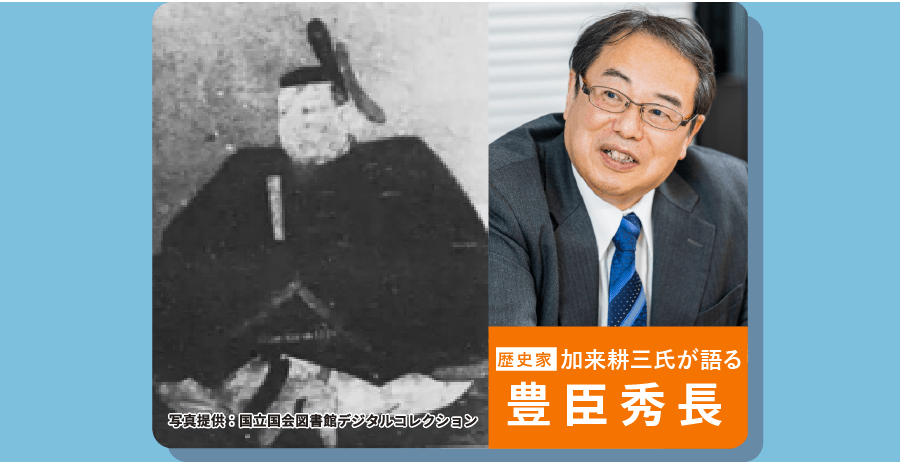
What was the reason that a warrior born of peasant origins was able to grow so rapidly into a great advisor to the ruler of Japan? - Toyotomi Hidenaga's learning method of clarifying the skills and information to be acquired through problem awareness -
-
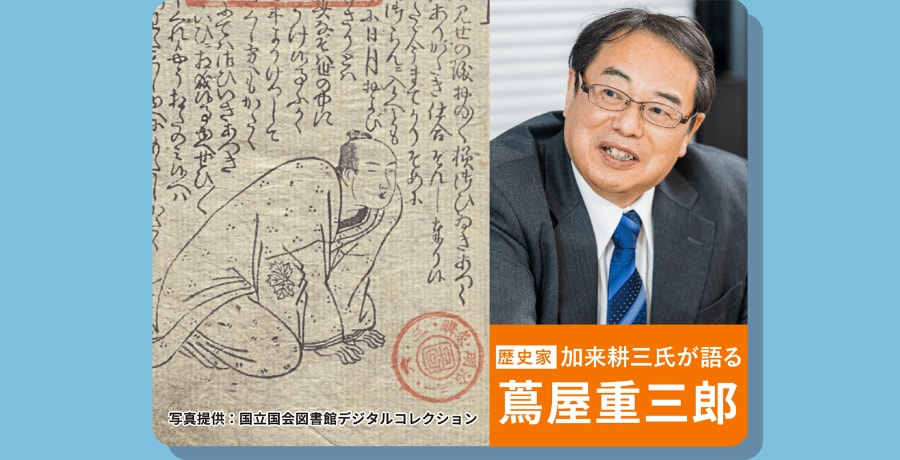
How did the "Edo Media King" discover so many exceptional talents and produce so many hits? ~A "backward information strategy" that gathers the information necessary to reach the goal~
-
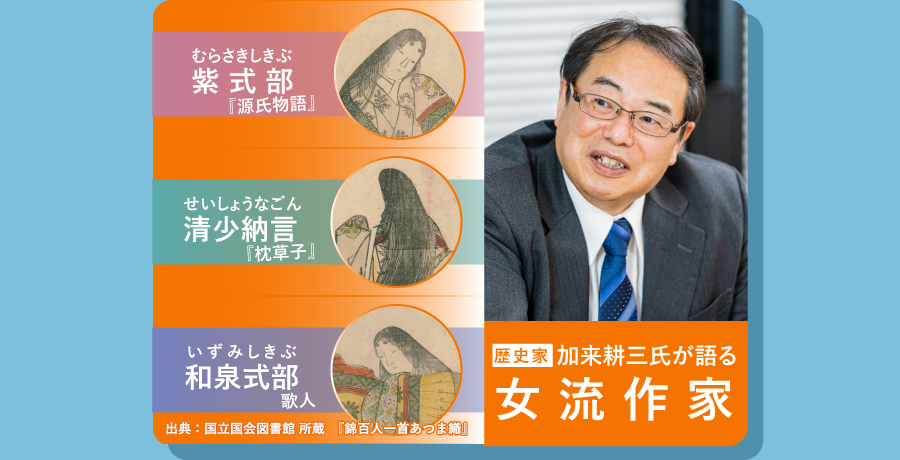
Each of the three made their mark with their own unique information strategies. Murasaki Shikibu ・ Sei Shonagon ・ Izumi Shikibu ~Exploring the background behind the flourishing of women's literature in the mid-Heian period~