

How did the "Edo Media King" discover so many exceptional talents and produce so many hits? ~A "backward information strategy" that gathers the information necessary to reach the goal~
NHK's 2025 Taiga drama "Berabou" Tsutajueika's Dream Story A publisher from the mid- to late Edo period who has suddenly become famous after being featured as the protagonist in the novel "..." Tsutaya Juzaburo . Kitagawa Utamaro or Sharaku Toshusai , Takizawa (Kyokutei ) Bakin He introduced the works of many artists and writers, including those mentioned above, to the world, and is today highly regarded as the "media king of Edo."
Historian and author Kozo Kaku analyzes that the key to Juzaburo's success was his excellent powers of observation, imagination, and associative abilities, which can be considered a form of information gathering and utilization. He gave us a detailed explanation while looking back on Juzaburo's life and the historical background.
▼Profile of Kozo Kaku
Graduated from the Department of History, Faculty of Letters, Nara University. After a career as an academic, he became a researcher at the Faculty of Letters, Nara University in March 1984. He currently works as a lecturer at universities and companies, while also writing books based on his own unique historical perspective as a historian and author. He is also a lecturer at the National Research Institute for Domestic and Foreign Affairs, the Small and Medium Enterprise College, and the Political and Economic Forum.
・Representative works (new publications)
"Japanese History: Ultimate End-of-Life Planning: Life Lessons Learned from the Deathbeds of Great Men" (Nihon Journal Publishing, 2025)
"Leaders Should Develop Tactics Over Strategy" (Cross Media Publishing, 2024)
"Toshiyoshi Kawaji: The Meiji Giant Who Created the Japanese Police" (Chuokoron-Shinsha, 2024)
"Failure Studies of Sengoku Warlords and Princesses: Failure Studies of History 3: How to Survive and End Times in Chaotic Times" (Nikkei BP, 2023)
"Introduction to History as a Liberal Arts Education" (Business Press, 2023)
・Supervision, translation, etc. (new publications)
"Comic Edition of Japanese History, Volume 91: Sengoku Biography: Oda Nobunaga Gaiden" (Planning, composition, and supervision: Poplar Publishing, 2024)
"Reading it makes me feel better: Reverse biographies of great people who didn't try hard, Japanese history edition" (Supervised by Shufunotomosha, 2023)
・TV and radio
"The Power of Our Ancestors: Wisdom Fountain" (NHK Educational TV, irregular appearances)
"Heroes' Choices" (NHK BS Premium, irregular appearances)
"Kaku Kozo's 'History This and That'" (regular appearances on AM radio stations nationwide), etc.
*Titles and affiliations are those at the time of interview.
The power of observation to survive, and the power of imagination and association born from comparison with knowledge and experience are the source of a string of hits.
In past interviews, Professor Kaku has repeatedly stated that in the study of history it is important to ask the question "why?" When it comes to the person called Tsutaya Juzaburo, the question arises: "Why was he able to discover so many extraordinary talents and produce so many hits?"
Juzaburo was involved in the role of publisher, or producer, so to speak, in most of the works that we think of today as representative examples of Edo culture, such as those by Utamaro and Sharaku. He created these works by displaying his excellent powers of observation, imagination, and associative abilities while collecting and utilizing information. Naturally, he must have had the experience and environment to cultivate these abilities. Therefore, to get closer to the answer to this question, we need to look not only at his upbringing, but also at the historical background.
So far, the story in the taiga drama has progressed with almost no explanation or depiction of this.
Therefore, viewers who are not familiar with the history of Edo will not understand why Juzaburo was able to acquire such outstanding abilities and achieve such great feats that he was called the "media king of Edo." Therefore, in this article, I would like to trace his footsteps and also explain the historical background in which he lived.
Juzaburo's Identity It's not clear, but my friend Kyoka poet of Masanobu Ishikawa "Kitagawa" selected by Keli tombstone inscription "or Ota Nanpo Written by Monument to his mother According to the inscription, he Kanen 3 (1750), Owari As the son of a father from Edo and a mother from Yoshiwara When he was seven years old, his parents separated for unknown reasons, and he was adopted by Mr. Kitagawa, who ran the Tsutaya business.
By the way, regarding his personality, the monument in memory of his mother reads, Hidetoshi Shiki And, nodules Without cultivating faith in dealing with people, Below It is said that he was a man of great character and magnanimity, who did not get hung up on trivial matters, and who valued integrity in dealing with others.
Juzaburo was at Tsutaya, Bookstore "Koshodo He began running a bookstore called ".
At that time, books were expensive, so even though they were called bookstores, they mainly ran rental books. Responsible His job was to visit the red-light districts and go to the shops. Naturally, if no one borrowed a book, his luggage wouldn't lighten, and he would have to go back and get another one. Juzaburo must have developed his powers of observation through this job. We can imagine that he was able to quickly read information about people (personality, environment) by looking at them, and was always thinking about what kind of book they would borrow.
So you learned the importance of carefully observing people and making use of the information you gain from that.
Yes. In life, people who actively observe and try to gather information will have a much greater advantage than those who don't. In Juzaburo's case in particular, he was adopted into Tsutaya, and as the second son, he was not in a position to inherit the family business, so he must have been desperate. I think that at first he probably closely observed his adoptive parents and brother-in-law who had taken him in, and learned a lot from them. He probably thought hard about how he could survive in the future when he left home, and gathered the information he needed to do so.
This important task of "gathering information through observation and utilizing it," which should originally have been performed by humans, is now being performed by machines in the form of data collection and analysis. As a result, in contrast to Juzaburo, it seems that the ability of modern people in this area is unfortunately steadily declining.
Indeed... Next, Juzaburo read the Yoshiwara guidebook, Hosomi I was involved in the proofreading and publication of ``.''
The Yoshiwara Digest he edited and published garnered praise for its incomparable amount of information and ingenious structure compared to previous works, and it quickly grew into a pillar of his business. How was he able to create such an innovative product? He must have compared the contents of the previous work, which was also sold in his bookstore, with his own extensive knowledge of Yoshiwara. This raised the question, "Why is it structured like this?", and from there, I believe, the idea of "I would write it like this" was born. Conversely, ideas and associations cannot be born without questions, and these questions can only arise from comparison with existing knowledge and experience.
Juzaburo was able to create hit works because he had the knowledge and experience that fueled his creativity and associative abilities.
That's right. If you think about it, Juzaburo, the second adopted son, could have left Yoshiwara and become independent. But he stayed. I think he decided that the best way to survive was to make use of his greatest strength: he was constantly in and out of the red-light district and knew more about its affairs than anyone else.
Moreover, even though he was born in Yoshiwara and lived there for many years, he did not become immersed in it, but rather seemed to be able to view Yoshiwara and his own business objectively. In modern times, it is common for a company's sales representative to not actually know in detail the advantages and disadvantages of the company's products that they themselves sell. This was not the case with Juzaburo. He objectively understood the products that were displayed in his store, and just as he thought about what kind of books to carry for rental books, he thought about in detail on a daily basis what kind of books he would create. This is why he was able to work for the long-established publisher, Urokogataya From "Yoshiwara Saiken" Revised When I was asked to do the work of "(providing information and the resulting proofreading)," I immediately accepted, and later, when Urokogataya's business fell into a slump, I took advantage of the opportunity and quickly published Hosomi myself.
I see…….
Such sharp reflexes are extremely important in order to achieve success. I believe the reason Juzaburo was able to act so quickly in everything he did was because he was always questioning various things, constantly observing, and thinking up his own answers. If he hadn't done that, he wouldn't be able to act quickly when the time came. It would be too late to think later, "I should have done that then."
What other things did Juzaburo excel in?
He was able to read and write. Although it's not mentioned in the historical drama, it was common for people of his background and position to be illiterate. At the time, brothels often adopted children like Juzaburo to secure a labor force of young men who would now be called "cabaret club black suits," the men who told the prostitutes which seats to sit at and chased away drunks. These men didn't need to be able to read or write for their jobs. However, Juzaburo's adoptive parents gave him an education. Perhaps they thought that if he became an independent businessman in the future, it would reduce the number of mouths to feed and help them in their old age. In any case, if Juzaburo had not been able to read and write, he would not have been able to run his bookstore in the first place, and he would undoubtedly have led an entirely different life.

Was success merely a matter of riding the wave of the times? Tsutaya Juzaburo's "backward-looking information strategy" steadily moves him closer to his goal
So far, I have explained that Juzaburo's success was due to his ability to collect and utilize information, in other words, his powers of observation, imagination, and associative abilities. However, if we set everything aside and look at it from a different perspective, we can also say that his success was actually due to him simply riding the wave of the times. From here, I would like to explain the historical background that made his success possible.
This may seem a bit sudden, but do you know when the concept of "Edokko" was created?
I'm ashamed to say I don't know, but they say that if three generations of parents and children have lived there, they are considered Edokko...
In the field of history, we must ask the question, "Why three generations?" The city of Edo was a newly developed area built by Tokugawa Ieyasu. Therefore, the first generation of residents were mainly people who came from all over the country to work on civil engineering projects. Naturally, there was no standard Japanese at the time, so people could not understand each other's language. It is said that "fires and fights are the flowers of Edo," but this means that communication through conversation was difficult in Edo, and trouble was likely to occur.
It's not the case that, as is often said, "Edokko are quick-tempered."
That's right. So, it was around the third generation after they started living in Edo that they finally began to understand the language of those around them. That's what the saying "After three generations you're an Edokko" means. That's how the concepts of "Edokko" and "Edo dialect" were finally established around 1800.
So, looking back at Juzaburo's achievements, his personal writer Jugensha Ichiku The first best-selling Edo period literature, Hizakurige on the Tokaido The publication of "Edo-ko" began in 1802, which coincides perfectly with the establishment of townspeople culture, known as "Edokko" and "Edo dialect." It could be said that townspeople culture flourished precisely because Juzaburo laid the groundwork for it by publishing a variety of works, but conversely, it could also be said that Juzaburo published a variety of works in response to the rise of townspeople culture.
Either way, it was a success only possible because of the historical context.
That's right. More specifically, Juzaburo's success was Tanuma Okitsugu Between 1767 and 1786, side employee ・ Elderly person Ienari, who wielded power as a shogun, brought about a change in economic policy, in other words, a shift from merchants to luck He adopted policies such as collecting a business tax and promoted economic growth. As a result, the lives of townspeople became more prosperous, and townspeople culture flourished in Edo. Juzaburo was certainly skilled at reading the times based on various sources of information, but it was only thanks to Okinobu's reign that he was able to lead townspeople culture and achieve such great accomplishments.
I see. However, Juzaburo, in 1787, Matsudaira Sadanobu by" Kansei era As soon as the "Reform of the 1960s" began, political satire yellow backed novel or pun book was discovered, Half of one's wealth He was punished with half of his assets being confiscated. It seems like something he could have avoided, as he had been adept at reading the times up until that point.
Of course, he would have wanted to avoid it, but in reality it was probably unavoidable. This is because complacency, thinking "I've been doing things this way up until now," creates an opening, and is a mistake that many successful people fall into. In Juzaburo's case, the only people he was surrounded by at the time were artists and writers who had been promoted by him, so there was no one who could give advice or opinions to his patron, which may have also been a factor in his failure.
However, Juzaburo did not give up, and in order to turn the business around, he revised his publishing strategy and achieved another success.
As I mentioned earlier, he was always observing everything and thinking about what he would do in that situation. He always had a second or third plan ready to take when he failed, using his own and others' failures, such as the fall of Urokogataya, as model cases. Katsushika Hokusai The fact that he had always nurtured many people he saw as having talent was an essential step in making that "next move," and actually contributed greatly to Juzaburo's success.
What can we say about Juzaburo's way of thinking and approach when viewed from the perspective of "information strategy," the theme of this project?
What made him so great was his careful consideration of the "quality and quantity" of information. Initially, he focused on familiar and reliable information related to Yoshiwara, and embarked on proofreading and publishing "Yoshiwara Saiken." As this grew into the mainstay of his business, he did not rest on his laurels, but steadily expanded his business by gradually increasing the number of items he collected that were sure to sell, such as Kyoka picture books and yellow-covered books. Such steady progress would not be possible without a strategy that involves constantly working backwards to understand the "quality and quantity" of the information you possess and then calculating what more is needed to achieve your goal.
Finally, what can modern business people learn from Juzaburo's life?
This overlaps with what I said earlier, but it's about how to use information as a tool to achieve your goals. Juzaburo achieved success with a "backwards information strategy" in which he first clarified his goal of "what he wanted to do," then determined "what he could do to achieve that," and then considered what information he needed to obtain.
On the other hand, modern business people seem to blindly accept the conventional wisdom that "information is important" and are busy gathering information regardless of their abilities or goals. Perhaps we should learn from Juzaburo that if there is no purpose in the first place, there is no use for information even if it is available.
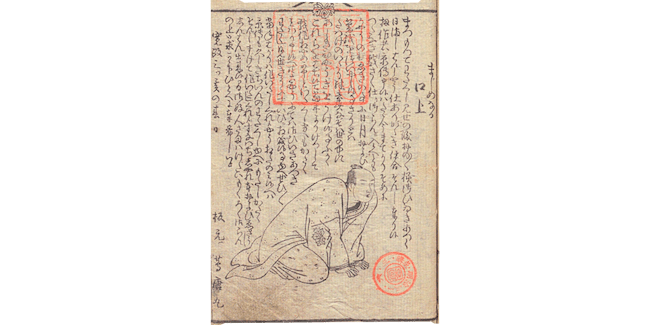
Photo courtesy of the National Diet Library Digital Collection
Recommended Content
e-book: Learn business success tips from military commanders
This e-book analyzes the strategies of Tokugawa Ieyasu and Date Masamune, using the ingenuity of the Sengoku period to explore how to make the most of limited information. From their judgment and methods of utilizing information, you can discover practical business tips and gain a new perspective on success. If you're interested, please check it out at the link below.
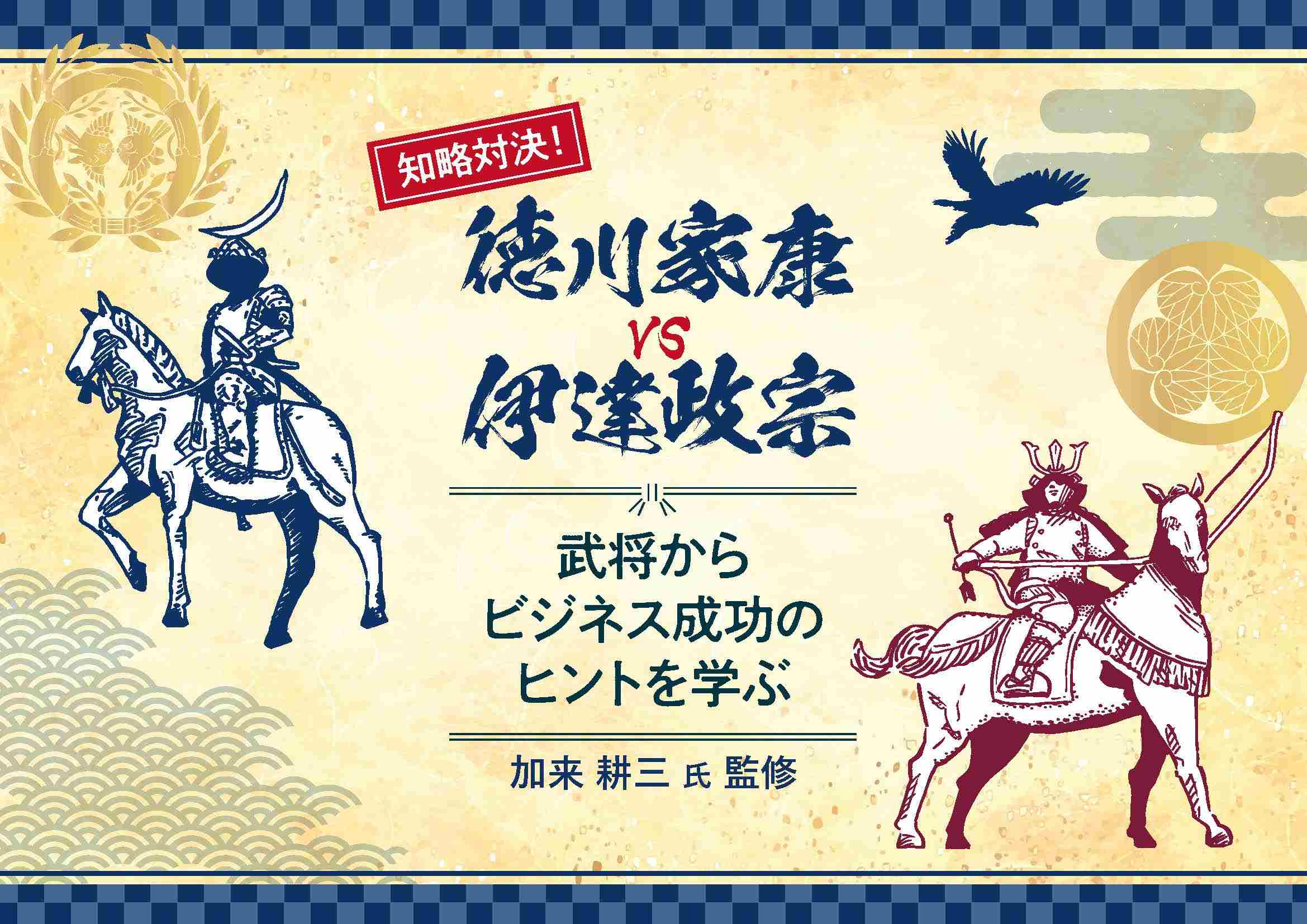
A battle of wits! Tokugawa Ieyasu vs Date Masamune - Learn business success tips from warlords
In modern business, differences in judgment determine success. How did Tokugawa Ieyasu and Date Masamune, who survived the Warring States period, interpret and utilize the limited information they had? This e-book introduces the perspective of turning information into a weapon through their ingenuity.
Saison Technology Official YouTube Channel "SIS☆STA"
The official Saison Technology YouTube channel is introducing an interview video with historian and author Kozo Kaku.
In this article we have explored the factors that led to the success of Edo period publisher Tsutaya Juzaburo, but for more insight into him, be sure to check out the video interview below.


Related videos
In this video interview with historian and author Kozo Kaku, Kaku's deep understanding and keen observation of history explains the life and influence of Tokugawa Ieyasu. It will help you understand the historical trends behind Juzaburo's success and how he acquired his information strategy. We hope that this video will help you unravel the history of Edo and understand Juzaburo's true character.
Related Content
-
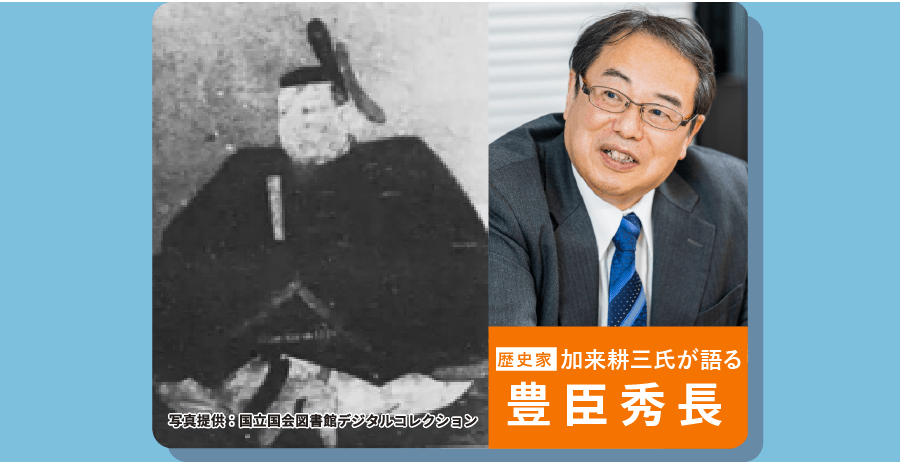
What was the reason that a warrior born of peasant origins was able to grow so rapidly into a great advisor to the ruler of Japan? - Toyotomi Hidenaga's learning method of clarifying the skills and information to be acquired through problem awareness -
-

The key to utilizing generative AI is to develop strategies that capitalize on a company's unique data and enhance its strengths
A leading expert on AI talks about the current state of Japanese companies and their future aspirations -
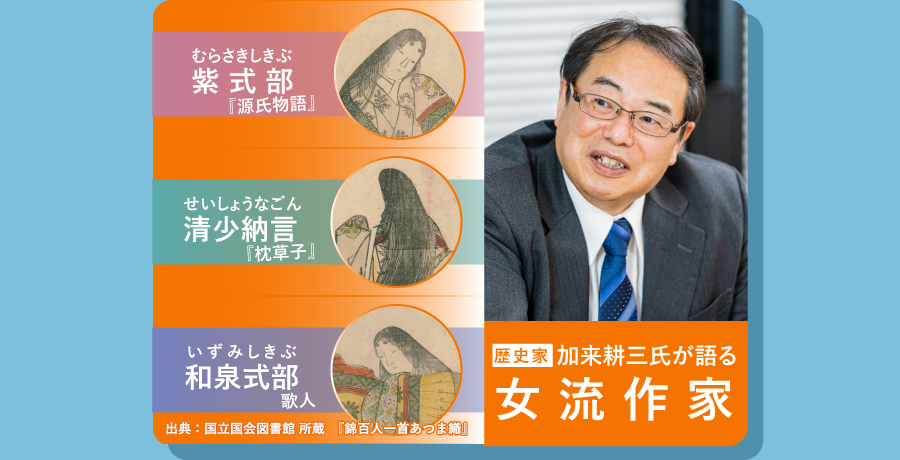
Each of the three made their mark with their own unique information strategies. Murasaki Shikibu ・ Sei Shonagon ・ Izumi Shikibu ~Exploring the background behind the flourishing of women's literature in the mid-Heian period~