

What was the reason that a warrior born of peasant origins was able to grow so rapidly into a great advisor to the ruler of Japan? - Toyotomi Hidenaga's learning method of clarifying the skills and information to be acquired through problem awareness -
Toyotomi, the protagonist of the NHK Taiga drama "Toyotomi Brothers!" scheduled to air in 2026 Hidenaga As Toyotomi Hideyoshi's half-brother (some say he was his biological brother), Hidenaga was one of the few vassals who could speak frankly to his brother, and as a mediator between the various feudal lords, he was indispensable to Hideyoshi's conquest of the country and the running of the government. It is said that Hidenaga's contribution as an advisor to the ruler of Japan was so great that some even point out that if he had not died before his brother at the young age of 52, the Toyotomi government would not have collapsed so rapidly.
Hidenaga lived as an ordinary farmer until he accepted an invitation from his older brother and became a samurai at just over 20 years old. In a short space of time, he grew into a skilled aide. Hidenaga likely had a clear awareness of the problems he faced and worked backwards to acquire the skills and information necessary to solve them. Historian and author Kozo Kaku offers this analysis, and we asked him to look back on Hidenaga's life and explain his study methods.
▼Profile of Kozo Kaku
Graduated from the Department of History, Faculty of Letters, Nara University. After a career as an academic, he became a researcher at the Faculty of Letters, Nara University in March 1984. He currently works as a lecturer at universities and companies, while also writing books based on his own unique historical perspective as a historian and author. He is also a lecturer at the National Research Institute for Domestic and Foreign Affairs, the Small and Medium Enterprise College, and the Political and Economic Forum.
・Representative works (new publications)
"Japanese History: Ultimate End-of-Life Planning: Life Lessons Learned from the Deathbeds of Great Men" (Nihon Journal Publishing, 2025)
"Leaders Should Develop Tactics Over Strategy" (Cross Media Publishing, 2024)
"Toshiyoshi Kawaji: The Meiji Giant Who Created the Japanese Police" (Chuokoron-Shinsha, 2024)
"Failure Studies of Sengoku Warlords and Princesses: Failure Studies of History 3: How to Survive and End Times in Chaotic Times" (Nikkei BP, 2023)
"Introduction to History as a Liberal Arts Education" (Business Press, 2023)
・Supervision, translation, etc. (new publications)
"Comic Edition of Japanese History, Volume 91: Sengoku Biography: Oda Nobunaga Gaiden" (Planning, composition, and supervision: Poplar Publishing, 2024)
"Reading it makes me feel better: Reverse biographies of great people who didn't try hard, Japanese history edition" (Supervised by Shufunotomosha, 2023)
・TV and radio
"The Power of Our Ancestors: Wisdom Fountain" (NHK Educational TV, irregular appearances)
"Heroes' Choices" (NHK BS Premium, irregular appearances)
"Kaku Kozo's 'History This and That'" (regular appearances on AM radio stations nationwide), etc.
*Titles and affiliations are those at the time of interview.
"If only they had lived, the Toyotomi government would not have collapsed" - Three great generals who developed peasant-born military commanders into excellent advisors
When I first learned about Hidenaga, the first question that came to my mind was, "How did Hidenaga, who was just an ordinary farmer, grow to become known as Hideyoshi's greatest aide in such a short time?"
It is a very good thing in the field of history to have your own questions like that. So, let's look back at Hidenaga's life and the circumstances of the time to find the answer.
To do this, we must first begin by clarifying the evaluation of Hidenaga as a person. This is because there are many unclear aspects about Hidenaga, with some documents describing him as "a capable man" and others describing him as "completely incompetent."
In fact, there are very few records left that give us insight into Hidenaga's early life and personality. martial arts night story (Served under Oda Nobunaga and Hideyoshi) Maeno In the family records, it is written that he helped his brother from a young age, The Chronicles of Nobunaga 』 (Gyuichi Ota Hidenaga first appears in the 1574 book "The Life of Nobunaga" written by Ise-Nagashima It's time to attack. There are various theories about Hidenaga's birth year, but if we accept the theory that he was born in 1540, he would have been 34 years old at the time of his first appearance.
It is strange that there are so few records of a man who is said to have served as the right-hand man of a great ruler of Japan.
We will consider this point later, but people like Hidenaga, who intentionally left this world without leaving any trace of themselves, are the most difficult people for those who deal with history. However, even in such cases, there is a way to estimate the role and importance that person played. This is by examining how the world changed as a result of that person's death.
After the Toyotomi government unified Japan, Hidenaga was ranked second only to Tokugawa Ieyasu in terms of rice yield. Yamato ・ Izumi ・ Kii He became a great feudal lord with a fief of 1.16 million koku. Grand Minister During his lifetime, Hidenaga was known as the "Great Prince" and the government was rock solid. However, when Hidenaga died of illness at the young age of 52 in 1591, the government collapsed in a very short time. As is well known, Hideyoshi was a close aide to Hideyoshi and was a key figure in the government alongside Hidenaga. Sen no Rikyu However, he suddenly incurred the wrath of his lord, was ordered to commit seppuku, and went on to invade Korea, which is considered the greatest failure in Japanese history.
So it's no coincidence that these events occurred within one or two years of Hidenaga's death.
Yes. Of course, if Hidenaga had lived, he may not have had the power to avoid the invasion of Korea. However, I think that at the very least, the feud between Hideyoshi and Rikyu, and the conflict between the military and civil factions within the government that arose after Hideyoshi's death, could have been prevented. This is because Hidenaga was trusted by the daimyo with his gentle and honest personality, and he certainly contributed to the administration of the government as a mediator. Depending on the timing of Hidenaga's death, the battle between Toyotomi and Tokugawa like the Battle of Sekigahara might not have occurred, and history might have been completely different. Hidenaga was three years younger than Hideyoshi and two years older than Ieyasu. The three were very close in age, and there was a great possibility that they would have died in different orders.
Considering the historical fact that the situation changed drastically after Hidenaga's death, this certainly seems to be the case.
Such "what if" thinking, or historical "what if" thinking, is often criticized in the field of history as the "regret school." However, when thinking about a person like Hidenaga, about whom there are few historical documents, it is still a very useful method.
In fact, when we consider Hidenaga in this way, we see the image of an ideal aide whose value was only realized after his death. Earlier, you said it was strange that there are so few records about Hidenaga, but this very fact clearly shows Hidenaga's behind-the-scenes mentality of "success belongs to the lord, failure belongs to oneself," and his competence as an aide.
I see…….
As an aside, the person who is often cited as a similar figure to Hidenaga during the Sengoku period is Takeda Shingen younger brother of Nobushige Like Hidenaga, he was the younger brother of his lord, close in age to him, and held a position of authority within the household. He usually acted as a mediator among the vassals, and in battle, logistics He continued to support his brother by playing important but unseen roles such as the logistical support of supplying, transporting, and managing personnel, weapons, and food. After his death, the family began to walk the path to ruin, just like Hidenaga's case. Kawanakajima A few years after he was killed in battle in place of his brother, Shingen and his eldest son, Yoshinobu Discord arose between them, and Yoshinobu was eventually forced to commit seppuku. It is said that if Nobuyuki had been alive, he would have been able to stop this quarrel between father and son, and the Takeda clan would have been able to march to Kyoto (leading their army into Kyoto) sooner.
Earlier, I mentioned that if Hidenaga had lived a little longer, the conflict between Hideyoshi and Rikyu, or between the military and civil factions, might have been avoided and the Toyotomi government might have been able to continue for longer, but the same can be said of Nobuyuki, who was a great advisor to Shingen.
This brings us to the question posed at the beginning: "Why was Hidenaga able to acquire such abilities?"
To put it simply, Hidenaga developed himself by correctly understanding the role he had to play and tackling the problems he had to solve in order to achieve that role. Hidenaga was probably not particularly intelligent or resourceful, but rather an ordinary person in terms of his abilities. However, he was far more fortunate than most people in one respect: he was surrounded by talented people who will go down in history, and through their teachings and instructions, he was exposed to a wide range of information that would be difficult to obtain in any other environment.
Does this mean that there were many "teachers" among Toyotomi's vassals?
Yes. Based on Hidenaga's career, it is believed that three military commanders played the role of his teacher. The first one was Masakatsu Hachisuka For Hidenaga, he was 14 years older than him and Hideyoshi's thigh Masakatsu, a vassal of Hideyoshi, had a deep relationship with Hideyoshi since the time when he was Kinoshita Tōkichirō. Hidenaga must have learned the basics of being a samurai, such as how to fight and how to prepare himself for battle, from the experienced Masakatsu.
However, the person who provided Hidenaga with more valuable information as he walked the path to becoming Hideyoshi's assistant was the second teacher mentioned below. Hanbei Takenaka (Shigeharu ) I think it was probably something like that.
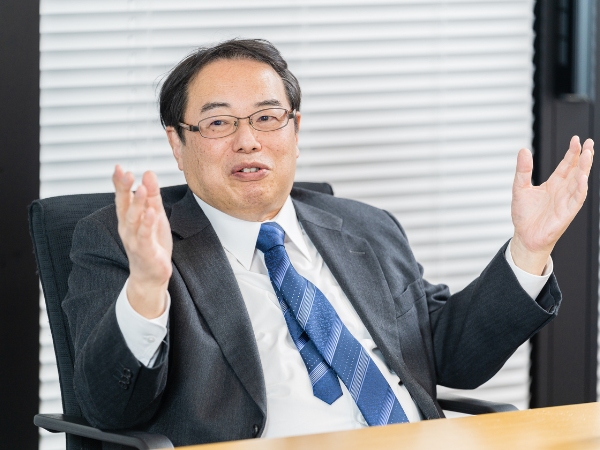
Hidenaga's learning method involves being aware of a problem and then working backwards to acquire the necessary skills and information
Speaking of Takenaka Hanbei, he was a military strategist who served under Hideyoshi. Kuroda Kanbei (Takataka ) and was often referred to as "Nihei."
Yes. Hanbei served under Hideyoshi alongside Hidenaga until his death from illness in 1579 during the campaign to invade the Chugoku region, with Hideyoshi as supreme commander. Naturally, Hidenaga would have asked Hanbei, who was four years his senior and renowned as a brilliant military strategist, to teach him not only military strategy but also how to play an assistant role in an organization and the principles of master-servant relationships.
There is a famous anecdote that supports this. One day, Hanbei heard from his colleague, Kuroda Kanbei, that Hideyoshi had been deeply moved by a letter he had received from his lord, Hideyoshi. The letter, he said, read, "I feel as at ease with you as I do with my younger brother, Hidenaga," and that Hanbei treasured it. However, after reading the letter, Hanbei tore it up in front of Kanbei. His intention was to admonish him, saying, "You should not keep such things. Your lord may not always feel the same way, and it is your duty as a vassal to know the difference between master and servant." Hidenaga, whose name appears in the letter, must have heard this anecdote. Having acknowledged that his brother was still his lord, and that Hideyoshi could sometimes be cruel even to him, Hanbei likely considered and adapted how to behave as his advisor.
It's a very plausible story.
And the third teacher was Kanbei. Great return to China Hidenaga and Kanbei were closely involved in Hideyoshi's conquest of Japan, the Battle of Yamazaki. Kanbei, six years younger than Hidenaga, taught Hidenaga what it meant to be the number two in an organization, replacing Hanbei, who died young at the age of 36.
Thanks to these three excellent generals, Hidenaga was able to grow rapidly into a great assistant.
That's true, but it's not just a matter of being blessed with a good environment. If Hidenaga himself hadn't had a clear awareness of the question, "What kind of person should I be as my lord's younger brother, and what abilities and information do I lack in order to become that?", he certainly wouldn't have been able to grow, even if he had met someone who could answer those questions.
If you don't have a specific problem awareness, if you don't even know what you don't know, no matter how much information you gather, you won't be able to put it to good use. This is a common failure pattern among modern business people. On the other hand, if you objectively delve into the issues you need to solve and ask sincere questions, people with answers and information will come to you, which is still true today.
Are there any episodes that show that Hidenaga was very aware of the problems and worked hard to solve them?
Hidenaga's attitude was in line with that of his retainers. Takatora Todo Takatora rose to success while changing his lord seven times, and eventually became the head of the Tokugawa Shogunate. Outsider (a feudal lord appointed by the Tokugawa family after the Battle of Sekigahara) Fudai He is said to have risen to a similar position of authority (a feudal lord who had been vassal to the Tokugawa clan even before the Battle of Sekigahara). Takatora is known as a master of castle construction and a wise general with great political power, but originally he was an uneducated warrior who made the most of his 190cm physique and achieved military success with his spear.
It was Hidenaga who employed Takatora at such a young age. Hidenaga continued to assign Takatora roles that were far removed from his apparent abilities and past experience, first as commander of the musketeers, then as head of logistics. From Takatora's perspective, it was only natural that he would become angry and ask to be transferred. However, interestingly, Takatora did not resist and continued to carry out his duties in silence. On the contrary, he pursued his subjects thoroughly, mastering everything from how to assemble musketeers to how to use an abacus, and eventually even how to build forts and fight with a navy.
He was originally a keen researcher, and it seems that his talent blossomed under Hidenaga's education.
That's right. In fact, Takatora had previously had the experience of his older brother, who died in battle, saying to him, "What a pity. If you had studied, I wonder what kind of military commander you would have become." This experience had always been in the back of his mind, and he must have had the awareness that "I must study after all."
Hidenaga probably felt that this situation was very similar to his own when he was young. Even though he was just an ordinary farmer, by being aware of the problem and responding to the challenges of those around him, such as "do this" and "do that," he gradually became able to do things and began to enjoy learning. So he thought, "This man can do it too." It was precisely because Hidenaga himself had grown in this way that he was able to teach when he was in a position to teach.
What can modern business people learn from Hidenaga's life?
To reiterate, it is important to first correctly understand your role, that is, what you want to do and what you should do. Once you understand this, you will be able to work backwards to determine what skills and information you need and find teachers and books that will help you learn them.
Conversely, if you do not have a concrete and accurate understanding of what you lack and what you want to be taught, it is meaningless no matter how excellent your teachers or books are. It is true that Hidenaga had an extremely favorable learning environment. However, Hidenaga also considered his role seriously, realizing that since he had chosen to become a samurai and help his brother, even though he had the option of ending his life as a farmer, this was the only way he could survive. And he was able to enjoy that way of life. We must not forget that it was not mere good fortune, but this desperation to survive and his sense of purpose in life that formed the foundation for him to become such a great assistant.
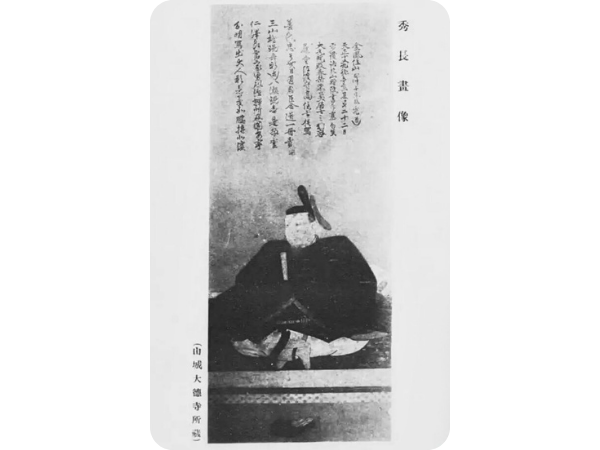
Photo courtesy of the National Diet Library Digital Collection
Recommended Content
e-book: Learn business success tips from military commanders
If you have learned much from Toyotomi Hidenaga's growth story, we would like to introduce you to an e-book that will provide you with even deeper insights.
This e-book analyzes the strategies of Tokugawa Ieyasu and Date Masamune, using the ingenuity of the Sengoku period to explore how to make the most of limited information. From their judgment and methods of utilizing information, you can discover practical business tips and gain a new perspective on success. If you're interested, please check it out at the link below.
A battle of wits! Tokugawa Ieyasu vs Date Masamune - Learn business success tips from warlords
In modern business, differences in judgment determine success. How did Tokugawa Ieyasu and Date Masamune, who survived the Warring States period, interpret and utilize the limited information they had? This e-book introduces the perspective of turning information into a weapon through their ingenuity.
Saison Technology Official YouTube Channel "SIS☆STA"
Saison Technology's official YouTube channel features an interview video with historian and author Kozo Kaku.
This article delves deep into Toyotomi Hidenaga's abilities as an excellent advisor and his learning methods, but this video is recommended for anyone who wants to learn more about the lessons that history can teach modern business.

Related videos
In this video interview with historian and author Kozo Kaku, Kaku, who has a deep understanding of history and keen observation skills, explains the life of Tokugawa Ieyasu and his influence.
[Part 1] Using the origins of Japanese names as an example, this book introduces three points of commonality between history and modern business. Toyotomi Hidenaga's awareness of issues and his growth process are highly suggestive for business as well.
[Part 2] Historian Kozo Kaku explores Tokugawa Ieyasu. Like Hidenaga, Ieyasu's leadership and strategy offer many important lessons for modern business. Keep an eye out for content that may change your image of Tokugawa Ieyasu.
It would be interesting to think about modern business from a historical perspective through these videos, along with Toyotomi Hidenaga's achievements and learning methods. Be sure to check them out!
Related Content
-
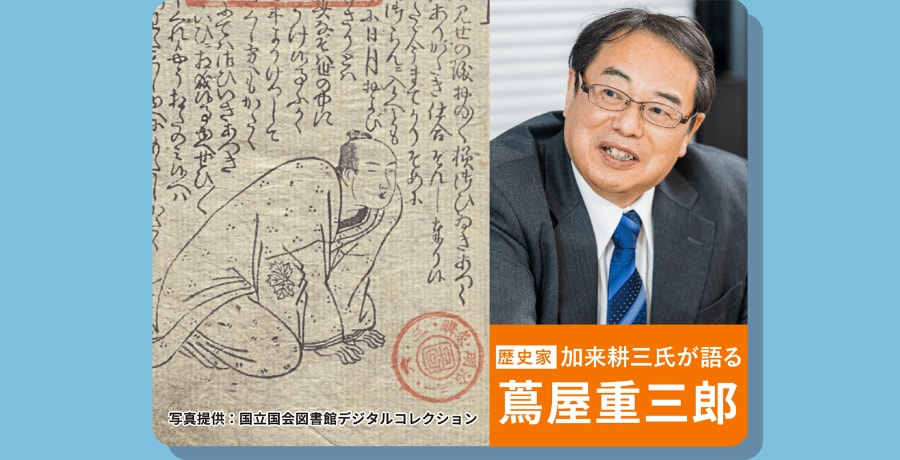
How did the "Edo Media King" discover so many exceptional talents and produce so many hits? ~A "backward information strategy" that gathers the information necessary to reach the goal~
-

The key to utilizing generative AI is to develop strategies that capitalize on a company's unique data and enhance its strengths
A leading expert on AI talks about the current state of Japanese companies and their future aspirations -
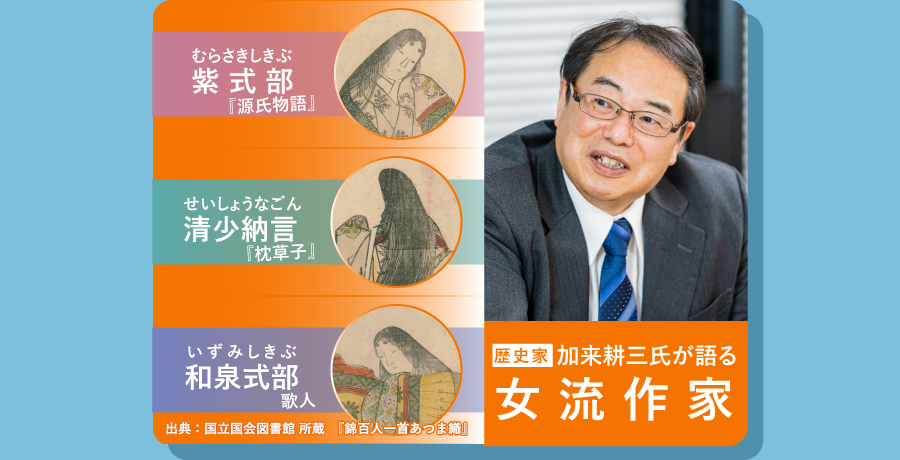
Each of the three made their mark with their own unique information strategies. Murasaki Shikibu ・ Sei Shonagon ・ Izumi Shikibu ~Exploring the background behind the flourishing of women's literature in the mid-Heian period~