

What is the real reason why Eiichi Shibusawa is suitable to be the face of the new 10,000 yen note? ~The "father of modern Japanese capitalism" had a clever information strategy behind him~
Eiichi Shibusawa was a businessman who was involved in the founding and management of approximately 500 companies, including the First National Bank (now Mizuho Bank), and approximately 600 public works projects, including welfare and education. Thanks in part to the influence of the 2021 NHK Taiga drama "Aoi Tou wo Tsuke," his personality and achievements have become more widely known, even among those less interested in history. Yet, many people wonder why he alone is so highly regarded, even to the point of being named the "father of modern Japanese capitalism" and featuring his portrait on the new 10,000 yen bill, which will be issued in July 2024, when there were other entrepreneurs and founders of zaibatsu. For modern businesspeople, evolving data into information and utilizing it as "knowledge" is crucial. According to historian and author Kozo Kaku, Shibusawa truly put this into practice in a unique way, which is why he became known as the "father of modern Japanese capitalism." In this interview, Mr. Kaku explores the true greatness of Shibusawa from the perspective of "utilizing information."
▼Profile of Kozo Kaku
Graduated from the Department of History, Faculty of Letters, Nara University. After a career as an academic, he became a researcher at the Faculty of Letters, Nara University in March 1984. He currently works as a lecturer at universities and companies, while also writing books based on his own unique historical perspective as a historian and author. He is also a lecturer at the National Research Institute for Domestic and Foreign Affairs, the Small and Medium Enterprise College, and the Political and Economic Forum.
・Representative works (new publications)
"Introduction to History as a Liberal Arts Education" (Business Press, 2023)
"Tokugawa Ieyasu's Study Method" (President Publishing, 2023)
"Ieyasu's Conquest of the Country: Sekigahara, the Battle of Sekigahara" (Tsuchiya Shoten, 2022)
・Supervision, translation, etc. (new publications)
"Reading it makes me feel better: Reverse biographies of great people who didn't try hard, Japanese history edition" (Supervised by Shufunotomosha, 2023)
"Comic Edition of Japanese History, Volume 87: Hideyasu Yuki" (Planning, composition, supervision, Poplar Publishing, 2023)
·others
"Sekiguchi Hiroshi's Newest Medieval History," with commentary by Kaku, will be broadcast from August 2022 to March 2024 on BS-TBS, every Saturday at 12 noon.
Is it because he founded and ran 500 companies? The real reason why Eiichi Shibusawa is suitable to be featured on the new 10,000 yen banknote
As I always do in my lectures, I will begin with a question: Why did Eiichi Shibusawa come to be called the "father of modern Japanese capitalism"? Why is he a suitable portrait for the new 10,000 yen banknote?
That's exactly what I would like to ask you about today, but I think that people like me who are not familiar with history understand it as "because he founded about 500 companies" and "because he was involved in about 600 public works projects."
There are many answers like that, but that is not the only answer. five generations " is a contemporary businessman who is highly regarded. Tomoatsu It would not be surprising if Godai were called the "father of modern Japanese capitalism." Godai's achievements rival those of Shibusawa, including founding the Osaka Chamber of Commerce (now the Osaka Chamber of Commerce and Industry) and reviving the Osaka economy, which was on the brink of collapse. Moreover, Godai was on good terms with Okubo Toshimichi, one of the "Three Great Men of the Meiji Restoration." Even taking into account the fact that he died relatively early, at the age of 50, Godai should have been more highly regarded, with Shibusawa overshadowed. However, this did not happen. Why is this?
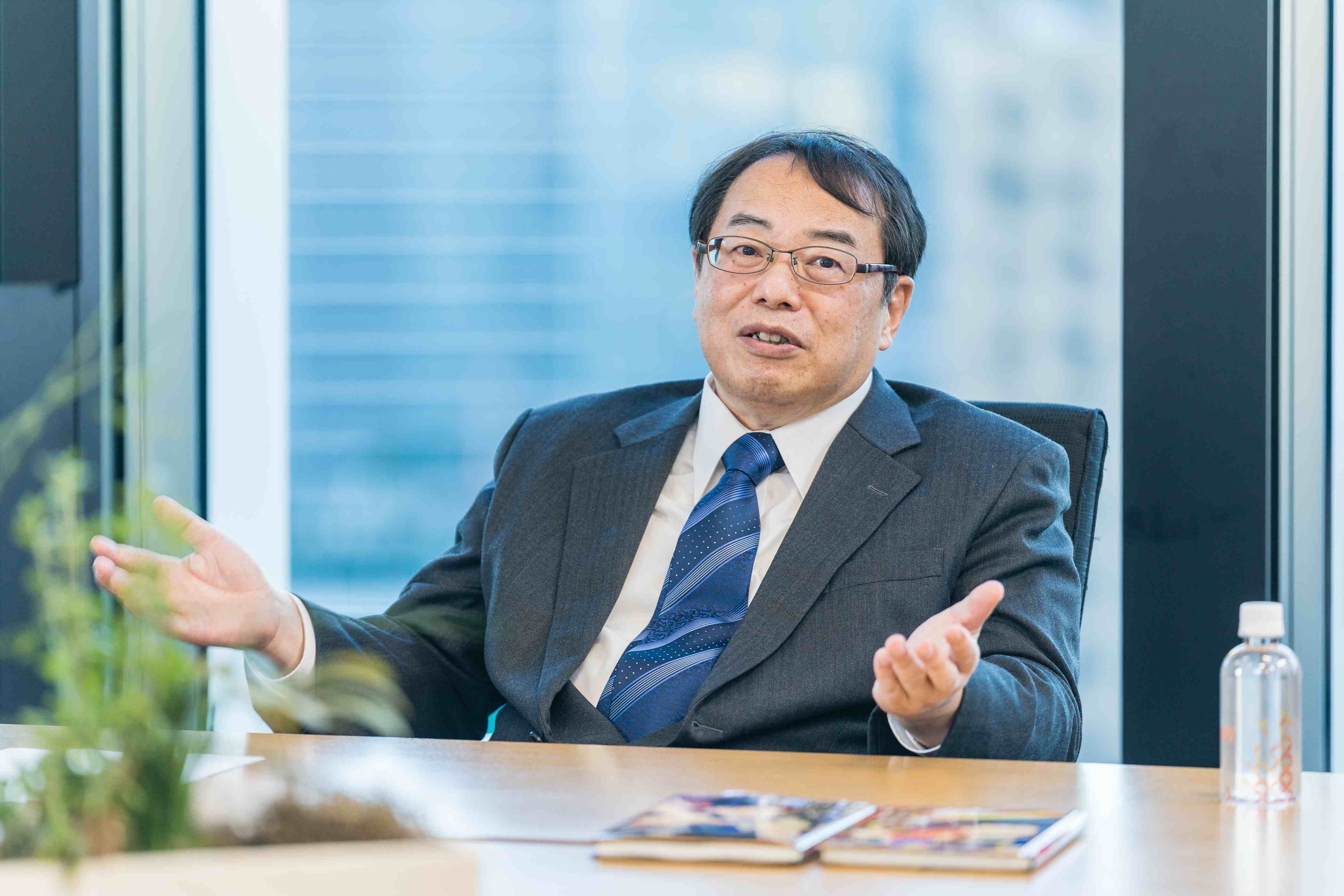
This is something that people don't really understand, which is why they are left with the vague question, "Why is Shibusawa on the new 10,000 yen bill?"
Therefore, in the study of history, we must always ask fundamental questions such as, "Why?" and "What would have happened if it hadn't been like this?"
Shibusawa was born into a wealthy farming family in what is now Chiaraijima, Fukaya City, Saitama Prefecture, and later served Tokugawa Yoshinobu, the 15th shogun of the Tokugawa shogunate. In other words, not only was he not from Satsuma, Choshu, Tosa, and Hizen, the provinces central to the Meiji Restoration, he wasn't even originally a samurai; he was on the side of the defeated shogunate, and was out of Japan during the crucial Meiji Restoration, having traveled to Europe. Why was such a person called the central figure in the Meiji Restoration's economy? Why was Shibusawa able to become president of the First National Bank?
I'm becoming more and more confused...
To give you a quick answer in line with the theme of this article, I believe it is because Shibusawa acquired and practiced a unique way of thinking about and utilizing information based on his upbringing and the experiences and reflections he had experienced in the first half of his life.
Let's consider this step by step. First, in order to understand Shibusawa's "true achievements" that earned him the title "father of modern Japanese capitalism," we must first consider what the Meiji Restoration was. Why did the Meiji Restoration take place in the first place?
I think I was taught in school that in order to resist external pressure from the Western powers, Japan had to develop industry, enrich its country, and strengthen its military power.
It's a good place to start, but there's still one more step to go. In fact, the Meiji Restoration was a war between neighboring countries that had nothing to do with Japan at first glance. opium We must start from the fact that it began with a war. The defeat of the Qing Dynasty (China at the time), with a military force of 880,000, by Britain, which had a total military force of only 20,000, is directly linked to the theme of the Meiji Restoration.
Why did 44 lose in a 44-on-1 fight? The only possible explanations are that 44 was not motivated, or that one or two of the 44 fought but ignored the others. In other words, this shows the true state of feudalism at that time. In the Qing Dynasty at that time, each province and state was considered a "country," and no one had the concept of a "big country" called the Qing. Therefore, even if a province was attacked by the British, no help would come from neighboring provinces. The reason opium spread throughout the country in the first place was because there was no concept of a single "big country." When opium became rampant in one province, it was confiscated and dumped in the neighboring province, which would then spread to the neighboring province and dump it again, repeating this cycle. As a result, the Qing, despite having a total military strength 44 times larger than the enemy, were defeated one by one and continued to lose. Nanjing They were forced to sign unequal treaties.
Japan was in the same situation as the Qing Dynasty at that time.
Yes, at the end of the Edo period, each domain was called a "country," and the inhabitants of each domain were called "Chōshū people" or "Satsuma people," and there was no concept of "Japan" or "Japanese people." Nariakira They were Qing Dynasty thinkers. Wei Yuan I diligently read through the "Haiguo Tuzhi" compiled by the same author, and upon learning that this very reason was behind the Qing's defeat in the Opium Wars, I came to one conclusion: unless we could create the concepts of "Japan" and "the people" and instill in each and every citizen a sense of responsibility to protect "Japan," we would not be able to escape the colonization policies of the great powers. This was the proposition behind the Meiji Restoration and the reason the Boshin War was fought.
If such centralization was the goal of the Meiji Restoration, then even with the restoration of imperial rule in 1867, the change of era name to "Meiji" in September 1868, and the end of the Boshin War, the restoration could not be said to have been achieved. This is because, although the shogunate was certainly gone, not a single domain had been destroyed. After the Battle of Sekigahara, Tokugawa Ieyasu appointed most of the daimyo of the defeated Western Army as his successors. elimination But the new government did not, or rather could not, immediately do the same. Why?
Is it because each domain had its own politics and economy and could not be easily abolished?
That answer takes us off topic a bit. We need to find an answer that directly connects the reason why the new government was unable to abolish the domains to the original question of what Shibusawa's "true achievement" was. In short, that answer is inextricably linked to the fact that Shibusawa accomplished something that no one else had been able to do.
What would happen if the feudal domains were abolished and most of the samurai who received stipends from each domain were expelled? In modern times, it would be like firing all civil servants without a severance pay and then rehiring only a few, which would surely lead to riots. Furthermore, each domain issued large amounts of paper money called hansatsu, which was valid only within that domain. In other words, they owed huge amounts of money to wealthy merchants and farmers who held hansatsu. If the new government had not repaid these debts and pretended they never existed, uprisings would have broken out all over the place, and the Meiji Restoration itself would have been crushed.
Solving these problems was essential to abolishing the feudal domains and realizing centralization. Money was desperately needed to support the samurai's immediate livelihood, and to collect feudal notes and repay debts. However, the new government had no money, and no one had the information to raise it. But there was one person who could find the answer.
That was Shibusawa.
That's right. Here, Shibusawa used the method of issuing public bonds for the first time in Japan. This was a method in which the government would issue public bonds and use interest to draw out and raise funds that had been lying dormant in the private sector. Shibusawa calculated the value of each domain's han notes and the total amount of their stipends, differentiated their stipends, added interest, and made each domain's samurai live on interest with the promise of repaying the money over 30 years, while collecting the han notes and exchanging them for new banknotes. In short, he convinced lenders that he would borrow money with public bonds, but asked them to wait a little while before repaying, in exchange for interest, and thus raised a huge amount of funds. And this Chitsuroku The punishment led to the abolition of feudal domains and the establishment of prefectures in 1871, which ultimately led to the centralization of power, one of the aims of the Meiji Restoration. This was Shibusawa's "true achievement," worthy of being called the "father of modern Japanese capitalism" and appearing on the new 10,000 yen note.
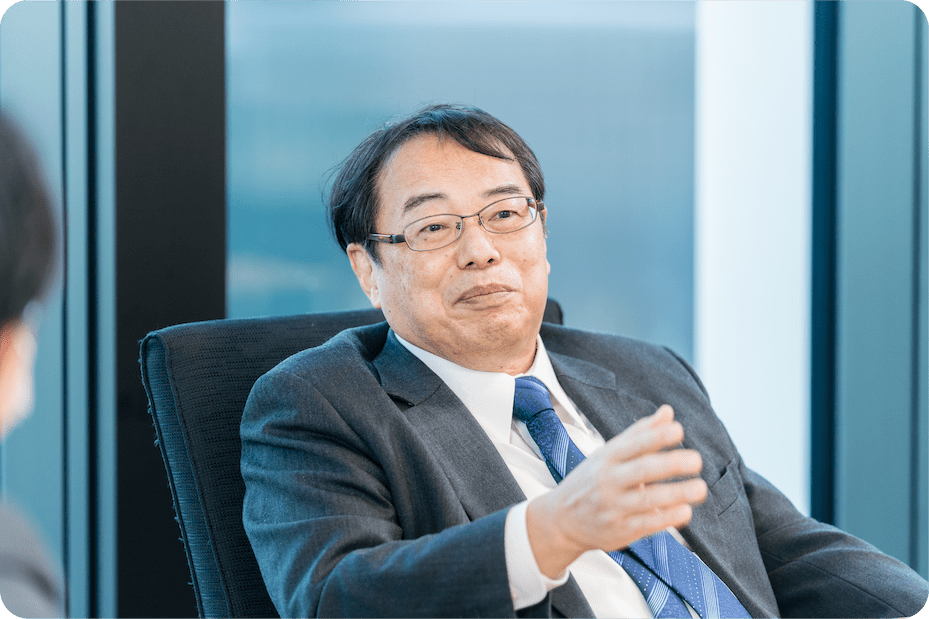
The information utilization techniques that made Eiichi Shibusawa a great man Progress Ri-ism
This raises the question of why Shibusawa was the only one who could accomplish such a feat. In 1867, Shibusawa was the younger brother of Tokugawa Yoshinobu and the head of the Shimizu Tokugawa family (one of the three branches of the Tokugawa family). one ) Tokugawa, the head of the family Akitake He traveled to Europe to attend the Paris World's Fair and study in France. Shibusawa knew about public bond certificates because he learned about them from the Japanese Consul General, banker Paul Fleury-Erard. However, Tokugawa Akitake's entourage consisted of around 20 people in total; Shibusawa was not the only one. Furthermore, there must have been hundreds of Japanese people who had traveled to Europe at the time. There must have been many people who had heard or seen similar information, so why was Shibusawa the only one who understood public bond certificates and was able to put them into practice in Japan?
This has always been a big question for me: why was Shibusawa the only one who was able to make use of the information he gained during his time in Europe? I thought that perhaps this was what made Shibusawa so great, but I couldn't find the answer...
When you can't think straight, one way to arrive at an answer is to start with the conclusion. Think about what was unique about Shibusawa, that is, what other business leaders didn't do.
It is often said that companies that only pursue their own profits and do not have good morals at their core cannot be allowed to survive, so they sought to share wealth with the entire society and enrich the entire country.
Yes, the theory of the unity of morality and economics. He summarized this idea in "The Analects and the Abacus," which he published in 1916 after retiring from the business world. So why did he write this book? This is just speculation, but I think it may have been because he had regrets and reflections about the way he had lived the first half of his life.
As is well known, in 1863, Shibusawa, then 24 years old and a radical supporter of the Sonno Joi movement, met his cousin, Otaka Attitude He planned to take over Takasaki Castle with only 69 people, burn down Yokohama, and ultimately overthrow the shogunate, but he abandoned the plan at the last moment and was forced to flee. Then, just three years later, Hiraoka, a retainer of the Hitotsubashi family (one of the three branches of the Tokugawa clan), whom he had met while studying in Edo, Enshiro With the recommendation of the shogun, he ended up serving the Hitotsubashi clan, which he had previously considered his enemy in his plans to rebel. How should we interpret this unconventional and unprincipled behavior of Shibusawa?
Both of these actions are difficult to understand...
In his youth, the thoughtless Shibusawa likely had wishful thinking: if he could take over Takasaki Castle, sonno joi (revere the emperor, expel the barbarians) would join him from all over, creating a powerful force; if he attacked the foreign settlement in Yokohama, the shogunate would be held accountable by the Western powers, and would inevitably be overthrown. Later, he approached the Hitotsubashi family because he truly believed he could persuade Yoshinobu, a leading figure in the shogunate, to become a sonno joi (revere the expulsion of the barbarians) extremist. It seems to me that the first half of his life was dominated by this self-righteousness and self-centeredness. However, while this self-centeredness was a weakness, it was also a great strength. I believe that this trait ultimately led to his "true achievement": the abolition of the feudal domains and the establishment of prefectures through the issuance of public bonds.
Is there any education that only he received that no one else received that is thought to have had a major influence on the development of his personality? Do you know anything about it?
"Progress It's "Ri-ism"!
That's right. As a boy, Shibusawa studied the Analects and other works under his cousin Odaka Junchu, who was 10 years older than him, and through this he learned a type of reading and teaching method called Tadashi-yari-shugi. Simply put, this means that even if you don't understand some things, just get in touch with things that you want to read and that look enjoyable, so that you can get as much information as possible as quickly as possible, interpret it in your own way, and find the answer. Shibusawa learned this method from an early age and continued to practice it.
The same was true of public bond certificates. Although he had studied them in France, he did not actually understand the entire system. There were many aspects that he did not understand. Nevertheless, immediately after returning to Japan, he first put into practice what he had understood about the system of public bond certificates in the Shizuoka domain, and achieved some success. He then put the same practice into practice at the Ministry of Finance, which led to the abolition of the feudal domains and the establishment of prefectures.
Because they put aside the things they didn't understand and interpreted things in their own self-righteous way, they sometimes came up with the wrong answer.
That's right. In fact, Shibusawa often made erroneous decisions that could be called absurd, such as believing that raising an army would be successful or that he would be able to persuade Yoshinobu. I believe that "The Analects and the Abacus" was a reflection on these decisions. The greatest self-righteousness a businessman can commit is to pursue personal gain and make only his own company profitable. However, Shibusawa desperately argues that if he does that, he will be abandoned by the country and the people, and his company will no longer be able to survive. I believe these words came from a deep self-reflection.
We now understand why Shibusawa is a suitable portrait for the new 10,000 yen banknote, and why he is the only one who was able to achieve such great things. So, what do you think modern business people should learn from Shibusawa's philosophy of speed and efficiency?
In order to put the Shibusawa philosophy into practice, the first thing you need is "good information," or in other words, information with a wide range of applications. For Shibusawa, this meant the Analects, Nanso Satomi Hakkenden, and Romance of the Three Kingdoms, which he diligently read as a child, as well as the various things he saw and experienced in Europe during his youth. However, no matter how high-quality information you obtain, if you do not have the ability to decipher it, or if there is no urgent reason to need it, ultimately the information will not be put to good use. In short, the world is overflowing with information, and much of it is useful, but it is meaningless unless you are the type of person who can use it.
Like Shibusawa, if you can use information in your own way and answer questions that no one else can answer, you will definitely be able to ``make a name for yourself'' and get ahead in life, so perhaps modern business people should think about this again.
Recommended Content
e-book: Learn business success tips from military commanders
This e-book analyzes the strategies of Tokugawa Ieyasu and Date Masamune, using the ingenuity of the Sengoku period to explore how to make the most of limited information. From their judgment and methods of utilizing information, you can discover practical business tips and gain a new perspective on success. If you're interested, please check it out at the link below.
A battle of wits! Tokugawa Ieyasu vs Date Masamune - Learn business success tips from warlords
In modern business, differences in judgment determine success. How did Tokugawa Ieyasu and Date Masamune, who survived the Warring States period, interpret and utilize the limited information they had? This e-book introduces the perspective of turning information into a weapon through their ingenuity.
Related Content
-
What was the reason that a warrior born of peasant origins was able to grow so rapidly into a great advisor to the ruler of Japan? - Toyotomi Hidenaga's learning method of clarifying the skills and information to be acquired through problem awareness -
-
How did the "Edo Media King" discover so many exceptional talents and produce so many hits? ~A "backward information strategy" that gathers the information necessary to reach the goal~
-

The key to utilizing generative AI is to develop strategies that capitalize on a company's unique data and enhance its strengths
A leading expert on AI talks about the current state of Japanese companies and their future aspirations