

How did Date Masamune face adversity? - His outstanding analytical and decisive abilities were based on information.
Date Masamune was the 17th head of the Date clan, a feudal lord of the Dewa and Mutsu regions of the Sengoku period who claimed dominance over Oshu. Despite being a contemporary of Toyotomi Hideyoshi and Tokugawa Ieyasu, he displayed great political power and established himself as a powerful feudal lord. He is a highly renowned hero, often lamented with comments such as "If he had been born 20 years earlier, he could have conquered the country" and "He was a late-comer Sengoku warlord."
However, historian and author Kozo Kaku points out that few people understand the true greatness of Masamune. In this interview, Kaku talks about the incredible intelligence strategy of Masamune and the background to how he came to acquire such power.
▼Profile of Kozo Kaku
Graduated from the Department of History, Faculty of Letters, Nara University. After a career as an academic, he became a researcher at the Faculty of Letters, Nara University in March 1984. He currently works as a lecturer at universities and companies, while also writing books based on his own unique historical perspective as a historian and author. He is also a lecturer at the National Research Institute for Domestic and Foreign Affairs, the Small and Medium Enterprise College, and the Political and Economic Forum.
・Representative works (new publications)
"Introduction to History as a Liberal Arts Education" (Business Press, 2023)
"Tokugawa Ieyasu's Study Method" (President Publishing, 2023)
"Ieyasu's Conquest of the Country: Sekigahara, the Battle of Sekigahara" (Tsuchiya Shoten, 2022)
・Supervision, translation, etc. (new publications)
"Reading it makes me feel better: Reverse biographies of great people who didn't try hard, Japanese history edition" (Supervised by Shufunotomosha, 2023)
"Comic Edition of Japanese History, Volume 87: Hideyasu Yuki" (Planning, composition, supervision, Poplar Publishing, 2023)
·others
"Sekiguchi Hiroshi's Newest Medieval History," with commentary by Kaku, is currently being broadcast on BS-TBS, every Saturday at 12 noon.
Date Masamune's Fierce Information Strategy as Seen in His Confrontation with the Great Emperor
Anyone with even a passing interest in history knows that Date Masamune was an incredible man. His base in Oshu was said to be 50 years behind Kyoto, the political center of his time, but Masamune's arrival alone instantly elevated it to a level close to that of the central government in every respect. He certainly possessed incredible abilities, not only in politics and economics, but also in cultural fields such as the tea ceremony. However, simply knowing these facts does not fully grasp his true greatness. Ultimately, what do you think was Masamune's greatest achievement, one that only he could have achieved?
Perhaps it is because, despite being born in a remote area and living in an era when the turbulent times were gradually coming to an end and when there were rulers such as Toyotomi Hideyoshi and Tokugawa Ieyasu, he continued to have the ambition to rule the country until the latter half of his life.
The first half is good. However, the true achievement of Masamune that should be mentioned in the second half is that he "survived." I think that sums it up. This is because people at the time, especially Hideyoshi and Ieyasu, the rulers of Japan, suspected Masamune at every opportunity. "He's dangerous, he's aiming to take over the world." With this kind of public opinion as a backdrop, many daimyo were eliminated, and Masamune himself faced many critical situations where it would not have been surprising if he had been killed. Despite this, he alone managed to overcome all of them brilliantly. In fact, he eventually became the first lord of the Sendai domain under the Tokugawa government, and was later appointed as the third shogun, Tokugawa. Iemitsu He has risen to the rank of guardian of the Imperial Japanese Army, a position that is practically equivalent to that of a lieutenant general. This is truly impressive.
You're right, but why was Masamune the only one who could do something like that?
That is the theme of this article. As with the last article, the answer can be given in one word: kind "It was because he had an exceptional ability to gather and analyze information, and the ability to make decisions based on that." Let's think about the situations in which he demonstrated this ability, how he did it, and why he was the only one to have it. If we can clarify this, modern business people can learn from it.
First, could you explain the well-known incident in which Masamune escaped crisis: his late arrival at Hideyoshi's siege of the Hojo clan and Odawara in 1590, which infuriated Hideyoshi?
Yes. Masamune was ordered by Hideyoshi to take part in the Odawara Campaign, but he was reluctant to do so. There are said to have been two main reasons for this. One is that the Date clan was originally the family of Masamune's father, the Date clan. Terumune Since the time of the shogun, he had been allied with the Hojo clan, and he was unsure which side to support. Another reason was that if Masamune left his territory, his younger brother, Date Kojiro (Politics ) might rebel. Masamune killed Kojiro to eliminate any worries behind him, and it took time to assess the situation, which showed that the Hojo clan was on the brink of defeat, and by the time he arrived in Odawara, the battle was already nearing an end. Naturally, Hideyoshi was furious and ordered Masamune to go to Hakone. house arrest Do you know what Masamune did at that time, when there was a good chance he would be ordered to commit seppuku?
I believe he went to meet Hideyoshi in his funeral attire. Hideyoshi was impressed by his life-risking performance and somehow managed to pardon him.
That's right. What we need to consider here is whether such a performance would have worked on anyone. For example, if the opponent had been Ieyasu, who valued simplicity and strength, he would most likely have been ignored and killed. It worked precisely because the opponent was Hideyoshi, who loved flashiness. In other words, Masamune did not take a bold gamble, but rather gathered information about Hideyoshi in advance, fully grasped his personality, and was convinced that this performance would be well received by Hideyoshi.
Not only that, but when Masamune was under house arrest, he asked Tokugawa Ieyasu and Maeda Toshiie (both of whom later became one of the Five Elders of the Toyotomi government) who visited him to question him on behalf of Hideyoshi, saying, "I would like to use my time under house arrest to learn the tea ceremony, so please introduce me to Sen no Rikyu." Naturally, at that time, Masamune must have been able to infer Hideyoshi's true intentions from what Ieyasu and Toshiie were saying, and quickly read how they would react to what he was saying and how that would be conveyed to Hideyoshi. And even if Hideyoshi had said, "Kill Masamune," he would no doubt have made arrangements so that Ieyasu and Toshiie would become his protectors.
Masamune was able to overcome repeated crises precisely because he employed a solid information strategy that included preparing second and third schemes.
I see. The following year, in 1591, Masamune was again in a difficult position when Hideyoshi seized a letter that was said to be evidence that he had incited uprisings in other countries. Did he have a similar information strategy then?
Yes. Masamune was ordered by Hideyoshi to go to Kyoto, and this time he even carried a cross on top of his funeral clothes. However, Hideyoshi, not wanting to fall victim to the same trick twice, did not take him seriously and summoned Masamune for questioning. Masamune responded by insisting that the letter that was supposed to be his was a fake. His letters always read, Kao (Equivalent to a modern handwritten signature, Masamune wagtail He explained that he had poked holes in the eyes of the bird (which he had written a picture of called a 'bird') with a needle, but there were no holes in this letter, so it was a fake, and if anyone had any doubts, they should check the letters he had sent up until then. Upon checking, he found that all of the letters addressed to Hideyoshi indeed had holes in the eyes, so Masamune was pardoned.
Masamune left the letter unpunched in case his letter inciting an uprising were to come to light. He was always skillful in deciding when to punch holes and when not. In this way, Masamune had a very well-prepared information strategy, not just choosing the best or second best option, but always being prepared with a third or fourth move.
Later, Masamune was also suspected of treason by Ieyasu. What was the information strategy he used at that time?
Masamune was the eldest daughter Gorohahime Matsudaira, Ieyasu's sixth son, Tadateru In 1603, Ieyasu became Shogun and passed the title on to his heir, Tokugawa. Hidetada Even if he had handed over the throne to his son-in-law, Tadateru, who would later become the second shogun, had he proven himself capable, Masamune's son-in-law, Tadateru, would have become the third shogun, and Masamune, in his role as father-in-law, could have effectively taken control of the country. However, things took a turn for the worse when Tadateru was ordered to stay in seclusion for arriving late at the Summer Siege of Osaka in 1615. Tadateru lied to Ieyasu, saying, "Actually, my father-in-law, Masamune, was on the Toyotomi side, and that's why he arrived late," and pushed the responsibility onto Masamune. Ieyasu didn't believe him, but he took this opportunity to remove Masamune, who was his only worry as he was getting older and had little time left, and ordered Hidetada to prepare for a march to Sendai.
If that had been carried out, Masamune would have been defeated and annihilated.
That's right. Masamune was the first to get hold of this information and quickly called a military council to consider how to respond. No matter how you look at it, there was no reason to be attacked at this timing, and Masamune was thinking that he would never have made such a mistake. Then, Ieyasu's concubine and lady-in-waiting, who was in Suruga, Victory (Also known as O Kaji A letter arrived by express horse from the Emperor. It said, "You must meet with Lord Ieyasu as soon as possible," implying that there was still time to explain himself.
In fact, Ieyasu's youngest son, born to Okatsu, Ichihime Masamune's eldest son, Tora Kikumaru (Later, the second lord of the Sendai domain, Date Tadamune Masamune and Okatsu had been engaged to be married to Ieyasu, and so they had a long-standing relationship. Although Ichihime died at the young age of four, Masamune continued to keep in touch with Okatsu through letters and gifts. Trusting Okatsu, who always provided him with the most up-to-date information, Masamune, after a few days of deliberation, decided to go to Suruga, where Ieyasu was, despite the objections of his retainers.
Seeing Masamune rush to the scene, Ieyasu, who was in bed at the time, opened up to him. After the misunderstanding was cleared up, Ieyasu is said to have told Masamune, "Please take good care of Hidetada." Such outstanding information gathering and analytical skills, and the ability to make decisions based on that information, were the source of Masamune's "will to survive."
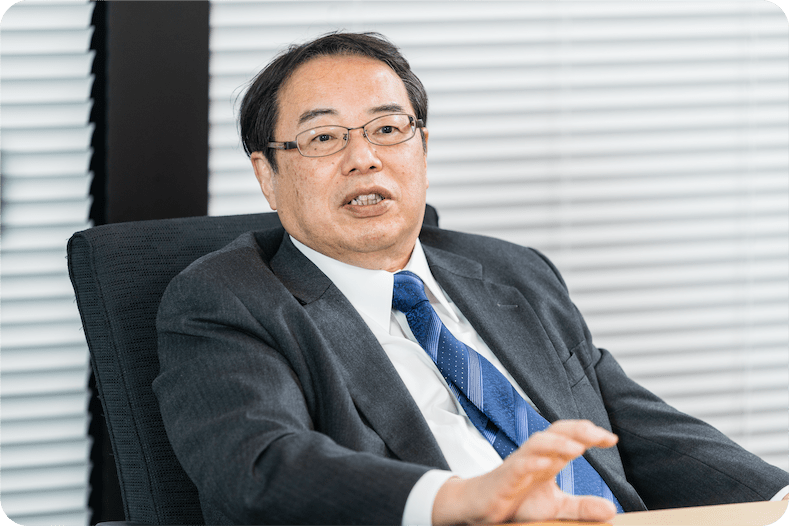
What did Masamune see after overcoming adversity by using information?
This raises the question of why only Masamune was able to acquire such power.
That's right. I have always thought that it was because Masamune had a deep inferiority complex and the "never give up spirit" to overcome it. Masamune was originally a very introverted person, partly because he lost his right eye to smallpox when he was a child. On the other hand, his younger brother Kojiro was handsome and loved by everyone, so his mother, Yoshihime The love of his mother was poured out to them, and Masamune was shunned. He had an inferiority complex about being born in a remote area, about being blind in one eye, about not being loved by his mother, about not having any great abilities... I think he was filled with all sorts of inferiority complexes.
However, he was able to work hard to overcome it. One of the driving forces behind this was a strong desire to repay the kindness of his father, Terumune, who had done everything in his power to help his son overcome his inferiority complex. Terumune had told his son, who was a mass of inferiority complex, to learn from the ninth head of the Date clan during the Muromachi period, who was praised as the founder of the revival of the Date clan. Daizen-no-taifu He was given the same name as Masamune and served as his close aide. Katakura Kagetsuna He took as his teacher the high priest of the Myoshinji school of the Rinzai sect, Toraya Souichi He quickly handed over the family headship to his father, and I believe that without his father, Masamune would not have become the person he was.
He was a great father...
Moreover, just one year after inheriting the family headship, Masamune witnessed his father being killed in front of him after being captured by the enemy. He felt a sense of gratitude towards his father for buying him. He also felt the weight of the name "Masamune." He must never let the Date clan be destroyed. He must survive at all costs. These were perhaps the things that became Masamune's identity.
For Masamune, who had to survive a series of adverse circumstances, it must have been essential to question the true nature of the problems he faced. Information was extremely useful in this regard. For Masamune, who was in Oshu, a region with little national power and no strong background to begin with, it could be said that his only means of survival was to collect and utilize information. His thoughts, "I have lived my life driven by feelings of inferiority; can I die here?" likely gave him the rare "will to survive" to desperately gather and analyze information and then make decisions based on that.
As with the case of Okatsu mentioned earlier, Masamune was a very prolific writer and apparently wrote many letters, but was he doing so consciously from the perspective of gathering information?
I think Masamune was originally fond of such things. People who have an inferiority complex and are concerned with survival have no choice but to make efforts that are commensurate with that, but Masamune probably thought that if he had to do it anyway, he might as well do it cheerfully and happily. So even though he was blind in his right eye, he showed up at salons where influential people gathered, greeted everyone, wrote many letters and interacted with many different people. I think that's one of Masamune's great qualities.
Masamune also diligently wrote letters to his mother, who was rumored to have tried to poison him. When he invaded Korea in 1593, he sent her a letter and a souvenir, making the excuse, "It's nothing special, but I've been walking around a lot and found something that caught my eye, so I'm sending it to you." It seems he overcame his inferiority complex.
What can modern business people learn from this?
Sublimate your feelings of inferiority and let them blossom at a higher level. Unless you are someone who desires to grow and not settle for the status quo, you will not be able to see what lies ahead. Conversely, being dissatisfied with the current situation and being aware of problems will lead to self-improvement. The only people who understand true happiness are those who have experienced unhappiness. I believe that people who can use information are those who understand the value of information.
In that sense, I feel that Masamune, who wrote letters to his mother diligently, was able to find happiness.
I think I got it. Only those who take the initiative can get it and win in the end. If you're going to do the same thing anyway, it's better to do it happily than reluctantly. I think Masamune was the person who taught me that.
Recommended Content
e-book: Learn business success tips from military commanders
Learn about the life of Date Masamune, who overcame adversity and used his ingenuity to survive the Sengoku period, and get hints for business success. This e-book has been released, and teaches you how to turn information into a weapon through a battle of wits with Tokugawa Ieyasu. Check it out now from the link below!
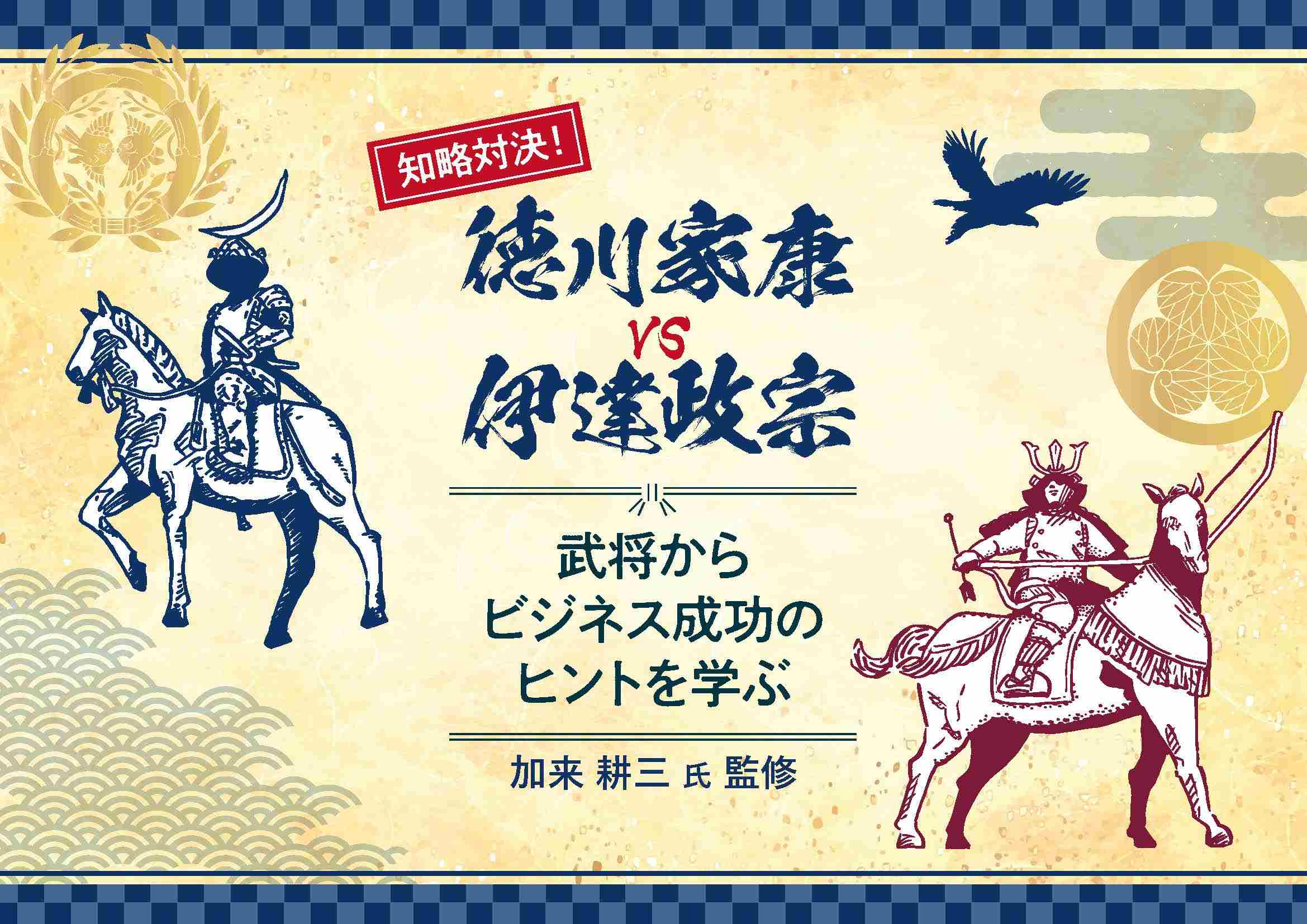
A battle of wits! Tokugawa Ieyasu vs Date Masamune - Learn business success tips from warlords
In modern business, differences in judgment determine success. How did Tokugawa Ieyasu and Date Masamune, who survived the Warring States period, interpret and utilize the limited information they had? This e-book introduces the perspective of turning information into a weapon through their ingenuity.
Related Content
-
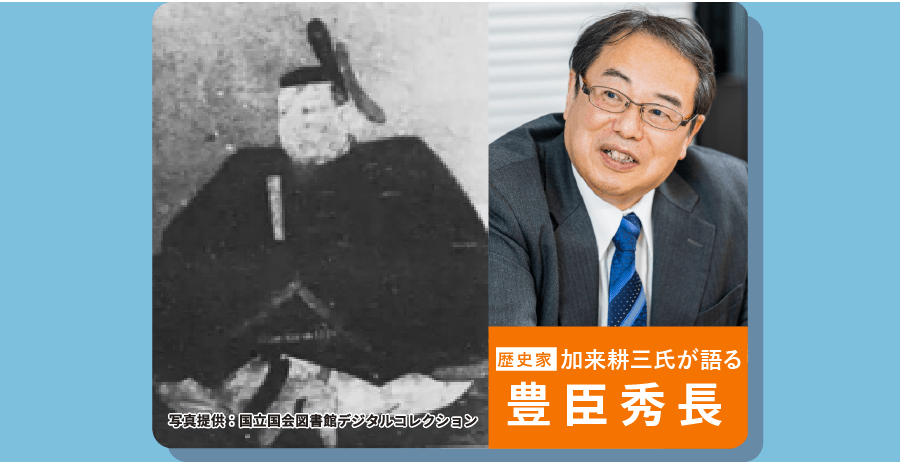
What was the reason that a warrior born of peasant origins was able to grow so rapidly into a great advisor to the ruler of Japan? - Toyotomi Hidenaga's learning method of clarifying the skills and information to be acquired through problem awareness -
-
How did the "Edo Media King" discover so many exceptional talents and produce so many hits? ~A "backward information strategy" that gathers the information necessary to reach the goal~
-

The key to utilizing generative AI is to develop strategies that capitalize on a company's unique data and enhance its strengths
A leading expert on AI talks about the current state of Japanese companies and their future aspirations