

What's important is "how useful the analysis results are and to what extent you can take responsibility" - A leading expert on data science as a means of business transformation
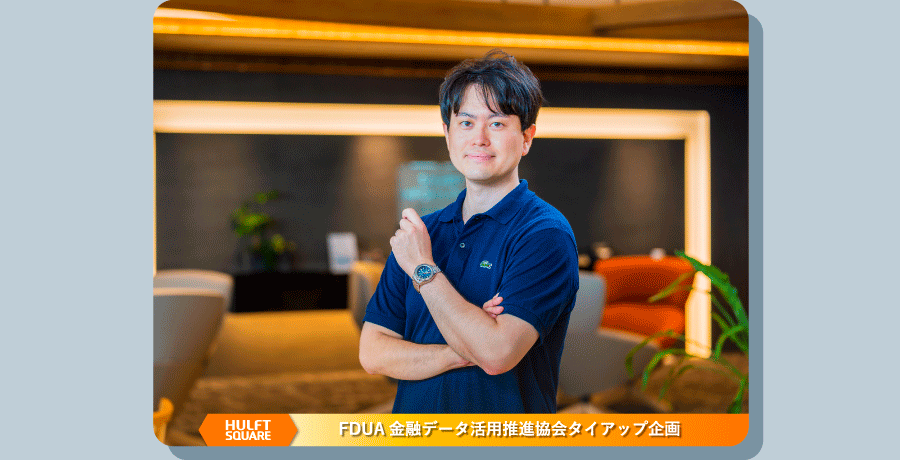
▼ Profile of Kaoru Kawamoto
Kaoru Kawamoto achieved numerous business reforms as director of the Business Analysis Center, a specialized analytical team at Osaka Gas, and is currently a professor at the Faculty of Data Science at Shiga University, where he trains the next generation of researchers. His significant achievements have attracted significant social attention, earning him the "Data Science of the Year" award from Nikkei Information Strategy in 2013 and the "Outstanding Craftsman (Contemporary Master Craftsman)" award from the Ministry of Health, Labor and Welfare in 2021.
*Titles and affiliations are those at the time of interview.
How did this leading expert in data science come to be? How does he analyze the current state of data utilization in Japanese companies and what are his predictions for the future? We spoke to Mr. Kawamoto about it.
"Responsibility and manners regarding numbers" drilled into me while studying in the US
Many people are interested in how the person Kaoru Kawamoto, a leading expert in data science, came to be. Could you tell us about your childhood and student days, such as what sparked your interest in data and why you decided to major in mathematical engineering?
I don't think it paints a very good picture when I talk about my youth. That's because there's absolutely no inevitability to me that my childhood experiences or the studies I did as a student led me to where I am today. I didn't have a particular interest in data; I chose university and my major for vague reasons, such as thinking that mathematics sounds interesting, and I studied because I had to get the credits to graduate.
The same goes for finding a job. During the bubble economy, students' values were flashy and many people chose companies based on their name and salary. However, I chose Osaka Gas for vague reasons, such as simply wanting to stay in the Kansai region and feeling that the company culture was good during a company visit, and I joined the company without any clear purpose in mind.
At the time, the term "data scientist" didn't even exist, and the only professional occupations using data were actuaries at insurance companies, so it was hard to imagine using one's expertise in a job.
This was a completely different situation from today, when the professional occupation of data scientist is attracting attention.
Yes. I'm glad I studied mathematical engineering because that's how I ended up where I am today, but it's not like my life up until I graduated from university led me to where I am today. As I'll explain later, after graduating, I was just an ordinary person, tossed about by fate, doing my best to live my life in my own way, and before I knew it, I was here.
With all due respect, this story makes me feel a strong sense of affinity and gives me courage, as it makes me realize that things aren't much different from when I was a child or a student, and that if I try hard, I could become like Professor Kawamoto.
I'm glad to hear you say that. Anyway, that's how I ended up joining Osaka Gas and being assigned to the department developing residential gas air conditioners. At the time, the gas company's greatest wish was to make gas, which was only sold in large quantities in the winter for heating, available for sale in the summer as well. Gas-based air conditioners had been put to practical use in business and industry, but had not yet been put to practical use for residential use. My first mission was to be the first in the world to make one.
However, up until that point I had only ever worked with computers, and had never even tinkered with machines using tools. But even so, I had to build a prototype and run countless experiments, which was really tough. Everyone around me was from the Department of Mechanical Engineering, so I wanted to prove my worth as someone with some experience in mathematical engineering, so I even created simulation models in my free time during experiments. But in the end, the mathematical models I created were no match for the insight of my seniors who had graduated from the Department of Mechanical Engineering.
It must have been a lot of trial and error...
Then, one day in my third year at the company, my boss told me, "In the Department of Mechanical Engineering, you don't need to use formulas or understand any of the logic behind it; you can get a PhD if you create the first thing that is useful to society." Those words completely changed my perspective. Just because you learn something using data doesn't mean it's meaningless if you can't put it to use; it only has value if it helps society. That was a mindset change in my life.
From then on, I stopped being too concerned with methodology and instead focused solely on whether something would be useful, and although I couldn't beat my seniors, I was able to achieve some results.
However, I was still a bit spoiled at the time. It wasn't until my parents were unfortunate that I suddenly found myself alone and became keenly aware that I had to make a living on my own. If I continued to stay in the world of manufacturing, I couldn't envision a future where I could survive. After all, my only strength was my studies in mathematical engineering, and I finally came to realize, albeit belatedly, that I had no choice but to make a living by utilizing that.
So that was the timing that led you to study abroad in the United States.
Yes. I applied for my company's overseas dispatch program and got the opportunity to study abroad as a researcher at the Lawrence Berkeley National Laboratory, a research institute affiliated with the US Department of Energy, for two years from 1998. That institute is usually a place where Japanese university professors go, and studying abroad was out of the question given my career, so I consider myself very lucky.
At the time, and I still am, I was a bit fearless, or rather, I knew nothing at all, so when I had a strong desire to do something, I wouldn't give up until it became a reality. Regarding my plans to study in the US, I heard that a senior figure from the institute was coming to Japan, so I couldn't wait any longer and contacted him directly, somehow arranging an appointment to meet. However, I had absolutely no experience in data analysis to promote. So, just to show my enthusiasm, I obtained a large number of papers published by the institute, and although I only managed to read a few, I stuffed them all into a paper bag and took them with me. Then, in my poor English, I desperately tried to explain my desire to work there, and miraculously, my enthusiasm was recognized. That was the beginning of the biggest career change of my life.
What kind of work did you do in the US?
The institute's mission is to conduct data analysis to support the formulation of US energy policy. I had no experience in data analysis, so I struggled at first, but I was fortunate to have a good boss who entrusted me with a variety of big tasks. Through these experiences, I was thoroughly trained in the importance of "responsibility and etiquette when it comes to numbers."
For example, one time, a consultant hired by the coal industry published a report titled "Dig More Coal." This was around the time the internet was rapidly becoming widespread. The report's main thrust was that, due to the expected surge in computer demand for electricity, coal-fired power plants would be needed to make up for the power shortage, and that coal should be dug up. Essentially, this was lobbying by the coal industry, but it eventually began to have a major social impact, such as rising stock prices for electric power companies. My boss, upon seeing this, declared, "These numbers are fabricated. If we leave them unchecked, the world will be in trouble." I was tasked with proving the report's figures wrong. I collected and analyzed as much data on computer-related power consumption as possible to estimate the power demand for IT equipment across the United States, and reported to my boss that the figures in the report were indeed false. My boss then thoroughly questioned me, asking, "Can you really take responsibility for the numbers you have produced?" In pursuing the goal of spreading accurate figures throughout society, we must never forget our sense of responsibility for the numbers and the proper manners for communicating them without misunderstanding. These two things that were drilled into me in America have become the core "soul" that guides my work today.
It was through these experiences that Kaoru Kawamoto established herself as a data scientist.
It's true that my experience in the US is where it all began. However, in that sense, my mindset is that of a "data analyst" rather than a "data scientist." Many data scientists put data through some kind of model and produce analytical results. But in my view, that alone isn't acceptable. What meaning does the analytical result have? How is it useful? To what extent can you take responsibility? I believe that it only has value if you clarify this. And I think that this aspect is actually neglected in Japan.
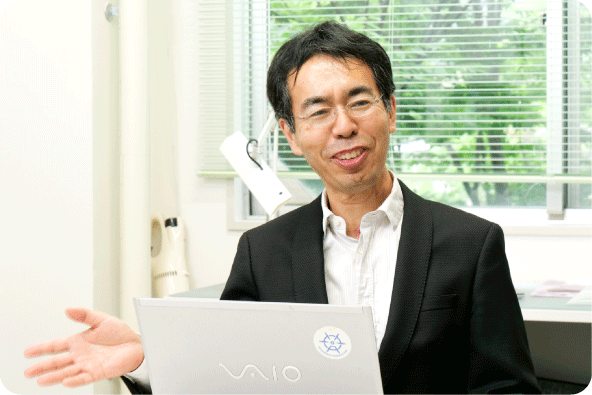
Data science as a means of business transformation is only valuable if it is useful
After returning to Japan, you began to use datain earnest at Osaka Gas. Can you tell us some examples of success?
For example, with the aim of improving the efficiency of "preventive maintenance activities" to repair commercial gas equipment before it breaks down, we developed and implemented a model that analyzes data obtained from remote monitoring of equipment and detects signs of failure. We also used data to optimize the allocation of emergency vehicles in Osaka Gas's vast gas supply area, determining how to efficiently and quickly dispatch vehicles to the scene in response to reports of gas leaks. Also, although I can't go into details, I believe data analysis has contributed to Osaka Gas's investment decisions and risk management in LNG trading.
Osaka Gas's success story in utilizing data has attracted a lot of attention not only within the industry but also in society. However, I think this also means that many companies are unable to achieve results despite making large investments in data utilization. What do you think is the difference between companies that can achieve results and those that cannot?
There are two main factors. The first is the difference in how companies work. Data analysis is not a method for directly solving business issues, but rather a means of solving problems by improving work methods. Therefore, it is only once work methods have been formalized that improvements through data analysis become apparent. The reason data analysis cannot be used to achieve results is because work methods are highly personalized, in other words, they are tacit knowledge that relies on intuition and experience, and I believe this is the reality for many Japanese companies.
Another factor that distinguishes companies that can do this from those that can't is the awareness of the top management. Here, I'm not talking about the management team, but the awareness of the president. I believe that data utilization will become more widespread in Japanese companies in the future. However, this is only at the level of business improvement. If data utilization were to lead to a fundamental reform of business processes or a transformation of business models, it would mean rejecting the way things have been done up until now, so it is inevitable that it will be met with resistance within the company and will not progress very quickly. If a company is on the verge of bankruptcy and is forced to change, they will do it, but that will be too late. They must look ahead and change their business even if it means rejecting the way things have been done up until now.
In Japanese companies, only the president can make that decision. In the council system of Japanese companies, where decisions are made based on the overall mood, it is difficult to make decisions that look ahead to future issues that have not yet become apparent. I believe that only the president, who can overcome the mood, can do that. That is why the awareness of the top is extremely important.
How do you think business people should understand data utilization?
There are two points to this as well. First, it's important to be aware that it's not experts who utilize data, but people who are directly involved in the business on the ground. This should be something that business people should be doing, but because they lack the knowledge and skills, they end up relying on data scientists. Unless you are aware that business people are the ones who should be the main players, data utilization will never be linked to business.
Another important thing is to have a sense of crisis: unless data utilization reaches the level of business "reform," rather than just "improvement," you won't be able to win the competition. For example, I often hear stories of companies that were actively adopting AI and other technologies up until five years ago, but have since scaled back their AI efforts because the number of AI projects that were cost-effective has decreased. In fact, from a cost-effectiveness perspective, this is only natural. This is because, within the framework of work up until now, they have simply exhausted all the ideas that could be used to improve things through data utilization, and are left with nothing to do. As I mentioned earlier, unless you change the very way you work, which has been cultivated through intuition and experience, in other words, unless you utilize data at the level of business reform, you will not be able to become truly strong as a company.
Based on what we have discussed so far, Professor Kawamoto, what is your policy for guiding students at Shiga University?
We are educating our students with the hope that they will become business managers, not data science experts. After all, it is business managers, not data scientists, who can bring about major change in society and companies. We believe that change can only be achieved when people with a background in data science are in management positions.
Data science is all the rage these days, but I believe there's something more important than tools and experts. The true essence of data science is that it increases the potential for operational reform and business model change by building data science skills. Since everything depends on the decision-making ability of top management, when thinking about a company as an entity, developing managers with that kind of awareness and ability is far more important than developing data scientists. To put it bluntly, there's no need for a company to develop its own data scientists. After all, if you have the money, you can hire as many excellent data scientists as you want.
With that in mind, if you were to choose one thing that you value as a data scientist, what would it be?
As I've said so far, there are three stages in my life. First, there was the "spoiled" period, growing up in an overprotective household. Next came the "independent" period, when I had to survive on my own. And, and I'm sorry to say this myself, but after that came the period of "a sense of mission." I don't know why this is, and I don't think I'm conscious of it at all, but when I listen to the stories of people around me, it seems that I do have a "sense of mission" inside me. However, now that you mention it, I do have a very strong sense of having to be useful to the company and contribute to society, and I definitely feel that this is the foundation of who I am.
Data scientists are prone to moral hazard if they approach the job with the desire to prove their worth through good analysis. That's why I think it's important to have the desire to somehow contribute to society and the company. In that sense, to me, data science is simply a means to help others. By chance, I was given the weapon of data science, and I believe it is my mission to make a contribution that is commensurate with that power.
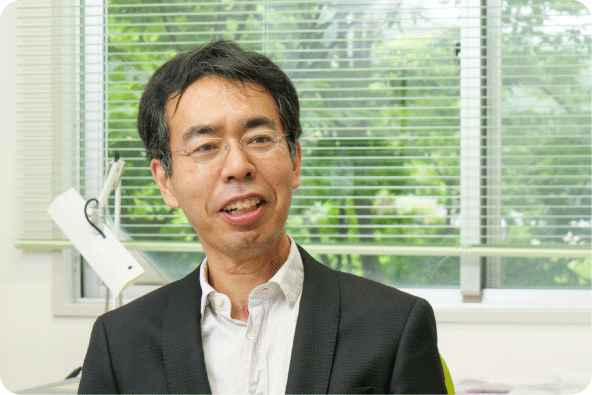
Kaoru Kawamoto's latest book
"Data-driven thinking that utilizes data analysis and AI in practice"
Now on sale and a big hit!
Related Content
-
Survival Strategy in an AI-driven Society: How will humans live in an artificial super-intelligence society?
-
Applicable AI that can quantitatively judge and evaluate core credit operations of banks - Tips for developing credit screening AI -
-
Grasp insights that cannot be grasped through numbers from text and qualitative information! ~ Characteristics of text classification AI ~