
The pitfall of "data integration in SAP S/4HANA migration projects

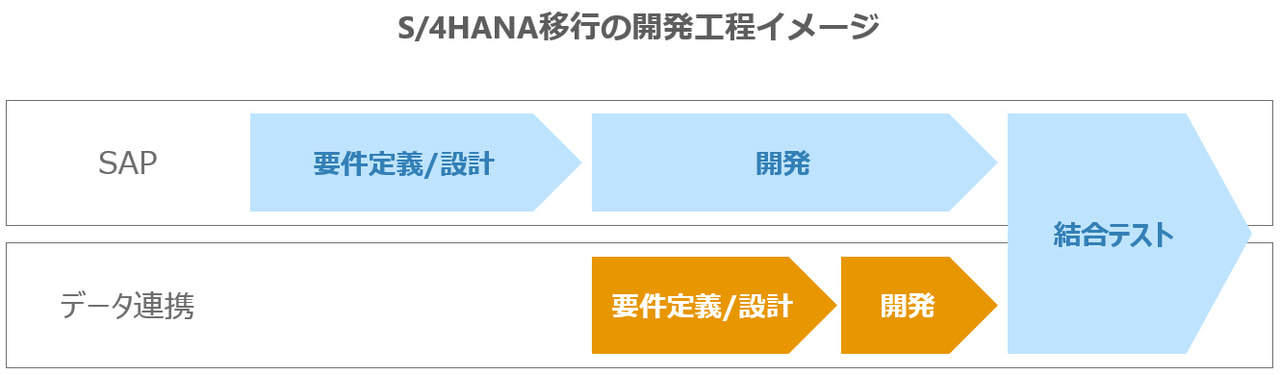
Support for SAP ERP has been announced to end in 2027. Many user companies are considering migrating to SAP S/4HANA (hereafter referred to as S/4HANA), which is recommended by SAP. Migration projects are led by engineers with extensive SAP knowledge, and proceed through a process that includes requirements definition and design, development, and finally integration testing. data integration development typically proceeds in parallel with this process. However, problems with this "connection" (data integration) often lead to significant delays and cost overruns in migration projects, resulting in serious consequences.
Two hurdles that make S/4HANA migration difficult
When migrating a large-scale mission-critical system, core system like SAP, there are several hurdles (difficulties) that must be considered, as follows:
1. data integration with other systems
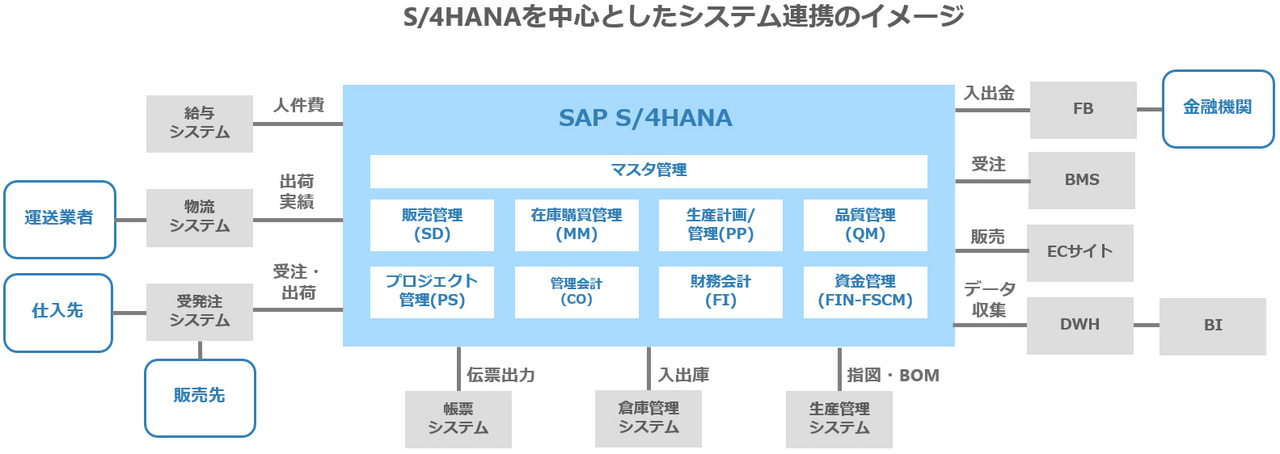
SAP is mission-critical system, core system comprised of core business modules such as sales management, inventory management, quality control, and financial accounting, and so it typically data integration with a variety of peripheral systems and services, including systems for order placement, logistics, and payroll, e-commerce sites, and data warehouses for BI. Therefore, migrating to S/4HANA inevitably requires rebuilding the "connections" (data integration) with these peripheral systems and services. Not only does it require large amounts of data, but the methods and formats for integration vary depending on the target, such as databases, files, and cloud services. Furthermore, flexible response to frequent business process revisions is also required during the migration process.
Part 2: Master migration, integration and code conversion
Migrating data from SAP ERP, integrated master data, and other mission-critical system, core system to S/4HANA is also a challenge. Large-scale projects like mission-critical system, core system migrations typically involve a gradual transition while running the old and new systems in parallel, resulting in the migration and integration of various master data in a variety of situations and scenarios. Leveraging existing master data is essential for efficient initial migration, and smooth integration between the old and new systems is required once parallel operation begins. However, in many cases, the source and destination master data systems differ, necessitating code conversion. While the conversion itself is not complicated, the sheer volume of data necessitates some kind of mechanism, such as the creation of a conversion program.
The reality and challenges of "bridging" in migration projects
In the previous section, we explained the difficulties inherent in mission-critical system, core system when migrating to S/4HANA. However, in an actual migration project, you will be faced with the following harsh realities (further challenges) that add to these problems.
Reason 1: There are no experts in “bridging”
While it is inevitable that SAP engineers will be at the core of S/4HANA migration projects, the reality is that there are no experts with extensive knowledge of "connecting" (data integration), or even if there are, they are very few. There are multiple methods for data integration, such as using the SAP standard function module BAPI (Business Application Programming Interface), accessing data using table queries, or exporting the required data to a file and transferring it, and a certain level of knowledge is required to select the optimal method based on resources. The presence of "connecting" experts with advanced know-how can be said to be a prerequisite for project success.
Reason 2: There are too many connections (resources)
mission-critical system, core system require program development to accommodate a vast and diverse range of connection destinations. For example, using SQL for databases requires extensive programming knowledge, but problems like inability to connect or the inability to create data suitable for connection often arise, leading to project delays and budget overruns. Furthermore, data integration is likely to be affected by upgrades to connected devices or system updates, resulting in ongoing heavy burdens in terms of labor and costs for repairs and maintenance.
Reason 3: The impact on the construction period
In S/4HANA migration projects, the main focus is on SAP development and migration, with "bridging" generally being considered merely ancillary work. Once the requirements definition and design on the SAP side are finalized, consideration of data integration finally begins. However, data integration must be achieved and integration testing conducted within the SAP development period, and if the requirements definition/design on the SAP side is delayed, the project is forced to compete even more quickly. Due to cost constraints, it is not possible to hire a large number of "bridging" experts, and the reality is that in many cases, projects are plagued by the double whammy of a lack of personnel and a short-term strategy.
Reason 4: There are no experts to deal with specification changes
While you might think that once the specifications are finalized in the requirements definition, development on the SAP side will proceed smoothly, it's entirely possible that specifications will change midway through development. If it's more desirable in terms of business operations, there's no choice but to go ahead with it, even if it does have some impact on project progress. The problem is that this will also result in changes to data integration. If this happens when data integration development has reached a plateau, data integration team may already be downsized, making it difficult to respond quickly and potentially taking time to arrange for engineers.
When we look at the issues in this way, we realize that the "connector" (data integration), which is often considered a secondary role, holds the key to the success of the migration project. By reducing the time and cost required for data integration, we can invest that time in realizing the business operations that should be carried out.
Problem solving using data integration tool (EAI)
From here, I would like to introduce the benefits of data integration tool as a solution that overcomes various challenges and enables smooth and efficient data integration.
Many data integration tool are GUI-based and low-code, allowing you to easily integrate data integration without advanced programming skills by simply selecting from a variety of pre-built data integration methods. This allows the SAP team to centrally manage the process even without the need for experts from each partner, and it also increases the flexibility of project progress, allowing for changes in specifications. Other benefits of using data integration tool include:
Reason 1: High feasibility and reduction of future burdens
data integration tool equipped with connection functions (engines) to various resources make connection more feasible and reduce risk compared to developing programs from scratch. Upgrades to connected systems are often absorbed by the tool itself, minimizing the need for additional work such as modifying the integration.
Reason 2: Shortening project time through efficiency
data integration tool developed specifically for data integration are also effective in shortening project time. They cover all basic functions and can be implemented simply by setting and selecting parameters related to data transfer, avoiding the need for rework due to mistakes that are common in scratch development. Standardization and template creation can further increase efficiency.
3. Eliminating the problems of black boxes and personalization
By utilizing GUI-based data integration tool, many tools also allow you to check change history, so even first-time users can make changes with confidence. Another benefit is that the GUI visualizes the data, deepening understanding of each data integration and preventing dependency on one person.
We highly recommend introducing data integration tool to avoid the pitfalls of "data integration in S/4HANA migration projects. We also regularly hold demonstration seminars on integration with SAP using DataSpider, which has been ranked No. 1 in customer satisfaction for seven consecutive years in the field of data integration tool (EAI), so please consider attending.