

"SAISON Technology Days 2026" was held again this year!
This report covers the events of the first day of "SAISON Technology Days 2026," which was held over three days in October 2026.
This year's theme is "The separation of AI and business operations is over, and business acceleration is beginning."
"SAISON Technology Days" is an annual business event hosted by Saison Technology for companies promoting AI/data utilization and modernization. In 2026, it was held over three days starting October 21st. This article will introduce the content of the first day, which was held offline.
This year's event was themed "The separation between AI and business operations is over, and business acceleration is beginning," and focused on how to successfully utilize AI, which is currently attracting a lot of attention.
The venue
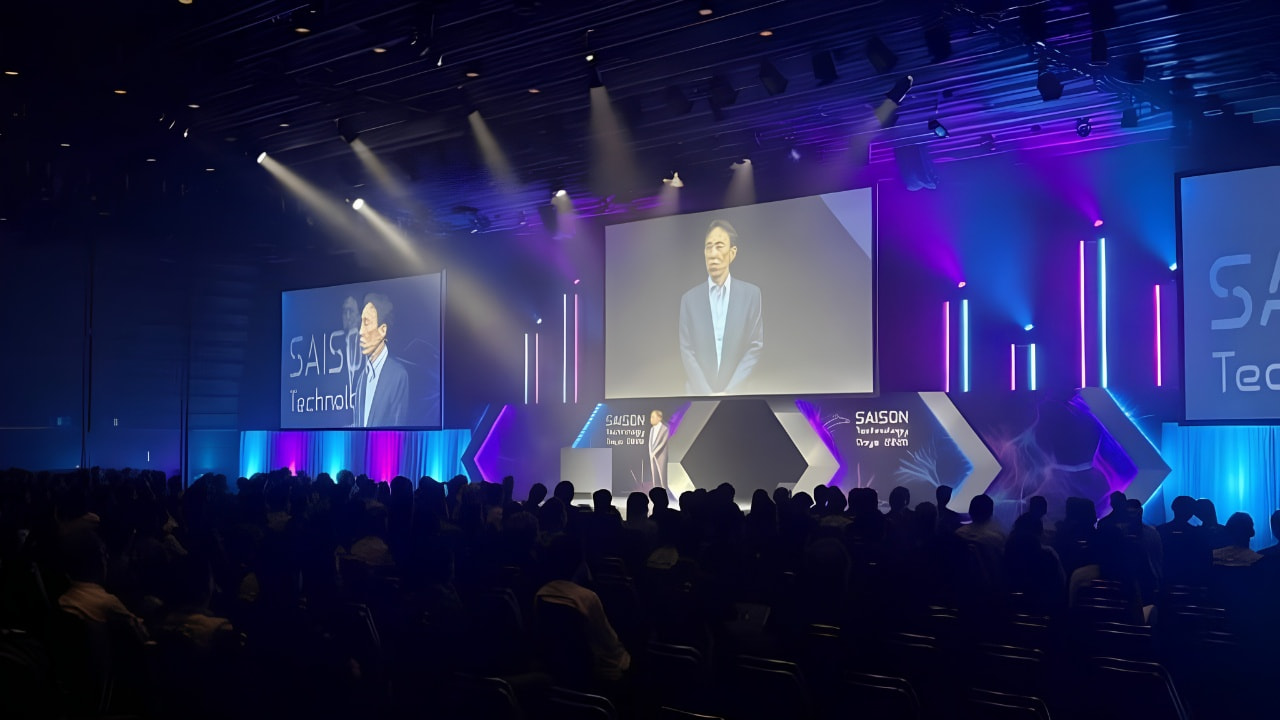
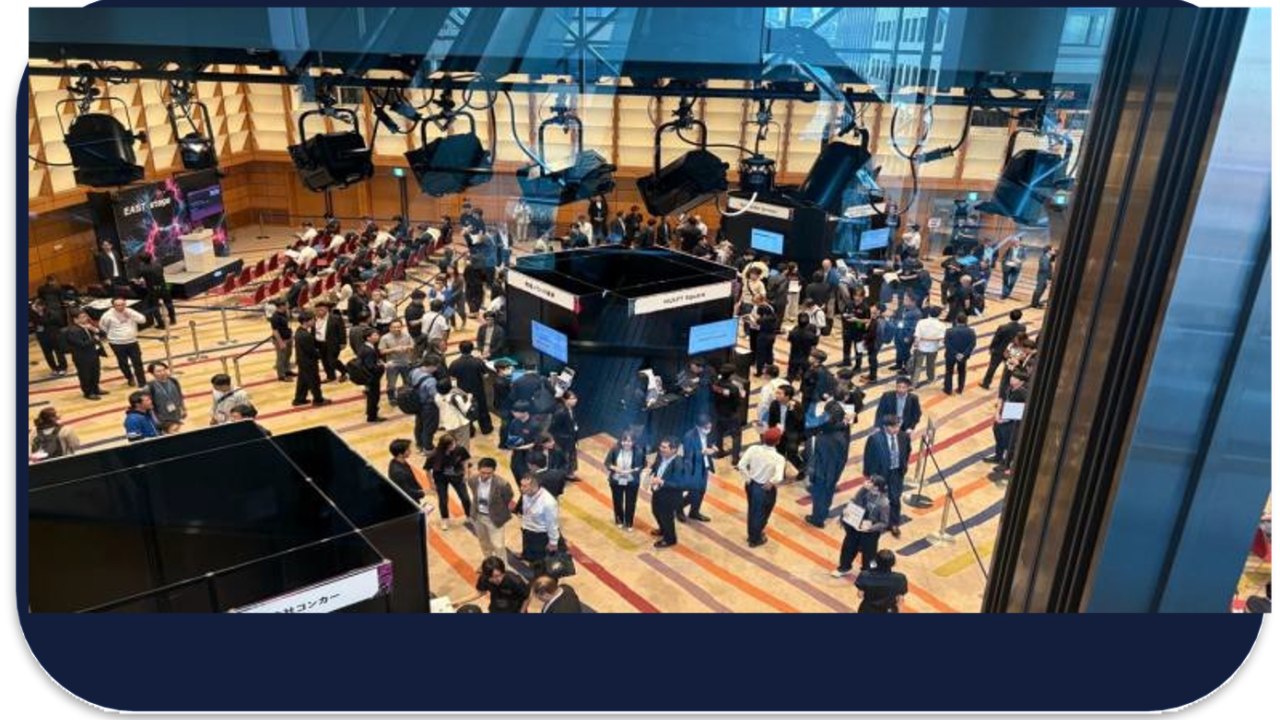
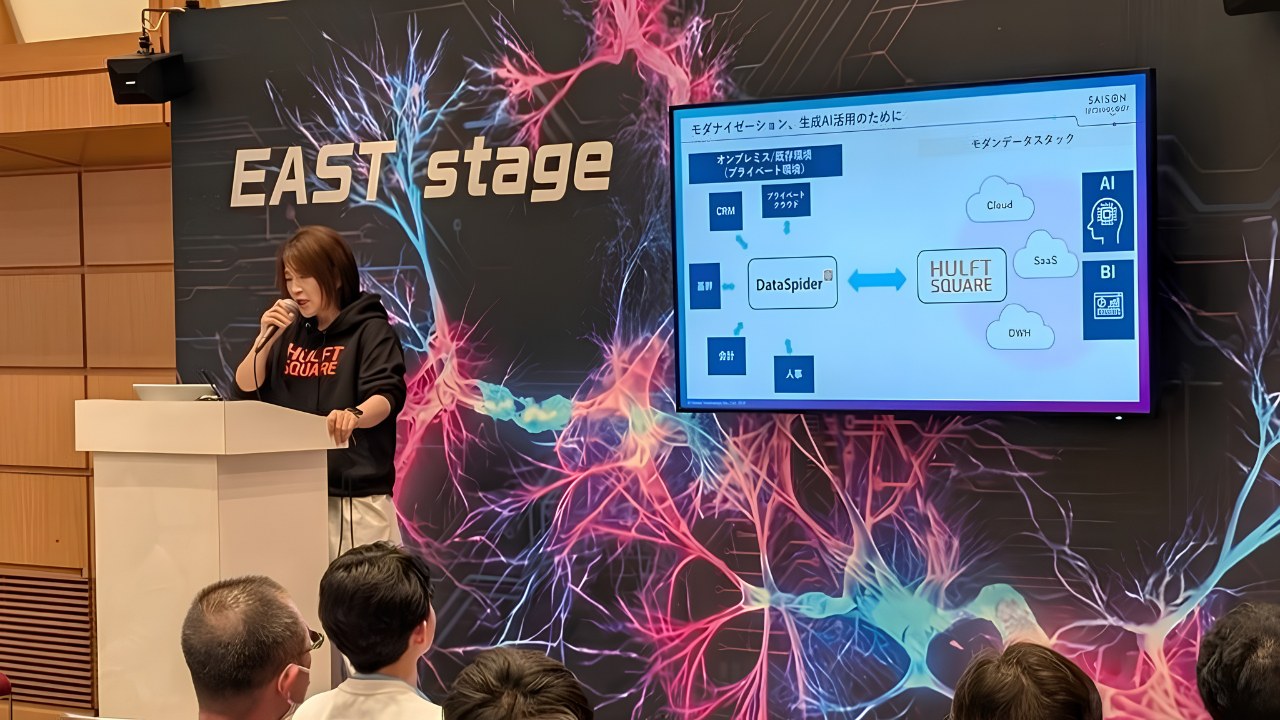
Following last year's event, it was held again at the Tokyo International Forum, located right next to Yurakucho Station in Tokyo. This time, the event was held on two floors simultaneously: the 7th floor featured presentation sessions and exhibition booths, while the 5th floor housed exhibition booths and short sessions. This article will mainly introduce the content of the presentation sessions held on the 7th floor.
Session venue and exhibition booths on the 7th floor
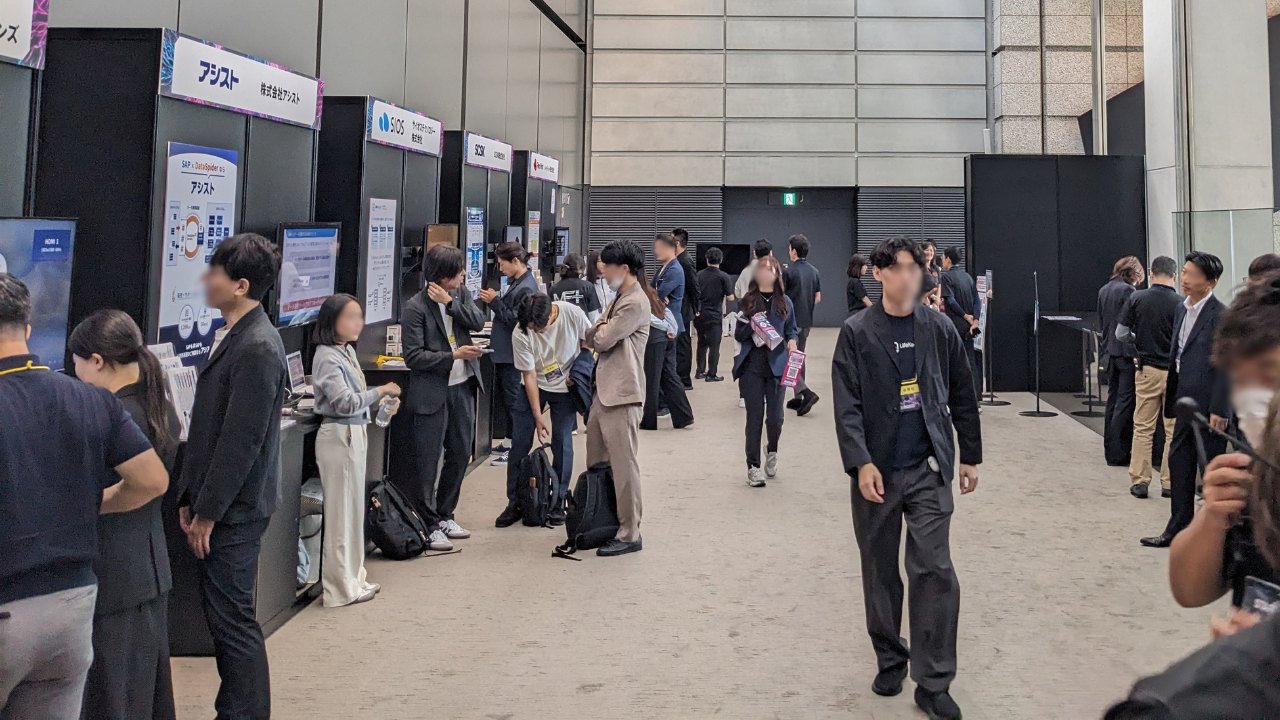
Exhibition booths and short session venue on the 5th floor
[Opening Special Session] We have the data. How do people act? -- Homare Sawa and Aya Samejima discuss the decisions and communication of a world-class team.
Homare Sawa
Former Japan women's national football team player
Aya Samejima
Former Japan women's national football team player
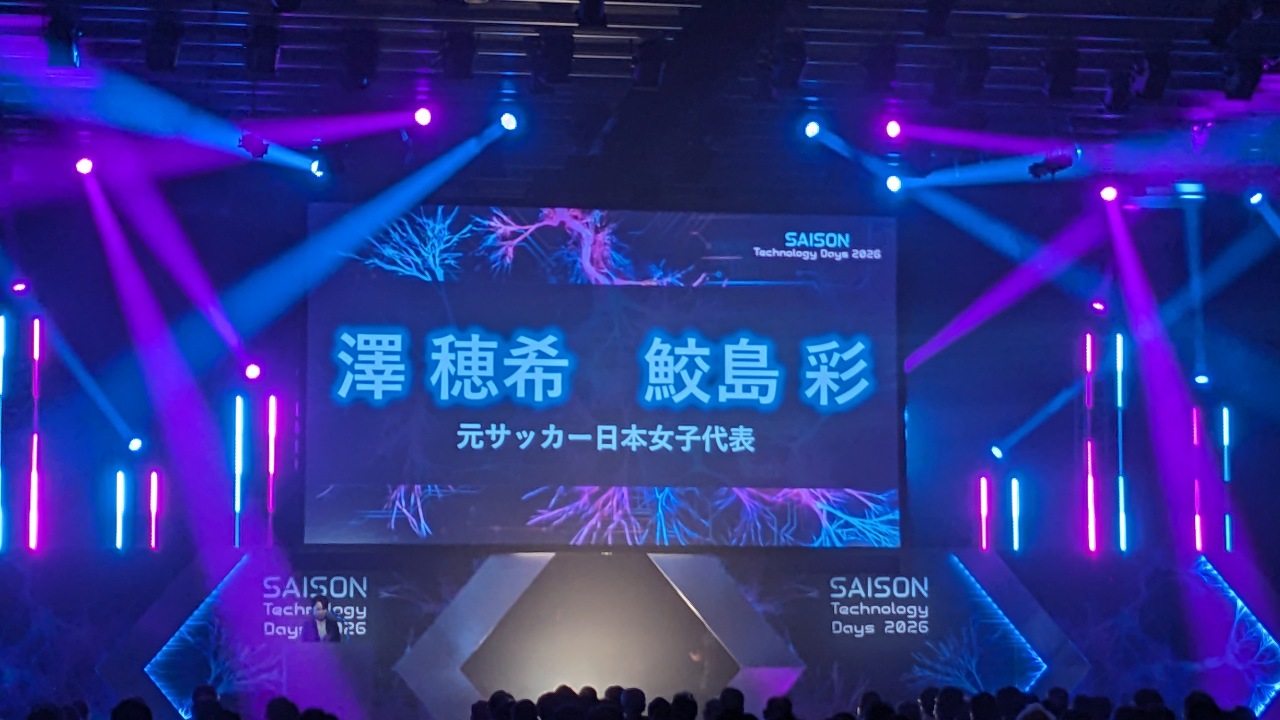
We were honored to have Homare Sawa and Aya Samejima, both famous members of the "Nadeshiko Japan" women's soccer team, take the stage. Both were key members of the Nadeshiko Japan team that achieved Japan's first-ever "World Cup victory" in women's soccer history at the Women's World Cup held in Germany in July 2011.
Things that we respect about each other
In 2011, Sawa played as a defensive midfielder and Samejima as a left back for the Nadeshiko Japan team, both excelling in both offense and defense. The first topic of the session was "Please tell us what you respect about each other," and their answers reflected the relationship between their positions.
A defensive midfielder (Defensive midfielder) not only handles defense but can also act as the team's playmaker. A full-back (Side-back) not only takes on defensive responsibilities but also plays a crucial role in attacking by pushing deep into the opponent's territory. Both players need stamina because they must run towards the opponent's half when attacking and return to their own half when defending.
When Samejima praised Sawa, saying, "If I thought a pass would get through and it would be dangerous, she would cover it and prevent it from happening," and "Because Sawa was there, the danger was prevented beforehand and nothing happened," it seemed like he was praising Sawa's reliability as a defensive midfielder from a defender's perspective. And when Sawa praised Samejima, saying, "He's fast," and "He delivers good crosses," it seemed like he was praising his attacking ability as a full-back.
In the latter half of the session, teamwork will be discussed, and in soccer, players change their roles depending on the situation of the game and work together to fight. The concept of "orchestration," which will be covered in the keynote later, is also an idea of effectively utilizing AI agents with different roles working together.
Regarding data utilization
Modern football utilizes vast amounts of data, and now sensors are attached to players and even the ball. This allows for real-time, high-precision tracking of player location and movement patterns, leading to a surge in data utilization and analysis-based team management.
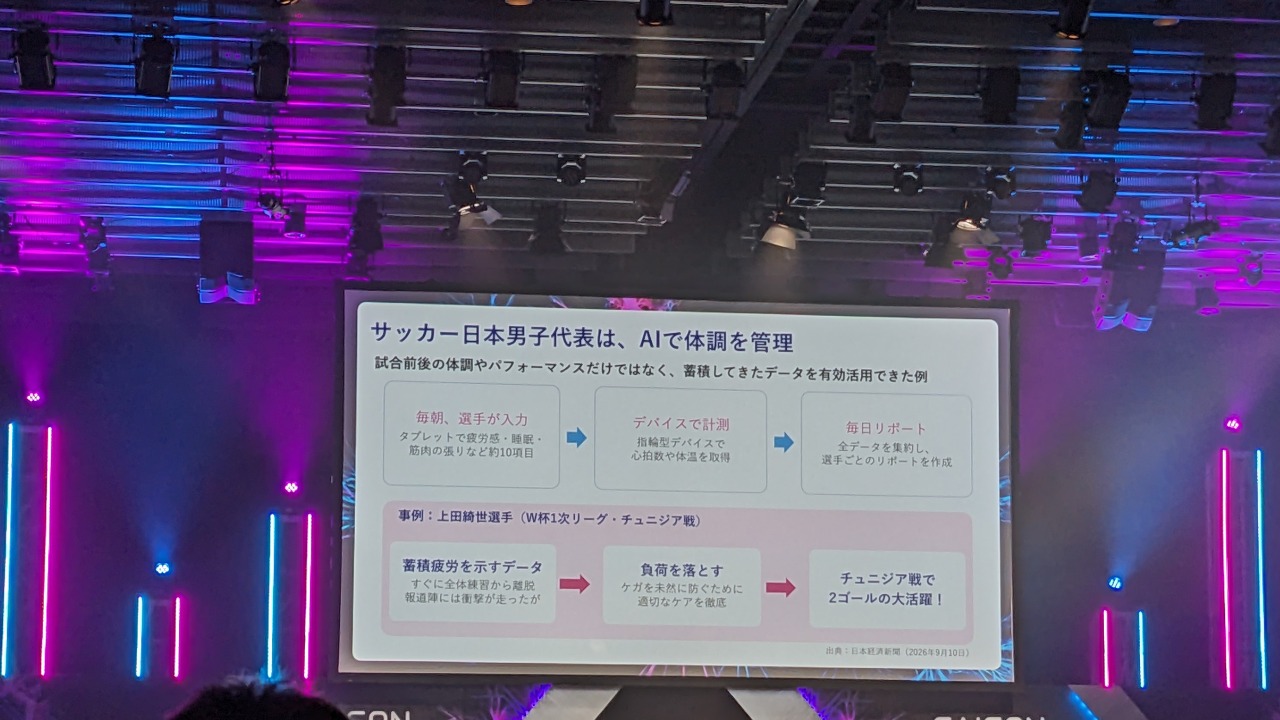
In the session, an example of data utilization was presented in which the Japanese men's national soccer team for the 2026 World Cup used AI to determine the fatigue levels of the players based on information collected from sensors. The AI determined that Takumi Minamino was fatigued, so he was given a rest from team practice and immediately received appropriate care, which allowed him to have a great performance in the match against Tunisia, scoring two goals.
Nadeshiko Japan won the world championship in 2011. At that time, sensors like those we have today didn't exist, and unfortunately, advanced data utilization wasn't possible. Nevertheless, Sawa reportedly took care to monitor her body temperature, weight, and body fat every day, and adjusted her diet to manage her condition.
In fact, recently, Ms. Samejima's body fat was too low, so she used data to change her diet and gained a few kilograms, which eliminated her leg cramps. Ms. Samejima believes that there is no better conditioning than diet and sleep, so she gets eight hours of sleep every day and consults with a nutritionist about what to eat.
Ms. Samejima is known for having completed graduate school at the University of Tsukuba, and she says that the reason she decided to go to graduate school was because of the circumstances described above (and also because she was influenced by Ms. Sawa, who made her want to do things thoroughly if she was going to do them), and she wanted to properly learn about nutrition.
Another topic of discussion was the disconnect between "those who analyze data" and "those who use the data in practice," a common problem with data utilization. It was suggested that simply imposing data as a conclusion is not always effective, as data can be influenced by the individual's or opponent's condition, and data might not register a sprint if a player is actually sprinting but is slow. Therefore, mutual trust is considered crucial in situations where data cannot be accepted without interpretation.
As an example of a data analysis failure, Mr. Samejima shared a story about how, while working on graduate school research using actual WE League game data, he included his own retirement game in the analysis, resulting in a mix of games that were different from regular games.
Furthermore, regarding the example of Takumi Minamino taking a break from practice based on AI's judgment, there was a discussion about how AI might be suitable for younger players. The reasoning was that younger players may find it difficult to ask for rest themselves, so if AI could tell them "you are accumulating fatigue," they might be more inclined to take time off. We thought this was an idea that could serve as a useful reference for us as well, as an unexpectedly good example of how AI can be used.
Nadeshiko Japan valued communication.
We were told that the Nadeshiko Japan team placed great importance on communication among the players.
In soccer, players change their roles depending on the game situation and work together as a team. Therefore, the ability to coordinate with other players and make appropriate decisions about switching plays depending on the situation is crucial. For example, if a team concedes a goal and wants to understand why, it's necessary to reflect on how each player involved assessed the situation and what their own role was.
Therefore, they started discussing any issues or problems that arose during practice on the spot. This included discussions among players in the same position (e.g., defensive midfielders, defenders), as well as discussions between players in related positions. In fact, it seems that the Nadeshiko Japan team used all their free time at the hotel for meetings.
Before the fateful penalty shootout in the 2011 final...
Nadeshiko Japan became world champions in 2011, winning a fierce battle against the USA in the final. The match was tied after 90 minutes, and even after extra time, the winner was decided by a penalty shootout. It became a topic of conversation at the time that the Nadeshiko Japan players and coach were all smiling as they huddled together before the penalty shootout. This was also a topic of discussion during the session.
The American team was so strong, yet the Japanese team was able to win because of a lot of support. They also mentioned that they were actually enjoying the pressure of the situation, which was so incredible that American shots kept hitting the crossbar and posts, narrowly avoiding conceding goals. They saw it as an amazing, once-in-a-lifetime opportunity.
[Keynote] HULFT 's New Strategy for the AI and Security Era
Makoto Hayama
Saison Technology Co., Ltd. Representative Director, President and CEO
Ryota Kosaka
Deputy General Manager, Development Division Saison Technology Co., Ltd., CTO
Akira Fukutomi
Product Management Manager, Development Division, Saison Technology Co., Ltd.
Next, Saison Technology gave sessions on the themes of "Dispelling misconceptions about HULFT," "Our future product initiatives," and "Orchestration for achieving results with AI agents."
Now, in this age of AI, you should use HULFT (Dispelling misconceptions about HULFT)
HULFT file transfer middleware, was introduced in 1993, making it 33 years old this year. Because of its long history, it's sometimes mistakenly considered an outdated, legacy product. However, HULFT is a "current product," and in fact, we want people to use it now, in this AI era. I wanted to start by explaining why this misunderstanding exists.
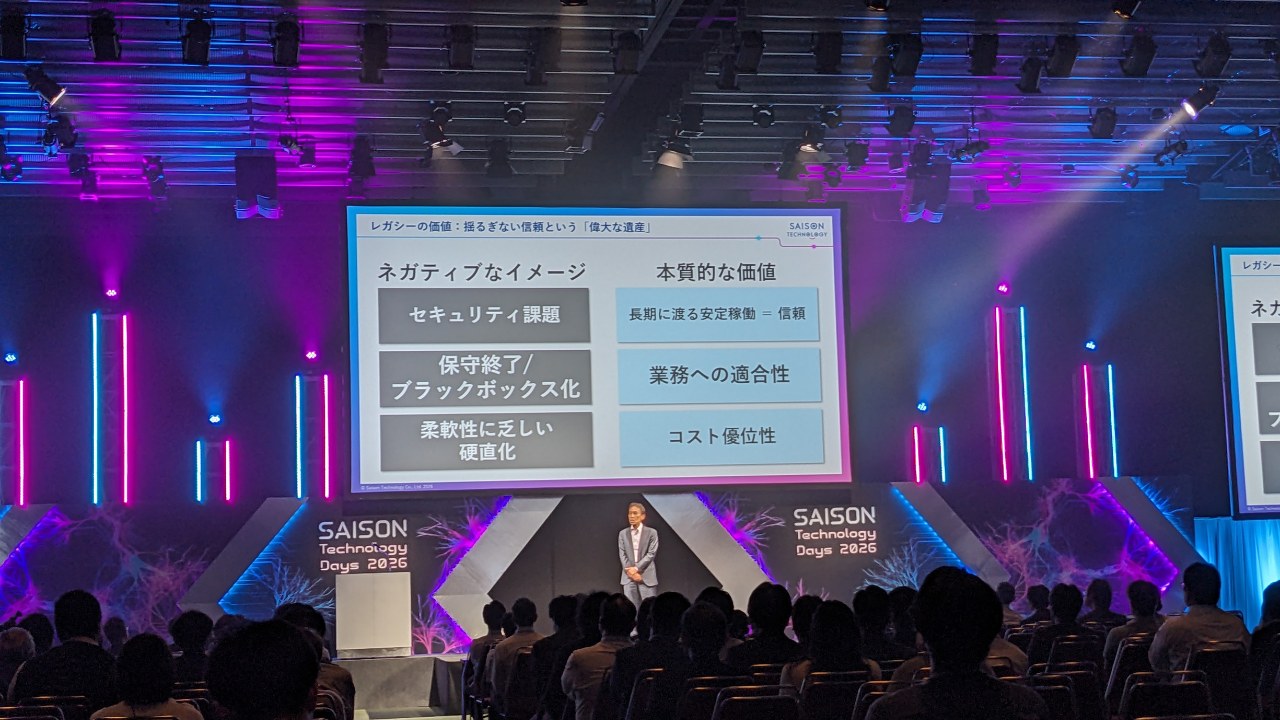
HULFT continues to receive regular updates and releases, and the product is certainly not outdated. For example, it continues to support new IT environments such as AWS. In fact, I believe that its unwavering track record of being supported by a strong emphasis on safety and security is even more valuable today, given the heightened security awareness.
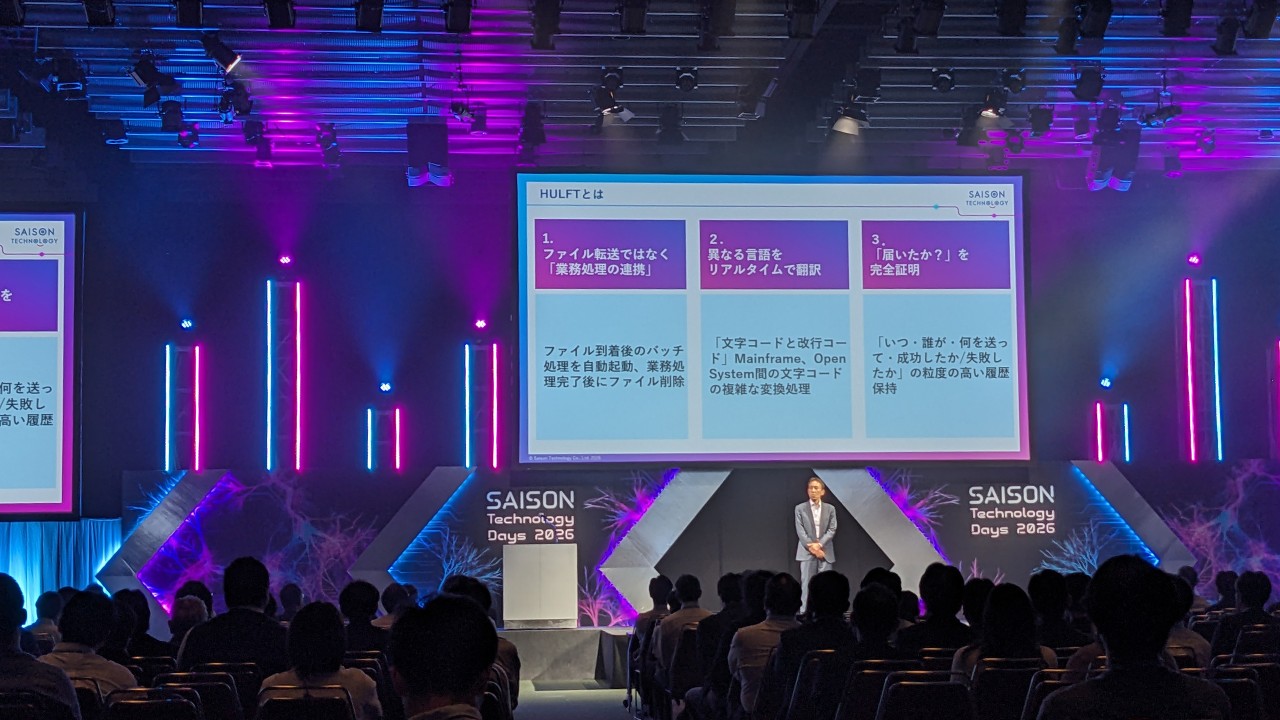
Furthermore, there seems to be a misconception that HULFT is only for file transfer. However, it also provides various functions necessary to realize a robust "data integration platform" capable of handling business operations through file transfer. One of its features is that by implementing it, you can use the entire environment with all these functions fully equipped.
For example, it handles "business process coordination," such as initiating subsequent processes after transfer is complete and deleting files after those processes are finished. It also handles data differences between environments, such as Japanese data on mainframes, which are absorbed by HULFT. A management function is in place that allows you to check "when, who, what was sent, and whether it was successful or unsuccessful," so even in difficult situations, such as when a line failure occurs during file transfer from company A to company B, you can check how far the process has progressed and where it has stopped, and smoothly resume the process.
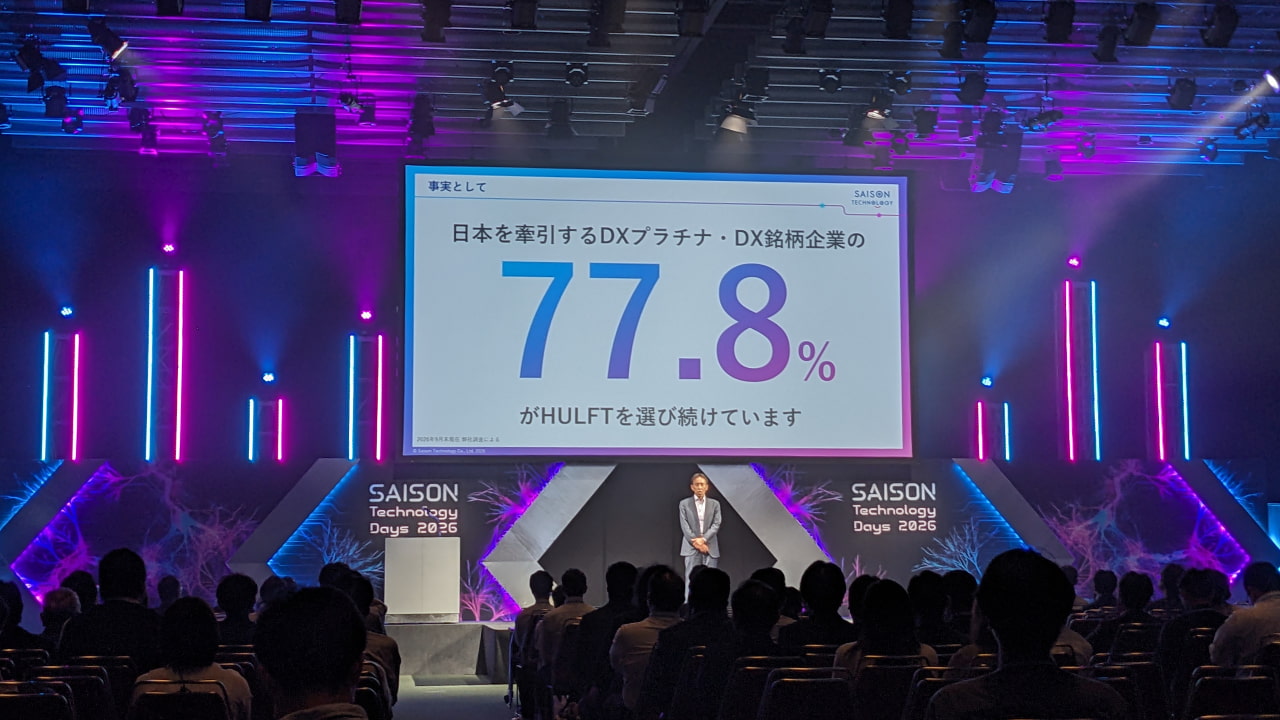
In fact, we have found that 77.8% of the companies designated as "Digital Transformation Stocks (DX Stocks)" by the Ministry of Economy, Trade and Industry, which recognize companies that are making outstanding efforts in promoting digital transformation (DX), are using HULFT.
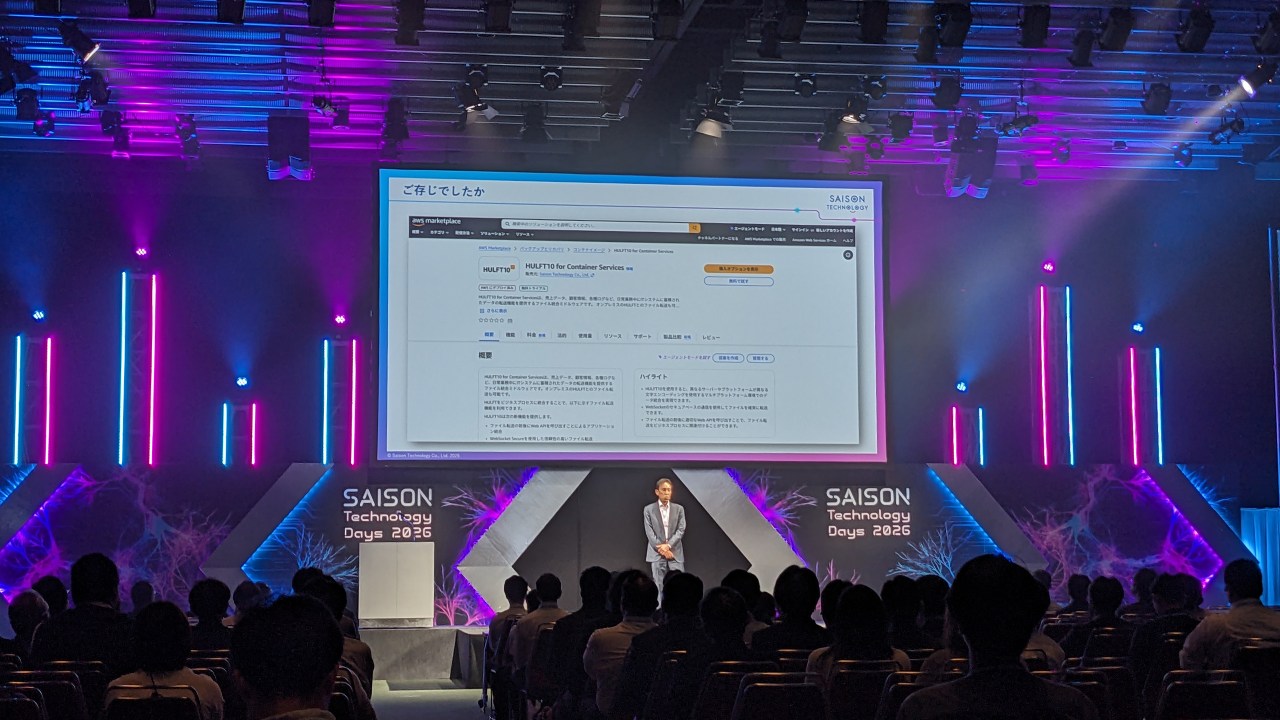
HULFT also offers "HULFT 10 for Container Services," a product designed for use in cloud-native IT systems. This version of HULFT is optimized for use in microservice environments that utilize container virtualization, where the system architecture itself differs significantly from that of traditional IT systems.
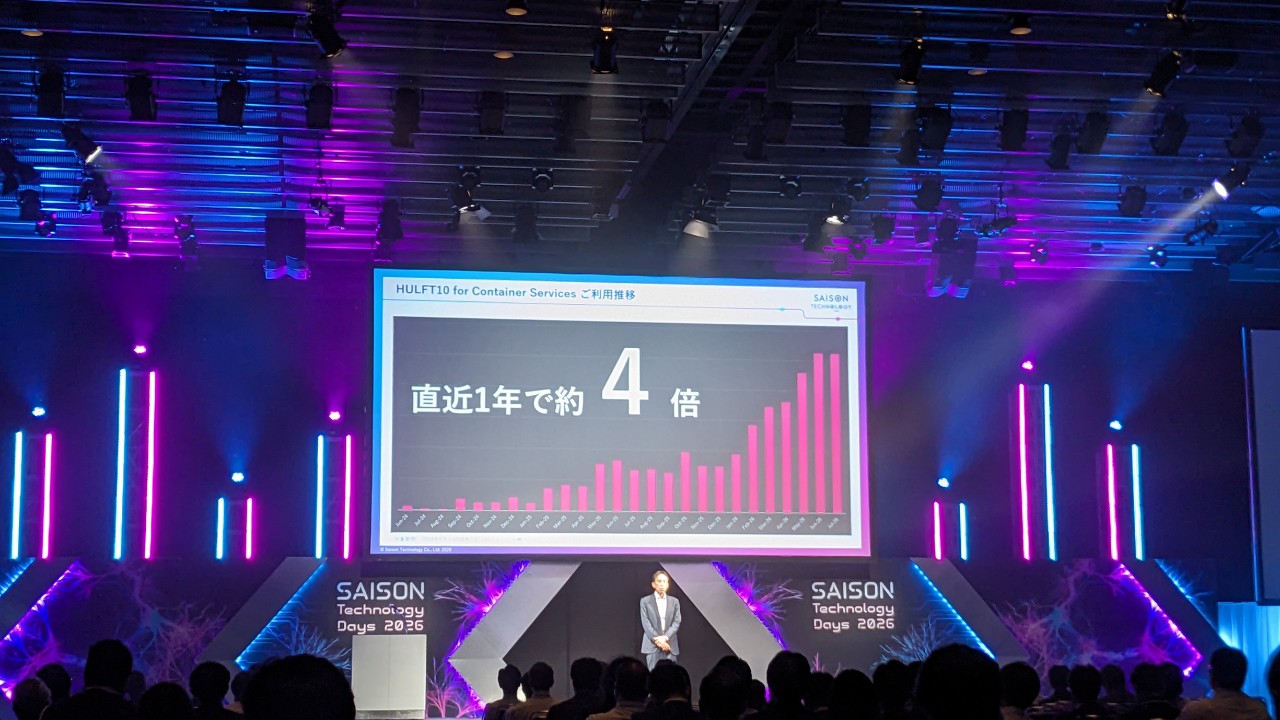
HULFT is constantly evolving to become a key player in today's IT landscape, with features like product availability through the AWS Marketplace and deployment via CloudFormation templates. Sales of HULFT 10 for Container Services on the AWS Marketplace have quadrupled in the past year, demonstrating the growing adoption of HULFT in the cloud-native world. HULFT is no longer limited to legacy environments.
Another point to note regarding HULFT is that, in addition to its outstanding track record of "safe, secure, and reliable file transfer," it is also making progress in security-focused initiatives. Especially in recent times, there are major concerns such as information leaks due to the misuse of AI, but HULFT is also making progress in this area as a foundation for safety and security.
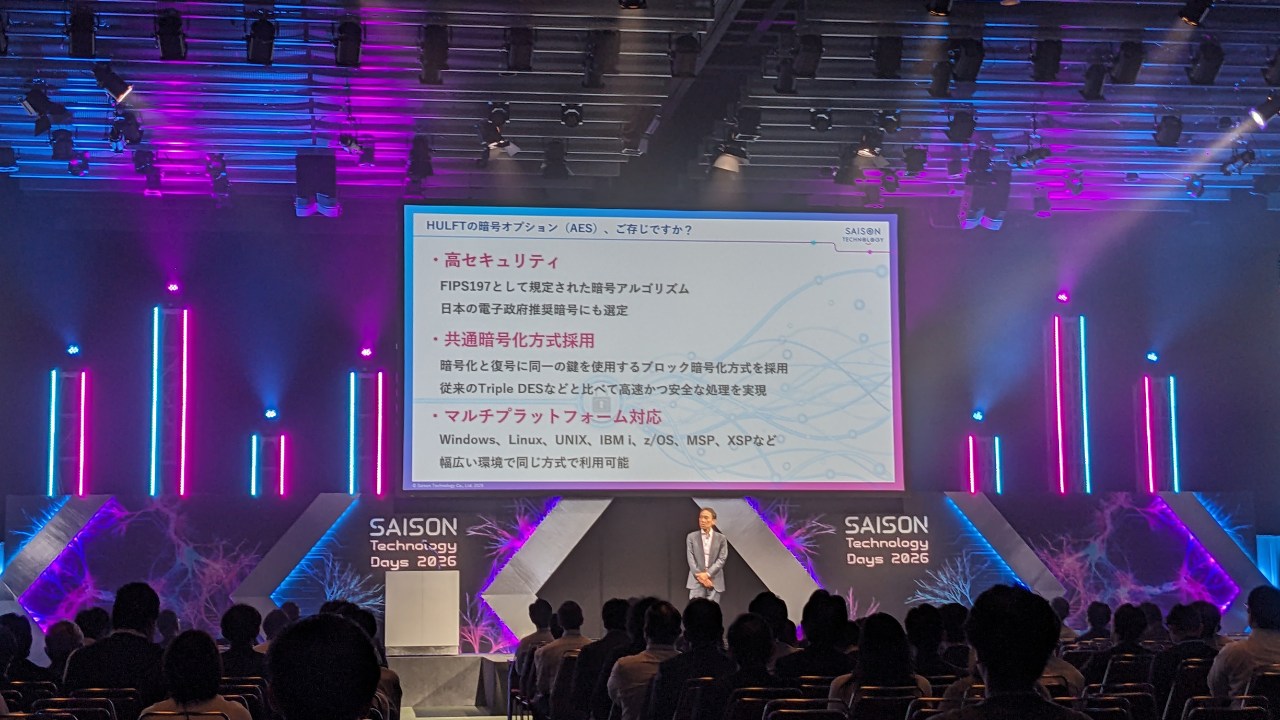
For example, we have already released an optional feature that enables encryption using "AES encryption," which is the de facto global standard for symmetric-key cryptography. This makes the AES encryption option available in a wide range of environments where HULFT can be used. As we will discuss again below, the 256-bit encryption length of AES encryption is thought to be able to withstand attacks by quantum computers, making it a secure and reliable feature that looks ahead to the quantum computing era.
Both "DataSpider" and "HULFT Square" will continue to receive feature enhancements.
Furthermore, it was explained that functional enhancements will continue for both HULFT Square and DataSpider, which are the other core products besides file transfer, focusing on "connecting" features. While it is true that in recent years, due to the service launch period, the focus has been on HULFT Square, there is no truth to the claim that development of DataSpider has stopped. In 2026, version 5 was released in February, 5.0.1 in May, and 5.0.2 in August, and further functional enhancements for DataSpider will be a focus going forward.
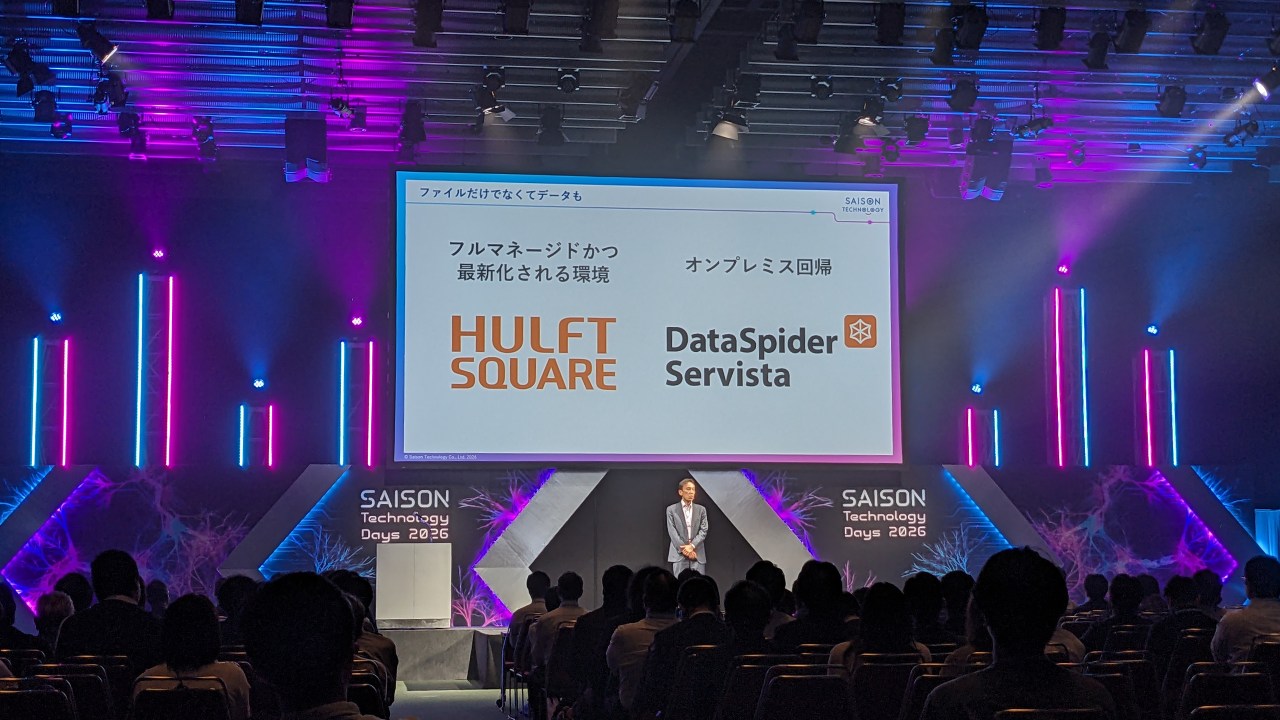
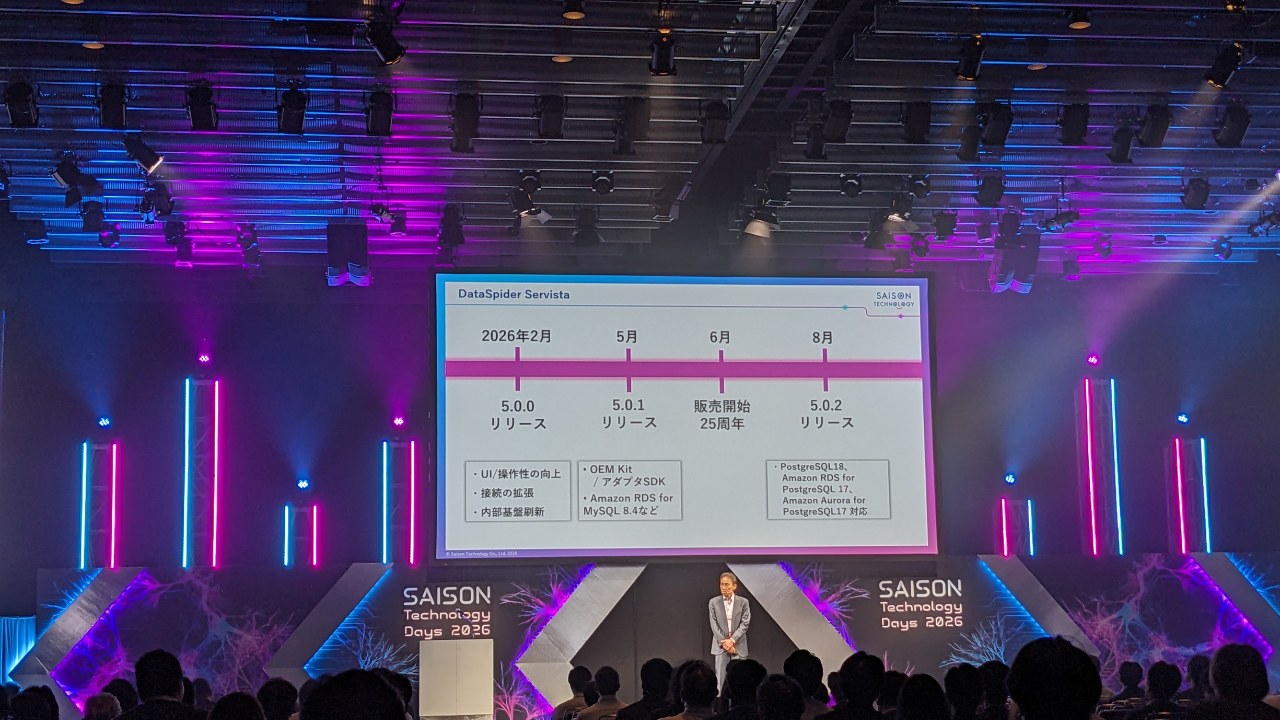
HULFT Square is offered as a fully managed service that eliminates the need for in-house operation, while DataSpider addresses the recent trend of returning to on-premises solutions. By enhancing both products and combining them, we can meet the needs of both parties.
We will advance our response to the threats posed by frontier AI and quantum computers.
Currently, attacks on IT systems that appear to be using AI are causing widespread concern. When considering future IT security and safety, what measures are necessary?
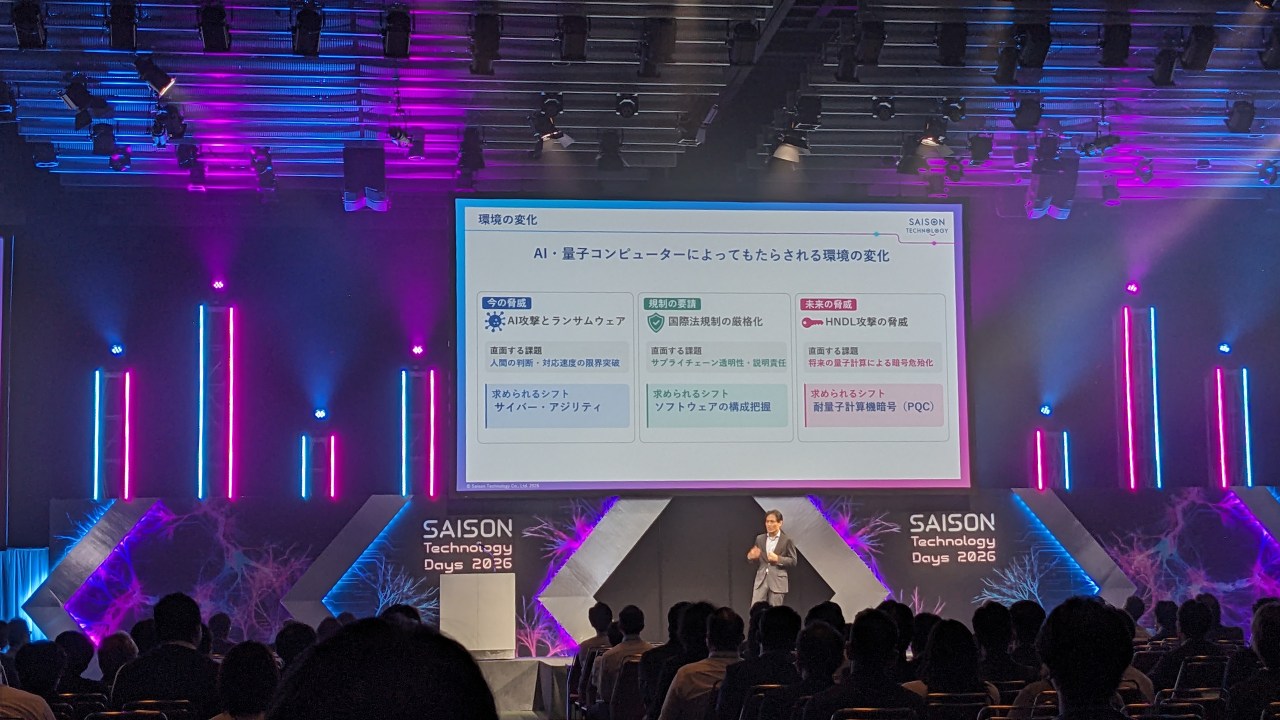
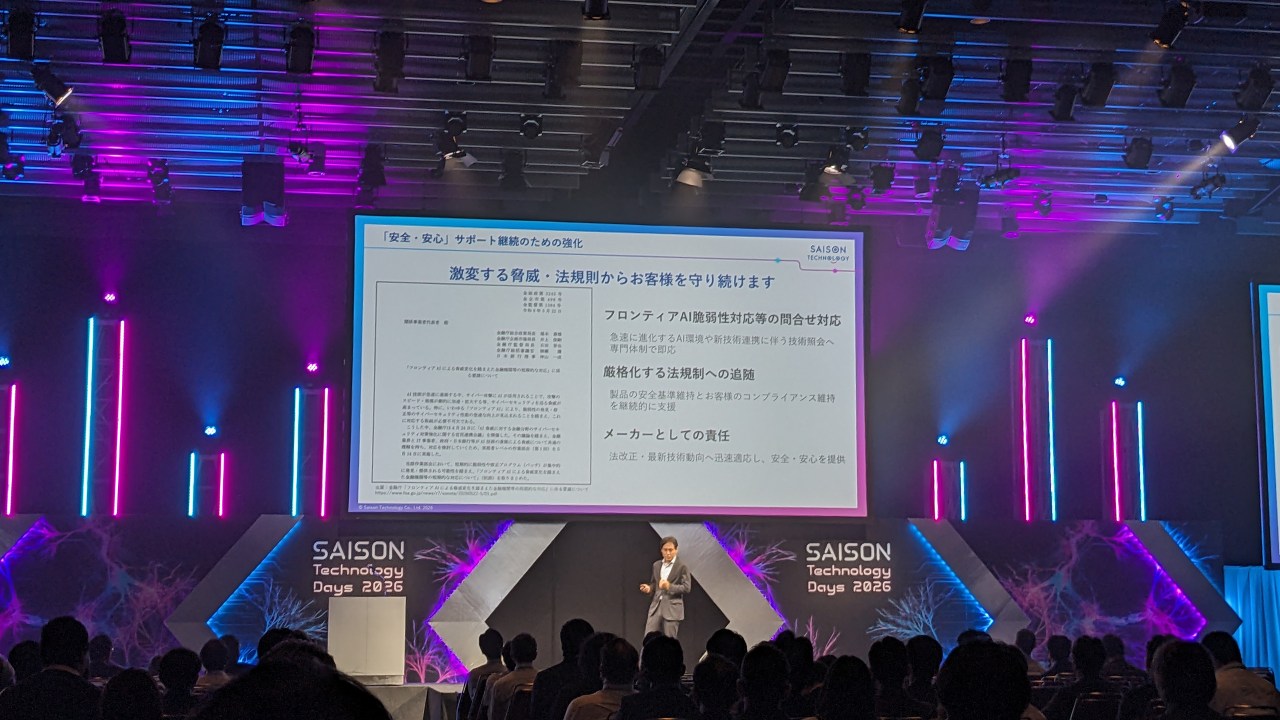
First, as "current threats," we must consider factors such as "frontier AI attacks" like Claude Mythos, which has attracted attention for its advanced cyberattack capabilities, and "ransomware threats." Related to this, we also need to respond to "tightening international legal regulations" on IT systems. And as a future threat that requires immediate countermeasures, we need to prepare for the "harvest attack (HNDL attack: Harvest Now, Decrypt Later)" using quantum computers.
To address the threats posed by cutting-edge AI, we have a specialized team to promptly respond to technical inquiries related to AI environments and new technology collaborations. To comply with increasingly stringent regulations, we are committed to maintaining the safety standards of our products themselves, while also continuously supporting our customers in maintaining compliance.
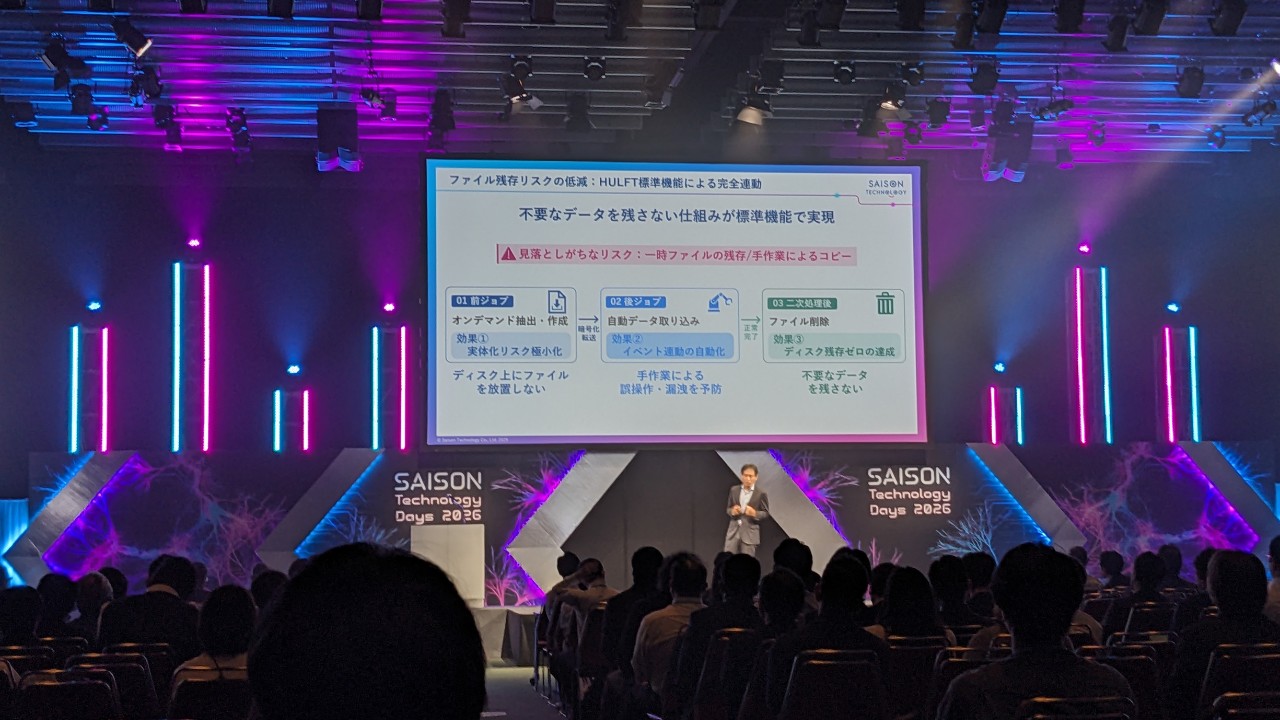
While there are serious concerns about information leaks from IT systems, HULFT has always been designed with consideration for not leaving unnecessary temporary data throughout the entire file transfer path. It has features such as reliably deleting files on disk after use and automating file transfer and subsequent processing to prevent accidents caused by manual errors or forgotten steps.
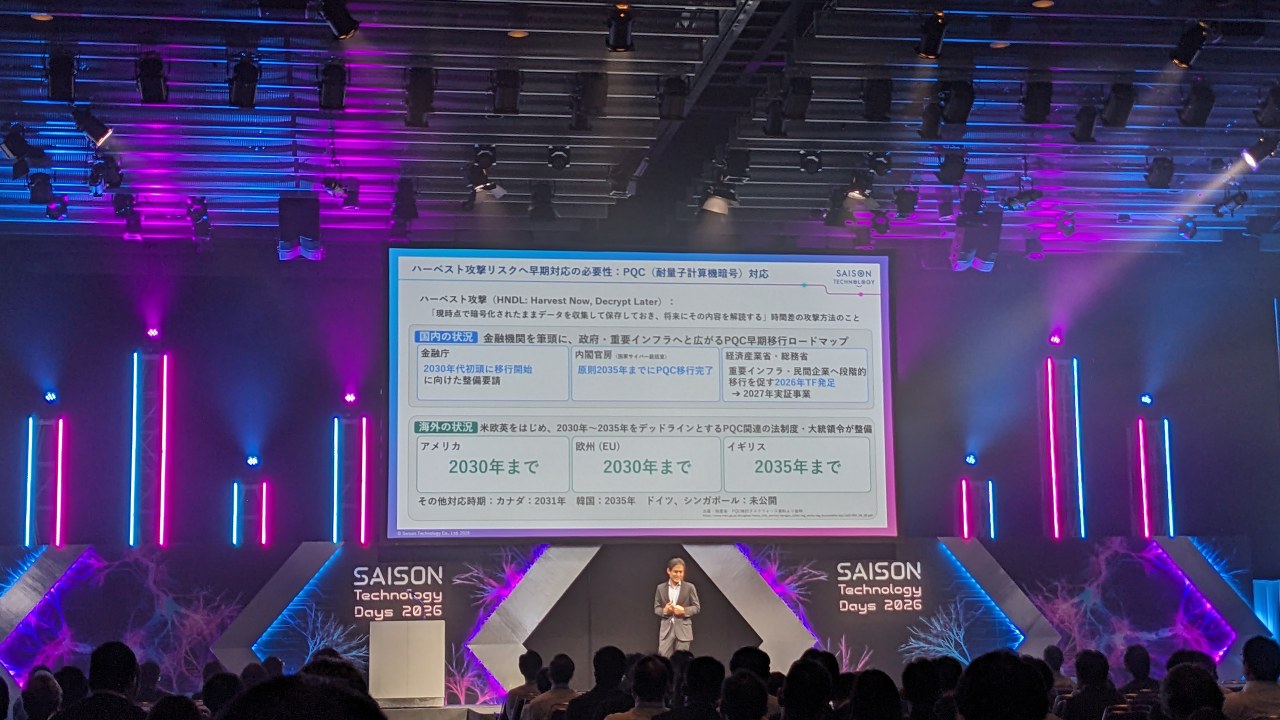
We are also working to address the threat of "harvest attacks (HNDL attacks)" that use quantum computers to decrypt data. Even though the full practical application of quantum computers may still be some time away, there is a risk that encrypted data, which should be secure at this time, could be acquired and then decrypted in the near future when quantum computers are fully operational.
To address these risks, countries around the world are working towards a "transition to post-quantum cryptography." Some countries are required to complete the transition by 2030, making it an urgent global issue.
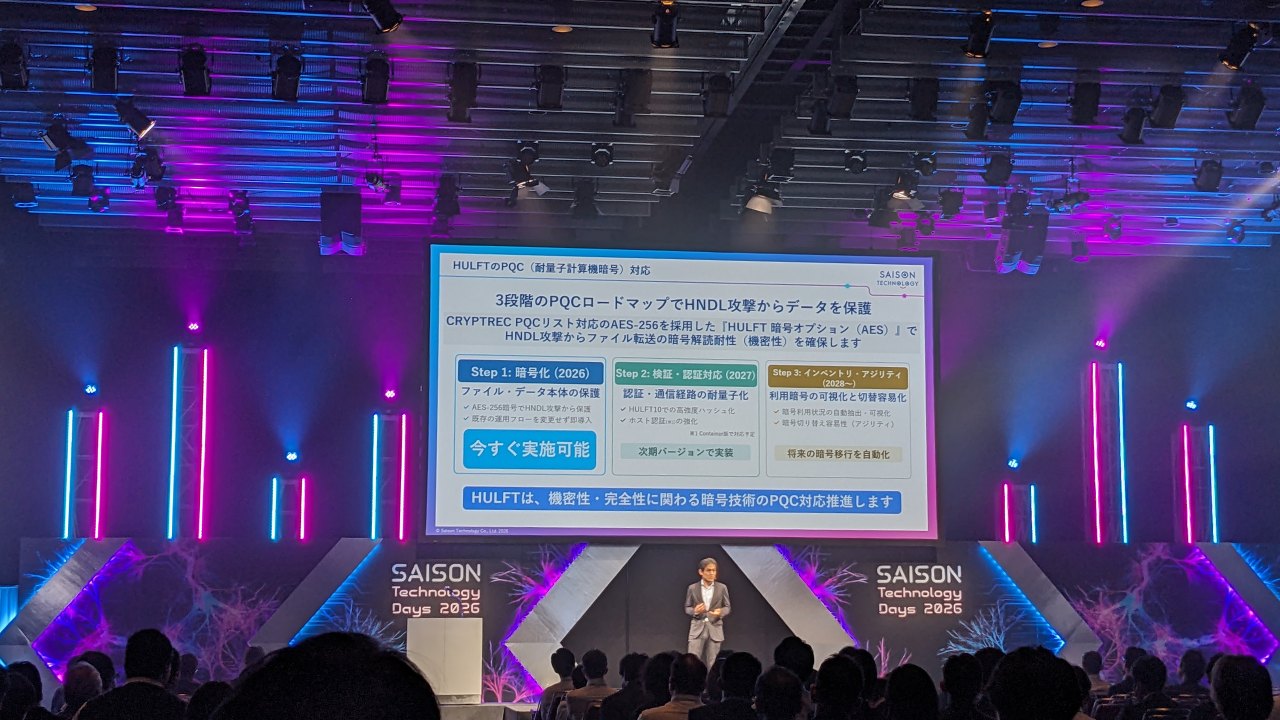
HULFT already offers the "AES encryption option," which enables data encryption using AES-256, a protocol considered secure even in the quantum computing era. We plan to continue supporting authentication and communication pathways, as well as crypto inventory and crypto agility, which are recommended for ensuring long-term security in the quantum computing era.
The safety and security that HULFT has cultivated so far is expected to soon evolve to an advanced level that is compatible with the quantum computing era.
Orchestration is necessary for the effective use of AI agents.
Many companies are now adopting AI. However, expanding AI adoption throughout the entire company is not easy.
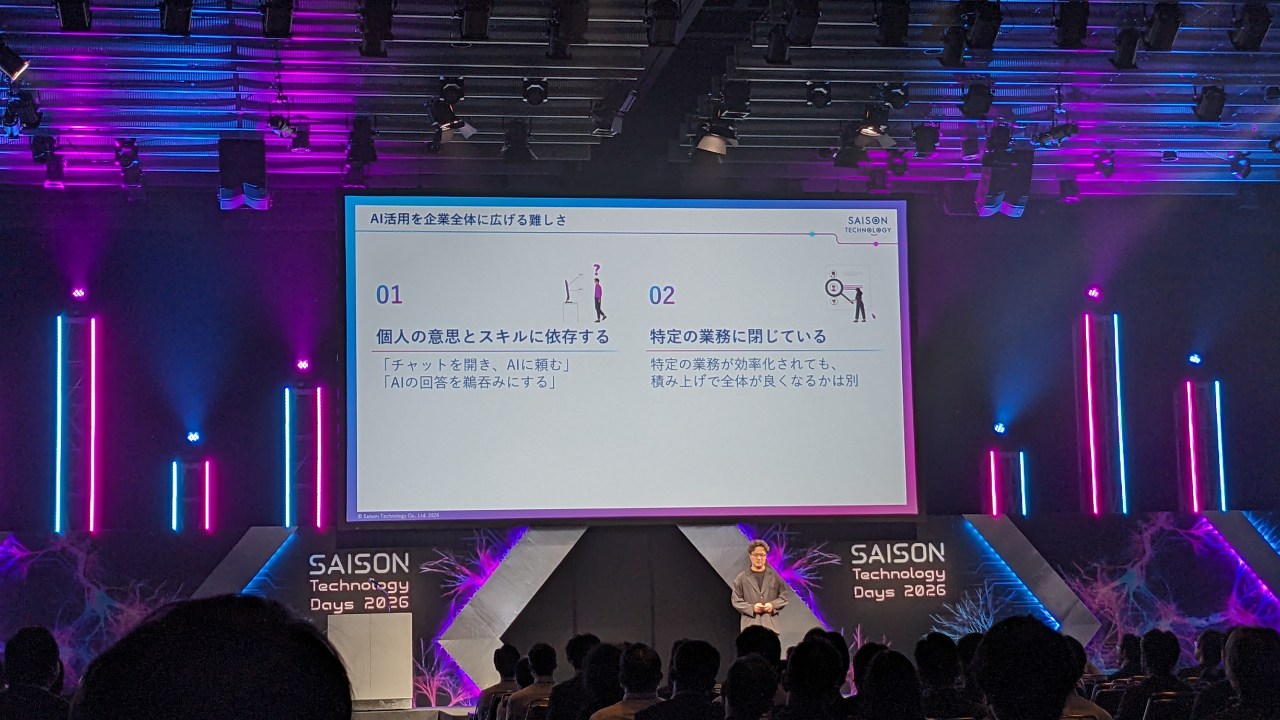
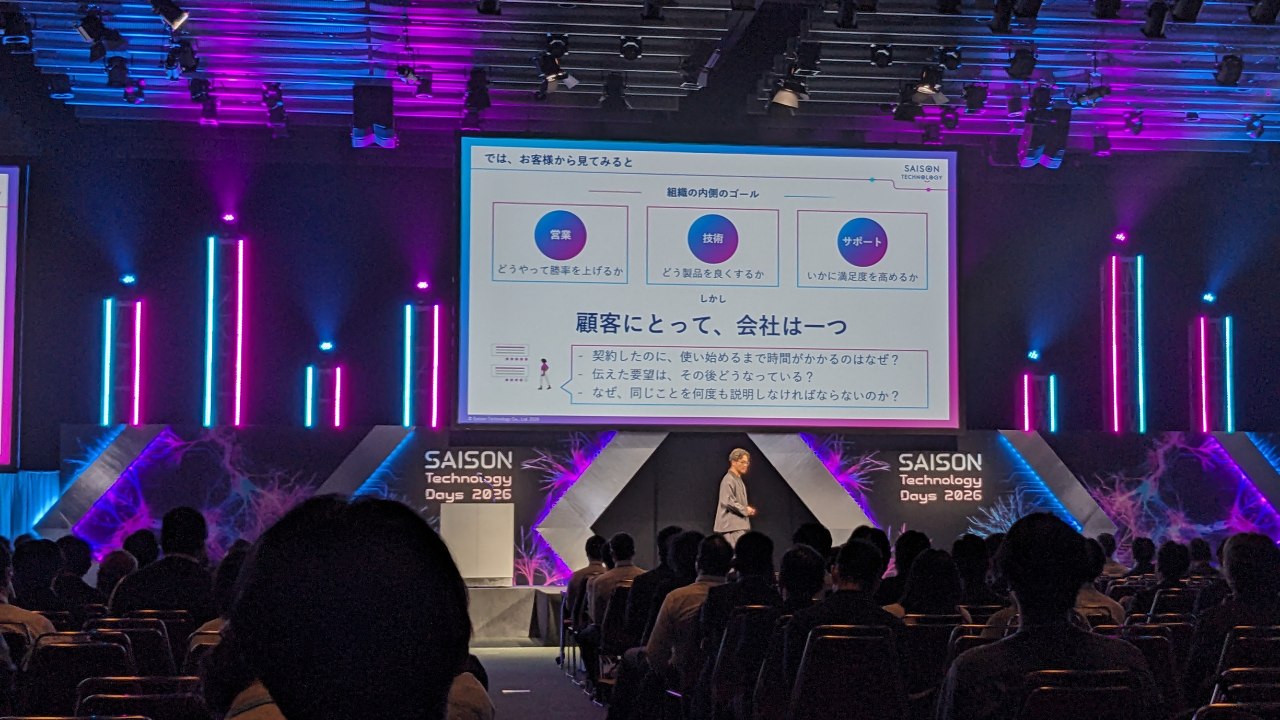
While there are issues where success depends on the skills and motivation of individuals working on AI implementation, even if AI is implemented and results are achieved in specific tasks or business units, when viewed as an organization, the efforts are fragmented across departments and do not become a company-wide initiative.
This concern is similar to the situation when "connecting" technologies (EAI) like DataSpider and HULFT Square became necessary. Although IT systems were being implemented in each department of a company and achieving results individually, the systems were not interconnected, and from a company-wide perspective, business systems were being implemented in a fragmented manner. "Connecting" technologies were born out of the recognition that it was necessary to data integration between systems to resolve this issue.
The same can be said for the use of generational AI. AI agents are created and used in the sales department, and AI agents are created and used in the support department. Even if this is the case, if the agents in each department are not coordinating with each other at all, it cannot be said to be a desirable situation from a company-wide perspective, from the perspective of the entire business that is carried out by multiple departments, or from the customer's perspective.
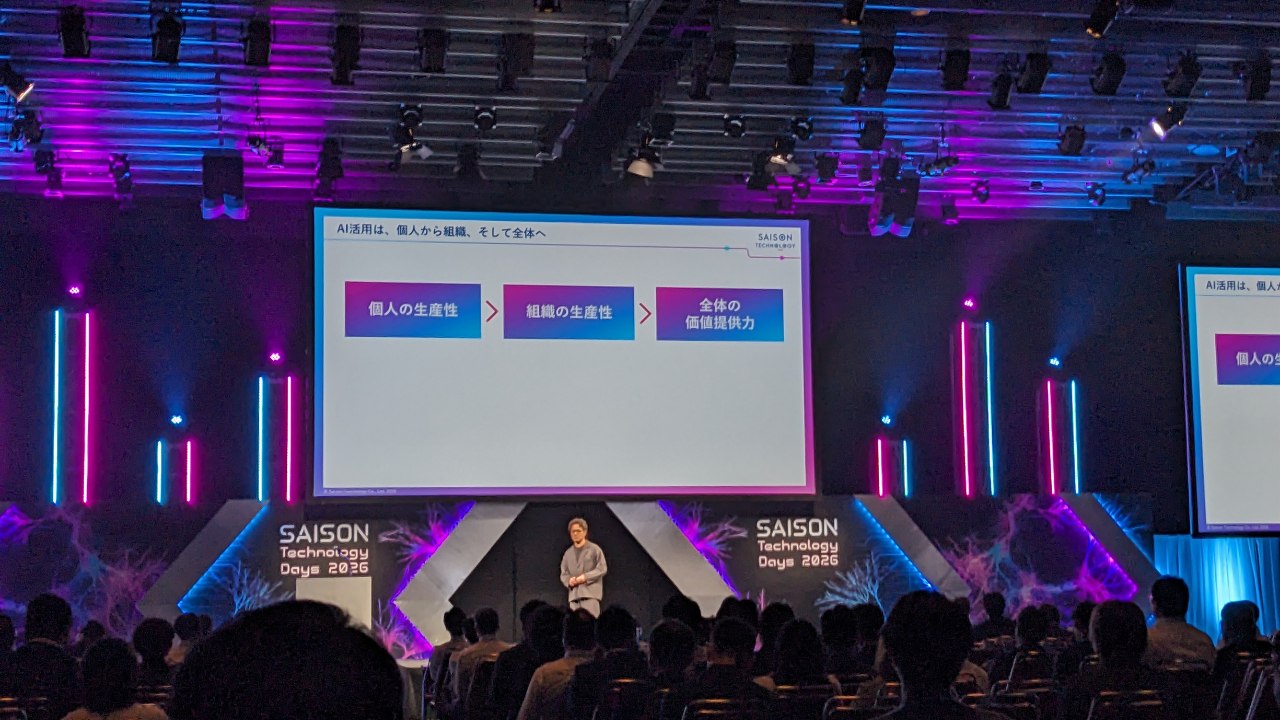
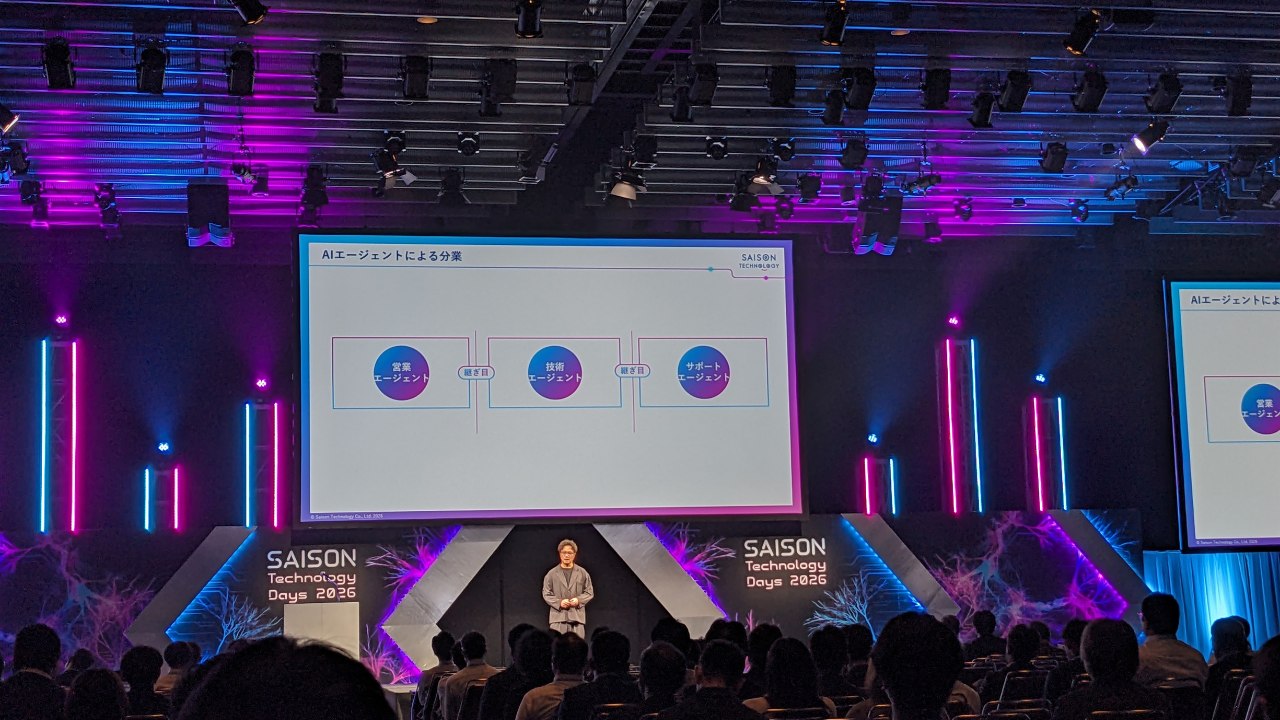
To resolve such situations and successfully implement company-wide AI utilization, we recommend our new product, "Agent Orchestration." By linking AI agents created in each business and department, it enables a seamless workflow across the entire company.
[User Session] Seven Bank's Choice for Achieving Fit to Standard: What is ERP Modernization with Domestic iPaaS?
Kenji Ishihara
Head of Corporate IT Design Office, Seven Lab, Seven Bank, Ltd.
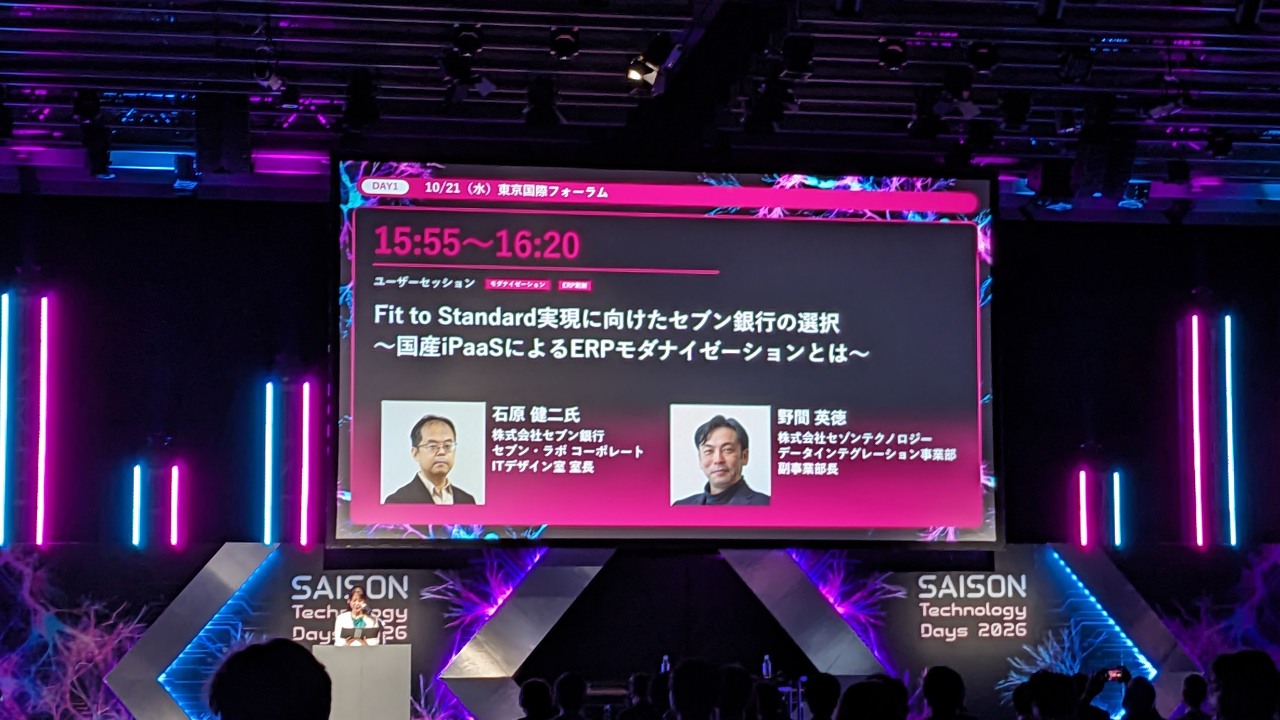
Next, we invited customers who are actually using our product, "HULFT Square" to speak and explain why they needed iPaaS and how they are using "HULFT Square" in their actual business systems.
"Fit to Standard" means
A common problem companies face when implementing IT systems is how to utilize off-the-shelf packaged software and cloud services within their own operations.
Ideally, companies should analyze their own operations and then develop a custom IT system from scratch based on the analysis results. However, this is often prohibitively expensive and time-consuming, so it's becoming increasingly common to build a company's system using existing software assets.
In particular, with ERP packages, the ideal state of an advanced organization is often built into the package itself. It is increasingly said that instead of adapting IT systems to one's own needs, it is more exemplary for companies to adapt (fit) to the desirable state (standard) of the company embodied in the ERP package.
Another common pattern of failure in ERP package implementation is the extensive customization performed to adapt the package to the company's specific business processes. This customization can lead to the package being used in a way that deviates from its intended purpose, or even prevent future version upgrades or the addition of further features due to excessive customization.
However, existing software doesn't always fully address a company's specific needs. Simply using packaged software and adapting it to your business processes can lead to problems where you can't actually perform your tasks.
Should we use it as is, or should we customize it? This is a question we actually face every time we use cloud services. For example, if we were to implement kintone, there would naturally be a difference between the features we want and the features that are provided.
Realizing "Fit to Standard" through iPaaS (HULFT Square)
The case study presented here is an example of how this problem was solved by introducing a technology that "connects" these solutions, namely iPaaS (HULFT Square).
In short, we aim to achieve "Fit to Standard" by utilizing ERP products as much as possible while leveraging their inherent strengths. Regarding integrating on-site operations with IT, we select and use products that are easy for on-site personnel to use for each specific task, and achieve this through data integration with the ERP system via iPaaS (composable architecture).
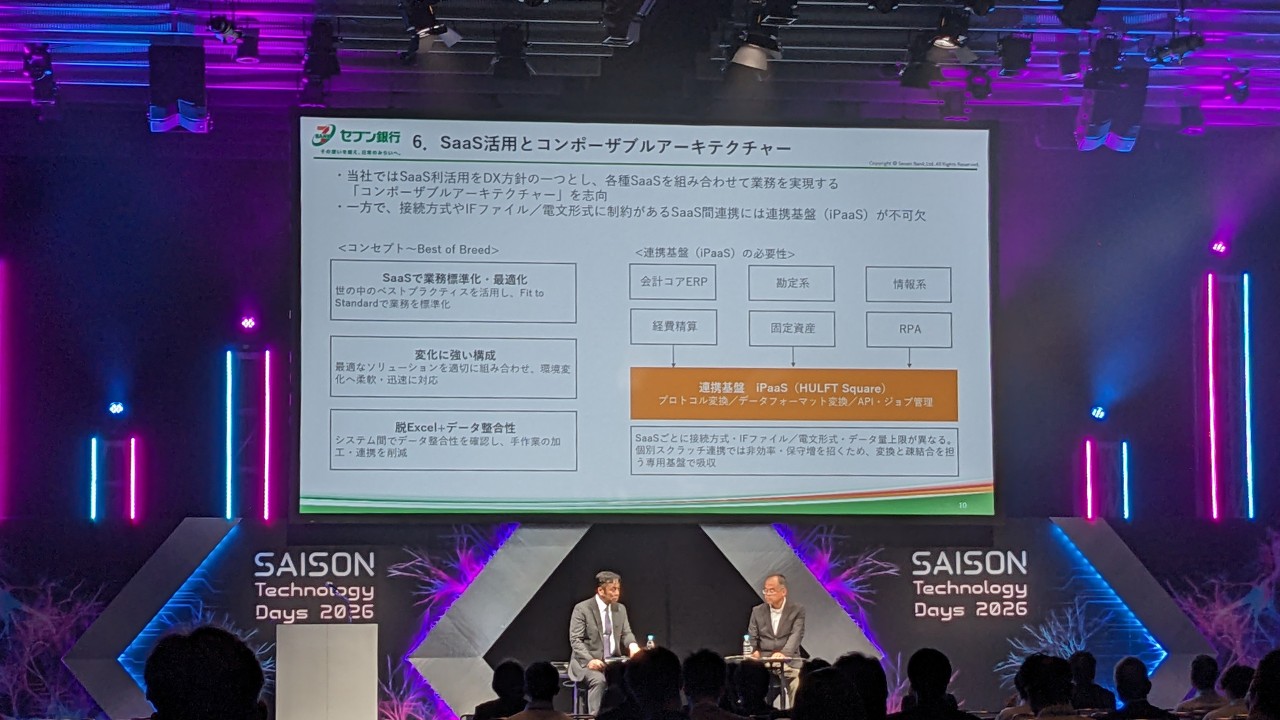
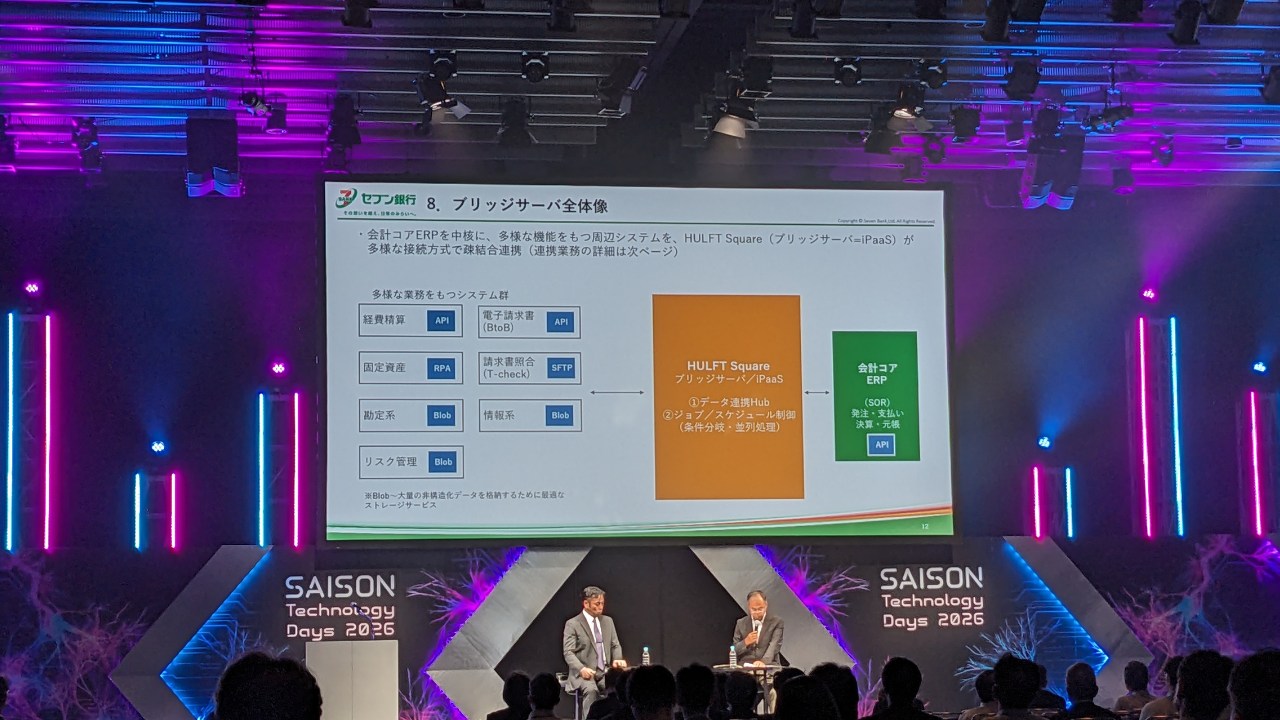
This approach prevents excessive customization of the ERP system. As a result, the inherent strengths of the ERP system are not only utilized, but there are also no obstacles to version upgrades. Meanwhile, each business unit can choose and use what is easiest for them to use, while simultaneously enjoying the benefits that the core functions of the ERP system provide through data integration.
Reasons for choosing HULFT Square
data integration While there are various products available that can achieve this, the reason they chose HULFT Square was that, although other products also offered the features necessary to realize the system concept itself, they wanted to “focus on in-house development” as part of the new system implementation, and this product stood out from that perspective.
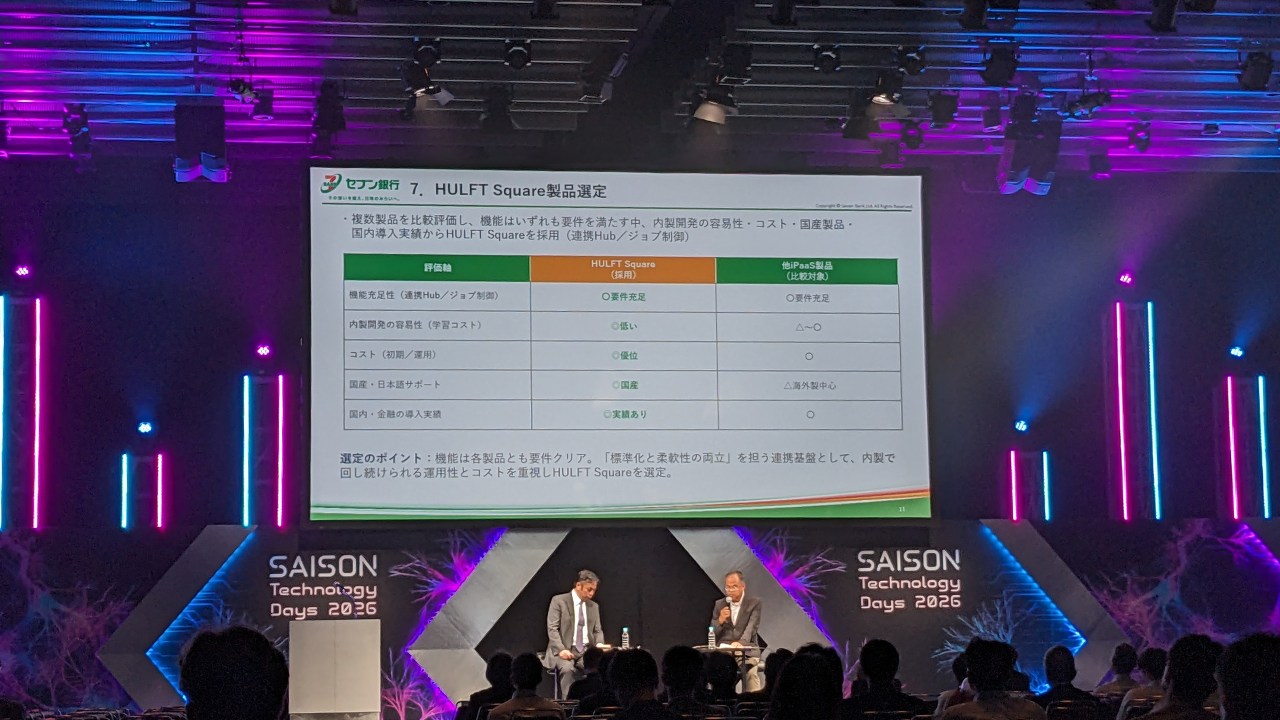
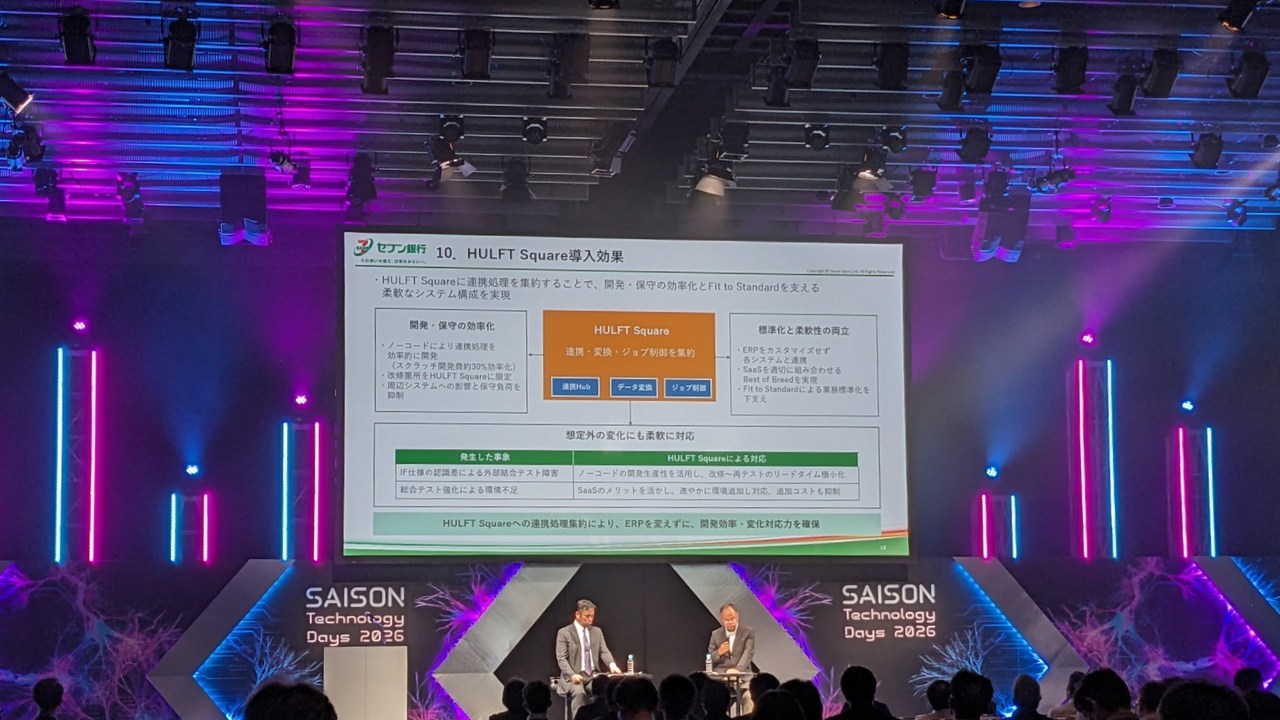
In fact, both DataSpider and HULFT Square have long been well-regarded for their ability to create highly sophisticated processes using only a GUI. If you're seriously considering in-house development, I highly recommend you consider them.
In addition, they mentioned that the adoption was based on the fact that it is a domestically produced product with excellent support, and that they appreciated the good track record that HULFT had achieved with their products up to that point.
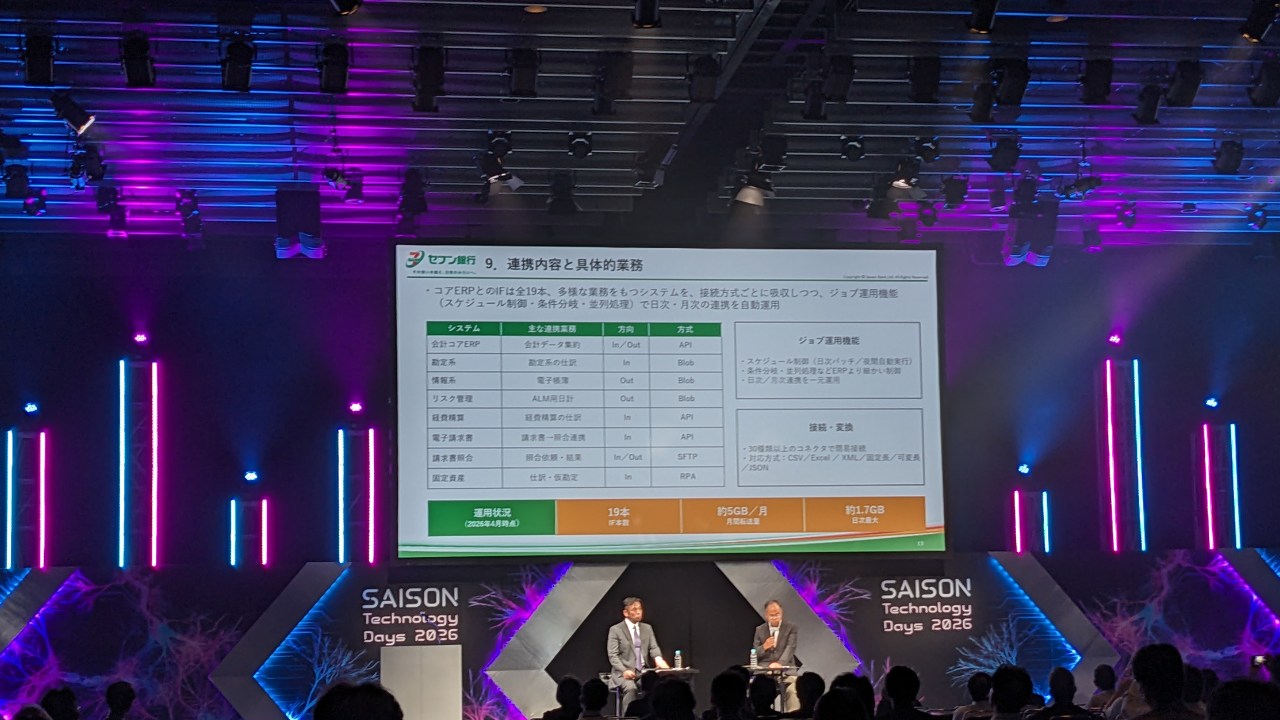
As a result, we achieved a 30% reduction in man-hours, successfully separated the ERP system as the core of the business from the front-end system used by the business users, and received praise for successfully achieving both standardization (Fit to Standard) and flexibility.
Furthermore, HULFT Square has been used for a wide range of purposes since its implementation, including as a job manager to trigger processes on both the ERP and front-end sides.
We also received positive feedback that HULFT Square 's ability to handle unexpected situations that arose after system development began, such as the need for in-house development and flexible integration of various systems and data, is a great advantage.
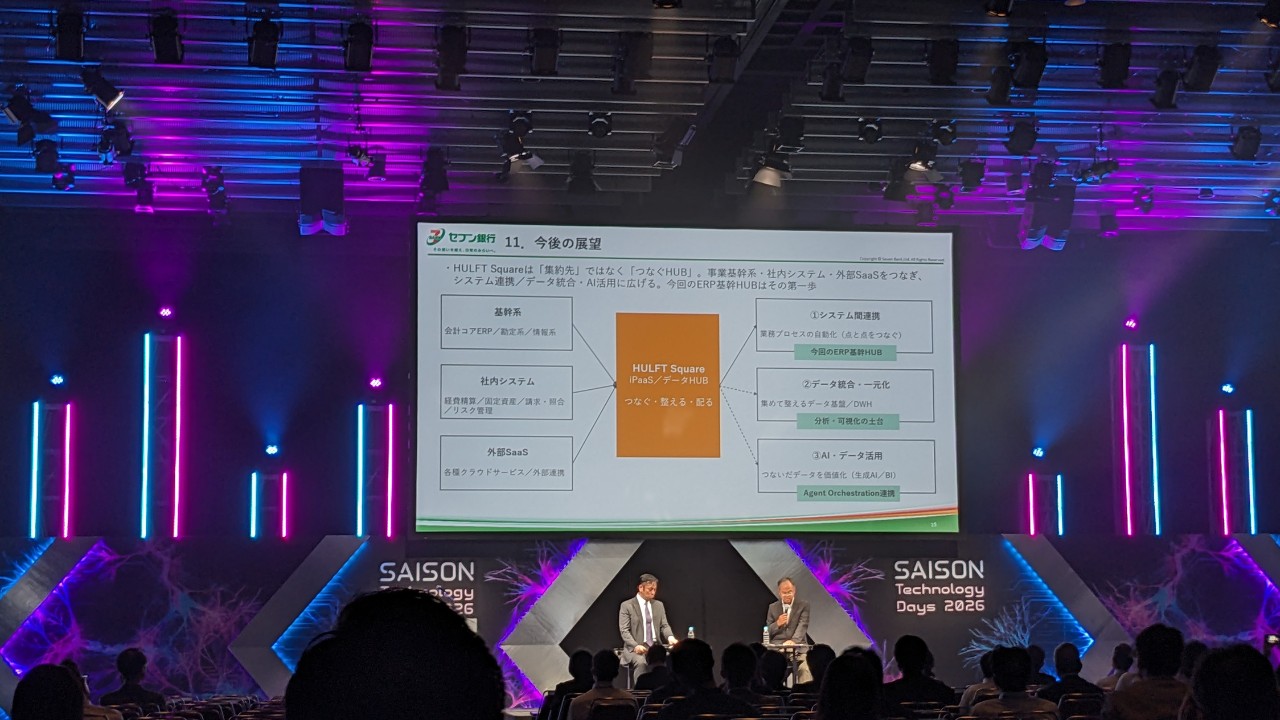
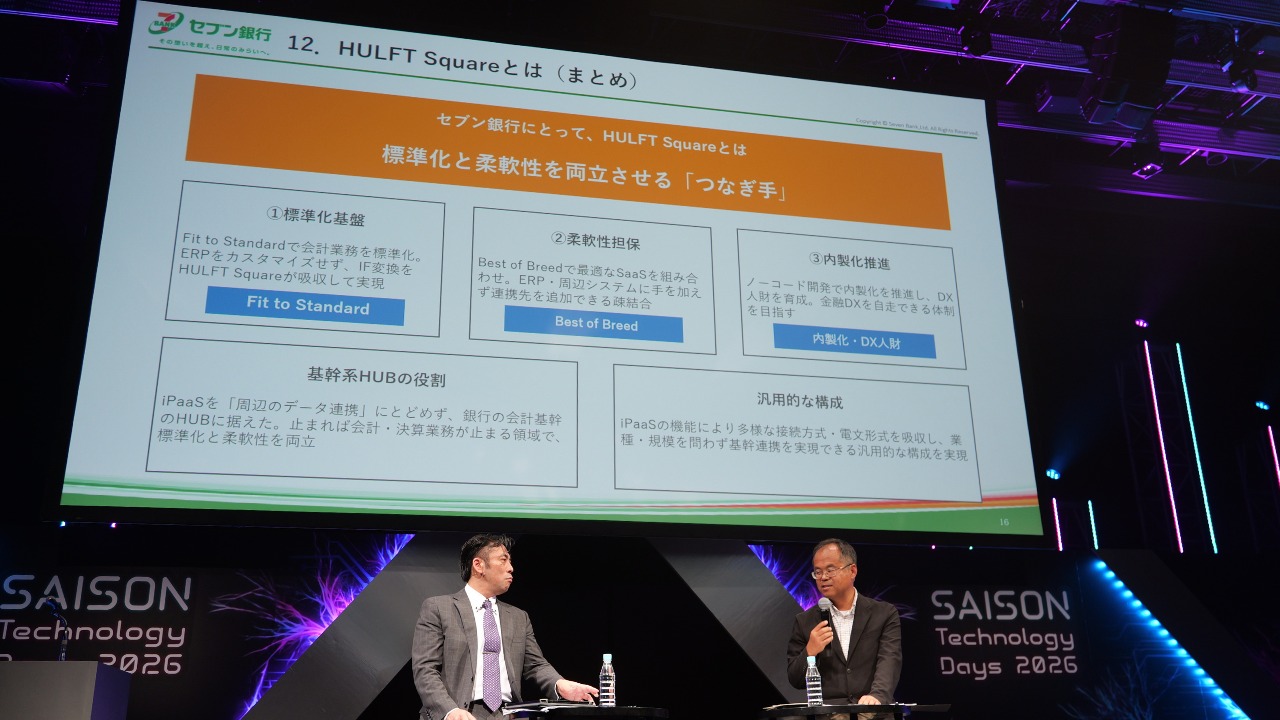
They have now achieved the first stage of implementation, and after the successful integration of the system, they plan to integrate data, and beyond that, they intend to work on utilizing AI with HULFT Square.
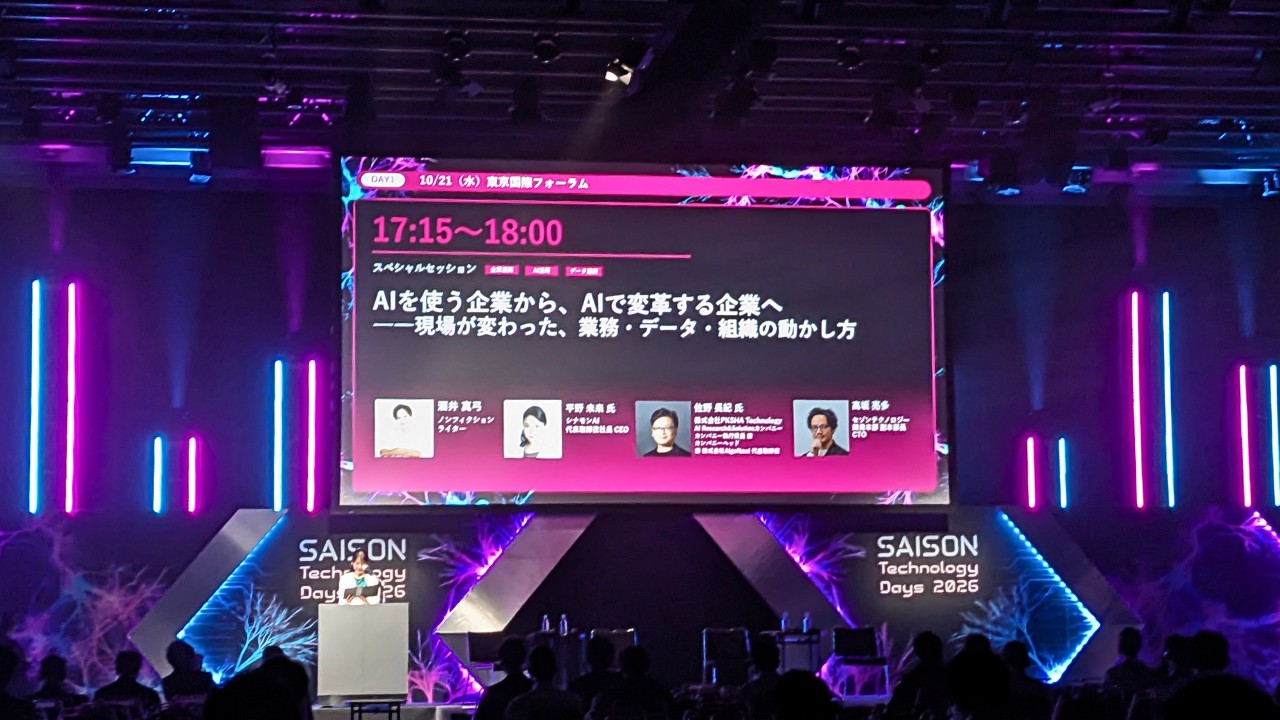
[Special Session] From Companies Using AI to Companies Transformed by AI: How Operations, Data, and Organizations Have Changed on the Ground
Ms. Mirai Hirano
Cinnamon Co., Ltd. (Cinnamon AI) President and CEO
Nagaki Sano
Executive Officer and Head of Company, PKSHA Technology AI Research & Solution Company, Inc., and Representative Director, AlgoNaut Co., Ltd.
Ryota Kosaka
Deputy General Manager, Development Division Saison Technology Co., Ltd., CTO
Finally, we invited representatives from three companies that have supported AI utilization and data integration in many businesses to take the stage and share their opinions on how to think about and proceed in order to actually achieve results with AI utilization.
Many topics were discussed during the session, but I'd like to share a few points that I found particularly memorable.
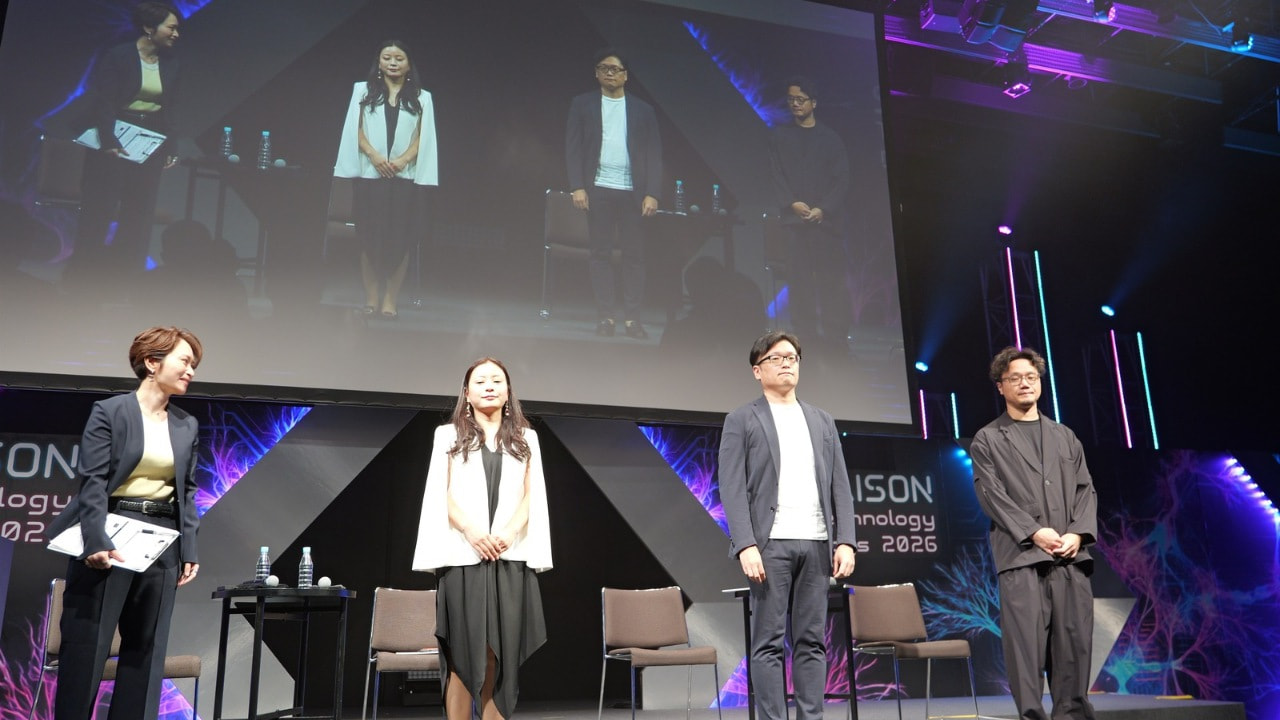
Generative AI will change the very way we live (Naoki Sano / PKSHA Technology Co., Ltd.)
First, let me introduce some helpful ideas from Mr. Nagaki Sano.
When you think about it, discussions about generative AI tend to revolve around "what can we do with generative AI?" However, there was a suggestion that generative AI itself is changing the way people live, and we should instead consider what we want to do in the world after these changes.
As an example, it was mentioned that purchasing behavior has emerged where people "consult with ChatGPT and then buy the product." For instance, if someone is unsure which insurance to choose, they might consult with ChatGPT about insurance and then buy the insurance product that ChatGPT recommends. This is a purchasing behavior that did not exist before.
When consulting with an insurance agent in the past, whether receiving explanations or specific recommendations, it was necessary to try to guess the agent's intentions. In contrast, ChatGPT sometimes feels like it makes recommendations in a more neutral way, and if that's the case, it eliminates that hassle. Indeed, the emergence of generative AI is changing the traditional industry structure.
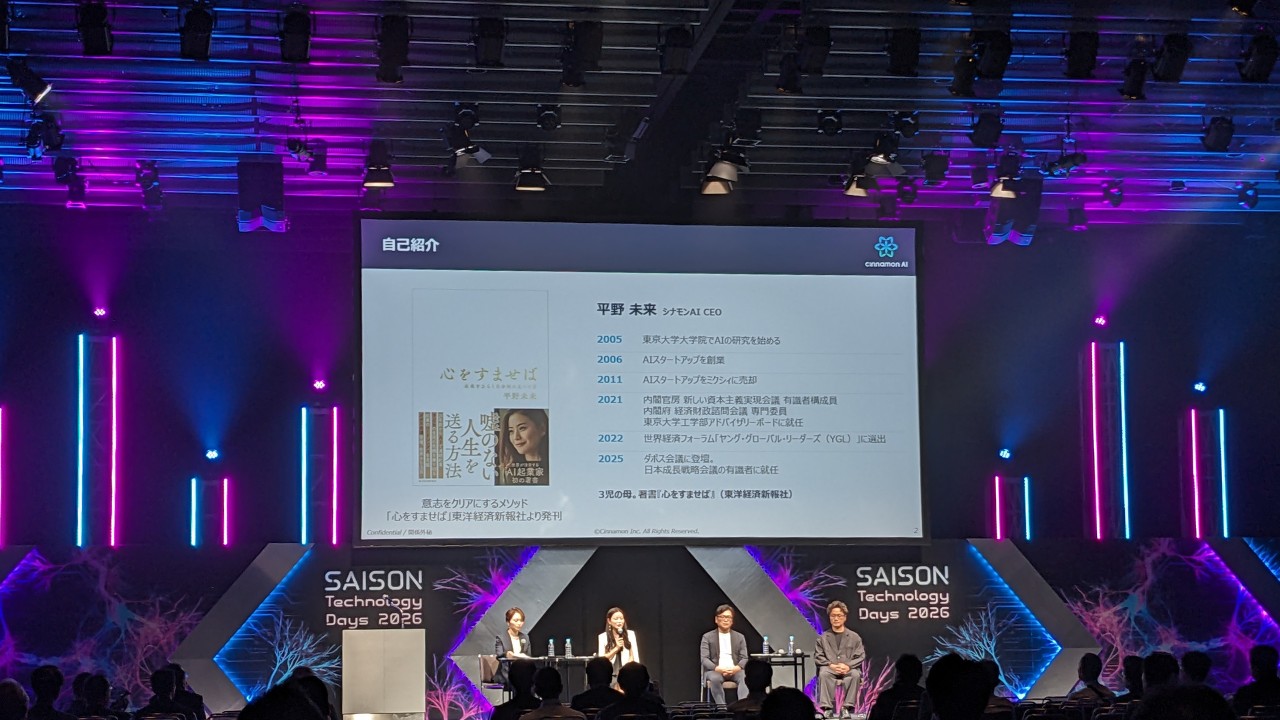
Mr. Sano has been working to realize social implementation by introducing AI solutions and formulating DX strategies based on future changes in industry structure. However, instead of the exhausting method of taking stock of one's own operations before starting, he suggested that it would be better to think about "how we want to be in the future after the changes brought about by generative AI."
"Knowledge Loop" and "Will" (by Mirai Hirano / Cinnamon AI)
Next, I will introduce the "Knowledge Loop" method proposed by Ms. Mirai Hirano.
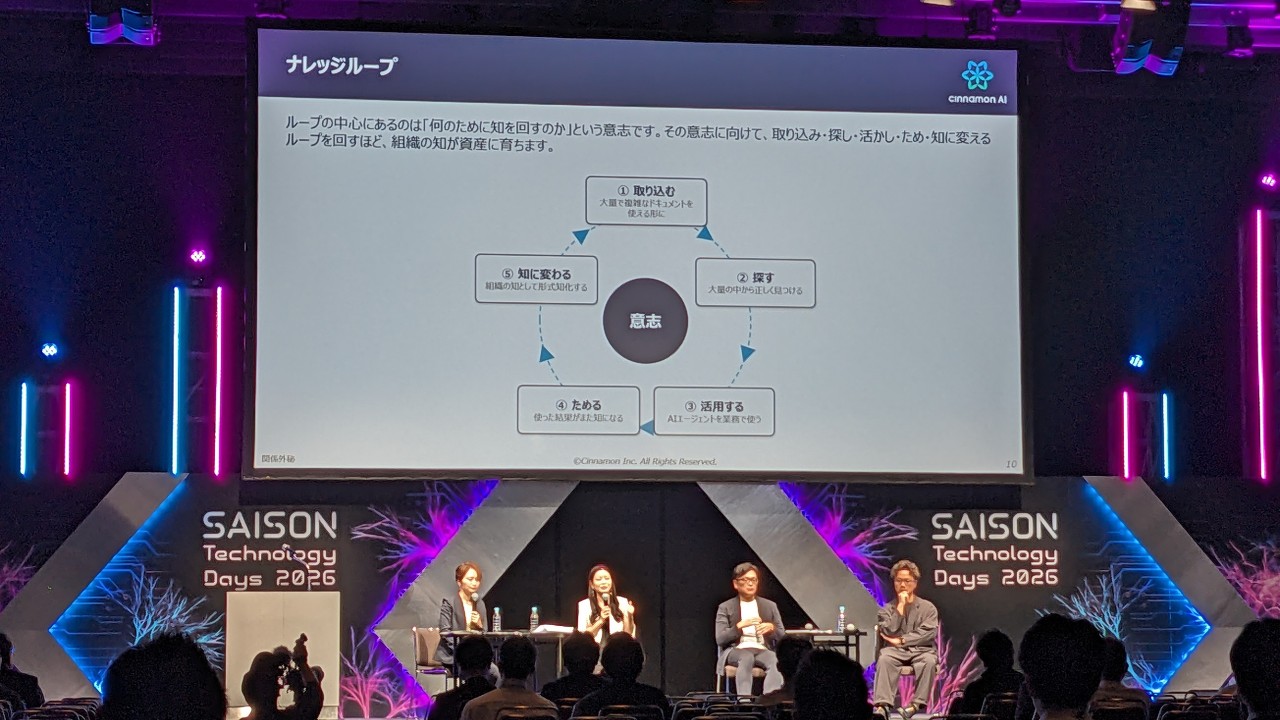
The knowledge loop proposed by Mr. Hirano is an initiative that involves incorporating past knowledge, utilizing it in the field, and formalizing it as organizational knowledge by cycling through the following steps.
① Import (convert large and complex documents into a usable format)
② Search (find the correct one from a large number of items)
③ Utilize it (Use AI agents in business operations)
④ Accumulate (the results of using it become knowledge again)
⑤ Becoming knowledge (formalizing it as organizational knowledge)
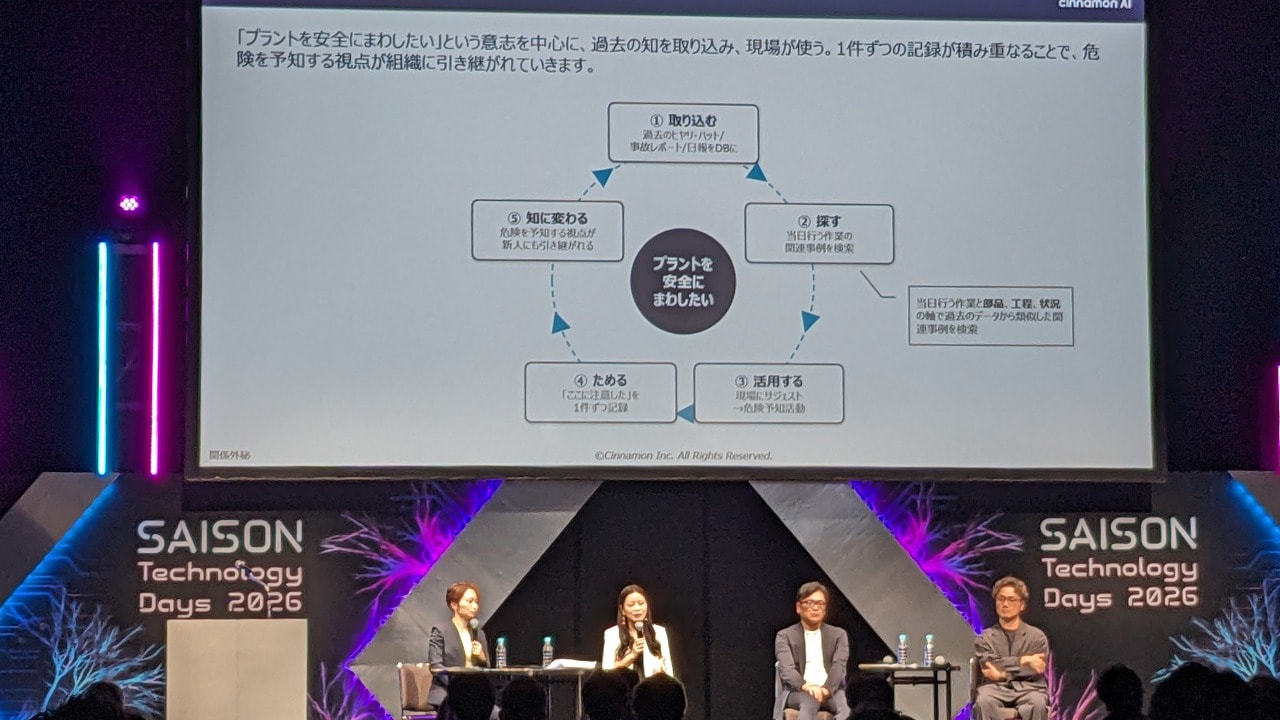
As a concrete example, they also introduced an example of safety management initiatives at a factory. Traditionally, veteran workers would share their past experiences and knowledge during morning meetings, saying things like, "This is what happened in the past," but this will be changed as follows.
The "Import" function imports past near misses, accident reports, and daily reports into the database. The "Search" function searches the database for information relevant to the day's work. The "Utilize" function suggests the findings to the field staff for use in hazard prediction activities. The "Accumulate" function records each instance of what the field staff paid attention to as a result. The "Become Knowledge" function ensures that the perspective for predicting hazards is passed on to new employees. The insights gained throughout this cycle are then added to the database. This cycle transforms previously unused unstructured data and large amounts of data into valuable knowledge.
Throughout the session, Mr. Hirano repeatedly emphasized the importance of "intention," which is also written at the heart of this cycle. It is important to clarify what you are trying to achieve with this initiative and move forward accordingly. In the example of safety management in a factory, the intention would be "to operate the plant safely." He emphasized that intention is crucial in the process of clarifying your intention, drawing a knowledge loop around it, and then actually running that knowledge loop. The knowledge loop will change depending on the intention, and PoCs often fail because the intention is not clear.
Perhaps it would be better to pose a "question" rather than a "theme" (Ryota Kosaka / Saison Technology Co., Ltd.)
Kosaka from Saison Technology suggested that in order to successfully promote the use of AI agents throughout a company's organization, it is important to focus on customer "questions" rather than improvement themes, which have been common in previous initiatives.
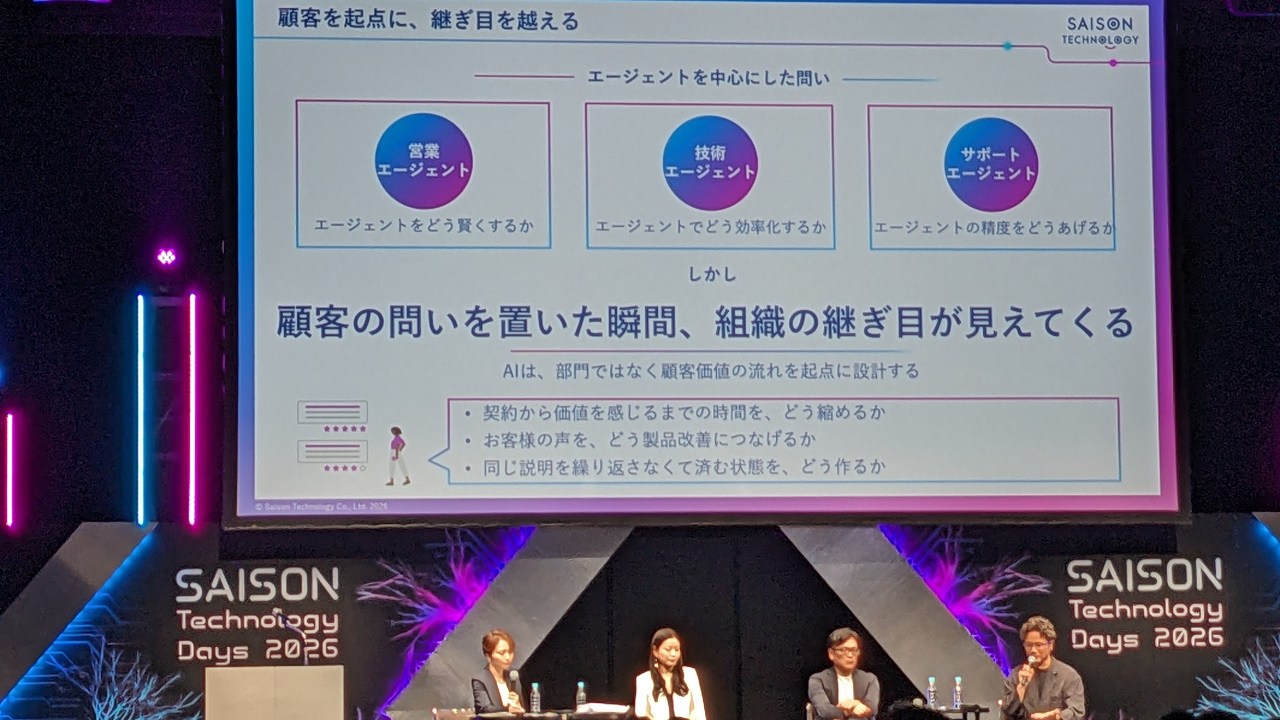
In general data utilization and AI utilization, or when organizations engage in the use of AI agents, it's common for AI agents to be created for each department or business unit, with improvements being made on individual themes.
For example, the sales department might create an AI agent for sales support and work on "how to make the agent smarter" to achieve better sales support, while the development department focuses on "how to make the agent more efficient," and the support department focuses on "how to improve the agent's accuracy."
Such "theme-based" initiatives tend to result in achievements like "we improved by XX%." However, from the customer's perspective, customers don't just deal with individual departments. Even if each department makes improvements based on a theme, if the customer requires cross-departmental support, problems will arise at the "connections" between the different AI agents.
For example, even if customer feedback reaches an AI agent in the support department, the request may not be fulfilled if it doesn't reach an AI agent in another department. Alternatively, there could simply be inconvenience due to this fragmentation, such as having to repeat the same explanation given to the development department that was given to the sales department.
To prevent such problems and to ensure that the initiative even considers connecting the "gaps" between AI agents, it was suggested that instead of focusing on a theme, the initiative should be based on "customer questions" (for example, "How can we shorten the time from signing a contract to experiencing value?"), allowing for a design that starts from the flow of customer value rather than optimizing the functions of each department.
Evaluation should be based not only on AI, but also on AI plus human interaction (Naoki Sano / PKSHA Technology Co., Ltd.)
There was also a suggestion that the evaluation of whether or not AI is yielding results should include human evaluation as well.
Results are sometimes evaluated with statements like, "We improved by XX% using AI, but we didn't reach our target value," or "We tried automatic classification using AI, but it didn't work well."
However, results don't have to be achieved solely through AI; success is achieved when improvements are made through "AI + human" collaboration. For example, if using AI for automated classification works well not just on its own, but in combination with humans to assist them, then that can be considered a success.
If we think in that way, we can also argue that the results of AI cannot be properly evaluated unless people actually use it. If the aforementioned suggestion of "formulating customer questions" is a proposal to consider things across agents, then this one seemed to be a proposal to "consider things across agents and people."
Perhaps this is where we should start with using AI.
The session concluded with a presentation on the topic of where to begin when undertaking AI utilization. This was also very informative.
■ Naganori Sano (PKSHA Technology)
As a first step, the following initiatives were proposed.
- Select tasks where there is a difference in results between veterans and juniors, and write down the reasons why they cannot be entrusted to AI.
- I'll break down the reasons for writing this into the following three points.
- Because it's not organized ⇒ Organize the rules and data.
- Because people should be responsible ⇒ Design it so that people are responsible.
- Because it requires the expertise of veterans ⇒ Let's make it usable by everyone using AI
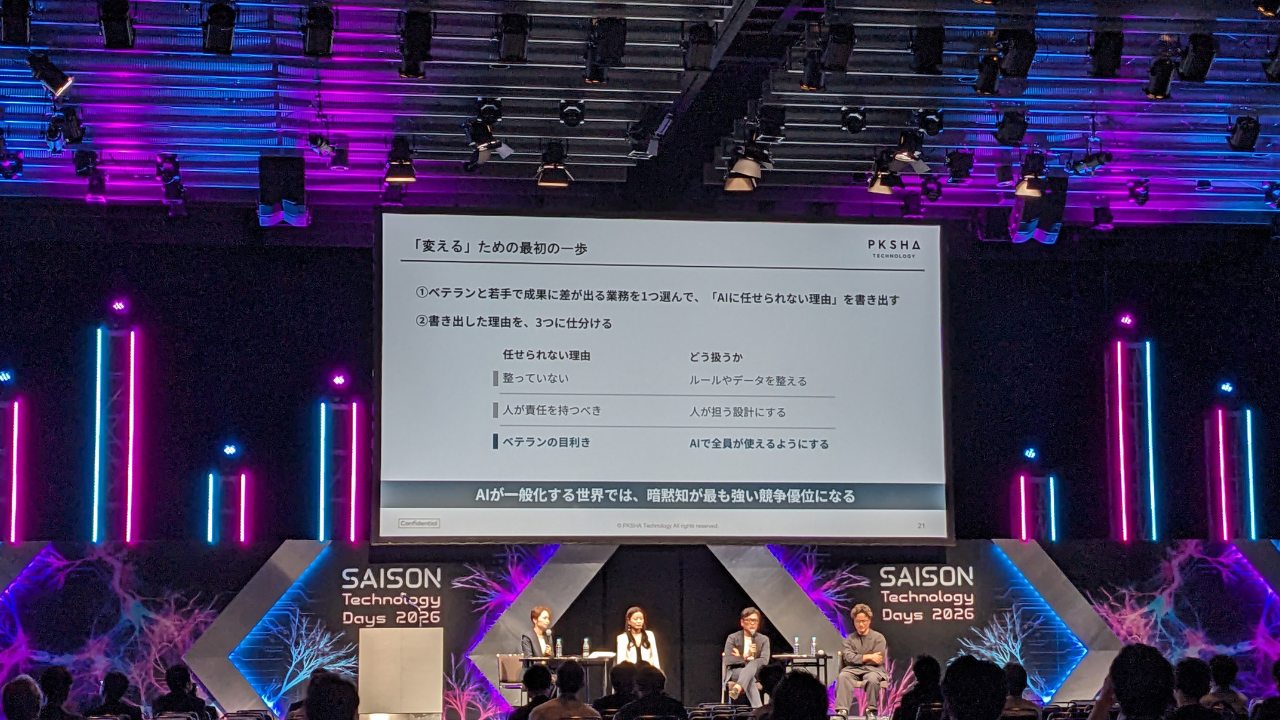
Furthermore, based on these considerations, it was stated that in the age of widespread AI, "tacit knowledge"—knowledge that is difficult to express or explain objectively using words, documents, or mathematical formulas—will become the strongest competitive advantage.
■ Mirai Hirano (Cinnamon AI)
Regarding Mr. Hirano's concepts of "knowledge loop" and "willpower," which have been introduced so far, he suggested addressing them in the following order. He reiterated his opinion that "willpower" is crucial for achieving results.
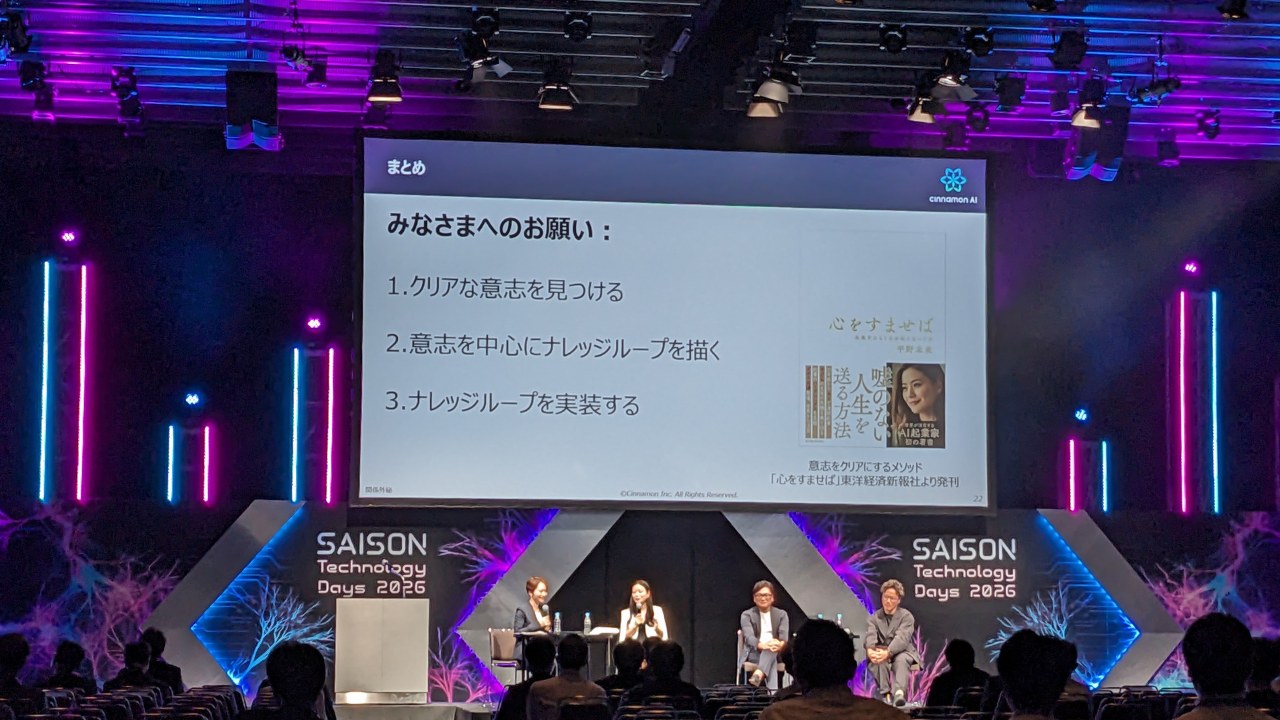
- Find a clear "will".
- Drawing a knowledge loop centered on "willpower"
- Implement a knowledge loop.
■ Ryota Kosaka (Saison Technology)
Finally, here is a proposal from Kosaka of Saison Technology.
Everyone can think of initiatives to "streamline existing operations." However, the point is that we should focus on "things we've previously given up on," things we often overlook.
- Things that we knew were necessary but had given up on because the cost was not justifiable.
- Example: Since it was not possible to double-check all items, we were checking by sampling.
- Example: Not all inquiries could be analyzed, so only critical ones were reviewed.
- Example: It was difficult to look up past individual cases every time, so we relied on the experience of the person in charge.
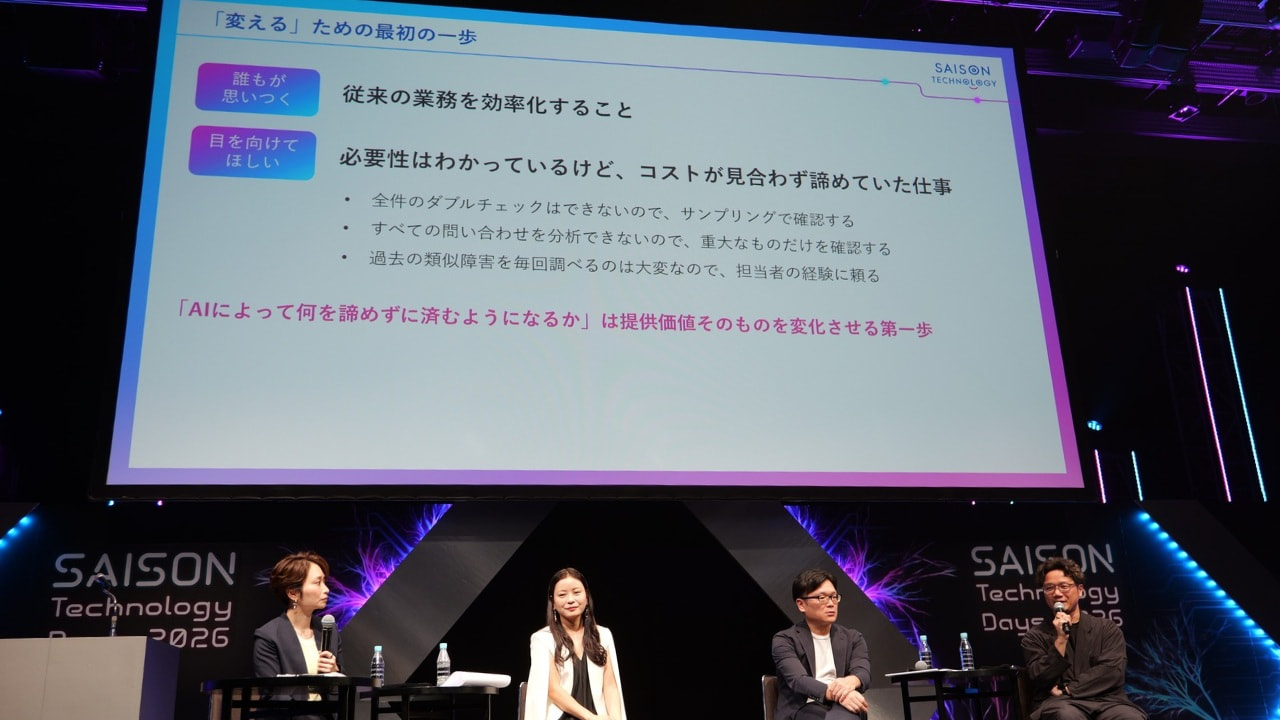
The idea is to focus on things that we previously gave up on because they were too time-consuming or costly, or things that we took for granted, but which might become possible with the use of AI. In other words, it's a suggestion to think about "what we've given up on" until now.
SAISON Technology Days, we look forward to seeing you again next year!
As in previous years, "data" remained a major theme, but this year we focused on "AI utilization" and held sessions on a variety of topics. We hope that the content of this event will be of some help in achieving success in data utilization or in making AI utilization more effective.
SAISON Technology Days is scheduled to be held again in 2027. We hope you will continue to attend and watch the event next time. We look forward to seeing you at SAISON Technology Days next year.
Related Columns
-
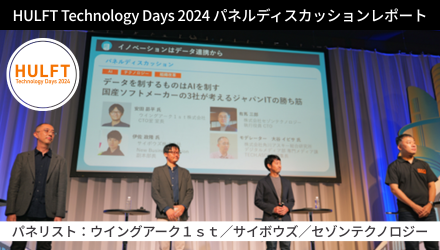
Based on the IT trends of the past decade, what are the "Winning Strategies for Japan's IT" as envisioned by three domestic vendors? -HULFT Technology Days 2024 Panel Discussion Report -
-
"HULFT Technology Days 2023" was held again this year! (Business Day: Part 2) [17th]
-
"HULFT Technology Days 2023" was held again this year! (Business Day: Part 1) [17th]
Recommended Articles
-
How can we turn the "tacit knowledge" lying dormant within our company into "AI knowledge" and utilize it?
We will explain the specific process for turning unstructured data scattered throughout your company into an asset and maximizing the potential of AI. -
Automated classification of product masters using generative AI: How to bring a new perspective to your analysis
We will explain the new perspectives that transformation in product master management brings, through the mechanism of automatic classification brought about by generative AI and the benefits that can be gained by adopting it. -
How to get the insights you want without changing your master data
This e-book offers a new approach to solutions for companies that have data but are not making use of it.