

Evolve with iPaaS! Maximize the value of your internal data with multi-RAG

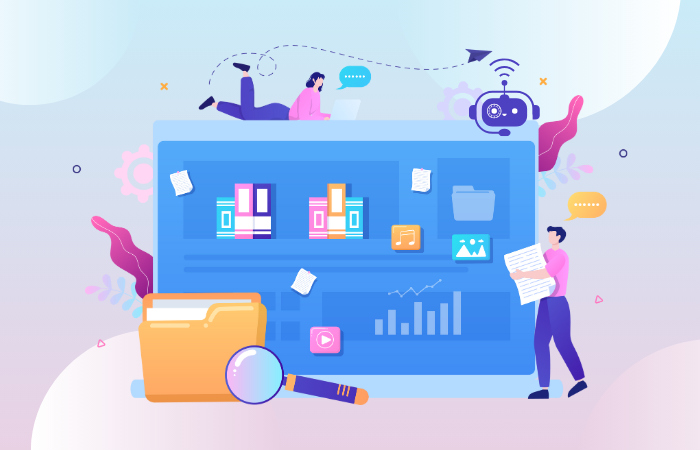
Retrieval Augmented Generation (RAG) is gaining attention as a system for utilizing data assets lying dormant within a company using generative AI. Many companies are working on RAG for unstructured data, including document search, but RAG for utilizing structured data held by business systems and SaaS has yet to progress.
In this column, we will introduce how to extract value from internal data assets, including structured data, using "Multi-RAG" that utilizes iPaaS (Integration Platform as a Service).
Three common barriers to building a RAG and their impact on your business
At first glance, RAG appears to be a simple process in which AI searches for appropriate information in response to user input and generates an answer based on that information. However, when actually implementing RAG in corporate activities and trying to operate it continuously, you will face several unavoidable "walls," or constraints and challenges. In this article, we will take a closer look at how these walls affect business, focusing particularly on three aspects: "model," "data," and "environment."
▼I want to know more about RAG
⇒ Retrieval Augmented Generation (RAG) | Glossary
1. Model barrier: Unable to select the optimal AI or keep up with evolution
The "model" referred to here refers to trained generative AI, such as the GPT series, Claude, and Gemini, especially the core language model (LLM, large-scale language model).
- Risk of dependence on a specific AI: Generally provided RAG services and RAG systems built by specific system vendors often have limited language models available. If you are tied to the models offered by a specific service provider or the models that the vendor specializes in, you will not be able to make the best choice to meet your needs.
- Difficulty keeping up with the speed of evolution: AI technology is evolving at a rapid pace. A variety of models are constantly emerging, each with their own strengths, such as text generation, image generation, research capabilities, specialization in specific business domains, or cost-effectiveness. For example, while the latest, high-performance model may be suitable for one task, a cost-effective, lightweight model may be sufficient for another routine task. If you cannot flexibly select and change the optimal model to suit your company's diverse business needs and challenges, the effectiveness of using generative AI will be limited, and it will be difficult to expect an improvement in return on investment. This lack of flexibility can lead to rigidity in data utilization and a decline in competitiveness.
- Limited response quality: When a specific model is used, it is directly subject to constraints such as biases, strengths, and weaknesses derived from the characteristics of the model and the training data. This can lead to issues such as not being able to obtain the desired response or only receiving answers that are biased toward a particular perspective.
▼Learn more about LLM large-scale language models
⇒ Large Language Model (LLM) | Glossary
2. Data barriers: Unable to freely and safely use the data you want
The quality of RAG depends heavily on the quality, quantity, and freshness of the data it references. However, data limitations pose a major challenge for many RAG services and traditional implementations.
- Limitations of manual data integration: For example, consider a situation where data to be referenced by RAG must be manually uploaded to the service environment's storage via a web browser. While this may not be a problem when conducting a PoC with a small amount of data, it poses a significant operational burden when considering use in production operations. Data is updated daily, and the variety of data is constantly increasing. It is not realistic to continue to manually update all required data, such as product information, customer inquiry history, and the latest market trend reports, in a timely manner. This inefficiency leads to a decline in the freshness of the information and reduces the value of RAG responses.
- Difficulty in utilizing structured data: Many typical RAG services are designed to process document files (unstructured data) such as PDFs, Word, and PowerPoint. However, the key decision-making inputs for corporate business activities are often "structured data," such as sales data in ERP systems, customer data in CRM systems, and operational data in SaaS applications. This structured data typically has a specific format or schema and is accessed through databases or APIs. Traditional RAGs have had difficulty effectively incorporating this structured data and combining it with unstructured data. This limitation limits the scope of what generative AI can do and leads to missed opportunities for data-driven decision-making.
- Security and governance concerns: When uploading internal data to an external RAG service, companies must also consider security and governance issues such as the risk of information leakage and access rights management. These technical hurdles become even higher when dealing with highly confidential data.
▼I want to know more about API
⇒ API | Glossary
3. Environmental barriers: Different interfaces each time you use it, disrupted workflows
The "environment" referred to here mainly refers to the user interface (UI) that allows users to interact with the RAG system, and integration with existing business systems.
- Tool silos and increased learning costs: Generative AI can be used in a wide variety of scenarios. Potential use cases include searching internal documents, developing marketing strategies, creating sales plans for customers, automatically responding to FAQs, and creating management reports including sales analysis. If RAG services and AI applications specialized for each task or purpose are implemented separately, users will have to learn multiple different screens and operation methods. This not only increases learning costs, but also leads to inefficiencies such as information fragmentation and duplicate entry if tools are not integrated, hindering improvements in business efficiency.
- Interference with Workflow: Many businesspeople conduct their daily work primarily through specific applications (e.g., groupware, CRM, SFA, BI tools, etc.). To utilize generative AI, they must close their usual application, launch a separate dedicated tool, enter prompts there, get a response, and then copy and paste the results back into the original business application. This disrupts their workflow and makes it feel cumbersome. This creates a psychological barrier to using AI, especially for users with low IT literacy, and ultimately becomes an issue that hinders increased adoption.
- Lack of personalization: If the information displayed and the functions available cannot be personalized based on a user's role, job responsibilities, and access privileges, issues can arise in terms of usability and security.
These "barriers" all hinder maximizing the benefits of implementing generative AI when considering its actual use in business operations, and in the worst case, they even pose the risk of the project itself collapsing. Without a deep understanding of these challenges, true data utilization cannot be achieved.
"Multi-RAG" enabled by iPaaS: Overcoming barriers with four features to open up the future of data utilization
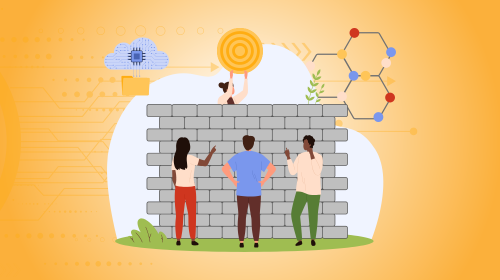
So how can you remove these barriers to building a RAG and maximize the value of your internal data assets? At Saison Technology, we strongly recommend building a RAG using iPaaS (Integration Platform as a Service) as the key solution.
iPaaS is an integrated platform provided on the cloud that connects various systems, applications, and data sources. It features API integration, data conversion, and process automation, enabling seamless integration and linkage of data scattered inside and outside the company. By leveraging the characteristics of iPaaS, it flexibly connects all internal data, various generative AI models (LLM, large-scale language models), and familiar user interfaces, providing and executing internal knowledge in an optimal way according to the user's business objectives and challenges. This is what we call "Multi-RAG."
"HULFT Square" provided by Saison Technology is a powerful low-code iPaaS that enables this "multi-RAG" to be realized.
- Extensive connectivity (connectors): Easily connect to internal and external data sources with a wide variety of connectors for various on-premise systems, cloud services, databases, and SaaS applications.
- No-code / low-code development: Even without programming expertise, data integration and processing flows can be designed and implemented with simple drag-and-drop operations through an intuitive GUI. This shortens development time, reduces costs, and enables rapid response to changes.
- High flexibility and scalability: The architecture allows for flexible response to business changes and the emergence of new technologies.
What exactly is "multi" about this approach, which we call "Multi-RAG"? Here, we will explain in detail the four core "multi" elements and the value they bring.
▼I want to know more about iPaaS
⇒ iPaaS | Glossary
1. Multi-LLM: Freely select and combine optimal AI models to maximize response quality
HULFT Square can flexibly call external generative AI services (such as LLM large-scale language models) via a REST API. As long as the API is publicly available, you can consider any generative AI model on the market as a language model option for RAG, without being locked into a specific vendor or model.
- Strategic use of optimal models:
- For example, you can flexibly switch between models based on project requirements, costs, and desired response characteristics (creativity, accuracy, summarization ability, etc.), such as the GPT-4o model and OpenAI o3 model available on Microsoft's Azure OpenAI Service, the Claude 3.7 Sonnet model and Titan Text model available on Amazon Bedrock provided by Amazon Web Services, and the Gemini 2.0 Flash model available on Google Cloud's Vertex AI.
- For routine queries where cost and speed are important and token volume should be kept low, use lightweight and fast models (e.g., GPT-4o mini or Gemini 1.5 Flash). For complex analysis, long content comprehension, detailed report generation, and other advanced tasks that require high quality response and processing of large amounts of input information, a high performance model with large context windows (e.g., Gemini 1.5 Pro)" can be easily implemented on HULFT Square, a low-code iPaaS.
- Improving quality through comparison and evaluation of multiple models: While RAG itself is a mechanism for suppressing hallucination, it cannot be said with certainty that the responses obtained from the generative AI are always 100% correct. Many users may be concerned about the validity and quality of the AI's answers. Therefore, advanced use is possible, such as inputting the same prompt (instruction or question) into multiple different language models, generating each answer, and even having the AIs evaluate each other's answers for validity and logic. By building such comparative evaluation logic into HULFT Square, users can select the most desirable answer more objectively and neutrally, without being biased toward the characteristics of a single model, and can refer to multiple answer proposals. This is expected to improve the reliability and quality of responses.
- Future development of AI agents: In the future, we will see more advanced applications such as "AI agents" that combine multiple LLMs and AI with specialized knowledge to autonomously plan and execute more complex tasks. The flexibility of multi-LLMs will be an important foundation for such future AI applications.
2. Multi-cloud: Optimizing costs and risks by utilizing the optimal AI infrastructure in the right place
Currently, the major generative AI services are provided by mega cloud providers such as Microsoft Azure, Amazon Web Services (AWS), and Google Cloud, each with their own unique strengths. This trend is expected to continue accelerating, with more specialized and high-performance AI models becoming available only in specific cloud environments.
- Flexible cloud infrastructure selection: Each cloud provider offers a wide range of services that support the use of AI, including not only AI models but also storage of training data, model fine-tuning, operation monitoring tools, etc. Naturally, companies will want to select the optimal cloud environment based on their own security policies, existing IT infrastructure, cost budget, and desired performance.
- Building a common infrastructure with iPaaS: Building and operating RAG systems separately in each cloud environment is unrealistic given the development costs, operational burden, and management complexity. Positioning a low-code iPaaS like HULFT Square as the common infrastructure for RAGs consolidates commonly required functional layers, such as data collection, preprocessing, and integration, into the iPaaS. Then, flexibly connect to the iPaaS via APIs for the use of generative AI models and cloud provider-specific features (e.g., specific vector databases or machine learning services). This allows companies to avoid excessive dependency on specific cloud providers (avoiding vendor lock-in) and utilize AI in a "right-fit" manner, leveraging the strengths of each cloud. This is an important perspective that is equally required for utilizing generative AI, as an increasing number of companies are adopting multi-cloud strategies across their entire IT infrastructure.
3. Multi-data source: Leverage the power of RAG to access all structured and unstructured data stored within your company
The quality of RAG's "search expansion" depends on the breadth and depth of the data that can be referenced. HULFT Square is designed as a platform for integrating data, so it comes standard with a wide range of connectors for connecting to the wide variety of system environments that exist within a company, from on-premise legacy systems to the latest cloud SaaS applications.
- Freedom from data source constraints: Traditional RAG systems tend to assume that the data to be used in RAG must be aggregated and stored in advance in a specific data lake, data warehouse, or cloud storage environment. However, by utilizing iPaaS, it is possible to connect directly to each data source and obtain and input the necessary information in near real time. This applies not only to Office documents stored on file servers, information on internal portal sites, and documents on SharePoint, but also to a variety of other data sources that were previously difficult to use with RAG.
- Deepening insights through full-scale utilization of structured data: Particularly important is the utilization of "structured data," such as accounting data and production management data in ERP systems, customer response history and sales negotiation information in CRM, supply chain information in SCM systems, and operational data accumulated in various business SaaS services. Using HULFT Square 's powerful data integration and conversion capabilities, this structured data can be extracted, combined with unstructured data as needed, and processed into a format that is easy for RAG to understand and provided as reference information. For example, complex criteria, such as "a list of customers who purchased a specific product, contacted support within the past six months, and did not respond to a specific campaign," can be extracted from both structured and unstructured data. Advanced utilization, such as generating personalized proposals based on this information, opens up new horizons for what generative AI can do. Utilizing such complex data leads to deeper business insights and the execution of targeted actions.
- Maintaining data freshness and reducing operational burden: By connecting to data sources via iPaaS, you can easily implement mechanisms for periodic automatic updates and incremental updates of data. This ensures that RAG always references the latest information, improving the freshness and reliability of responses. It also relieves you of the burden of manual data updates, significantly improving operational efficiency.
4. Multi-interface: Interact with AI using familiar tools and the most suitable screen
No matter how powerful an AI system is, if it is difficult for users to use, its value will be halved. The "multi-interface" concept aims to provide users with a way to connect with AI that is best suited to the tools they use on a daily basis and their business objectives.
- Resolving the issue of tool proliferation and usability: When specialized generative AI applications are introduced separately for each business department or specific task, users are burdened with situations such as having to open a different screen every time they use AI and having to learn how to use each tool. By using iPaaS as a hub, back-end AI models and data sources can be standardized, while the optimal front-end interface can be selected and provided depending on the usage scenario.
- Seamless integration with the business applications you use every day:
- ◦ Communication tools such as Microsoft Teams and Slack: Employees can enter questions in natural language into an AI bot on chat tools that they use daily, and receive search results for related documents, summaries, or simple analysis results as a response. This allows even non-IT employees to easily use AI without special training, and is expected to help share internal knowledge and speed up problem resolution.
- ◦ BI dashboards (Tableau, Power BI, etc.): BI dashboards, which executives and managers refer to to understand the daily business situation, can directly incorporate AI-generated information such as "analysis of the factors behind sales trends" and "recommended actions based on future forecasts." Going beyond simple data visualization, adding AI insights supports higher-quality decision-making.
- ◦ CRM/SFA systems: AI can summarize and present past customer interactions and related news on the CRM or SFA screens used by sales representatives, and can also suggest next action plans, thereby contributing to improving the efficiency and quality of sales activities.
- Dedicated web applications: If you want to provide advanced functions specialized for specific business processes, you can develop dedicated applications that integrate with AI functions via iPaaS. In this way, iPaaS delivers insights and functions gained from generative AI to an interface that allows users to utilize AI in the most natural and efficient way, helping to improve productivity across the entire business process. This creates an environment where users can master AI and focus on their core business, rather than on tasks related to using AI.
Summary: Preparing for future data utilization and business transformation with a change-resistant "multi-RAG" platform
In this column, we introduced the "Multi-RAG" approach that utilizes iPaaS as a means of extracting value from all data assets, including structured data lying dormant within a company. We hope you were able to understand the content.
Many companies have completed PoCs of generative AI and are finally beginning to move toward full-scale business use, i.e., production implementation. However, in the process, they often face various challenges, such as "model barriers," "data barriers," and "environment barriers."
Generative AI technology, including large-scale language models (LLM), will continue to evolve at an astonishing pace and will be offered in an ever more diverse range of service formats. At the same time, the amount and variety of data handled by companies will increase, and the needs for utilizing it will become increasingly sophisticated and diverse. The impact of generative AI will go beyond simply improving business efficiency; it could even lead to the creation of new business models and the establishment of a competitive advantage.
In this rapidly changing era, for companies to maximize the benefits of data utilization, it is essential to have a flexible and easily scalable AI utilization platform that is not tied to a specific technology or vendor. MultiRAG, with the low-code iPaaS HULFT Square at its core, meets exactly this need.
- Multi-LLM provides the flexibility to always select and utilize the optimal AI model.
- Multi-cloud allows you to take advantage of the strengths of each cloud while strategically avoiding dependency on a specific environment.
- Multi-data sources provide comprehensiveness that transforms all data, both inside and outside the company, into the power of AI.
- Multi-interfaces provide the convenience of allowing anyone to benefit from AI in a familiar environment.
Combining these four "multis" will enable companies to make truly data-driven decisions and accelerate business growth.
Saison Technology will provide strong support for our customers' data utilization and digital transformation efforts through our data integration technology, which we have cultivated over many years, and our iPaaS, "HULFT Square." We encourage you to consider using iPaaS to build a RAG platform that is resilient to change and has excellent future scalability. We hope you will maximize the potential of generative AI in your own business.

iPaaS-based data integration platform HULFT Square
To utilize generative AI, you need to know how to capture the data your business needs. Learn more about HULFT Square, Saison Technology's iPaaS, which meets the needs of this era.
The person who wrote the article
Recommended Content
-
Generative AI for Business Analytics
This webinar will explain practical initiatives using data utilization platforms, with demonstrations. Please also take a look at this. (Viewing time: approximately 20 minutes) -
What is data analysis? A simple explanation for beginners, from the basics to how to use it
We will explain in detail everything from the basics of data analysis to practical methods, necessary tools, and use cases in a way that is easy to understand even for beginners. -

Get an online consultation about data utilization
If you would like to hear more about our data utilization platform, we also offer online consultations.
Related Content
-
The Use of Generative AI in Talent Management: From Intuition to Data-Driven Approaches
-
What is CDC (Change Data Capture)? – A method for securely and reliably transporting data from on-premises systems.
-
data integration techniques for character code conversion—preparing for a mix of SJIS, JEF, and Unicode.