

Why is iPaaS necessary? An integrated platform required in the cloud era


With the spread of cloud services and the digitalization of business processes, the number of situations in which diverse systems and applications are used simultaneously is rapidly increasing. As a result, data exchange between systems has become complicated, and there is a growing risk of information becoming siloed without being properly shared. This is why iPaaS (Integration Platform as a Service), which enables data integration and business automation between multiple services, is attracting attention.
This article provides a comprehensive explanation of why iPaaS is necessary and its value as an integrated platform required in the cloud era.
A basic overview of iPaaS
We will clarify the concept of iPaaS (Integration Platform as a Service) and its role in cloud and SaaS environments.
Companies adopt multiple cloud services because of their ease of quickly accessing the functions they need and their high scalability. However, because each service has different data management methods and specifications, smooth information exchange can be difficult, making integrated management of the entire business difficult. Therefore, the basic role of iPaaS is to connect various systems on the cloud and provide a mechanism for automatically linking and converting data. Introducing iPaaS also makes it easier to link with on-premise systems, allowing companies to make the most of the benefits of new cloud services while leveraging existing systems.
▼I want to know more about iPaaS
⇒ iPaaS | Glossary
▼I want to know more about SaaS
⇒ SaaS (Software as a Service) | Glossary
What is iPaaS (Integration Platform as a Service)?
iPaaS is a general term for a cloud-based platform that facilitates integration between multiple systems. It often comes equipped with no-code or low-code integration tools, making it relatively easy for even those without specialized programming skills to build data integration flows and automate business processes. Because it can significantly reduce development time and costs compared to traditional custom development, it has attracted a lot of attention, especially from companies that prioritize the speed of system development.
The position of iPaaS in the context of cloud computing and the spread of SaaS
The shift to cloud and SaaS is driven by the convenience of flexible scalability and on-demand access to the latest features. However, each service often operates independently, requiring new mechanisms to automatically link data and achieve centralized management. In response to these needs, iPaaS provides API connections between clouds and consistent data integration, positioning it as an important platform for promoting information utilization across the entire company.
▼I want to know more about the API
⇒ API|Glossary
Why is iPaaS attracting attention?
The background to iPaaS, which has been rapidly gaining attention in recent years, is the existence of challenges caused by multiple factors and the technology to solve them.
The more diverse cloud services and applications a company adopts, the more complex data and process management tends to become. When different departments use different systems, it's easy to run into problems like entering the same information multiple times or not knowing where the latest data is. iPaaS is gaining attention as a platform that can resolve these situations and increase consistency across the organization.
Decentralized IT systems and data silos
As the number of cloud and on-premise systems, as well as the adoption of SaaS by departments and teams, increases, data within an organization tends to accumulate fragmentedly. This situation, in which necessary information is stored in different locations and is not connected to each other, is called siloing. Silos not only delay decision-making, but also increase the risk of business errors due to data inconsistency, so there is an increasing need for iPaaS to integrate and manage this data.
The trend towards no-code/low-code development efficiency
In recent years, there has been a growing trend for the speed of system development to be directly linked to a company's competitiveness, and for companies facing labor shortages and skill gaps, significant improvements in development efficiency are an urgent need. By utilizing no-code and low-code tools, it is possible to configure system integration and workflows using GUI operations, even without specialized knowledge. iPaaS supports this trend while standardizing core API integration and data integration, enabling rapid implementation.
Expectations for API utilization and business automation
Many cloud services and software products expose APIs, and skillful use of these can dramatically advance the automation of business processes. However, connecting all services individually is often inefficient in terms of cost and maintenance, increasing the need for an integration platform. iPaaS provides comprehensive API management and workflow design functions, creating an environment in which a company's diverse tools can be controlled from a single location.
Why iPaaS?
Companies are introducing iPaaS with various expectations, such as real-time collaboration and improved business efficiency.
In today's world where cloud services and on-premise environments coexist, efficient information exchange and automation are key to business growth. Implementing iPaaS ensures data consistency across departments and systems, significantly reducing the burden on operations staff. Real-time data integration also enables quick decision-making in line with business needs, such as customer support and inventory management.
Real-time integration of data from multiple systems
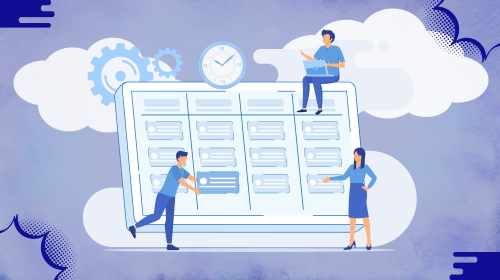
In the past, data was synchronized periodically using batch processing, which often resulted in significant delays in updating information. With iPaaS, each system can instantly obtain updated information, enabling timely business operations such as responding to customers and checking inventory. Real-time collaboration is also highly effective in manufacturing and logistics, helping to speed up operations and reduce errors.
Automate and streamline the entire business process
Automating the connections between systems reduces repetitive tasks performed by personnel and allows resources to be allocated to higher-value-added tasks. Another benefit of iPaaS is that it improves process accuracy while preventing human error. In particular, it makes it easier to visualize the entire workflow, making it easier to identify bottlenecks and continuously improve operations.
Reduced IT costs and operational burden
Integration between individual systems typically requires coding and individual maintenance, resulting in significant labor and development costs. iPaaS enables integrated management, so operational burdens such as maintenance and version control can be handled all at once. Furthermore, no-code integration capabilities reduce the need to hire external engineers on a large scale, potentially reducing overall IT costs.
Benefits and Effects of iPaaS
Let's take a look at the specific benefits that can be gained by introducing PaaS.
In the past, it required a lot of effort to connect various services and bridge legacy systems. By introducing iPaaS, you can quickly build the necessary data integration flows and make real-time information available both inside and outside the company. In addition, the no-code environment improves implementation speed, allowing you to focus resources on strategic initiatives.
Utilizing data through real-time collaboration
The ability to instantly acquire and analyze data that is constantly updated to the latest state directly leads to improved corporate competitiveness. By linking with data analysis platforms such as machine learningand BI tools, data can be aggregated and visualized in real time, supporting rapid decision-making. Effectively utilized data not only improves the quality of services, but also plays a role in expanding the scope of marketing and customer support.
Quick deployment with no-code environment
Traditional system integration required specialized programming knowledge and long-term development projects. However, iPaaS's no-code/low-code approach allows you to intuitively configure connected services and data flows using a GUI. Reducing development burden shortens implementation lead time and creates flexibility to immediately try out new ideas and projects.
Smooth integration of new and old systems
Many companies still have legacy systems that have been in use for many years, and completely replacing them would take time and cost money. Utilizing iPaaS allows for gradual integration by bridging the gap between existing on-premise environments and the latest cloud services, making it possible to proceed with the migration without disrupting business operations. By achieving hybrid operation of legacy and cloud, you can maximize the benefits while minimizing the risks of introducing the latest technology.
Key features of iPaaS
We will explain the main functions that iPaaS provides and how it supports your business.
At its core, iPaaS is a system that centrally manages multiple applications and data sources and allows for flexible workflows to be assembled as needed. Because it handles everything from data integration to API management all in one place, maintenance and expansion become easier. Another major feature is that, when combined with a no-code/low-code environment, it allows a wide range of users to create their own business processes.
data integration
iPaaS acts as a bridge to consolidate data that is scattered across various formats and protocols. This eliminates the need to convert formats between systems, and makes it easier to manage access rights and maintain data quality. As a result, necessary data can be exchanged in a consistent format, improving the efficiency and accuracy of overall business operations.
Workflow automation
By automatically data integration and processing data according to a pre-defined workflow, the burden of manual work can be significantly reduced. For example, you can implement a process in which an inventory management system is notified when order data is updated, and shipping instructions are automatically issued if there is a change in inventory status. This reduces errors and delays, enabling seamless business operations.
API management
It centrally manages APIs provided by cloud services and internal systems, comprehensively handling security, authentication, version management, etc. Even if there are changes to the API endpoints or specifications, its strength is that it can be adapted to all connected destinations by changing the settings in one place. This improves development efficiency, allowing for the smooth and safe expansion of connected destinations and functional enhancements.
HULFT Square, an iPaaS provided by Saison Technology

iPaaS-based data integration platform HULFT Square
HULFT Square is a Japanese iPaaS (cloud-based data integration platform) that supports "data preparation for data utilization" and "data integration that connects business systems." It enables smooth data integration between a wide variety of systems, including various cloud services and on-premise systems.
Types of iPaaS
Understand the typical forms of iPaaS and use this as a reference when selecting the platform that suits your company.
Although iPaaS is generally referred to as such, it can be categorized into several types depending on the integration method and purpose. Depending on the usage scenario and system requirements, a specific form may be optimal, so it is important to consider it in light of your company's business flow and technology stack. Understanding the characteristics of each type, especially recipe-based and ETL/ELT-based, will help you aim for a more efficient implementation.
Recipe type
This type allows you to quickly build standard data integration and processes using pre-prepared templates and recipes. Cloud services can be integrated with each other with just a simple setup, making it easy to adopt even for teams with low development skills. Although scalability is often limited, it is suitable for companies that want to start with a simple integration.
ETL/ELT type
This is a specialized form of data processing that extracts and transforms large amounts of data and loads it into a data warehouse or data lake. It is often used in combination with big data analysis and BI tools, and is suited to companies that place importance on data analysis. However, because the management of large amounts of data and performance are more important than simple message integration, requirements tend to be more meticulously defined.
EAI type
EAI (Enterprise Application Integration)is a type of integration that aims to integrate multiple applications running within a company and facilitate the exchange of data. It is often adopted by large companies that mainly use legacy systems and on-premise environments, and it reduces point-to-point connections and allows for the creation of hub-type connections. As it is primarily focused on internal integration, it is more effective at controlling systems within a company than at linking with external services.
ESB type
ESB (Enterprise Service Bus) is a core communications platform that connects various systems within a company or distributed systems using a bus-like mechanism. It provides a unified infrastructure by centrally managing message routing, protocol conversion, security, etc. It is suitable for large-scale environments that require high reliability and scalability, and is characterized by its ease of realizing a loosely coupled architecture.
Embedded iPaaS
Embedded iPaaS refers to the incorporation of iPaaS functionality into the products and applications they offer. User companies benefit from seamless access to data integration and workflow automation functions through the product. For vendors looking to differentiate their customer-facing services, it is often used as a way to increase the added value of their solutions.
iPaaS market size and growth potential
With the global trend of accelerating cloud shift, the iPaaS market is also expected to expand rapidly.
With the recent spread of remote work and the emergence of a wide variety of business applications, the need for system integration is increasing. iPaaS leverages the strengths of the cloud to enable rapid implementation and expansion, and is currently being considered for adoption by companies of all sizes. Market research predicts that demand for iPaaS will grow significantly over the next few years, and it is believed to become an essential foundation for promoting digital transformation.
Differences between RPA, SaaS, PaaS, and IaaS
We will clarify the differences and usage between process automation tools and cloud services, which are often confused.
When discussing system integration and business automation, it is important to correctly understand the differences between RPA and various cloud services such as SaaS, PaaS, and IaaS. RPA excels at automating user interface operations, while iPaaS excels at internal system integration and data integration. Furthermore, SaaS, PaaS, and IaaS represent cloud service tiers, with iPaaS positioned as a middle layer that seamlessly connects multiple services.
▼I want to know more about PaaS
⇒ PaaS|Glossary
▼I want to know more about IaaS
⇒ IaaS | Glossary
How to use it with RPA
RPA (Robotic Process Automation) is primarily focused on automating screen operations, effectively replacing routine processes that were previously performed manually. On the other hand, the greatest feature of iPaaS is that it automates the exchange of data between systems and handles integration at the API level. RPA is effective when business operations involve many operations via user interfaces, but if various services provide APIs, using iPaaS can be expected to provide more robust and scalable integration.
Positioning in comparison with SaaS, PaaS, and IaaS
SaaS (Software as a Service) refers to the delivery of software via the cloud, PaaS (Platform as a Service) refers to the provision of an application development base, and IaaS (Infrastructure as a Service) refers to the provision of an infrastructure platform. While each of these services covers different areas of responsibility, iPaaS bridges the gap between data and functions and facilitates integration between these services. In other words, iPaaS is positioned as a key component for making the most of SaaS, PaaS, and IaaS.
Relationship with FaaS, DaaS, etc.
FaaS (Function as a Service) is a serverless system for executing code, while DaaS (Data as a Service) refers to the provision and utilization of data as a service. By linking these services with iPaaS, it is possible to build a comprehensive system that handles everything from a series of data processing to function execution and analysis. For example, a wide variety of combinations are possible, such as triggering a specific event to execute code in FaaS, and then processing the data obtained by DaaS in iPaaS.
iPaaS implementation steps and selection points
To ensure a successful implementation, we will explain everything from advance preparations to checkpoints when selecting the system.
Successful implementation of iPaaS requires clarifying requirements, streamlining existing systems, and making thorough comparisons when selecting products. It's also important to understand the API availability and pricing plan structure to avoid unexpected limitations or costs after implementation. Ultimately, the key to continued use is whether the support system during the operational phase is stable.
Preparation before implementation: Defining requirements and organizing existing systems
First, a company needs to clarify which business processes they want to automate and which systems they want to integrate. They must identify the roles and data formats of each existing system and determine the priority of integration. Solidifying requirements at this stage will ensure smooth process and operational design after implementing iPaaS.
Criteria for product selection: compatible services, security, support system
Each iPaaS vendor has different capabilities in terms of the range of cloud services and APIs they can support, their security standards, and their support systems. It's important to carefully assess whether the service meets your company's requirements and ensure it can accommodate future expansion. It's also important to remember to check the details of the service, such as the speed of response to inquiries and the comprehensiveness of documentation, in preparation for actual operation.
Important points to note when implementing: API availability, additional costs, etc.
When actually implementing a system, a key point is whether the cloud service or internal system to be integrated has a public API. Non-public APIs or APIs with many restrictions may prevent integration or result in additional development costs. In addition to the basic fee, there may be cases where fees are incurred for exceeding data volume or increasing the number of integrations, so it is important to understand the pricing structure before implementation.
Saison Technology provides professional services for iPaaS implementation

Saison Technology's professional services provide comprehensive support for every phase of data integration, from considering the implementation of HULFT Square to initial construction, in-house development, daily operations, and even company-wide standardization.
iPaaS use cases
We will imagine the effects of introducing iPaaS based on specific usage scenarios.
iPaaS is an effective solution for any industry or business type, but it is particularly effective for companies that use multiple cloud services in combination or in conjunction with on-premise systems.By connecting systems scattered across departments, it has the great advantage of reducing manual data entry and transcription errors and raising productivity throughout the organization.
Automatic linkage between in-company systems
There are many examples of vertical integration between core systems used within a company, such as ERP and CRM. For example, customer data entered by the sales department is automatically linked to the accounting system, greatly improving the efficiency of creating quotes and invoices. Reducing data duplication and missed updates makes it easier to share information between departments, improving the quality of business decision-making.

Case studies | Furusato Maruka Holdings Co., Ltd.
No-code development using iPaaS reduces development time by up to 80%
Developing a highly scalable data integration platform including EDI
Linking with data analysis platforms
In the age of big data, collecting and analyzing data in real time is crucial for building a competitive advantage. By automatically integrating information obtained from CRM, ERP, and even external data sources into an analytical platform using iPaaS, lag time to decision-making can be minimized. Handling frequently updated data in an integrated manner also has a positive impact on marketing strategies and product development.
Case Study | Nissin Foods Holdings Co., Ltd.
Establishing data integration and analysis platform that utilizes generative AI to contribute to "data-driven" management
HULFT Square ensures scalability of data integration with a wide range of connectors
Hybrid integration of legacy systems and cloud services
Hybrid integration using iPaaS is extremely effective for companies that use both existing on-premise environments and the latest SaaS and PaaS. Rather than completely replacing legacy systems, companies can gradually move to the cloud and create a system where data on both systems is synchronized in real time. This allows for a gradual transition without disrupting business operations, while making it easier to take advantage of the latest technology.

Case Study | Seven Bank, Ltd.
Seven Bank aims to spread AI and data utilization throughout the company
HULFT Square contributes to the implementation of data integration platform and an environment for utilizing generative AI
The Future Outlook for iPaaS in the Cloud Era
How will iPaaS evolve in the increasingly sophisticated cloud environment?
It is expected that corporate IT environments will become more complex, not only through collaboration between clouds, but also through the combination of AI, microservices, and IoT. In this environment, iPaaS will evolve into a platform with advanced automation functions and scalability, and will play a central role in realizing a variety of collaboration scenarios.
Expanding collaboration with AI and microservices
AI and microservices divide systems into smaller units, improving maintainability and scalability and enabling rapid response to business changes. By strengthening integration with these technologies, iPaaS is expected to support nonstop data analysis and feature additions in line with decision-making. In the next-generation cloud environment, these integrations will become a key factor in determining a company's competitiveness.
Evolution as an automation platform
iPaaS has the potential to expand beyond simply being a collaboration mechanism into an automation platform that achieves total optimization of business processes. By linking with RPA and workflow management tools, an environment will be created in which tasks scattered across departments and systems can be automated in a seamless manner. Companies can use this environment to create new processes in an agile manner, making it easier to respond to ever-changing market needs.
summary
As technology continues to rapidly evolve, iPaaS is establishing itself as a data integration platform that transforms business and creates new value. Seamless integration of applications and data sources eliminates the data silo issues companies face, improving business efficiency and automating operations. Maximizing data utilization will further increase business value.
By carefully defining requirements and selecting key points during implementation, it is possible to reduce unnecessary costs and rework. Furthermore, as integration with AI and microservices advances in the future, the scope of iPaaS use will continue to expand, and it will undoubtedly become the foundation supporting a company's competitive advantage. As iPaaS evolves, business possibilities will also expand infinitely. In an increasingly complex cloud and on-premise environment, optimal utilization in line with corporate strategy will be the key.
The person who wrote the article
Recommended Content
-
Why we recommend iPaaS for data integration | A thorough explanation of iPaaS
We will thoroughly explain why iPaaS is suitable for data integration, how it differs from traditional methods, and how it is actually used. -

What is data integration? A comprehensive explanation of its purpose, benefits, and practical methods
We will provide a detailed explanation of the definition of data integration, its benefits, methods, and points to note, as well as introduce use cases and answers to frequently asked questions. -

RAG's data governance realized through iPaaS
We will introduce how using iPaaS can ensure governance in the use of RAG and how it can be used safely and efficiently in business.
Related Content
-
The Use of Generative AI in Talent Management: From Intuition to Data-Driven Approaches
-
What is CDC (Change Data Capture)? – A method for securely and reliably transporting data from on-premises systems.
-

data integration techniques for character code conversion—preparing for a mix of SJIS, JEF, and Unicode.