

The Use of Generative AI in Talent Management: From Intuition to Data-Driven Approaches

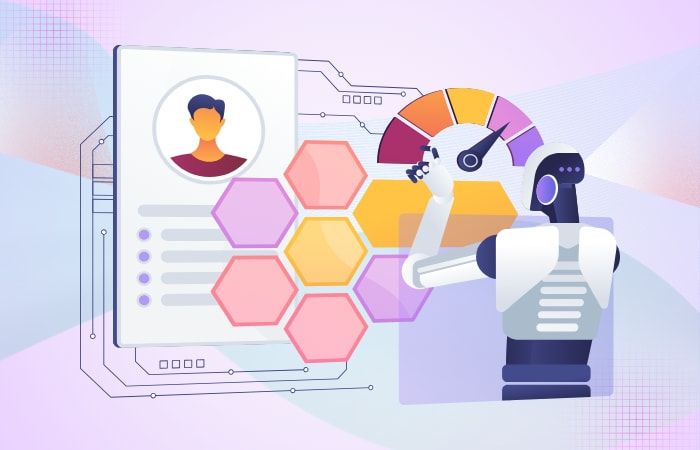
In your daily work, do you ever find yourself wondering, "Who should I entrust with leading this project?" You write down and cross off names of potential team members, only to end up relying on "that usual person"—this is a common situation in many workplaces.
In today's world, where maximizing the value of human capital is paramount, optimizing talent allocation is a crucial management challenge. This column will explain specific methods for utilizing generative AI in performance evaluation and project assignment, as well as its effects.
Current challenges in talent management
Many companies are working to use data to maximize the potential of each employee, but there are several common obstacles to overcome before they can achieve strategic talent development and assign the right people to the right positions.
The difficulty of data distribution and centralized management
The first challenge is that information about personnel is scattered throughout the company. Basic profiles are in the HR system, daily activities are in communication tools, and project performance is in individual reports, resulting in isolated data. The inability to centrally manage this data hinders objective decision-making and reduces the accuracy of assignments.
Underutilization of unstructured data
The second issue concerns data format. While easily quantifiable data such as qualifications and years of service are readily accumulated, unstructured data such as experience recorded in resumes and daily reports, and changes in motivation reflected in interview records, tend to be left unused and difficult to utilize. However, it is in this kind of data that a person's true strengths are hidden.
Personalization of assignments and associated risks
The third issue is the personalization of the decision-making process. When talent selection relies on the memory or limited network of specific managers, employees who would otherwise be suitable may be overlooked. This not only leads to a decline in overall organizational engagement but can also increase the risk of employee turnover due to a lack of appropriate career opportunities.
Use Case ① Selection of store manager candidates for new store opening (B2C retail)
As a concrete example, let's consider the scenario of opening a new store in the B2C retail industry. For instance, if a new store is to open in an area experiencing a surge in foreign tourists, the store manager will need more than just operational skills.

Complex personnel requirements needed on-site
The proposal for the new store should include requirements such as the following:
- Understanding of diverse cultures and the ability to respond flexibly in multiple languages
- The ability to communicate and inspire those on the ground without being intimidated by unexpected situations.
- The ability to make calm judgments when troubles occur or in emergencies.
Traditionally, finding someone who met these requirements required HR personnel to go through the enormous task of reviewing hundreds or thousands of employee profiles one by one and deciphering past performance records.
The effectiveness of AI-generated matching and talent development.
By utilizing generative AI, the AI can automatically extract necessary requirements from new store proposals and extract the most suitable candidates from an integrated database.
The AI doesn't just look at TOEIC scores in the qualifications section. It analyzes episodes from past daily reports, such as what kind of efforts were made to handle inbound tourists and what kind of leadership was demonstrated during troubles. It can objectively evaluate aptitudes that were difficult to see with traditional performance evaluations alone, such as "a young employee who, despite not having qualifications, is better at providing attentive service to multinational customers than anyone else on the front lines" or "a staff member who actually has extensive experience in cross-cultural exchange and is trying to utilize that knowledge in store operations."
Assignments based on this kind of data utilization not only increase employee satisfaction, but also have a significant impact on talent development, such as effectively preventing employee turnover and fostering the next generation of leaders.
▼I want to know more about generative AI
⇒ Generative AI | Glossary
Use Case ② Optimization of Project Assignment (B2B Information and Communications Industry)
Next, let's look at an example of a project assignment in the B2B information and communication industry, where more specialized skills are required. Let's assume that you have been commissioned by a fictional financial institution, Sankai Bank Co., Ltd., to build a highly complex sales support AI.
Bridging the gap between ideals and reality
This project requires a team of specialists, including project managers, system architects, AI engineers, and data engineers. However, in reality, members with the ideal skills and experience are not always readily available.
The biggest advantage of using generational AI here lies in its flexibility: when there isn't a perfect candidate who scores 100%, it can present highly accurate alternative solutions.
Maximizing productivity through flexible selection
Based on the skills and experience of the waiting members, the AI supports the following multifaceted decision-making:
- If there are no PM candidates with experience in building sales support AI, we will select PMs with very deep knowledge of the financial industry and experience in managing large-scale projects as candidates.
- Although they have limited leadership experience, we propose this engineer as a candidate for Project Leader (PL) because they are the most familiar with the latest technology stack being used in this project and have received high marks in past code reviews.
By comprehensively evaluating skill compatibility and past performance, and presenting the selection criteria, the time required for assignment consideration can be significantly reduced. The ability to quickly assemble the optimal team directly increases the project's success rate and improves overall organizational productivity.
What will be the data sources for talent management?
To achieve highly accurate data utilization, the source of information is crucial. To gain a multifaceted understanding of employee profiles, we integrate and utilize the following data:
Human resources-related systems
This includes foundational data such as name, job title, basic work history, skills, and performance evaluation results. Keeping this data up-to-date is a prerequisite for the analysis.
Communication tools (such as Microsoft Teams and Slack)
Chat history reveals a person's current interests, how they collaborate with others, and their level of contribution to technical discussions. These represent dynamic qualities and engagement levels that are difficult to grasp from static data alone.
Personality assessments and aptitude tests (MBTI, CliftonStrengths, etc.)
By incorporating individual personality traits, strengths, and qualities as data, it becomes important material when considering compatibility in team building and optimal role assignments tailored to individual motivations.
On-site documents (resumes, daily work reports, project reports, etc.)
In addition to resumes, daily work reports and final project reports contain detailed records of the challenges an individual faced and how they overcame them. By analyzing these with AI, it becomes possible to grasp expertise that is difficult to quantify.
Three steps to implement the system
Building a talent management system centered on generative AI requires a step-by-step approach.
1. Structuring unstructured data
First, we collect information such as chat history and PDF reports, and then use multimodal AI to convert it into structured data. This makes it possible to combine qualitative information, which was previously difficult to search or compare, with other personnel data.
2. Integration of multiple data sources
We link HR data, attendance data, skill data, and other information using each employee as the key. By building a data platform that allows for centralized information management, we create an environment where talent information can be accessed from the necessary angles at the necessary time.
3. Requirements analysis and matching using AI
The integrated data is passed to an AI agent, allowing it to understand the requirements of the project or new store. The AI objectively evaluates the relevance of candidates to the requirements from the vast amount of data and presents the most suitable candidates along with the reasons for their selection. This process enables highly transparent assignments that are not biased by any particular subjectivity.
Finally
The use of generative AI in talent management is not merely about streamlining operations. Integrating scattered data and objectively evaluating employee performance and qualities is a logical approach to maximizing individual potential.
Appropriate assignments contribute to improved employee engagement and reduced turnover, ultimately increasing the value of the company's overall human capital. Furthermore, mitigating the risk of reliance on individual employees in assignments and creating an environment where everyone can work with a sense of satisfaction is an essential element for sustainable organizational management.
A data-driven approach to human resources will be a crucial factor in determining an organization's future competitiveness. It's essential to start by taking stock of the data accumulated within the company, verifying its effectiveness with small use cases, and steadily advancing data-driven talent management.
Saison Technology Online Consultation
If you would like to hear more about our data utilization platform, we also offer online consultations. Please feel free to contact us!
The person who wrote the article
Recommended Content
-
HR system integration infrastructure construction service
Introducing our Data Integration service, which integrates fragmented HR data to accelerate strategic human resource management. -
How can we turn the "tacit knowledge" lying dormant within our company into "AI knowledge" and utilize it?
We will explain the specific process for turning unstructured data scattered throughout your company into an asset and maximizing the potential of AI. -
How to adapt generative AI to the realities of corporate activities
We will explore the basic concepts and potential of generative AI, as well as the problem known as hallucination, and introduce concrete methods that companies can use to apply this technology in their operations.
Related Content
-
What is CDC (Change Data Capture)? – A method for securely and reliably transporting data from on-premises systems.
-

data integration techniques for character code conversion—preparing for a mix of SJIS, JEF, and Unicode.
-

Why are SoR and SoE separated? – Solving the operational challenges of "bimodal IT" through data integration.