

When we think of spring, we think of cherry blossoms, but there are some surprising facts about the origins of the Somei Yoshino cherry tree, such as the fact that its roots are unknown.

This is Watanabe from the marketing department.
This is a column that casually writes about various topics related to data, IT, etc.
This time too, the topic is "spring-like."
This time, I'd like to continue talking about things that are "spring-like." I'd like to talk about the very thing that comes to mind when you think of spring: Somei Yoshino cherry blossoms.
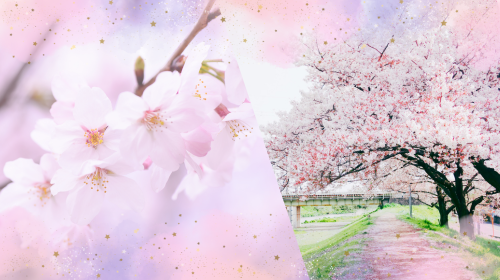
When we think of spring, we think of cherry blossoms.
In Japan, when we think of spring, we think of cherry blossoms. They are truly the symbol of spring in Japan. If, for some reason, you had to move far away from Japan, I think you might find yourself thinking, "I wish I could see the cherry blossoms in spring," when you think of Japan from afar. That's how strong the impression of spring cherry blossoms is when it comes to seasons and the local culture in Japan.
What we call "spring cherry blossoms" is actually the Somei Yoshino cherry tree. Although there are many trees classified as cherry blossoms in Japan, the term "cherry blossom" is so overwhelmingly associated with the Somei Yoshino that it almost exclusively refers to the Somei Yoshino.
The Somei Yoshino cherry tree is so ubiquitous in Japan that it's the first thing that comes to mind when you think of spring. It's so well-known that everyone recognizes it, yet it also has a fundamental mystery surrounding it. For a long time, the origins of the Somei Yoshino cherry tree (where it came from) remained unclear.
What kind of tree is a Somei Yoshino cherry tree?
Somei Yoshino cherry trees are planted all over Japan. It would be easier to understand if they were a rare, mysterious type of cherry tree, but they are trees that are commonly planted in neighborhoods, yet there were basic things about them that we didn't understand.
It made such a strong impression that it became established as the "image of Japan."
First of all, Somei Yoshino cherry blossoms have a distinctive characteristic as a spring flower. In spring, a large number of flowers bloom all at once, creating an overwhelming impression as the entire tree, or even an entire row of cherry trees, is enveloped in pink, giving a gorgeous and beautiful impression. And unlike other flowers, they are also striking for their transience, as they scatter after only a short period of time.
There are many flowers that bloom in spring, and there are many varieties of cherry blossoms other than Somei Yoshino, but even considering all of that, the impression of Somei Yoshino is outstanding, and I think it has created the image of "spring means cherry blossoms" to the point that when people hear the word "spring," they immediately think of Somei Yoshino in bloom.
Since they don't produce seeds, they are all clones.
Many cherry trees produce fruit (so-called cherries) after the flowers bloom, but Somei Yoshino cherry trees rarely produce cherries, and even when they do, the fruits are very small. Furthermore, even if cherries do grow and seeds are collected, planting them will not result in a Somei Yoshino tree growing.
In other words, Somei Yoshino cherry trees do not produce seeds and cannot be propagated by seed. This is an unusual characteristic for cherry trees that grow naturally in the wild. So how is it that they are planted all over Japan if they don't produce seeds? The answer is that they are propagated by cloning. Branches from existing Somei Yoshino trees are taken and grafted onto other trees, or planted as cuttings in the ground and grown again to create new Somei Yoshino trees.
Furthermore, because they are clones, all Somei Yoshino cherry trees throughout Japan have identical genes, and therefore, the characteristics of each tree are also similar. As a result, under the same conditions, they tend to bloom at the same time. The fact that "the entire row of cherry trees blooms at the same time" creates an overwhelming impression of flowers, while the fact that "the entire row of cherry trees falls all at once" creates a fleeting impression.
While Somei Yoshino cherry trees are being propagated through cloning, it's not possible to create and increase their numbers from nothing. However, they are not a naturally occurring species (since they don't produce seeds, they cannot reproduce naturally). The "first Somei Yoshino" must have been born from a seed somewhere at some point, and that tree has been propagated ever since, but for a long time, the origins of the Somei Yoshino—where it came from—remained unclear.
It is short-lived and has many difficulties.
Somei Yoshino cherry trees are generally short-lived. While trees often live longer than humans, and some have even lived for thousands of years, Somei Yoshino cherry trees typically reach the end of their lifespan after about 60 years.
When you see a row of cherry trees, you might think that this scenery has been in this town forever, but if we consider that their lifespan is about 60 years and it's currently 2026, then the Somei Yoshino cherry trees we see were basically planted after the period of rapid economic growth. In fact, it's said that the peak of their blooming season is about 20 to 30 years after planting, so unless they are old trees, it's more likely that they were planted during the Heisei era.
The reason for this is that Somei Yoshino cherry trees are susceptible to diseases and pests. It is known that with careful management, they can remain healthy for over 100 years, and for example, at the Koishikawa Botanical Garden in Tokyo, Somei Yoshino cherry trees planted during the Edo period are still healthy and over 200 years old. However, generally, they are not managed to that extent, and when planted as street trees, the environment is often harsh, so they generally do not live very long.
Somei Yoshino cherry trees grow very quickly and are short-lived, so the Somei Yoshino cherry tree in your neighborhood might be younger than you, and it's highly likely that it won't outlive your grandparents.
You might also notice that sidewalks are uneven and difficult to walk on due to tree roots. This is another unfortunate phenomenon caused by the characteristics of Somei Yoshino cherry tree roots, and despite being planted all over Japan, it has characteristics that make it unsuitable as a street tree.
Somei Yoshino cherry trees in historical records such as ancient documents
The origin of Somei Yoshino cherry trees is unclear, so investigating their past history requires examining historical documents rather than the trees themselves.
It is believed to have been born in the late Edo period.
Cherry blossoms are now so synonymous with Japan that some believe the "spring scenery" we see today has existed since ancient Japan. However, research into ancient documents reveals that Somei Yoshino cherry trees are "highly likely to have originated in the late Edo period." This is because there are no mentions of them before that time. Furthermore, it is known that they only became widely planted throughout Japan much later, after the Meiji era.
In other words, our "image of cherry blossoms" also needs to be revised. In situations in Japanese history where cherry blossoms are mentioned, such as the famous "Daigo Cherry Blossom Viewing" held by Toyotomi Hideyoshi, the cherry blossoms Hideyoshi was viewing were not Somei Yoshino. From our current perspective, it is thought that the cherry blossom viewing was held with mountain cherry blossoms, which give a much more subdued impression as spring cherry blossoms.
In other words, the image of "cherry blossoms in spring" that we have in our minds is something that only came into existence in modern Japan after the Meiji Restoration.
He is believed to have been born in Somei Village (near present-day Komagome, Tokyo).
It is believed that the Somei Yoshino cherry tree originated in Somei Village, a suburb of Edo, during the late Edo period. Somei Village is located near present-day Komagome in Tokyo, which means it originated just three stations east of Ikebukuro Station on the Yamanote Line.
However, it seems that in the Meiji era, there were small streams flowing through Shibuya and rice paddies, and Komagome was not as urban as it is today. The area around Komagome at that time seems to have been home to gardeners and landscapers who took care of the plants in the gardens of daimyo residences, and it appears to have been a center of Edo's horticultural culture.
The origin of the name "Somei Yoshino"
The later Somei Yoshino cherry tree was initially marketed in Somei Village under the name "Yoshino." The name Yoshino seems to have been taken from the "Yoshino cherry blossoms" of Mount Yoshino in Nara, a famous cherry blossom viewing spot since ancient times. However, since the cherry trees planted on Mount Yoshino at the time were "mountain cherry trees," it was questioned why a cherry tree that was clearly not a mountain cherry tree was being called "Yoshino." So, it was renamed "Somei Yoshino (Somei Yoshino)" to indicate that it was a Yoshino cherry tree but from Somei Village.
When a new product comes out, it's common to use the name of an existing brand to promote it, and that's what happened when they tried to capitalize on the Yoshino brand. Nowadays, when people think of cherry blossoms, they think of Somei Yoshino, and it's actually overshadowed other concepts, so looking back, it's a rather interesting story.
Alternatively, there are also "○○ Fuji" varieties found throughout Japan, named after Mount Fuji (such as Satsuma Fuji, Nikko Fuji, Dewa Fuji, Echigo Fuji, or Haruna Fuji). And in the case of Somei Yoshino cherry blossoms, Nikko Fuji, which was supposed to be borrowing the name, became so famous that it actually became the case that more people didn't know about the original Mount Fuji.
Various theories about Somei Yoshino cherry trees
Now that we have a general understanding of the conclusion, it seems that "it originated in Somei Village during the late Edo period" is a fairly accurate explanation. However, in the past, there seem to have been various opinions on "where the Somei Yoshino cherry tree came from."
For example, there have long been theories that cherry blossoms originated naturally in other parts of Japan, such as the Izu Peninsula, that Somei Yoshino cherry blossoms are a species that grows wild in the natural world, and even that they are not native to Japan but to the Korean Peninsula.
Those who are actually involved in the daily cultivation of cherry trees seem to have thought that, based on various botanical characteristics, it must have originated from the source described later. However, this is subjective, or rather, it is "what people on the ground think is true," and it is not something that can be definitively concluded even in discourse where various opinions are expressed. As a result, the origin of Somei Yoshino cherry trees remained unclear for a long time (although Somei Village in the late Edo period is considered the most likely candidate).
Genetic analysis settles controversy
It was modern technology, "genetic analysis," that settled this situation. In other words, data analysis resolved the controversy. Since genetic analysis became possible, it has become clear that the cherry blossoms were indeed a hybrid of Edohigan and Oshimazakura, just as those involved with cherry blossoms had intuitively believed.
In 2019, the entire genetic sequence of the Somei Yoshino cherry tree was finally deciphered, making it possible to completely analyze its origins using data. As a result, it was discovered that "it originated from a cross between the Edo Higan and Oshima cherry trees native to Japan" and "the genes of all Somei Yoshino cherry trees throughout Japan are indeed the same and they were propagated by cloning." Furthermore, it has become possible to investigate how they spread throughout Japan through subtle genetic fluctuations that occur during cloning.
Oshima cherry trees are known for their rapid growth and large white flowers. However, they are a standard type of cherry tree that produces leaves at the same time as the flowers bloom. Originally, they were sometimes used as rootstock when grafting Somei Yoshino cherry trees. Because of the pleasant fragrance of their leaves, Oshima cherry leaves are used in sakura mochi (cherry blossom rice cakes), making them a familiar type of cherry tree in Japan since ancient times.
On the other hand, the Edohigan cherry tree is a type of cherry tree where "only the flowers bloom first, and the leaves appear after the flowers have fallen." However, the flowers are small and do not leave a strong impression, and unlike the Somei Yoshino cherry tree, it is long-lived and often grows into a giant tree over a long period of time.
In other words, it is thought that the combination of the Oshima cherry's "ability to produce a large number of flowers" and "rapid growth" with the Edo Higan cherry's "ability to bloom only the flowers first" resulted in the Somei Yoshino cherry's "overwhelming impression of a massive number of flowers blooming all at once in spring."
While this explanation makes it seem like a very natural conclusion, the definitive resolution of the controversy had to wait until genetic analysis clearly determined the answer.
However, there are still things that remain unclear.
When you hear that "the conclusion has been reached through genetic analysis," you might think that "everything is now clear," but that's not actually the case.
While it has been revealed that "the first mention in historical documents is in Somei Village during the late Edo period," "there are still Somei Yoshino cherry trees planted in the late Edo period at Koishikawa Botanical Garden," and "genetic information indicates that it is a hybrid of Edo Higan and Oshima cherry trees," the exact moment of Somei Yoshino's birth—"when," "where," and "how"—remains unknown.
It's possible that a landscape gardener in Somei Village thought, "If we combine the best qualities of Edohigan and Oshimazakura, we can create the perfect cherry tree," and then successfully performed artificial crossbreeding to produce it.
Alternatively, in Komagome, where there were many gardeners and therefore a constant abundance of cherry blossom varieties, it's possible that an accidental cross between the Edohigan and Oshima cherry trees occurred, and someone noticed how wonderful the resulting cherry blossom was.
Alternatively, it's possible that the Somei Yoshino cherry tree was brought to Somei Village, a place where various plants from all over the country gathered for Edo (meaning it originated elsewhere), and was then extensively marketed in Somei Village.
In other words, "when, where, and in what form the first moment occurred" remains a mystery.
And there are still some surprising facts about us today.
And there's another surprising fact for us today (besides our short lifespan): the cherry trees we think of as Somei Yoshino are actually no longer Somei Yoshino.
While Somei Yoshino cherry trees make a stunning impression with their blossoms, they also have several drawbacks, such as being susceptible to diseases and pests, having a short lifespan, developing roots that can lift and uneven sidewalks, and, as they age, having rotting trunks that can cause accidents by falling over.
Therefore, when replacing Somei Yoshino cherry trees that have reached the end of their lifespan, it seems that alternative varieties such as "Jindai Akebono" and "Komatsu Otome," which closely resemble Somei Yoshino but have stronger resistance to diseases and pests, are increasingly being planted. In the future, people who think they are viewing Somei Yoshino cherry trees may find themselves in situations where they are actually viewing something different.
Examples of "pursuing facts using data"
Up to this point, I've been writing about the origins of the Somei Yoshino cherry tree as a rather interesting story related to spring.
I'd like you to consider this: "In order to do something new in business, we need to investigate what the market is like and draw conclusions about what's happening," or "drawing conclusions from data," which is something we're expected to work on in the future. This story, however, is about doing something similar, but using the Somei Yoshino cherry blossom as the theme.
While there's a lot of talk about data utilization these days, I feel that it often ends up being just about learning data analysis techniques or how to use BI tools to visualize data.
In discussions surrounding Somei Yoshino cherry trees, it seems that the key is rather gathering evidence (data) and conducting in-depth analysis. Facts about the actual Somei Yoshino trees—what they are like now, how they were planted, and what characteristics they possess—are gathered, along with historical records based on ancient documents, and ultimately, solutions are sought through the overwhelming power of data, such as genetic analysis. It seems that the crucial and challenging part is not just the process of analyzing and drawing conclusions, but also the effort to gather a wide variety of "related things" from all angles.
We provide products that "connect" a wide variety of data and IT systems. While you might want to analyze data, you first need data itself. To deepen your analysis, you need data from various sources, but simply preparing it can be incredibly time-consuming. To address this common need, we offer "DataSpider" and "HULFT Square" as a way to freely create solutions using a "no-code" approach that users can easily utilize themselves.
Data analysis isn't just about finding out things like "A had a higher value than B." It also has the potential to yield rich insights, such as the fascinating conclusions about the origin of the Somei Yoshino cherry tree. We hope you'll consider using our product as a means to realize such wonderful possibilities from diverse data.
The person who wrote the article
Related Content
-
I always find the "Yamazaki Spring Bread Festival" interesting in many ways – the possibilities of "adding a little something extra."
-
When the aurora appears, earthquakes occur, and when diaper sales lead to beer sales - it's surprising to see "unexpected correlations" in the world
-
"Miraculous comebacks" really do happen (quite often) - Kataller Toyama's miraculous J2 survival