

The "free rice" at Iekei ramen restaurants is actually a blessing for the establishments – what constitutes good innovation?

This is Watanabe from the Marketing Department.
This is a column that casually covers a variety of topics related to data, IT, and more.
Why is rice free at "Iekei Ramen" restaurants?
This time, I'd like to consider "what constitutes good innovation" by looking at everyday topics.
I'd like to talk about how the "free rice" offer at Iekei Ramen, which you're all familiar with, seems to be a more well-thought-out idea than you might expect.
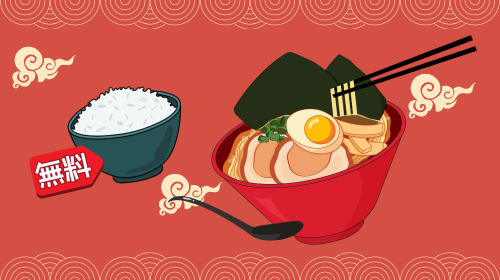
"Iekei Ramen" (just in case you're wondering)
I don't think it's necessary to explain, but just in case, "Iekei Ramen" refers to ramen shops that serve a unique style of ramen, often with names ending in "-ya".
Iekei ramen is a type of ramen made using both pork bones and chicken bones. It is characterized by a soup that combines the richness of pork bones with the umami and sweetness of chicken bones, a strong flavor from the soy sauce-based seasoning, richness from chicken oil, thick, chewy noodles, and is topped with seaweed.
When ordering, you choose the "noodle firmness," "flavor intensity (amount of tare sauce)," and "amount of oil (amount of chicken oil)" and "call out" (verbally communicate your preferences using a unique phrase when ordering), which is a style that is typical of Iekei ramen. Also, it is common for free rice to be included, which is another style typical of Iekei ramen.
Yokohama is its root.
Iekei ramen originated in Yokohama, and the original ramen is said to have been created by "Yoshimura-ya," which was founded in 1974 and developed through its own unique methods. It is a relatively recent creation compared to the ramen from all over Japan that have their roots in the food shortages of the pre-war or post-war period (for example, the "Niigata ramen" that we discussed earlier has such roots).
I think Iekei ramen is now widely known throughout Japan, but for example, in the Kansai region, even in the 21st century, I don't think it was that well-known. When I came to Tokyo, I was surprised to find Iekei ramen everywhere, and it seemed like everyone knew the unique ordering style without any explanation.
Originally, the owner, who used to be a truck driver and traveled all over Japan, came up with the idea of combining Hakata ramen's pork bone broth with Tokyo ramen's chicken bone broth, and it became popular and spread from there. As for the "free rice" that we'll be discussing today, it wasn't something he intentionally came up with, but rather it seems to have originated from customers who used to eat ramen and rice together, a kind of "B-grade filling" way of eating.
The "family lineage" system seems to be well-designed.
I've written a brief explanation, but I'm not particularly knowledgeable about Iekei ramen itself, and I think everyone is familiar with it without further explanation, so I'll leave it at that.
Also, it's not like I'm particularly fond of Iekei ramen. There are just so many Iekei ramen shops that I see them often, and as a result, I end up eating it quite a bit. But, for example, if I had to choose between Iekei ramen and Jiro-kei ramen, I think I'd most likely choose Jiro-kei ramen.
So, I'm not someone who actively eats it or is a huge fan of the taste (I sometimes wonder if it's because there are so many shops now that it's hard to find one that truly impresses me), but despite that, I've always been interested in and impressed by Iekei ramen. That's because I think it's a very well-designed "system."
A unique ordering style for a special experience at the store.
I think the foundation of Iekei ramen lies in its straightforward, rich, and delicious flavor, and its high level of basic performance as a B-grade gourmet dish that fills you up. However, there are many other B-grade gourmet dishes that offer similar satisfaction, and while Iekei ramen is tasty, it's not outstandingly delicious compared to others; rather, I think it's more like it's just slightly above average (at least that's my personal opinion).
However, even just the first time you eat Iekei ramen, it leaves a lasting impression. The style of ordering by specifying the "noodle firmness," "flavor richness," and "amount of oil" to customize it to your liking is a unique experience, and in fact, it gives the impression that "that kind of shop" is what Iekei ramen is all about.
Moreover, the ordering process, with requests like "firmer noodles, stronger broth, less broth," has a certain "atmosphere" that gives the impression of "I'm ordering as a knowledgeable customer." It also gives the customer a sense of participation in the dining experience.
The technique of using specialized terminology to create atmosphere can be seen elsewhere. For example, at Gyoza no Ohsho, the staff sometimes use their own code-like terms to call out to each other after taking an order, such as "Ee-ga-ko-teru, So-han-i" or "Liang-ga-ko-teru," deliberately using them loud enough for customers to hear, to enhance the atmosphere of the restaurant. By the way, "Ee" means one serving, "Liang" means two servings, "Ga" means one piece, "Ko-teru" means dumplings, and "So-han" means fried rice. In reality, they're not saying anything particularly profound, so it could easily be done in Japanese.
Adjusting the ramen preparation method for each customer is inherently time-consuming and inefficient. In fact, customers accustomed to Iekei or Jiro-kei ramen may make the same requests (for example, "firm noodles") at other ramen shops, but the shop owner will ignore them. From the shop owner's perspective, they are serving the ramen in its best possible state, so don't ask for amateur adjustments. In fact, it can even be considered a nuisance.
However, this is the system that Iekei ramen has, and when I hear Iekei ramen, I immediately think of the ordering process. In fact, I wonder if people who order "firm noodles" are doing so to feel satisfied by giving the impression that they are particular about their ramen. I've also heard that the noodle manufacturers make the noodles to be delicious even when they are "normal," and in fact, I think that the normal noodles are often tastier because they don't have that strange undercooked feeling.
But even knowing all that, when you come to a ramen shop specializing in Iekei-style ramen, you still want to say things like, "I want my noodles firm." Those kinds of things are part of the fun and richness of life, and eating at an Iekei-style ramen shop is an experience that's built into the menu.
The "free rice" offer feels very well thought out.
Another characteristic of Iekei ramen is that "rice is free."
The explanation given for this is "to make sure customers are full," but if the only goal is to make customers full, then "free extra noodles" would achieve the same objective, and it wouldn't involve the extra work of cooking rice and boiling noodles separately. So why rice?
First of all, just like with the calls, you might find signs posted in the shop encouraging you to eat your rice with care. For example, you might try adding grated garlic or chili bean paste to your rice, or try the traditional way of eating it that has been around since the early days of Iekei ramen: wrap the rice in seaweed soaked in the soup.
However, what seems even more important (for the restaurant) is that they recommend "eating rice with ramen soup." For example, they suggest pouring ramen soup over rice and eating it, or adding rice to the soup after you've finished the noodles and eating it as ramen rice.
For ramen shop owners, especially those serving rich, oily ramen, the cost of disposing of soup is something they cannot ignore. If oily liquid is poured directly down the drain, it will solidify and clog, so it must be disposed of in some way, incurring disposal costs.
The ideal scenario for a restaurant is to avoid any processing costs, which means that customers either finish their ramen down to the last drop of soup or at least eat some to reduce the amount of oil consumed. Now let's consider the meaning of "free rice." For the restaurant, it's a trump card to accelerate customers' soup consumption, isn't it?
- What does "free rice" mean?
- For customers, it's the source of a "unique Iekei experience" where they can creatively eat rice using table condiments, ramen seaweed, and soup.
- This kind of "suggestion for creative ways of eating" seems to be evolving rapidly in new Iekei ramen chain restaurants (for example, offering unique side dishes specific to each store).
- For customers, the guaranteed source of satisfaction is the free rice that comes with the ramen and rice, which is a surefire way to fill up your stomach at a Iekei-style ramen shop.
- For the restaurant, it's a win-win situation: they can please customers while also reducing the cost of discarding soup.
- For customers, it's the source of a "unique Iekei experience" where they can creatively eat rice using table condiments, ramen seaweed, and soup.
When you think about it this way, I think it's a really well-designed system. By offering free rice, customers can fill their stomachs and be satisfied, and the shop owner benefits from reduced waste costs. No one is unfairly disadvantaged; everyone is happy. It seems like a very good idea.
I even think that this is what "true innovation" is all about. The person who stumbled upon this idea by chance and turned it into what it is today truly advanced the world.
On the other hand, the struggle over "free rice"
I think it's really well done, but on the other hand, the established convention that "rice is free with Iekei ramen" has also led to some difficulties.
The surge in rice prices has had a direct impact.
First, there's the soaring price of rice in 2025. As you all know, the price of rice has risen so much that at one point it became difficult to even obtain. In such a situation, it naturally becomes costly and difficult to offer "free rice." However, for customers who come to the restaurant thinking that "rice is a must with Iekei ramen," not being able to offer free rice is disappointing (even if they understand the reason intellectually), and it will cause a decline in customers.
The "free rice" policy, which had been the foundation of the family's success, has ironically become a source of trouble. Some restaurants continue offering free rice, considering it a fundamental part of the family's style, while others seem to have introduced a small charge of around 100 yen for it. Even at 100 yen, customers have to consider whether it's worth paying for, which reduces the amount of rice consumed, and likely increases the cost of discarding the soup.
In the future, rice prices may return to what they were before (and hopefully other prices will also stabilize), and we may return to an era where "free rice" is the norm. However, if that doesn't happen, we will have to re-examine what the best way to serve rice is, while maintaining the "family-style experience."
Trouble with people who simply don't eat
In other words, the "free rice" offer could be seen less as a generous service from the owner and more as a way to achieve their true desire to reduce the cost of discarding soup.
However, these days, it's no longer an era where people gobble down their food. We want customers to finish their ramen, but even when we serve rice, it's becoming less common for them to finish it all. To make matters worse, we hear stories of customers arguing with the owner because they prepared a large serving of rice, claiming it was free, but then left almost none of it. We also see more and more signs saying things like, "If you order rice, you must finish it all," or "We offer free refills, so order only what you can definitely eat."
From the customer's perspective, since they've come to a ramen shop specializing in Iekei ramen, they probably want to have the Iekei experience. They might order the "famous free rice" and try out various ways of eating the famous Iekei rice, but they're not actually big eaters, and they don't live in a culture where they're expected to eat everything that's served, so they might end up leaving some behind, thinking, "This is enough."
However, from the shop owner's perspective, they incur costs for providing free rice, but not only do the costs of disposing of soup not decrease, the costs of disposing of rice also increase, making it a "double whammy." Moreover, since the person in question doesn't have any malicious intent, the shop owner doesn't even feel sorry for them, which is probably why some shop owners have started to voice their complaints.
As a result, signs saying "If you order rice, don't leave any behind" have become more prominent, and although rice refills are free, the bowls are strangely small, making it inconvenient to have to get refills multiple times. I wonder why that is.
The challenges of offering "free rice" (We are now in an era of change)
I think the "free rice" system is a well-designed one, but on the other hand, the world is constantly changing. And sometimes the public expectations that come with the fame you've gained can become a burden.
Rising rice prices can disrupt the established cost structure, and changing customer behavior can lead to a significant disconnect between what customers truly want and what is outwardly stated, potentially breaking down the win-win relationship between customers and shop owners.
One possible solution might be to stop offering free rice, but that would feel like ruining everything that has been built up. On the other hand, even if you want to protect free rice because it's a part of the family's spirit, in reality, the sacrifices involved would often be too great and difficult.
In reality, I think it will be more of a never-ending process of subtle adjustments rather than finding a clean solution while considering new cost structures and the customers of the new era. This might involve things like "trying to find the right way to subtly introduce charges" or "figuring out what kind of sign to put up to scold customers for leaving food uneaten is effective."
*And for those who know the situation, finishing the soup will help the owner, so if you want to support the shop, order rice and use up the soup.
Thinking about "innovation" and "an era of change"
These days, the world is incredibly challenging in many ways. We often hear about the need for innovation (new things) and how we're living in an era of change.
The reality of innovation
When the need for innovation arises, we often hear stories of "new initiatives" being undertaken, such as conducting Proof of Concept (PoC) projects for cutting-edge technologies like deep learning or blockchain, or holding workshops like business idea contests where people enthusiastically discuss new businesses, but ultimately failing to achieve the desired results.
On the other hand, the free rice offered by Iekei ramen shops doesn't really feel like a "novel initiative." There's nothing particularly glamorous about the story of how generously offering free rice with tonkotsu soy sauce ramen reduced waste costs and somehow made everyone happier. But it's a well-executed idea. I think that real-world innovation is more often about "connecting two known things, A and B, and getting an unexpectedly good result."
The economist Joseph Schumpeter called what generates innovation "new combinations," and he said that it is important to combine existing things, technologies, and ideas in new ways. I feel that this is exactly what happens when it comes to "things invented by family lineage."
The reality of an era of change
These days, we often hear people say, "This is an era of change." Such slogans sometimes encourage bold actions. Of course, there are situations where such actions are necessary, but in the changes affecting the "free rice" initiative, what is realistically needed seems to be a more down-to-earth approach that requires caution and patience.
The "connecting" technology we provide
Our company offers products such as "DataSpider" and "HULFT Square" which allow for seamless data integration across a wide variety of data, software, and cloud services using only a graphical user interface (GUI).
In reality, it's often difficult to get people to immediately understand the necessity of "connecting" data through data integration, or why dedicated tools and cloud services are needed for data integration.
Why is it necessary to be able to freely "connect" data using only a GUI?
Let's assume that what's truly necessary for innovation creation is something like the "free rice" initiative, where "excellent results were achieved by cleverly combining existing A and B." If that's the case, then in order to generate innovation using IT, it will be necessary to have the means and environment to freely combine "the diverse IT systems and cloud services that the company has" and "the data lying dormant in various locations within the company in various formats" as needed.
Furthermore, if adapting to change inherently requires continuous, painstaking modifications and adjustments, then I believe this means being able to continuously change how data and IT are used, driven by those on the ground, in accordance with business and market conditions.
This essentially means that we need an IT infrastructure that allows us to "flexibly combine A and B as needed" and "continue to refine changes and adjustments based on the needs of the workforce." To put this more concretely, I think it would be a "means of freely data integration diverse data, software, and cloud services using only a GUI."
Can you come up with such a well-designed system?
To reiterate, if I had to choose between Iekei ramen and Jiro-kei ramen, I would most likely choose Jiro-kei ramen and order extra vegetables (though I would consider whether to order the noodles firm). There aren't that many Iekei ramen shops, so I often wish they would change to other types of ramen.
However, I've always been impressed by how well-designed the "system" of Iekei ramen is. I think it's so well thought out that it's become so popular that there are too many of them.
Especially a while ago, there seemed to be a strong desire for transformative talent like Steve Jobs. We probably can't become Steve Jobs, but I think a system like "free rice" is a great innovation that truly moves the world forward. I think there are many things we can do to create that kind of innovation.
The person who wrote the article
Related Columns
-
What are "water breaks" in soccer and "WBGT" (Wet Bulb Globe Temperature), which is used in companies' mandatory heatstroke prevention measures? ~The era of thinking about "heat" with data.
-
The "space AI data center concept," which has been making headlines with companies like SpaceX, is generating intense debate – the reality is not so simple.
-
When we think of spring, we think of cherry blossoms, but there are some surprising facts about the origins of the Somei Yoshino cherry tree, such as the fact that its roots are unknown.
Recommended Articles
-

How can we turn the "tacit knowledge" lying dormant within our company into "AI knowledge" and utilize it?
We will explain the specific process for turning unstructured data scattered throughout your company into an asset and maximizing the potential of AI. -

Automated classification of product masters using generative AI: How to bring a new perspective to your analysis
We will explain the new perspectives that transformation in product master management brings, through the mechanism of automatic classification brought about by generative AI and the benefits that can be gained by adopting it. -
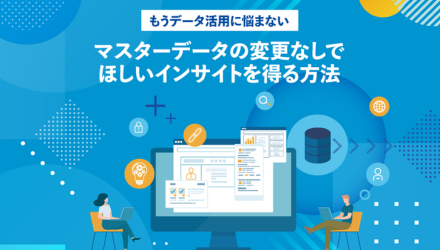
How to get the insights you want without changing your master data
This e-book offers a new approach to solutions for companies that have data but are not making use of it.